There’s no point trying to be solemn for solemnity’s sake. Even in the darkest, most trying and difficult moments, I believe if something is funny, you have to laugh. Seize the opportunity to escape the situation, even if for a few seconds, and welcome the release.
With every state in the U.S. now relaxing to some degree their “stay-in-place” orders, first put into effect back in March in response to the coronavirus pandemic, it seems a good time to look back at some of the funny memes (and a couple of serious ones) of the past few months.
In what's been called a “scathing indictment,” the editorial board of the renowned medical journal The Lancet recently denounced US President Donald Trump's “incoherent” response to the coronavirus (or COVID-19) pandemic and called on American voters to remove him from office in November.
The journal's editors also expressed shock at the inability of the once well-respected US Centers for Disease Control and Prevention (CDC) to cope with the public health crisis set in motion by the virus – a crisis that continues to spiral out of control, even as the Trump administration urges states to “reopen” their economies.
Following is the full text of The Lancet's May 16 editorial, one entitled “Reviving the US CDC.”
The COVID-19 pandemic continues to worsen in the USA with 1·3 million cases and an estimated death toll of 80,684 as of May 12. States that were initially the hardest hit, such as New York and New Jersey, have decelerated the rate of infections and deaths after the implementation of two months of lockdown. However, the emergence of new outbreaks in Minnesota, where the stay-at-home order is set to lift in mid-May, and Iowa, which did not enact any restrictions on movement or commerce, has prompted pointed new questions about the inconsistent and incoherent national response to the COVID-19 crisis.
The US Centers for Disease Control and Prevention (CDC), the flagship agency for the nation's public health, has seen its role minimised and become an ineffective and nominal adviser in the response to contain the spread of the coronavirus. The strained relationship between the CDC and the federal government was further laid bare when, according to The Washington Post, Deborah Birx, the head of the US COVID-19 Task Force and a former director of the CDC's Global HIV/AIDS Division, cast doubt on the CDC's COVID-19 mortality and case data by reportedly saying: “There is nothing from the CDC that I can trust.” This is an unhelpful statement, but also a shocking indictment of an agency that was once regarded as the gold standard for global disease detection and control. How did an agency that was the first point of contact for many national health authorities facing a public health threat become so ill-prepared to protect the public's health?
In the decades following its founding in 1946, the CDC became a national pillar of public health and globally respected. It trained cadres of applied epidemiologists to be deployed in the USA and abroad. CDC scientists have helped to discover new viruses and develop accurate tests for them. CDC support was instrumental in helping WHO to eradicate smallpox. However, funding to the CDC for a long time has been subject to conservative politics that have increasingly eroded the agency's ability to mount effective, evidence-based public health responses. In the 1980s, the Reagan administration resisted providing the sufficient budget that the CDC needed to fight the HIV/AIDS crisis. The George W Bush administration put restrictions on global and domestic HIV prevention and reproductive health programming.
The Trump administration further chipped away at the CDC's capacity to combat infectious diseases. CDC staff in China were cut back with the last remaining CDC officer recalled home from the China CDC in July, 2019, leaving an intelligence vacuum when COVID-19 began to emerge. In a press conference on February 25, Nancy Messonnier, director of the CDC's National Center for Immunization and Respiratory Diseases, warned US citizens to prepare for major disruptions to movement and everyday life. Messonnier subsequently no longer appeared at White House briefings on COVID-19. More recently, the Trump administration has questioned guidelines that the CDC has provided. These actions have undermined the CDC's leadership and its work during the COVID-19 pandemic.
There is no doubt that the CDC has made mistakes, especially on testing in the early stages of the pandemic. The agency was so convinced that it had contained the virus that it retained control of all diagnostic testing for severe acute respiratory syndrome coronavirus 2, but this was followed by the admission on February 12 that the CDC had developed faulty test kits. The USA is still nowhere near able to provide the basic surveillance or laboratory testing infrastructure needed to combat the COVID-19 pandemic.
But punishing the agency by marginalising and hobbling it is not the solution. The Administration is obsessed with magic bullets – vaccines, new medicines, or a hope that the virus will simply disappear. But only a steadfast reliance on basic public health principles, like test, trace, and isolate, will see the emergency brought to an end, and this requires an effective national public health agency. The CDC needs a director who can provide leadership without the threat of being silenced and who has the technical capacity to lead today's complicated effort.
The Trump administration's further erosion of the CDC will harm global cooperation in science and public health, as it is trying to do by defunding WHO. A strong CDC is needed to respond to public health threats, both domestic and international, and to help prevent the next inevitable pandemic. Americans must put a president in the White House come January, 2021, who will understand that public health should not be guided by partisan politics.
Others who participated in last night's show, which was simultaneously broadcast on ABC, CBS, Fox and NBC and a host of social media and streaming services, included Nobel Prize laureate Malala Yousafzai, World Cup champion and US women's national team soccer player Megan Rapinoe, and former President Barack Obama. Interestingly, LeBron, Rapinoe, and Obama have all been the target of President Donald Trump's verbal insults and attacks, for reasons that are both pathetic and embarrassing. (See here, here, and here.)
Obama, for his part, made a veiled criticism of Trump's gross mismanagement of the federal government's response to the coronavirus pandemic, and basically called Trump a “little kid.”
Doing what feels good, what’s convenient, what’s easy – that’s how little kids think. Unfortunately, a lot of so-called grown-ups, including some with fancy titles and important jobs, still think that way – which is why things are so screwed up. I hope that instead, you decide to ground yourself in values that last, like honesty, hard work, responsibility, fairness, generosity, respect for others.
Obama also talked about the importance of good leadership, noting (in true Marianne Williamson fashion) that “the old ways of doing things just don’t work” and thus the need to “set the world on a different path.”
“Demand better – together”
Meanwhile, Megan Rapinoe, the out lesbian USWNT World Cup Golden Ball winner, reminded students that “Every generation has a defining moment, a collective experience that will leave an indelible mark on each member. This is your moment and it is unlike any we have ever see before.”
“I’m not gonna ask you to come together,” said Rapinoe, “I’m gonna ask you to demand better – together.”
Rapinoe also had some specific advice for the class of 2020, most of whom will be voting for the very first time, about the importance of the election this November. She didn’t say whom to vote for, but her message was clear: “Who is leading matters.”
“The world is yours now”
And speaking of leaders, the inspiring education advocate and Nobel Prize laureate Malala Yousafzai, who, like the students she addressed last night is also missing out on her graduation ceremony this year, observed that, “Across the world, COVID-19 has forced one billion students out of school. For most of us, this is temporary and we will continue our education and follow our dreams.”
Yet Yousafzai reminded the American students she was addressing that millions of their peers in other parts of the world – particularly young women – won’t have the same opportunities moving forward.
Many girls, especially in developing countries, will never return to the classroom. Because of this crisis, they will be forced into early marriages or low paying jobs to support their families, and when schools re-open, their desks will be empty. They are our peers. They have the same right to education as we do. So I ask you to remember them today as you go out and change the world, don’t leave them behind.
“The class of 2020 won’t be defined by what we lost to this virus, but how we responded to it,” Yousafzai concluded, adding, “The world is yours now, and I can’t wait to see what you make of it.”
“You're All Kings and Queens”
As you can see, there were lots of inspiring sentiments and words shared during last night's Graduate Together broadcast. I conclude by sharing LeBron James' remarks and a YouTube video of the hour-long broadcast itself. Enjoy!
Seniors, tonight is for you. Tonight, we honor twelve years of your hard work. The studying, the tests, early mornings and late nights. And we honor everyone who got you here – your friends, your family, your community. Class of 2020, this is for you. Every student you see, the videos in our show, the pictures you see around me now, are all part of your graduation class and sent in by you guys. Before we get to the show, there is something I want to say to each of you. Thank you. You should have had a real graduation. I know. You should have had an incredible senior year. I know that as well.
But you made a sacrifice. And you did that to keep your community safe and healthy. On behalf of all of us, thank you. There is no doubt in my mind that the class of 2020 is going to be something really special. "After all this? You guys are prepared for anything. So celebrate. Be proud. Tonight is for you. We are all ready for the class of 2020 to change the world. Congratulations.
. . . In our poorest neighborhoods, schools are about much more than learning. In places like Akron, Ohio, schools are the most essential service. It may be the only place to support you, the only place to protect you, and for many, the only place to feed you. Our schools are our safety net. Our people build our communities. The class of 2020, as you celebrate tonight, do not forget your safety net.
Every teacher, every coach, and every pastor. They, along with your friends and family, got you to this moment. And now, it is time to go to a new place. It is time to chase every dream. Accept every challenge. Strive for greatness. Honor every promise. And recommit to your community.
The last thing you want to hear right now is 'stay home.' That's not my message to you. My message is, 'Stay close to home.' Maybe not physically but in every other way possible. Pursue every ambition. Go as far as you possibly can dream. And be the first generation to embrace a new responsibility. A responsibility to rebuild your class of 2020, the world has you will determine how we and I ask that you make your community your priority.
Congratulations, class of 2020. I love all of you. And remember one thing, you're all kings and queens.
.
Most people familiar with The Wild Reed would know that I work as a spiritual health provider (or interfaith chaplain) at a hospital in the Twin Cities' north metro. I'm the hospital's palliative care chaplain, which means I'm part of the palliative care team, one which also includes a physician, five nurse practitioners, and a social worker.
Palliative care is a specialized field of care that involves symptom management of chronic and/or terminal illnesses and end-of-life support and care. In my work as chaplain in this field, I endeavor to be for patients and their families a grounded, compassionate, and listening presence. In this way I accompany them on a journey of meaning-making (religious or otherwise) within the context of the incredibly challenging and often frightening situations that they're dealing with.
Many of us have come to realize that death and dying are no mere abstractions. We have taken care of a grandparent or a parent who was dying. Some of us have helped care for a dying sibling, others of us have lain beside a dying spouse. Some of us have even cradled children as they died. And some will be reading this while facing, as we all will, death itself.
Through my years as a hospice doctor, I have learned that dying does not have to be agonizing. Physical suffering can always be alleviated. People need not die alone; many times the calm, caring presence of another can soothe a dying person’s anguish. I think it is realistic to hope for a future in which nobody has to die alone and nobody has to die with their pain untreated. But comfort and companionship are not all there is. I have learned from my patients and their families a surprising truth about dying: this stage of life holds remarkable possibilities. Despite the arduous nature of the experience, when people are relatively comfortable and know that they are not going to be abandoned, they frequently find ways to strengthen bonds with people they love and to create moments of profound meaning in their final passage.
As a [palliative/hospice care provider], being present as someone is dying tears the boundaries between the personal and professional realms of my being. The experience of a patient dying challenges me to accept a more intimate, and yet more deeply respectful, relationship with that person. I do not know how it could be otherwise. While I may bring clinical skills and years of experience to the task, ultimately I am simply present, offering to help and wanting to learn.
Over the years I have learned that the actual range of human experience of dying is broad. I have seen tremendous suffering, but I have also witnessed people who in their dying experienced a sense of wellness and peace that can only be called blissful. . . . [Sharing these types of stories is] the only satisfying way I know of exploring the paradox that people can become stronger and more whole as physical weakness becomes overwhelming and life itself wanes. . . . We can grow stronger within ourselves and closer to those we love as we confront the challenges of dying with honesty, caring, and commitment.
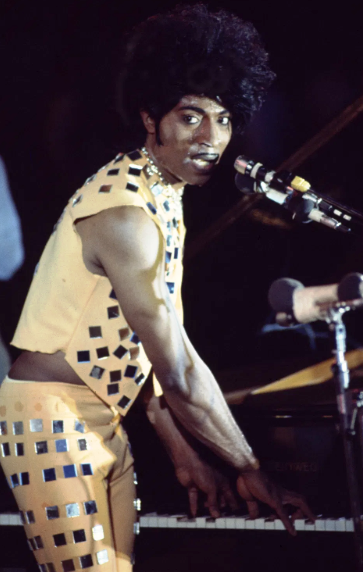
Pioneering rock 'n' roll legend Richard Wayne Penniman (aka Little Richard) died earlier today of bone cancer. He was 87.
Although I'm aware of and appreciate his contribution to music, what always intrigued me most about Little Richard were his conflicted views on his sexuality. It seems to me that this decades-long conflict lead to a life of contradictory extremes. I find it difficult to envision such a life affording opportunities for relational experiences through which a sense of wholeness is embodied; relational experiences, in other words, that are both affirmingly grounding and joyfully liberating. And I find the thought of anyone missing out on such experiences, such wholeness, to be really sad.
It's also understandable, given the times within Little Richard grew up and lived much of his adult life. British writer Martin Aston, for instance, writes the following about the music industry's gay closet of the 1930s through '60s in relation to Little Richard.
It’s said that the 20th century’s two most liberal decades were the 20s and the 70s; in between, McCarthyism unleashed a fresh era of homophobia, and the British establishment fought just as hard to discourage social tolerance and progress. If only Little Richard’s original lyric to “Tutti Frutti” – Tutti Frutti, good booty / If it don’t fit, don’t force it / You can grease it, make it easy – wasn’t censored by his producer, Britain would have enjoyed a top 30 ode to anal sex some 30 years before Frankie Goes to Hollywood’s “Relax.” Given it wasn’t until the Sexual Offences Act of 1967 that homosexuality – only for those aged over 21, and only in England and Wales – was decriminalised, and that the gay liberation movement didn’t get going until after the Stonewall riots of 1969, it’s not surprising that singers, actors or musicians didn’t want to advertise their same-sex feelings
Yet even if Little Richard himself could never accept, integrate, and live fully his “same-sex feelings,” it's clear that he became and remains a queer icon, one who influenced through both his music and stage persona a host of male artists, including David Bowie, Mick Jagger, Marc Bolan, Elton John, Freddie Mercury, and Prince. As Gabe Echazaba puts it, "Little Richard paved the way for those who teeter on the edge of androgyny and homoeroticism."
Following is a compilation of tributes and reflections on Little Richard and his legacy, musical and otherwise.
An influential figure in popular music and culture for seven decades, Little Richard's most celebrated work dates from the mid-1950s, when his charismatic showmanship and dynamic music, characterized by frenetic piano playing, pounding back beat, and raspy shouted vocals, laid the foundation for rock and roll, leading him to be given the nickname “The Innovator, The Originator, and The Architect of Rock and Roll.” Little Richard's innovative emotive vocalizations and uptempo rhythmic music also played a key role in the formation of other popular music genres, including soul and funk, respectively. He influenced numerous singers and musicians across musical genres from rock to hip hop; his music helped shape rhythm and blues for generations to come.
After “Tutti Frutti” came a whole string of hits that would include “Long Tall Sally,” “Good Golly Miss Molly,” and “Rip It Up,” all of which would get covered by future rock and rollers over and over again. Richard and his musical flamboyance and style became so quickly adored, that integrated audiences attended his shows during a time of segregation going strong in the U.S. He defied gender norms, sporting nail polish, makeup, and outlandish hairstyles and outfits while onstage. Makes you wonder where Bowie and Elton got their inspiration from, huh?
Following his initial success in the 50s, Richard performed on and off for decades, staying involved with occasionally recording new, gospel-oriented material, but not scoring anymore Top 10 hits. One of his last shows was actually in Pensacola back in 2013. That was the year he announced that he’d never perform again, nearly 65 years after “Tutti Frutti.”
[“Tutti Frutti”'s] follow-up, “Long Tall Sally,” hit Number Six, becoming the highest-placing hit of his career. For just over a year, the musician released one relentless and arresting smash after another. From “Long Tall Sally” to “Slippin’ and Slidin’,” Little Richard’s hits – a glorious mix of boogie, gospel, and jump blues, produced by Robert “Bumps” Blackwell – sounded like he never stood still. With his trademark pompadour and makeup (which he once said he started wearing so that he would be less “threatening” while playing white clubs), he was instantly on the level of Elvis Presley, Jerry Lee Lewis, and other early rock icons, complete with rabid fans and mobbed concerts. “That’s what the kids in America were excited about,” he told Rolling Stone in 1970. “They don’t want the falsehood – they want the truth.”
. . . Little Richard’s stage persona – his pompadours, androgynous makeup, and glass-bead shirts – also set the standard for rock & roll showmanship; Prince, to cite one obvious example, owed a sizable debt to the musician. “Prince is the Little Richard of his generation,” Richard told Joan Rivers in 1989, before looking at the camera and addressing Prince. “I was wearing purple before you was wearing it!”
“If you love anything about the flamboyance of rock & roll, you have Little Richard to thank,” says the Black Keys’ Dan Auerbach, a longtime fan. “And where would rock & roll be without flamboyance? He was the first. To be able to be that uninhibited back then, you had to have a lot of not-give-a-fuck.”
[Little Richard] made waves. Whether the public realized it or not, he brought excitement, sexuality, colorfulness and panache to rock and roll like no one else had done before. Sure, Elvis Presley would instantly become a sex symbol and the subject of idolatry at around the same time as Richard’s arrival, but it was the Macon, Georgia native who’d truly be the one to add a sense of unadulterated joy and abandon to this new genre that was in its infancy. It was Little Richard who so coyly and so stealthily threw innuendos and double entendres into his lyrics and his exuberant stage shows.
To say that Richard Wayne Pennimen, the man who’d create his unabashed Little Richard stage persona, knocked down walls and broke open doors would be a gross understatement. The man bulldozed buildings each and every time he screamed, hollered, sang, crooned and cooed while bashing out the best boogie woogie piano work the public had ever witnessed. His courage and his sheer audacity were just as pivotal as the mountain of essential music he made throughout the 50s and beyond.
His influence was immeasurable. Any rock frontman who ever teetered on the fence of sexuality, androgyny and homoeroticism unquestionably owes a debt of gratitude to Little Richard. Countless interviews and quotations from the likes of David Bowie, Marc Bolan, Elton John, Freddie Mercury and Mick Jagger reveal those artists’ reverence and gratefulness for Little Richard’s presence. The entire genre of glam rock, the extravagant and glittery movement that took over British airwaves in the early 70s, could not have existed if it weren’t for the style, the makeup, the swagger and the attitude Richard oozed. Who could resist songs like “Tutti Frutti,” “Lucille,” “Rip it Up,” “Slippin’ and Slidin’” and so many other bursts of blatant rock and roll vibrancy delivered by this irresistibly engaging dynamo?
While Richard was, at times, shrouded and veiled when talking about his sexuality, it only proved that he didn’t have to define the essence of what arguably made him the most compelling rock and roll performer of all time. He’d at times throughout his existence denounce homosexuality but, it didn’t matter; the color, gender and sexual lines he’d broken down and blurred since the first time he simultaneously zoomed up rock and R&B singles charts at the dawning of the birth of rock and roll had more impact than any words he’d utter in the press or in later interviews.
Rock’n’roll history has never exactly neglected or ignored Little Richard: it just has never quite known what to do with him. The longstanding pissing contest over who can claim the title “King of Rock’n’Roll” – Elvis? Jerry Lee Lewis? – is a case in point. While his authorised biographer went celestial in choosing to style Richard “the Quasar of Rock,” perhaps we might do better to listen to the artist, introducing himself at the Club Matinee in Houston, Texas, in 1953: “Little Richard, King of the Blues . . . and the Queen, too!”
Might we hear in this brash boast an invitation to think in non-binary terms about Little Richard’s place in black musical history? At 20 Little Richard was already a showbiz veteran of half a decade, performing first as a turbaned mysterio and then as a drag queen named Princess LaVonne in the travelling shows that plied the southern black entertainment circuit of the late 1940s. Other queens and “freakish men” – as the black speech of the period named gender-non-conforming males – taught Little Richard the musical, performative and sexual ropes: performers like Esquerita, whose flamboyant persona and piano technique inspired Richard (the question of who wore the pompadour first will probably go for ever unanswered).
These transgressively queer performers of a bawdy, sped-up blues, and the black publics they performed it for, were overlooked by a generation of white male critics and collectors eager to fetishise the rural: Robert Johnson standing at a lonesome crossroads in the Mississippi Delta. As historian Marybeth Hamilton notes, rock’n’roll was thought by these critics to be “a factory product that diluted, even perverted, black performance traditions for sale to undiscerning consumers who, if anything, preferred the fake stuff to the real.”
We often think about the history of rock 'n' roll through the lens of white artists and record executives profiting from black culture, but it’s rare we recognize that the musicians being stolen from have often not only been black, but queer as well. Artists like Little Richard are often seen as separate from their sexuality and gender performance, even though those are the very things that informed their innovation.
One of the primary ways we remember and memorialize our biggest stars is through onscreen dramatizations of their lives; often, these images play a huge part in the mythmaking of their personas. This format is also a common way to erase more complex facets of those figures. In the 2000 biopic Little Richard, there is no mention of his queerness, no attempt to connect his gender performance to his brilliant artistry. Likewise, in the 1991 biopic The Josephine Baker Story, there is no reference to Baker’s reported relationships with women.
Removing black queer identities from our recorded histories, including film, makes it seem as though iconoclasticism happens by chance. More accurately, creative people who lived or are living in the tension of both queerness and blackness have brought forward brilliant worlds that we all benefit from.
Not recognizing this leaves us with a series of horror stories, such as Whitney Houston and Luther Vandross, popular black figures who were never able to live their fullest truths. It has also led generations of black queer children to believe people like them haven’t contributed anything to culture, when the opposite is true.
At times, Little Richard himself would attempt to distance himself from facets of his queer identity, publicly denouncing homosexuality and his natural urges. Such denial can be its own form of admitting queerness. Yet it matters that despite these pronouncements – and unlike Houston or Vandross – his performance and aesthetic always remained overtly queer and transgressive, as if it was a second skin he couldn’t wash off, no matter how much he attempted to reject it. In performance if not in his personal life, at least, he embraced what made him so special.
What [we] are seeing is one of the wealthiest, geographically advantaged, productive capitalist societies in the world flounder and fail at its most basic test: taking care of its people.
This crisis is not about the virus.
This crisis is about the massive failure of our “booming economy” to survive even modest challenges. It is about the market dissonance of shortages in stores, even as farmers/producers destroy unused crops and products. This crisis is about huge corporations needing an emergency bailout within days of the longest bull market in our history ending and despite the ability to borrow with zero percent interest rates.
This crisis is about corporatized healthcare systems being unable and ill-equipped to provide basic healthcare, at the same time they post record profits. It is about crisis response depending on antiquated systems nobody remembers how to operate.
But most of all, this crisis is a direct result of the politicization of every aspect of our society for the benefit of a privileged few. The vilification of education, science, media, natural rights, rural lifestyles, urban lifestyles, charity, compassion, and virtually everything else for brief political gain has gutted our society.
I established The Wild Reed in 2006 as a sign of solidarity with all who are dedicated to living lives of integrity – though, in particular, with gay people seeking to be true to both the gift of their sexuality and their Catholic faith. The Wild Reed's original by-line read, “Thoughts and reflections from a progressive, gay, Catholic perspective.” As you can see, it reads differently now. This is because my journey has, in many ways, taken me beyond, or perhaps better still, deeper into the realities that the words “progressive,” “gay,” and “Catholic” seek to describe.
Even though reeds can symbolize frailty, they may also represent the strength found in flexibility. Popular wisdom says that the green reed which bends in the wind is stronger than the mighty oak which breaks in a storm. Tall green reeds are associated with water, fertility, abundance, wealth, and rebirth. The sound of a reed pipe is often considered the voice of a soul pining for God or a lost love.
On September 24, 2012,Michael BaylyofCatholics for Marriage Equality MNwas interviewed by Suzanne Linton of Our World Today about same-sex relationships and why Catholics can vote 'no' on the proposed Minnesota anti-marriage equality amendment.
"I believe your blog to be of utmost importance for all people regardless of their orientation. . . . Thank you for your blog and the care and dedication that you give in bringing the TRUTH to everyone."– William
"Michael, if there is ever a moment in your day or in your life when you feel low and despondent and wonder whether what you are doing is anything worthwhile, think of this: thanks to your writing on the internet, a young man miles away is now willing to embrace life completely and use his talents and passions unashamedly to celebrate God and his creation. Any success I face in the future and any lives I touch would have been made possible thanks to you and your honesty and wisdom."– AB
"Since I discovered your blog I have felt so much more encouraged and inspired knowing that I'm not the only gay guy in the Catholic Church trying to balance my Faith and my sexuality. Continue being a beacon of hope and a guide to the future within our Church!"– Phillip
"Your posts about Catholic issues are always informative and well researched, and I especially appreciate your photography and the personal posts about your own experience. I'm very glad I found your blog and that I've had the chance to get to know you."– Crystal
"Thank you for taking the time to create this fantastic blog. It is so inspiring!"– George
"I cannot claim to be an expert on Catholic blogs, but from what I've seen, The Wild Reed ranks among the very best."– Kevin
"Reading your blog leaves me with the consolation of knowing that the words Catholic, gay and progressive are not mutually exclusive.."– Patrick
"I grieve for the Roman institution’s betrayal of God’s invitation to change. I fear that somewhere in the midst of this denial is a great sin that rests on the shoulders of those who lead and those who passively follow. But knowing that there are voices, voices of the prophets out there gives me hope. Please keep up the good work."– Peter
"I ran across your blog the other day looking for something else. I stopped to look at it and then bookmarked it because you have written some excellent articles that I want to read. I find your writing to be insightful and interesting and I'm looking forward to reading more of it. Keep up the good work. We really, really need sane people with a voice these days."– Jane Gael
"Michael, your site is like water in the desert."– Jayden