Sunday, June 28, 2020

Mia Birdsong on the “Queering of Friendship”


.
The Wild Reed's 2020 Queer Appreciation series continues with an excerpt from Mia Birdsong's insightful June 20 Salon article, “The Queering of Friendship: Rethinking Platonic Relationships, Guided by LGBTQ Models.” It's an article that's actually an excerpt from Mia's book, How We Show Up: Reclaiming Family, Friendship, and Community.

The idea of platonic boyfriends/girlfriends/partners and “Boston marriages” (a 19th-century phrase describing two women who shared a life and lived together without the support of a man) has been around for a while. Back in the day, sometimes these relationships were actually sexual relationships between folks who couldn't be out as gay because it was illegal, socially unacceptable, and dangerous. But sometimes they were intimate non-sexual friendships.

A more modern umbrella term for these relationships is queerplatonic. The word was coined, defined, and redefined by asexual and aromantic people to describe a relationship that is not romantic, but emotionally closer than what we generally think of as friendship. The “queer” part is not about sexuality, but about the queering of our ideas about what relationships look like. As writer and activist Shon Faye puts it, “Queer is about removing labels and replacing them with a question. It is a side eye and a challenge back to mainstream society and politics. It says, 'I don't know the answer, but why are you asking the question?'” Queering relationships is rejecting the restraints of convention, but it's also liberatory truth-finding. It allows us to look at a relationship (and so many other things) stripped of preconceptions and ask, What is this really? What are the components? What is happening inside of it? Anyone of any sexual orientation, gender, or other relationships status can be in a queerplatonic relationship.

Having more language and examples that articulate a way to be in relationship with others outside conventional understanding is affirming because I have, and want more, relationships like that. Even though I'm not aromantic or asexual, the paths people with those identities are forging to be wholly who they are makes room for the rest of us too. People are living into identities that aren't accepted or even recognized by society at large. Their insistence on self-definition creates space for all of us to be self-determined in our identities.

. . . “I think of my family as a queer family even when it's full of straight people. This is an unconventional approach to family,” Gabi, who is queer, transgender, and genderqueer, told me, reflecting on the idea that “queering” is about bucking convention — not just for its own sake, but because it's what actually works. They told me, “I love the defiance of the bumper sticker 'Not gay as in happy but queer as in fuck you.'”

. . . Perhaps part of our challenge in thinking expansively about our friendships is that we're limited by the word friend. Like community, the word friend has come to be so broad as to have lost meaning. We can have thousands of “friends” on social media, including people we have never met and make no effort to know. Friend can describe a work acquaintance whose personal life you know nothing about or a close intimate with whom you share history and your realest self. There are beautiful words in languages other than English that get at some of the richness and variety of friendship, like the Gaelic phrase anamcara, which literally translates as “soul friend”; or the Aramaic havruta, which means “friend” and, depending on your brand of Judaism, can mean a person with whom you study the Torah or someone with whom you engage in self-education; or the Japanese nakama, which can mean “buddy” or “people who you can trust in all things.” And then there is the Black American practice of applying familial words to friends who are like family, like auntie or brother. Knowing that there are other words supports my ability to see the possibilities that were previously obscured to me even if I never use them.

While part of what I'm working toward is flattening the relationship hierarchy, I'm also clear that my friendships are part of what keep my marriage working. I get a range of love, affirmation, attention, inspiration, perspective, and engagement that isn't dependent on my husband or the state of our relationship. My husband, as wonderful as he is, does not have much to offer me when it comes to some things that are important to me, like narrative change strategy or Black feminist liberation (and I don't have much to offer him when to comes to music creation or particle physics). When I am pissed at him, my friends allow me to vent, but also move me toward empathy and reconciliation. And there is a deep joy and rightness with the world that I get from sitting in the presence of my closest girlfriends, loving one another, laughing, eating, drinking, and being unapologetically ourselves, something that no man will ever give me.


To read Mia Birdsong's article on the queering of friendship in its entirety, click here.


NEXT: The Distinguished Rhone Fraser:
Cultural Critic, Bibliophile, and Dramatist


For previous installments in the The Wild Reeds' 2020 Queer Appreciation series, see:
• Zaylore Stout on Pride 2020: “What Do We Have to Be Proud Of?”
• Francis DeBernardo on the U.S. Supreme Court Ruling on Title VII: “A Reason for All Catholics to Celebrate”

See also the previous Wild Reed posts:
• Manly Love
• Reclaiming the Power of Male Touch
• Edward Sellner on the Archetype of the Double and Male Eros, Friendships and Mentoring
• Remembering a Daring Cinematic Exploration

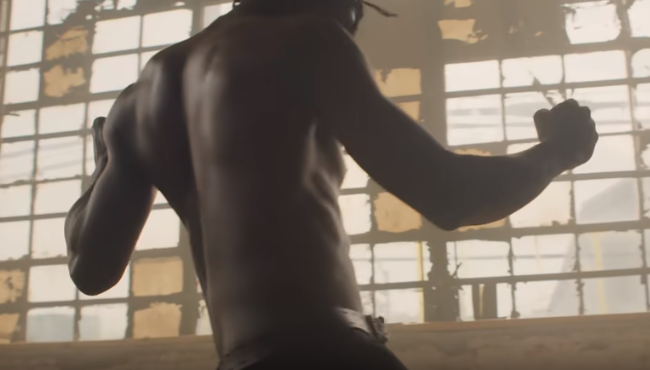
Image 1: Getty stock image.
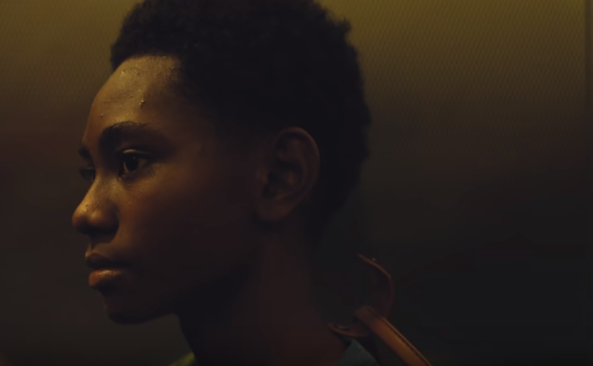
Image 2: Photographer unknown.


Saturday, June 27, 2020

Francis DeBernardo on the U.S. Supreme Court Ruling on Title VII: “A Reason for All Catholics to Celebrate”


.
The Wild Reed's 2020 Queer Appreciation series continues with the sharing of the June 16 statement by Francis DeBernardo, the Executive Director of New Ways Ministry, in response to the U.S. Supreme Court ruling on Title VII that bars discrimination based on sexual orientation and gender identity. (To start at the beginning of this series, click here.)

The U.S. Supreme Court’s landmark Title VII decision protecting LGBTQ people from workplace discrimination is a reason for all Catholics to celebrate. While pro-LGBTQ Catholics, who are the overwhelming majority in the U.S. church, will obviously applaud this decision, even Catholics who take a negative stance toward LGBTQ people should welcome this decision because it is absolutely in agreement with Catholic teachings about the human dignity of LGBTQ people, anti-discrimination, and respect for workers’ rights.

Unfortunately, the United States Conference of Catholic Bishops does not agree. Archbishop José Gomez of Los Angeles denounced the decision in a statement, saying, in part:

I am deeply concerned that the U.S. Supreme Court has effectively redefined the legal meaning of ‘sex’ in our nation’s civil rights law. This is an injustice that will have implications in many areas of life. . . . No one can find true happiness by pursuing a path that is contrary to God’s plan.

Every human person is made in the image and likeness of God and, without exception, must be treated with dignity, compassion, and respect. Protecting our neighbors from unjust discrimination does not require redefining human nature.

What Gomez doesn’t realize is that such a “legal redefinition” actually helps in the goal of “Protecting our neighbors from unjust discrimination. . . .” He commits the error that the bishops conference has continually made by viewing all LGBTQ issues through the lens of sexuality instead of through the more basic and correct lens of human rights and dignity.

Moreover, for decades upon decades, and with increasingly mounting scientific and social scientific evidence, the bishops have been exhorted to listen to the voices of LGBTQ people so that they can learn how these individuals experience and discern “God’s plan” for themselves, instead of being constrained by an abstract philosophical model.

Even Catholics opposed to marriage equality for lesbian and gay couples should be rejoicing that the Court’s decision is in line with Catholic teaching on homosexual people that “Every sign of unjust discrimination in their regard should be avoided.” (Catechism of the Catholic Church, 2358).

Even Catholics who do not support transgender people should be rejoicing that their dignity and humanity are upheld by this ruling. As the U.S. bishops have stated: “Human personhood must be respected with a reverence that is religious. When we deal with each other, we should do so with the sense of awe that arises in the presence of something holy and sacred. For that is what human beings are: we are created in the image of God.” (Economic Justice for All, 28)

As Pope Paul VI said, “All people have the right to work, to a chance to develop their qualities and their personalities in the exercise of their professions, to equitable remuneration which will enable them and their families “to lead a worthy life on the material, social, cultural and spiritual level. . .” (Octogesima Adveniens, 14)

Unfortunately, it is unlikely that this decision will protect the rights of LGBTQ workers employed in church institutions. Church agencies often hide behind religious exemptions to discriminate against LGBTQ workers in their employ. It is shameful that Catholic bishops and administrators do not themselves live up to their own teachings in regard to LGBTQ non-discrimination and workers’ rights.

As with other LGBTQ issues, it is sad that the Supreme Court is ahead of the Catholic Church when it comes to employment non-discrimination – a policy which should Catholic teaching speaks of eloquently in its words, but fails miserably in putting into practice.

So, while Catholics of all political persuasions can rejoice that the U.S. Supreme Court supported LGBTQ workers in a manner consonant with Catholic teaching, the work for justice and equality inside the Church will continue.

– Francis DeBernardo
New Ways Ministry
June 16, 2020


NEXT: Mia Birdsong on the “Queering of Friendship”


Related Off-site Links:
Supreme Court Rules LGBTQ+ People Protected From Job Discrimination – Brendan Wetmore (Paper, June 15, 2020).
Because of Sex: A Historic Win for LGBTQ Americans During Pride Month – Adam P. Romero (Ms., June 15, 2020).
Supreme Court Justice Neil Gorsuch Just Handed Down a Historic Victory for LGBTQ Rights – Mark Joseph Stern (Slate, June 15, 2020).
Kavanaugh Slams Ruling, Alito Compares Same-Sex Desire to Rape – Trudy Ring (The Advocate, June 15, 2020).
Conservatives – Led by Justice Alito – Melt Down Over Supreme Court’s Pro-LGBTQ Ruling – Alex Henderson (Salon, June 16, 2020).
Supreme Court Upholds Trans People’s Workplace Protections — but Trans Lives Remain Under Constant Threat – Natasha Lennard (The Intercept, June 15, 2020).

See also the previous Wild Reed posts:
• Progressive Catholic Perspectives on the U.S. Supreme Court's 2015 Marriage Equality Ruling
• Acknowledging, Celebrating, and Learning from Marriage Equality's “Triumphs of Faith”
• An Inspiring Evening of Conversation and Camaraderie


Friday, June 26, 2020

Zaylore Stout on Pride 2020: “What Do We Have to Be Proud Of?”

Since 2009 I’ve shared every year during the month of June a series of “Queer Appreciation” posts. Each series is comprised of a number of informed and insightful writings to mark Gay Pride . . . or, as I prefer to call it (since 2011), Queer Appreciation. I always try to include in each series a diverse range of writers and topics; and, in general, the writings I share are positive, proactive and celebratory.

I start this year’s Queer Appreciation series with an excerpt from Zaylore Stout’s commentary, “Happy Pride: What Do We Have to Be Proud Of?,” first published June 8 by The Advocate.

Zaylore is an active advocate for LGBT issues, primarily through his law firm, Zaylore Stout & Associates, which specializes in representing HIV+ and transgender employees discriminated against at work. Zaylore is also the author of Our Gay History in Fifty States, and, like me, he is a resident of Minneapolis.

“Happy Pride!” is a phrase I would have uttered thousands of times starting June 1, the first day of Pride month. I had some damn high hopes for Pride in the year 2020. I published my first book, Our Gay History in Fifty States, and planned an amazing whirlwind book tour, advocating for the inclusion of a more diverse rendition of our community’s history. I envisioned myself demanding more states join the ranks of California, Colorado, New Jersey, Illinois, and Oregon in requiring the teaching of LGBTQ+ history in schools. I had a goal to get 1,725 of books donated to LGBTQ+ youth-focused learning centers across the country, especially in conservative states and counties, so that kids there know that they are seen, valued and part of a rich community that has contributed so much to this country.

However, my plans were hit with a one-two punch: First Covid-19, and then the murder of George Floyd.

I am a Black man in Minneapolis and my world stopped on Memorial Day. The Black community is crippled with grief and anger, but not disbelief. We’ve seen this story before: We watched Ahmaud Arbery murdered by vigilantes. We followed the trial of Trayvon Martin’s murderer as the state let him walk free. Our eyes were glued to the video of Eric Garner in New York gasping for his last breath crying out, “I can’t breathe.”

George Floyd said, “I can’t breathe” too. And yet, we are here, still unable to breathe. The Black community, my community, is being snuffed out and nobody cares.

This year marks the 50th anniversary of the first Pride march, which began as a commemoration of the events of June 28, 1969, when, empowered by the Black Power, women’s liberation, and anti-war movements, the patrons of the Stonewall Inn said “enough is enough!” Black, brown, transgender, and gender non-binary people spearheaded the resistance. A revolutionary riot lasted six days. There were both peaceful protestors and defiant rioters. There was unrest. There was violence. There was property damage. And people went to jail.

Today, the country celebrates their contributions, even though none of them were celebrated at the time. Stonewall, like every riot in our country’s history was sparked by a push back against police violence and brutality.

Today, as I stand in Minneapolis, I ask, where is the groundswell of LGBTQ+ community warriors now when my Black community is under attack? Peaceful Black Lives Matter protests occurred at Pride parades across the country have been met with boos, jeers, and social media rants. This is what happens when we fail to tell the history of our movement, including who was involved from the very beginning. This is what occurs when we fail to ensure that Black, Brown, and Indigenous voices are part of our leadership structure and have an equal voice. Without diverse voices and leadership, people believe the false narrative that white gays and lesbians secured gains on their own without the rest of us.


To read Zaylore Stout's commentary in its entirety, click here.


NEXT: Francis DeBernardo on the U.S. Supreme Court Ruling
on Title VII: “A Reason for All Catholics to Celebrate”


Related Off-site Links:
Meet Zaylore Stout – E.B. Boatner (Lavender, June 7, 2018).
LGBTQ Communities Are Elevating Black Voices During Pride 2020 in Solidarity – Francesca Giuliani-Hoffman (CNN, June 9, 2020).
No, We Should Not Condemn Uprisings Against Police Murders Like George Floyd’s – Peter Gowan (Jacobin, May 28, 2020).
Prolonged Uprising Is the New Normal – Jade Begay (Common Dreams, June 20, 2020).
In Defense of Destroying Property – R.H. Lossin (The Nation, June 10, 2020)


See also the previous Wild Reed posts:
• “I Can’t Breathe”: The Murder of George Floyd
• He Called Mama. He Has Called Up Great Power
• Honoring George Floyd
• Emma Jordan-Simpson: “There Will Be No Peace Without Justice”
• Rallying in Solidarity with Eric Garner and Other Victims of Police Brutality
• In Minneapolis, Rallying in Solidarity with Black Lives in Baltimore
• “Say Her Name” Solidarity Action
• “We Are All One” – #Justice4Jamar and the 4th Precinct Occupation
• Nancy A. Heitzeg: Quote of the Day – March 31, 2016
• “This Doesn't Happen to White People”
• Remembering Philando Castile and Demanding Abolition of the System That Targets and Kills People of Color


The Wild Reed's 2019 Queer Appreciation series:
• Quote of the Day – May 31, 2019
• James Baldwin’s Potent Interweavings of Race, Homoeroticism, and the Spiritual
• John Gehring on Why Catholics Should Participate in LGBTQ Pride Parades
• A Dance of Queer Love
• The Queer Liberation March: Bringing Back the Spirit of Stonewall
• Barbara Smith on Why She Left the Mainstream LGBTQI Movement
• Remembering the Stonewall Uprising on Its 50th Anniversary
• In a Historic First, Country Music’s Latest Star Is a Queer Black Man
• Historian Martin Duberman on the Rightward Shift of the Gay Movement
• Queer Black Panther


The Wild Reed's 2018 Queer Appreciation series:
• Michelangelo Signorile on the Rebellious Purpose of Queer Pride
• Liberating Paris: Exploring the Meaning of Liberation in Paris Is Burning
• Stephanie Beatriz on the Truth of Being Bi
• Queer Native Americans, Colonialism, and the Fourth of July


The Wild Reed's 2017 Queer Appreciation series:
• Our Lives as LGBTQI People: “Garments Grown in Love”
• On the First Anniversary of the Pulse Gay Nightclub Massacre, Orlando Martyrs Commemorated in Artist Tony O'Connell’s “Triptych for the 49”
• Tony Enos on Understanding the Two Spirit Community
• Making the Connections


The Wild Reed's 2016 Queer Appreciation post of solace, inspiration and hope:
• “I Will Dance”


The Wild Reed's 2015 Queer Appreciation series:
• Vittorio Lingiardi on the Limits of the Hetero/Homo Dichotomy
• Reclaiming and Re-Queering Pride
• Standing with Jennicet Gutiérrez, “the Mother of Our Newest Stonewall Movement”
• Questions for Archbishop Kurtz re. the U.S. Bishops' Response to the Supreme Court's Marriage Equality Ruling
• Clyde Hall: “All Gay People, in One Form or Another, Have Something to Give to This World, Something Rich and Very Wonderful”
• The (Same-Love) Dance Goes On


The Wild Reed's 2014 Queer Appreciation series:
• Michael Bayly’s “The Kiss” Wins the People's Choice Award at This Year's Twin Cities Pride Art Exhibition
• Same-Sex Desires: “Immanent and Essential Traits Transcending Time and Culture”
• Lisa Leff on Five Things to Know About Transgender People
• Steven W. Thrasher on the Bland and Misleading “Gay Inc” Treatment of the Struggle to Overturn Prop 8
• Test: A Film that “Illuminates Why Queer Cinema Still Matters”
• Sister Teresa Forcades on Queer Theology
• Omar Akersim: Muslim and Gay
• Catholics Make Their Voices Heard on LGBTQ Issues


The Wild Reed's 2013 Queer Appreciation series:
• Doing Papa Proud
• Jesse Bering: “It’s Time to Throw 'Sexual Preference' into the Vernacular Trash”
• Dan Savage on How Leather Guys, Dykes on Bikes, Go-Go Boys, and Drag Queens Have Helped the LGBT Movement
• On Brokeback Mountain: Remembering Queer Lives and Loves Never Fully Realized
• Manly Love


The Wild Reed's 2012 Queer Appreciation series:
• The Theology of Gay Pride
• Bi God, Somebody Listen
• North America: Perhaps Once the “Queerest Continent on the Planet”
• Gay Men and Modern Dance
• A Spirit of Defiance


The Wild Reed's 2011 Gay Pride/Queer Appreciation series:
• Gay Pride: A Celebration of True Humility
• Dusty Springfield: Queer Icon
• Gay Pioneer Malcolm Boyd on Survival – and Victory – with Grace
• Senator Scott Dibble’s Message of Hope and Optimism
• Parvez Sharma on Islam and Homosexuality


The Wild Reed’s 2010 Gay Pride series:
• Standing Strong
• Growing Strong
• Jesus and Homosexuality
• It Is Not Good To Be Alone
• The Bisexual: “Living Consciously in the Place Where the Twain Meet”
• Spirituality and the Gay Experience
• Recovering the Queer Artistic Heritage


The Wild Reed's 2009 Gay Pride series:
• A Mother’s Request to President Obama: Full Equality for My Gay Son
• Marriage Equality in Massachusetts: Five Years On
• It Shouldn’t Matter. Except It Does
• Gay Pride as a Christian Event
• Not Just Another Political Special Interest Group
• Can You Hear Me, Yet, My Friend?


See also:
• Worldwide Gay Pride – 2017 | 2016 | 2013 | 2012 | 2011 | 2010 | 2009 | 2008 | 2007
• A Catholic Presence at Gay Pride – 2013 | 2012 | 2011 | 2010 | 2009 | 2008 | 2007
• Gay Pride: A Catholic Perspective
• Reclaiming and Re-Queering Pride
• Police, Pride, and Philando Castile

Image: Photographer unknown.


Helpful Rebuttals

. . . to Racist Talking Points


See also the previous Wild Reed posts:
• “I Can't Breathe”: The Murder of George Floyd
• He Called Mama. He Has Called Up Great Power
• Something to Think About – May 28, 2020
• Honoring George Floyd
• “New and Very Dangerous”: The Extreme Right-Wing Infiltration of the George Floyd Protests
• Mayor Melvin Carter: “The Anger Is Real, and I Share It With You”
• “An Abolitionist Demand”: Progressive Perspectives on Transforming Policing in the U.S.
• Marianne Williamson: Quote of the Day – June 2, 2020
• Trevor Noah on the “Dominoes of Racial Injustice”
• Emma Jordan-Simpson: “There Will Be No Peace Without Justice”
• Keeanga-Yamahtta Taylor: Quote of the Day – June 9, 2020
• Rallying in Solidarity with Eric Garner and Other Victims of Police Brutality
• In Minneapolis, Rallying in Solidarity with Black Lives in Baltimore
• “Say Her Name” Solidarity Action
• “We Are All One” – #Justice4Jamar and the 4th Precinct Occupation
• Nancy A. Heitzeg: Quote of the Day – March 31, 2016
• “This Doesn't Happen to White People”
• Remembering Philando Castile and Demanding Abolition of the System That Targets and Kills People of Color
• Sweet Darkness
• Photo of the Day, 5/3/2015: “Black Is Sacred”
• “And Still We Rise!” – Mayday 2015 (Part I)
• “And Still We Rise!” – Mayday 2015 (Part II)
• Something to Think About – March 25, 2016


Monday, June 22, 2020

Nick Cruse: “‘Vote Blue No Matter Who’ Is the Privileged Position”

Podcaster Nick Cruse recently posted the following 10-minute video in which he fires back at “vote shamers,” in particular, those Democrats who insist that all Democrats should “vote Blue no matter who.” Those who don’t, those who instead choose to vote, for example, Green Party, are often accused of being “privileged” and thus not caring for marginalized groups.

Well, Nick is part of a marginialized group, and he’s not buying that argument. In fact, he maintains that it’s actually the “Vote Blue no matter who” position that is the privileged position.


See also the related Wild Reed posts:
• Demolishing the False Narrative About Jill Stein and the 2016 Election
• Howie Hawkins: “The Democrats Are Not the Answer to the Trump/Fascism Problem”
• “The Next Step Is a Green Step, a Progressive Step”
• Bernie Sanders and Jill Stein: Is a “Historic Collaboration” in the Making?
• Voting Green: Hope Over Fear


Saturday, June 20, 2020

On This Summer Solstice, A Proclamation of the Power of Fire


In celebration of the Summer Solstice today, I share an excerpt from the book, The Circle of Life: The Heart's Journey Through the Seasons by Joyce Rupp and Macrina Wiederkehr. In this particular excerpt, the power of fire, both physical and spiritual, is proclaimed and celebrated. Enjoy! . . . And Happy Summer Solstice!

_______________________


We proclaim that the lights of the cosmos unite all people on the planet in a great oneness. As the fiery stars, the intense sun, and the reflective moonlight shine on us, so they bathe each one who dwells on this beautiful sphere of life with a great illuminating energy.

We proclaim that there is an unquenchable fire shining within each person, a light that is strong, deep, and enduring. It is the vigilant fire in the hearth of the soul, maintaining hope and truth amid life's many ups and downs.

We proclaim that the fire of those who have gone before us has never left this earth. We are heartened by the truth that their sacred fire has become an eternal light that leads us on, a fire continually blessing us, encouraging us, affirming us to live our life to the fullest for our own benefit as well as for the good of all humankind.

We proclaim that the fire within cannot be contained. It seeks to move out, to permeate, to enter into every place that lacks passion and vitality. When the inmost self is opened with love, trust, and confidence, an energizing and healing light shines forth to fill the corners of the world.

We proclaim that there is a divine fire within us that is immeasurably loving, inconceivably caring, consistently non-judgmental, and enormously passionate. This light will never give up on us. It will cherish us into eternity.

We proclaim that the light within us is beautiful, precious, and wild. We urge everyone to do all they can to tend this fire, to care for it with courage and kindness. Let the inner light shine forth radiantly so all will benefit from the power of this immense warmth and goodness.

– Joyce Rupp and Macrina Wiederkehr
Excerpted from The Circle of Life:
The Heart's Journey Through the Seasons

(Sorin Books, 2005)


Related Off-site Links:
Summer Solstice 2020: Sensual Traditions on the Longest Day of the Year – Daisy Carrington and Forrest Brown (CNN, June 19, 2020).
Rare ‘Ring of Fire’ Solar Eclipse Will Coincide With Summer Solstice 2020 – Laura Italiano (New York Post, June 19, 2020).
Summer Solstice 2020: How Midsummer Is Celebrated Around the World – Sophia Waterfield (Newsweek, June 20, 2020).
A Summer Blessing – The Leveret (June 21, 2019).

See also the previous Wild Reed posts:
• The Light Within
• A Summer Solstice Reflection
• Photo of the Day – Adnan in Morning Light
• Celebrating the Summer Solstice
• In Summer Light
• Summer Blooms
• Summer Boy
• The Source Is Within You

Photography: Michael J. Bayly.


Friday, June 19, 2020

Black Pumas’ “Colors”: A Celebration of Family, Connections, Movement, and Life


.
In the spirit of Juneteenth, I share this evening for “music night,” the video for the Black Pumas’ song, “Colors.”

Black Pumas is an American psychedelic soul band based in Austin, Texas, led by singer Eric Burton and guitarist/producer Adrian Quesada. The group received its first Grammy Award nomination earlier this year for Best New Artist at the 62nd awards.

“Colors” is from Black Puma’s 2019 self-titled debut album, an album described as “perfectly realized” by The Guardian, and as “a polished, timeless-sounding debut album,” by Headliner Magazine. Pitchfork declared the band’s sound to be “acutely cinematic,” while Rolling Stone complimented frontman Eric Burton’s “tireless, charismatic energy.”

Kristian Mercado, who directed the music video for “Colors,” said that he and lead singer Eric Burton wanted to capture the complicated experience of growing up; to “capture the feeling that is both beautiful and sometimes imperfect.”

I'm thinking that after viewing Mercado's video, you'll agree with me that he definitely succeeded in his goal.


I woke up to the morning sky first
Baby blue just like we rehearsed
When I get up off this ground
I shake leaves back down
to the brown, brown, brown, 'til I'm clean
Then I walked where I'd be shaded by
the trees by a meadow of green
For about a mile I'm headed to
town, town, town, in style

With all my favorite colors
All my favorite colors
My sisters and my brothers see them like no other
All my favorite colors
It's good day to be, a good day for me,
a good day to see my favorite colors
My sisters and my brothers,
they see them like no other
All my favorite colors

Now take me to the otherside
Where the baby blues birds fly
In grey clouds, or white walls,
or blue skies we gon' fly, feel alright
Now we gon' woo ooh woo ooh woo ooh ya
They sound like woo ooh woo ooh woo ooh ya
The least I can say I anticipate
a homecome parade as we renegade in the morning

All my favorite colors
My sisters and my brothers see them like no other
All my favorite colors

All my favorite colors
All my favorite colors, yes ma'am
My sisters and my brothers see 'em like no other
All my favorite colors

It's good day to be, a good day for me,
a good day to see my favorite colors
My sisters and my brothers, they see them like no other
All my favorite colors


Following is an excerpt from American Songwriter magazine’s article about the video for “Colors.”

The cinematic [video] – a powerfully intimate, Melanin-packed depiction of the joys and hardships of life colliding – was directed by Kristian Mercado, fresh off his Best Music Video win at this year’s SXSW Film Festival for Hurray for the Riff Raff’s “Pa’lante.”

“I really wanted to capture how powerful the sounds and vocals of Black Pumas are,” says Mercado. “I’m driven by emotion and felt a strong connection to the music. I was on a trip in Florida at Banana Records, when I heard ‘Colors’ playing. I was instantly moved and asked tons of questions about who they were. It was such a powerful song and experience that I sought out to do the music video for the song. We shot the whole film in the Bronx, wanted to show the Bronx as a place that was alive and vibrant. We wanted to celebrate family, connections, movement, and life. We explored the idea of the Bronx as a living garden, always growing always moving forward, and finding a cinematic landscape in places people often ignore.

“[Lead singer] Eric [Burton] and I spoke in great length about perspective and growing up, and how sometimes it’s a complicated experience,” says Mercado. “And we want to capture the feeling that is both beautiful and sometimes imperfect. We wanted to show both the joys and hardships of life colliding and expressing things in movement with images colliding together. Black Pumas are an extraordinary band and the visual needed to share the timeless quality of the song.”


Related Off-site Links:
Black Pumas Share “Colors” Live Video in Honor of Juneteenth – Andrew O'Brien (LiveForLiveMusic.com, June 19, 2020).
What Is Juneteenth? – Henry Louis Gates, Jr. (PBS.org, June 19, 2014).
Why All Americans Should Honor Juneteenth – Vox via Millenial June 19, 2020).
How Juneteenth's History Is Being Reshaped as America Reckons With Its Past – Janell Ross (NBC News, June 19, 2020).
How to Mark Juneteenth in the Year 2020 – Matthew Cunningham-Cook and Ryan Grim (Jacobin, June 19, 2020).
Why Juneteenth Is a Celebration of Hope – Rachel Jones (National Geographic, June 17, 2020).

Previously featured musicians at The Wild Reed:
Dusty Springfield | David Bowie | Kate Bush | Maxwell | Buffy Sainte-Marie | Prince | Frank Ocean | Maria Callas | Loreena McKennitt | Rosanne Cash | Petula Clark | Wendy Matthews | Darren Hayes | Jenny Morris | Gil Scott-Heron | Shirley Bassey | Rufus Wainwright | Kiki Dee | Suede | Marianne Faithfull | Dionne Warwick | Seal | Sam Sparro | Wanda Jackson | Engelbert Humperdinck | Pink Floyd | Carl Anderson | The Church | Enrique Iglesias | Yvonne Elliman | Lenny Kravitz | Helen Reddy | Stephen Gately | Judith Durham | Nat King Cole | Emmylou Harris | Bobbie Gentry | Russell Elliot | BØRNS | Hozier | Enigma | Moby (featuring the Banks Brothers) | Cat Stevens | Chrissy Amphlett | Jon Stevens | Nada Surf | Tom Goss (featuring Matt Alber) | Autoheart | Scissor Sisters | Mavis Staples | Claude Chalhoub | Cass Elliot | Duffy | The Cruel Sea | Wall of Voodoo | Loretta Lynn and Jack White | Foo Fighters | 1927 | Kate Ceberano | Tee Set | Joan Baez | Wet, Wet, Wet | Stephen “Tin Tin” Duffy | Fleetwood Mac | Jane Clifton | Australian Crawl | Pet Shop Boys | Marty Rhone | Josef Salvat | Kiki Dee and Carmelo Luggeri | Aquilo | The Breeders | Tony Enos | Tupac Shakur | Nakhane Touré | Al Green | Donald Glover/Childish Gambino | Josh Garrels | Stromae | Damiyr Shuford | Vaudou Game | Yotha Yindi and The Treaty Project | Lil Nas X | Daby Touré | Sheku Kanneh-Mason | Susan Boyle | D’Angelo | Little Richard


Monday, June 15, 2020

On the 100th Anniversary of Their Horrific Murder, Remembering Elmer Jackson, Elias Clayton, and Isaac McGhie


.
Today marks the 100th anniversary of one of Minnesota's most shameful and tragic events: the June 15, 1920 lynching of Elmer Jackson, Elias Clayton, and Isaac McGhie, three African-American circus workers falsely accused of robbing and raping Irene Tusken, a nineteen-year-old white woman.

Notes Wikipedia about this heinous event and its aftermath:

On June 15, 1920, three African-American circus workers, Elias Clayton, Elmer Jackson, and Isaac McGhie, suspects in an assault case, were taken from jail and lynched by a white mob of thousands in Duluth, Minnesota. Rumors had circulated that six African Americans had raped and robbed a nineteen-year-old woman. A physician's examination of her subsequently found no physical evidence of rape.


Right: A postcard of the lynching of Elias Clayton, Elmer Jackson, and Isaac McGhie. Lynching postcards were in widespread production for more than fifty years in the United States. Often inscribed with racist text or poems, these postcards were intended to be distributed so as to intimidate blacks and/or be collected and kept as a souvenir by whites. Although their distribution through the United States mail was banned in 1908, some white supremacists still distribute them today.


The 1920 lynchings are the only known instance of lynching of blacks in Minnesota. Twenty other lynchings were recorded in Minnesota, and included mainly Native Americans and whites. The state of Minnesota passed anti-lynching legislation in April 1921, and lynchings have not been recorded in Minnesota since.

[At the time of the lynchings] prominent blacks in Duluth complained that the city had not protected the circus workers. The mayor, commissioner of public safety and police chief were criticized for their failures to break up the mob before it had gotten so powerful. A special grand jury was called to investigate the lynchings. It said that the Duluth commissioner of public safety, William F. Murnian, was "not competent" and the police department was in need of a "thorough overhauling."

Two days after the lynchings, on June 17, Judge William Cant and the grand jury had a difficult time identifying the lead mob members. In the end the grand jury issued thirty-seven indictments for the lynching mob. Twenty-five were for rioting and twelve for the crime of murder in the first degree. Some men were indicted on both charges. Three men: Louis Dondino, Carl Hammerberg, and Gilbert Stephenson were convicted of rioting; none served more than 15 months in prison. No one was prosecuted for the murders of the three black men.

Prosecution continued against the other black circus workers. Despite the lack of significant physical evidence, seven men were indicted for rape. The NAACP had protested to the city about the lynchings. It hired defense attorneys for the men, and charges were dismissed for five. Max Mason and William Miller were tried for rape. Miller was acquitted, but Mason was convicted and sentenced to serve seven to thirty years in prison. He was a native of Decatur, Georgia, who had been traveling with the circus as a worker. He appealed his case without success. He was incarcerated at Stillwater State Prison, serving four years, from 1921 to 1925. He was released on the condition that he would leave the state. On June 12, 2020, three days before the 100th anniversary of the lynchings, Max Mason was granted the first posthumous pardon in the history of the state of Minnesota.

In the late twentieth century, journalist Michael Fedo wrote The Lynchings in Duluth (1970), which began to raise awareness of the event. Community members from many different groups began to come together for reflection and education. Elmer, Elias and Isacc's unmarked graves were located and in 1991, gravestones were erected with funding from a local church. Vigils began to be held at the intersection where the men were lynched. In 2000, a grassroots committee was formed, and began to offer speakers to groups and schools. At around the same time it was decided to commemorate the event with a memorial. The Clayton Jackson McGhie Memorial, which includes a corner wall and plaza, was dedicated in 2003. It includes three 7-foot (2.1 m)-tall bronze statues of the three men. The CJMM Committee continues to work for racial justice through educational outreach, community forums, and scholarships for youth.

Irene Tusken's great nephew, as of 2020, is the chief of the Duluth Police Department.


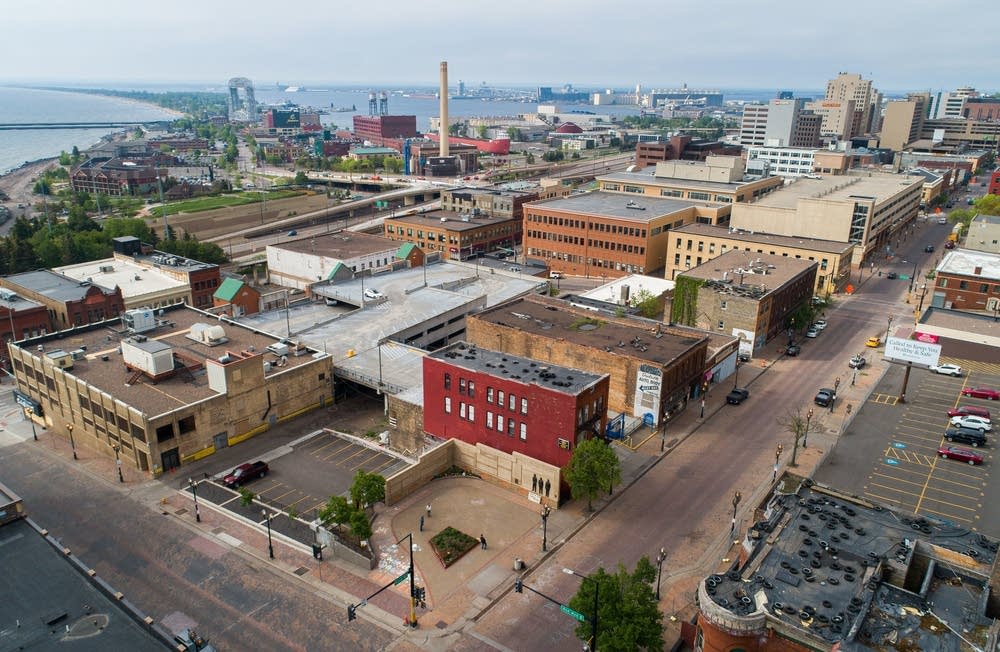
Above: The Clayton-Jackson-McGhie Memorial, located on the corner of East First Street and North Second Avenue East in Duluth, MN – June 9, 2020. (Photo: Derek Montgomery/MPR News)


On June 17, 2017, when returning to Minneapolis from a visit to Grand Marais, my friend Kathleen and I stopped in Duluth and visited the memorial to Elias Clayton, Elmer Jackson, and Isaac McGhie.

Designed and sculpted by Carla J. Stetson, in collaboration with editor and writer Anthony Peyton Porter, this memorial comprises a plaza and bronze statues of the three men who were killed. Situated across the street from the site of the lynchings, the Clayton Jackson McGhie Memorial was dedicated on October 10, 2003.

At the memorial's opening, thousands of citizens of Duluth and surrounding communities gathered for a ceremony. The final speaker at the ceremony was Warren Read, the great-grandson of one of the most prominent leaders of the lynch mob. Here is part of what he shared:

It was a long held family secret, and its deeply buried shame was brought to the surface and unraveled. We will never know the destinies and legacies these men would have chosen for themselves if they had been allowed to make that choice. But I know this: their existence, however brief and cruelly interrupted, is forever woven into the fabric of my own life. My son will continue to be raised in an environment of tolerance, understanding and humility, now with even more pertinence than before.


Read has written a memoir exploring his learning about his great-grandfather's role in the lynching, as well his decision to find and connect with the descendants of Elmer Jackson, one of the men killed. Read's book, The Lyncher in Me: A Search for Redemption in the Face of History, was published in March 2008.


Following is a 12-minute documentary produced by TPT about the Duluth lynching and its aftermath.


Related Off-site Links:
“Very Powerful”: Duluth Lynching Anniversary Draws Crowd to Memorial – Christa Lawler (Duluth News Tribune, June 15, 2020).
“We Never Solved the Problem”: Echoes of 1920 Duluth Lynching Persist at Centennial – Dan Kraker (MPR News, June 15, 2020).
100 Years After the Duluth Lynching, Another Face Is Added to the “Mob” of Systemic Racism – Daniel Bergin (Refinery29, June 12, 2020).
100 Years Ago African-Americans Marched Down 5th Avenue to Declare That Black Lives Matter – Chad Williams (The Conversaion, July 25, 2017).
America Begins to See More Clearly Now What Its Black Citizens Always Knew – Theodore R. Johnson (National Review, June 11, 2020).

See also the previous Wild Reed posts:
• “I Can't Breathe”: The Murder of George Floyd
• He Called Mama. He Has Called Up Great Power
• Something to Think About – May 28, 2020
• Honoring George Floyd
• “New and Very Dangerous”: The Extreme Right-Wing Infiltration of the George Floyd Protests
• Mayor Melvin Carter: “The Anger Is Real, and I Share It With You”
• “An Abolitionist Demand”: Progressive Perspectives on Transforming Policing in the U.S.
• Marianne Williamson: Quote of the Day – June 2, 2020
• Trevor Noah on the “Dominoes of Racial Injustice”
• Emma Jordan-Simpson: “There Will Be No Peace Without Justice”
• Keeanga-Yamahtta Taylor: Quote of the Day – June 9, 2020
• Rallying in Solidarity with Eric Garner and Other Victims of Police Brutality
• In Minneapolis, Rallying in Solidarity with Black Lives in Baltimore
• “Say Her Name” Solidarity Action
• “We Are All One” – #Justice4Jamar and the 4th Precinct Occupation
• Nancy A. Heitzeg: Quote of the Day – March 31, 2016
• “This Doesn't Happen to White People”
• Remembering Philando Castile and Demanding Abolition of the System That Targets and Kills People of Color
• Sweet Darkness
• Photo of the Day, 5/3/2015: “Black Is Sacred”
• “And Still We Rise!” – Mayday 2015 (Part I)
• “And Still We Rise!” – Mayday 2015 (Part II)
• Something to Think About – March 25, 2016