Showing posts with label Queer Cinema. Show all posts

Sunday, September 20, 2026

Will the “Astonishing” Andrew Scott Be the First Gay Man to Win the Best Actor Oscar?

Above: Andrew Scott in Simon Stone’s soon-to-be-released film, Elsinore.


Following, with added images and links, is an excerpt from an article by Catherine Shoard published yesterday in Guardian.

_____________

This Sunday, the curtain falls on the Toronto Film Festival, the last of the three big autumn showcases – alongside Venice and Telluride – that are launchpads for award campaigns. And as the dust settles on the red carpets, one name rises above the others as destined for sure-fire glory: Andrew Scott.

The Irish actor, 50 next month, is now not only considered a lock for a leading actor Oscar nomination but almost certain to take the prize next spring. Should he win, he will become the first out gay actor to do so in the Academy’s almost 100-year history.

If that’s a fact that seems astonishing today, it would have felt an inevitability in 1989, when the film for which Scott has been so praised is set. In Elsinore, he plays Ian Charleson [left], the dashing Scottish star of films including Chariots of Fire and Gandhi. Charleson had been given his first role three years before Chariots by Derek Jarman, but excised it from his CV (leading to a lifelong rift, depicted in Elsinore). Muting his sexuality was then considered essential in the pursuit of stardom. Yet despite such curation – and his undeniable talents – Charleson never reached the level of fame he felt he deserved.

Until December 1989, that is, when he took over the role of Hamlet from Daniel Day-Lewis at the National Theatre, despite secretly having AIDS. His performance was reckoned to be one of the finest ever, and he died six weeks after the final show, aged 40. His family then went public with his diagnosis and sexuality: this was the first celebrity death in the U.K. attributed to AIDS, and did much to boost awareness and acceptance.

The film is a passion project for Scott, who also produced and rallied together funding alongside Stephen Beresford, screenwriter of Scott’s big-screen breakthrough, 2014’s Pride, another real-life story of 1980s gay history, about an unlikely alliance of LGBTQ+ activists and striking Welsh miners. Scott was galvanised to get Elsinore off the ground by the death of his mother, Nora, in 2023. “When you’re in that grief state,” he said, “you feel like you’ve got nothing to lose.”


The actor’s own path to stardom makes for a curious contrast with the man he plays. Born in Dublin in 1976, Scott shot his first film aged 17 before studying drama at Trinity College Dublin and moving to London aged 22. Despite playing gay characters, he, too, was advised to remain silent on his own sexuality, to avoid pigeonholing. Speaking after Elsinore’s Toronto premiere last week, Scott said such a climate gave him “a horrible feeling that I perhaps wasn’t going to be able to speak a language I was desperate to speak.”

He came out publicly in 2013 aged 37, shortly after his small-screen breakthrough as Moriarty opposite Benedict Cumberbatch’s Sherlock. In the 13 years since, Scott has arguably done more than any man since Ian McKellen to refute the idea that publicly gay actors cannot plausibly play straight roles. His part in Fleabag is the most lusted after example, yet the hot priest stands alongside numerous other heterosexual characters he’s taken on: Richard Rogers in Blue Moon, Anthony Julius in Denial, 10 different people in his one-man Uncle Vanya. Still in cinemas is his sturdy and scowling Group Captain James Stagg, meteorological hero of D-day and new drama Pressure.

“The war is never over,” said Scott of the debate over LGBTQ+ casting in Toronto, “but there have been significant advances in what I believe is stopping the underestimation of audiences. They’re smart and they want to see representation and also transformation.”

And yet alongside his more conventional career choices, the actor has also consistently sought to engage with the pricklier aspects of the debate – railing against the use of the phrase “openly gay” while doing the rounds for All of Us Strangers [right] in 2023, for instance. His next role, in Leo Reich’s forthcoming sitcom It Gets Worse, pushes the envelope further. A teaser appears to shows him as a toxic therapist who instructs his much younger client that he’s “just a hole for daddy” before spitting into his mouth.

For Guy Lodge, chief critic of Variety, Scott is “essentially carving an unprecedented career path for an out gay leading man in the industry. One where he isn’t pigeonholed into queer roles, but where he doesn’t have to avoid them either, in order to prove his mainstream viability.”

While some of his highest-profile roles have been gay or queer men – Pride, All of Us Strangers, the Netflix series Ripley [left] and now Elsinore – Lodge points to the lack of other commonalities between these parts. “In defiance of the restrictions and stereotypes that would, not all that long ago, have limited his options, Scott is showing us that there are many ways to embody queerness on screen.”

And it is this forward-thinking integrity that has come to mark the actor’s persona. His gentle, uncompromising candour – paired with an elegant discretion about his private life – has meant he is held in high regard and affection both by the public and his collaborators.

“I love him,” says Johnny Flynn, who plays the director Richard Eyre in Elsinore, and previously starred opposite Scott in Ripley. “He’s a dear friend and I think he deserves everything for Elsinore. He always puts his whole soul into whatever he does but this was something else. Watching him channel and hold Ian Charleson was such a privilege.”

Scott, Flynn adds, is “one of our greatest actors. He’s got such a unique quality – a beauty in the deftness of his thinking; darkness and humour and power with heartbreaking fragility. He is such a gorgeous human being – so quick to laugh and wicked fun.”

[. . .] Andrew Haigh, who directed him in All of Us Strangers, calls Scott’s turn “simply astonishing. I struggle to think of a better performance. Andrew embodies the character so completely it feels as if we are watching lived experience. But make no mistake, this is a performance of incredible skill. Andrew is completely fearless in the role.”

Likewise, Elsinore director Simon Stone says that “every time I rewatch the film I can’t see Andrew – it’s just Ian. The way he surrenders to the character, to the world, the situation, is beyond compare. Sure, it’s also an effortlessly brilliant performance in terms of technique. But what is most astonishing is how he matches this technique with raw truth.

“Where other actors may perform an emotion or a state, Andrew presents us with a character surprised by what he is going through. That shock helps the audience be surprised and heartbroken with him and we can feel empathy in the truest sense.”

The Academy has spent 98 years giving out leading performance Oscars to gay actors who never or only later publicly spoke their whole truth, as well as to a parade of straight stars for playing LGBTQ+ characters. Their failure to recognise Scott’s remarkable achievements, both professional and personal, seems unlikely.


To read Catherine Shoard’s article in its entirety, click here.


Related Off-site Links:
Elsinore Review – Andrew Scott Is Astonishing as Ian Charleson in Devastating AIDS Drama – Benjamin Lee (The Guardian, September 14, 2026).
A New Oscar Contender Is Emerging from Toronto. It Is Once Again About . . . Putting on Hamlet – Sam Adams (Slate, September 17, 2026).
Andrew Scott Gets Candid About Elsinore and People Against Gay Actors Playing Straight Roles: “That’s I Prejudice” – Marlow Stern (Variety, September 16, 2026).

UPDATE: Andrew Scott Could Make Oscars History With This “Incredibly Personal” Role – Curtis M. Wong (The Huffington Post, September 30, 2026).


See also the previous Wild Reed posts:
• Thoughts on Queer Cinema
• Floating Skyscrapers Reflects Its Country of Origin's Ongoing Tensions Between Denial and Desire
• Liberating Paris: Thoughts on the 1990 Documentary Paris Is Burning
• Stephen A. Russell on Moonlight, “the Most Beautiful Gift to Cinema in Countless Years”
• Celebrating Moonlight
• Five Takes on Five Dances
• John Schlesinger’s Sunday Bloody Sunday: “A Genuinely Radical Film”
• Chris Mason Johnson’s Test: A Film that “Illuminates Why Queer Cinema Still Matters”
• “This Light Breeze that Loves Me”: Reflections on Hamam: The Turkish Bath
• Christian Draz’s Critique of Brokeback Mountain
• Frank D. Myers’ Long Hard Look at Brokeback Mountain – Part I | Part II | Part III
• On Brokeback Mountain: Remembering Queer Lives and Loves Never Fully Realized


Tuesday, October 21, 2025

Celebrating Moonlight


Nine years ago today Barry Jenkins’ 2016 film Moonlight was released in theaters. It remains one of my all-time favorite films.

To mark the occasion I share “Moonlight: A Deconstruction,” a 10-minute video essay by Karsten Runquist. Enjoy!


See also the previous Wild Reed posts:
• Stephen A. Russell on Moonlight, “the Most Beautiful Gift to Cinema in Countless Years”
• Vulnerability Is Power
• For André Holland, “Selectiveness Has Served Him Well”
• André Holland: “There Are So Many Stories in Our Community That Are Yet to Be Told”

Related Off-site Links:
“Moonlight” Undoes Our Expectations – Hilton Als (The New Yorker, October 17, 2016).
The Unbearable Intimacy of Moonlight – Richard Brody (The New Yorker, October 28, 2016).
Moonlight Is the First LGBT Movie to Win Best Picture. Here’s Why It Matters – Nico Lang (Salon, February 28, 2017).
Will Moonlight Finally Change the Way White People See Black Men? – Jeremy Helligar (SBS, March 22, 2017).


Saturday, August 08, 2020

Floating Skyscrapers Reflects Its Country of Origin's Ongoing Tensions Between Denial and Desire

Tomasz Wasilewski's film Floating Skyscrapers is as topical today as it was in 2013, the year it was released. This is due in large part to the ongoing actions of the notoriously anti-LGBTQI government of the Polish filmmaker's homeland.

Yesterday, Human Rights Watch published a helpful (though troubling) statement on recent events in Poland. Following is an excerpt.

In recent weeks, [Polish] police have arrested LGBT rights activists for peaceful protest actions on the basis of an overly broad blasphemy law, violating freedom of expression and signaling the further deterioration of the rule of law in Poland.

On August 7, hundreds of demonstrators gathered outside the Warsaw offices of the Campaign Against Homophobia, an LGBT rights group, to protest an order to arrest an activist named Margo accused of causing damage in June to a truck promoting false anti-LGBT propaganda. After about an hour of the demonstration, which was livestreamed on Facebook, police who had arrived to execute the order departed without Margo.

“Polish authorities should immediately stop targeting activists who exert their basic free expression rights,” said Kyle Knight, senior LGBT rights researcher at Human Rights Watch. “Scapegoating and targeting a vulnerable minority is becoming a routine and nasty part of the government’s playbook, with dangerous repercussions for human rights.”

. . . In recent years, Poland has been engulfed by anti-LGBT vitriol. The rhetoric has been largely fueled by the ruling Law and Justice Party, which has a history of scapegoating LGBT people and sexual and reproductive health activists for political ends, under the rubric of attacks on “gender ideology.” Senior party members have historically misrepresented efforts to advance gender equality and end discrimination as attacks on “traditional” family values, and used such arguments to undermine women’s and LGBT rights groups.

Andrzej Duda, a Law and Justice politician, was re-elected president in late June following a campaign that actively deployed anti-LGBT rhetoric as an election strategy, including calling “LGBT ideology” more dangerous than communism. Currently the Justice Ministry is funding work aimed at “counteracting crimes related to the violation of freedom of conscience committed under the influence of LGBT ideology.”

In July, the European Commission announced that it would withhold development funding for six Polish municipalities in reaction to their insistence of retaining the label of an “LGBT-Free Zone.” Authorities in one third of Poland’s cities have identified their localities as “LGBT Ideology Free Zones” although courts attempted in 2019 to curtail the pernicious anti-rights campaign. On August 6, an administrative court in Lublin annulled the anti-LGBT resolution of the Serniki Commune.

– Human Rights Watch
Excerpted from "Poland: Crackdown On LGBT Activists"
August 7, 2020


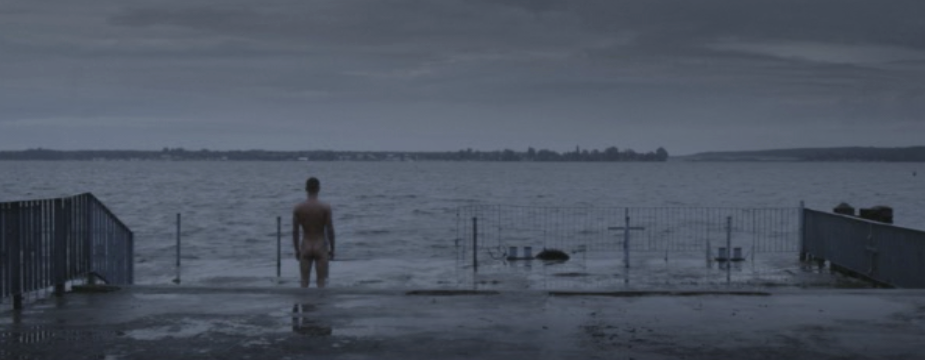
Tomasz Wasilewski's Floating Skyscrapers is set in the Polish capitol of Warsaw and follows the story of Kuba (Mateusz Banasiuk), an aspiring professional swimmer who falls in love with another man to the disapproval of his mother and to the surprise of his girlfriend, who tries to hold on to him and their relationship.

The film premiered at the 2013 Tribeca Film Festival in New York City, and is the first Polish production that primarily deals with the topic of same-sex relationships. As such, many see Floating Skyscrapers as a work of cinema that challenges contemporary Polish social and cultural norms on homosexuality. The film is noted for its largely clean, straight aesthetic, along with its emphasis on the starker urban landscapes of Warsaw to convey Poland's strict social conventions, which its storyline then attempts to break through and move beyond.

As praiseworthy as the film's convention-shattering intentions are, I must admit I find it to be uncompelling in terms of its largely non-existent character development, flat storyline, meandering pacing, and predictable conventional tragic end.

In short, not only does the title of Jack Page's review of Floating Skyscrapers pretty much sum it up for me – “Diving Right In . . . But Not Making a Splash” – but so does Page's central critique: “Floating Skyscrapers shares an all too safe and familiar depiction of repressed homosexuality as the majority of popular gay and lesbian European cinema. The film offers no new perspective, nor a different variation on the narrative or visual style of similar recent independent feature films. Devoid of any ideological or political agenda, Wasilewski’s vision is considerably tame, but accomplished, yet lacking in any real progression and importance in regards to its increasingly prominent subject matter.”

Of course, others think otherwise; and so I close with Clive Botting's relatively positive review of Floating Skyscrapers.

Kuba (Mateusz Banasiuk), an aspiring champion swimmer and romantic character has a normal uneventful life living at home with his mother, Ewa (Katarzyna Herman) and his girlfriend Sylwia (Marta Nieradkiewicz). Invited to an art gallery opening, Kuba meets Michal (Bartosz Gelner) and their magnetic attraction is immediate.

Kuba’s world changes – he drops his training programme to the consternation of this mother and the film follows his evolving sexuality and its effect on Sylwia and his family in an ever increasing claustrophobic environment. Whilst Kuba dreams of a life with Michal, the latter takes on the task of convincing his concerned mother and distant father that his lifestyle isn’t just a passing fancy.

Floating Skyscrapers is an accomplished second feature and is a touching story of denial and desire that addresses themes of loneliness, love that’s different and its social acceptance in contemporary Polish society.

Tomasz Wasilewski says: “It is about love, or the lack of it, and about the consequences of seeking out its substitutes. It is about wasted opportunities and lost dreams – about the contemporary world and its pitfalls.”

There are sound performances and the film has visual style but the sparse dialogue and clinical approach offers a style magazine presentation of two middle class Polish families with little attempt to elicit audience interest in the characters – we’re looking at a series of photo shots whereas we want to know what makes Kuba tick. What makes him a romantic character, destroying all those who love him? And what of the power and influence of the conservative Catholic Church in contemporary Polish society?

The essence is the family in the context of a gay relationship and its powerful influence on Kuba and Michal. Explore the characters in depth and we may then begin to see the complexities that are the background to this relationship.

– Clive Botting
“Floating Skyscrapers: Gay Love in Contemporary Poland”
The Huffington Post
February 12, 2013


Related Off-site Link:
Poland’s Anti-LGBTQ Attitudes and Arrests Spark Mass Protests In Warsaw – Vanessa Gera (The Huffington Post, August 10, 2020).

See also the previous Wild Reed posts:
• Thoughts on Queer Cinema
• Recovering the Queer Artistic Heritage
• Chris Mason Johnson's Test: A Film that “Illuminates Why Queer Cinema Still Matters”
• John Schlesinger's Sunday Bloody Sunday: “A Genuinely Radical Film”
• Stephen A. Russell on Moonlight, “the Most Beautiful Gift to Cinema in Countless Years”
• Vulnerability Is Power: Moonlight Actor André Holland on Masculinity and Homosexuality in the Black Community
• On Brokeback Mountain: Remembering Queer Lives and Loves Never Fully Realized
• Liberating Paris: Liberation in Jennie Livingston's Paris Is Burning
• Five Takes on Five Dances
• “This Light Breeze That Loves Me”


Wednesday, August 05, 2020

Vulnerability Is Power


André Holland on masculinity and
homosexuality in the Black community.


Barry Jenkins' 2016 film Moonlight remains an all-time favorite for me, and I continue to follow and admire the career of one of the film's actors, André Holland.

Recently I came across the following video by The Root in which André thoughtfully and insightfully talks about masculinity and homosexuality in the Black community and about what drew him to the role of the adult Kevin in Moonlight.

At one point André observes: “There’s so many shades to masculinity, and the characters in this movie show us that vulnerability is power.”


See also the previous Wild Reed posts:
• Stephen A. Russell on Moonlight, “the Most Beautiful Gift to Cinema in Countless Years”
• A Fresh Take on Masculinity
• Reclaiming the Power of Male Touch
• Love as Exploring Vulnerability

Related Off-site Links:
The Knick's André Holland: “I Don't Want to Be 'the Black Friend'” – Sarah Hughes (The Guardian, October 13, 2015).
Moonlight’s André Holland Talks About His Unforgettable Performance – Bené Viera (GQ, October 26, 2016).
Here's What Critics Are Saying About Hulu's André Holland-Led Stephen King Series, Castle Rock – Monique Jones (Shadow and Act, July 25, 2018).
Actor André Holland Explores: “Where I Fit, How I Fit, If I Fit” – Fresh Air (August 22, 2018).
The Eddy’s André Holland: “I Still Have a Lot to Learn, and a Lot to Offer” – Maxine Wally (W Magazine, May 4, 2020).
André Holland Says The Eddy Isn’t a Musical, but Tells a New Narrative Through Music – Kristen Lopez (IndieWire, May 6, 2020)
We Need to Give André Holland His Flowers – Ineye Komonibo (Refinery 29, May 8, 2020).


Tuesday, June 26, 2018

Liberating Paris

Exploring the meaning of liberation in
Jennie Livingston's 1990 documentary Paris Is Burning


The Wild Reed's 2018 Queer Appreciation series continues with a piece I wrote in 2002 when studying film and theology at United Theological Seminary of the Twin Cities. This paper focuses on the 1990 documentary film Paris Is Burning which, as Caitlin Breedlove recently noted, "[gave] the world its first peek into the exclusive 'ball' culture and [gave] drag queens, trans men and women, femmes, and gay individuals a spotlight unlike any they’d had before."

Paris Is Burning has been in the (entertainment) news recently with the release of writer and director Ryan Murphy's FX drag ball series Pose. According to Noel Murray of The Verge, the premiere of Pose is "the perfect time to revisit the landmark documentary that captured the scene that started it all." As you'll see, my piece on Paris Is Burning takes a more critical look at the scene it documents.

___________________________________


My interest in writing about Jennie Livingston's documentary film, Paris is Burning, revolves upon five interrelated questions:


• How do the majority of ball participants understand "liberation"?

• How and why is this understanding problematic?

• Does the film lift up a dissenting voice?

• What is a feminist/queer theological understanding of liberation?

• How could such an understanding translate within the ball scene?


For many of those interviewed by Livingston, the drag ball circuit, or scene, offers a sense of belonging and community. Because of their "otherness" in terms of race, gender-identification, and/or sexual orientation, these individuals are marginalized by society. Yet at the balls they feel free to express themselves. As black men, such expression can potentially be of challenge to the status quo: "For black males to take appearing in drag seriously, be they gay or straight, is to oppose a heterosexist representation of black manhood," notes author, feminist, and social activist bell hooks in "Is Paris Burning?", one of the essays in her 1992 book, Black Looks: Race and Representation. "Gender bending and blending on the part of black males has always been a critique of phallocentric masculinity in traditional black experience," says hooks.

Yet hooks also notes that the subversive power of black males in drag can be altered when such images are informed by "a radicalized fictional construction of the feminine that . . . makes the representation of whiteness as crucial to the experience of female impersonation as gender."


Right: Octavia St. Laurent in Paris is Burning (1990).


Evidence of this alteration and its implications abound in Paris Is Burning. "To be real is to look like your straight counterpart, cynically notes Dorian Corey, one of the black participants in the ball scene. Another notes that it is every minority's dream to "live and look and work as the white person." Still another states that if one has "captured the great white way of living and looking" than one is "a marvel." This "great white way" is epitomized for the ball circuit participants by '80s television shows like Dynasty and by white "supermodels." Accordingly, bell is adamant that what viewers are witnessing in Paris Is Burning is "not black men longing to impersonate or even to become like 'real' black women but their obsession with an idealized fetishized vision of femininity that is white."


Above: Pepper LaBeija in Paris Is Burning (1990).


Thus for many of those who participate in the balls, liberation from marginalization and disempowerment is achieved by becoming like a wealthy white female. Theologically, such an outlook implies liberation is about looking beyond one's own intrinsic, God-given worth and seeking to imitate another who, by their external appearance and circumstances, represents that which is "worthy and good." Furthermore, it implies that God gives this worthiness and goodness to some while denying it to others, and that the hallmarks of such worthiness and goodness are outward signs of wealth and power. Finally, it reduces our struggle for liberation to a personal, individual striving for economic betterment.

The achieving to be just like a wealthy white female is also problematic for hooks as she observes that "the longing to be in the position of the ruling-class woman . . . means there is also the desire to act in partnership with the ruling-class white male." Thus the oppressive power structure – the "brutal imperial ruling-class capitalist patriarchal whiteness" – which ensures that those who populate the ball circuit are disempowered and marginalized, remains unchallenged.


Above: Willi Ninja in Paris Is Burning (1990).


Indeed, the power structure is viewed as something to aspire to, as the exclusive club that one must strive to join. There is no (or little) sense of awareness of the systematic injustice and oppression at work, no desire to band collectively in order to expose, undermine, and transform this system into one that ensures that no one suffers marginalization and disempowerment. For hooks, the glow from Paris Is Burning does not come from the flames of a transforming fire but rather from a sacrificial altar to a false god. The film, she notes, portrays "the way in which colonized black people (in this case black gay brothers, some of whom were drag queens) worship at the throne of whiteness, even when such worship demands that we live in perpetual self-hate, steal, lie, go hungry, and even die in its pursuit."

Yet Paris Is Burning does lift up a critical and dissenting voice. In her discussion of the film, hooks notes that the elder black drag queen Dorian Corey (left) tells viewers that "the desire for stardom is an expression of the longing to realize the dream of autonomous stellar individualism." Corey laments that the ball scene is no longer about what you can create but about what you can acquire. He understands the way that consumer capitalism has undermined the subversive power of the drag balls, in much the same way, I would argue, that capitalism has undermined the subversive power of the lesbian, gay, bisexual, transgender, and intersex (LGBTI) movement in general. The end result is that conformity masquerades as liberation.

What, then, might a queer theological understanding of authentic liberation look like? I use the word queer as defined by feminist theologian Mary Hunt, as meaning "all whose sexual identities and practices fall beyond the parameters of 'hetero-patriarchy'." Hunt insists that queer theology with feminist input "signals a new way to bring together people from a broad spectrum of 'sexual outlaw' positions and invite their theological reflections."

Theologically, liberation, says Joyce Ann Mercer, is "the struggle for freedom from oppression as subjugated people become conscious of their situation and work to transform the conditions of their existence." It is important to note that such transformation includes personal and social change. within the Christian sphere, theologians of liberation emphasize "the biblical theme of God's action on behalf of enslaved, poor, and outcast persons as a central paradigm for faith." A key tenet of liberation theology, Mercer reminds us, is God's "preferential option for the poor," which is understood as "a call to solidarity with suffering persons, including those oppressed by unjust power relations structured around gender."

One of the reasons I am drawn to Paris Is Burning and, in particular, to bell hook's critique of it and, by extension, the wider realities of capitalism and patriarchy, is that I see hook's analysis similar to my own of the wider LGBTI community/movement. It was hook's viewing of Paris Is Burning that was instrumental in the articulation of her broader critique. For me, it was a "fashion spread" entitled "Burmese Dreams" in OUT Magazine's April 2000 edition. What made this particular marketing ploy especially repugnant was that OUT Magazine editors not only approved the putting of brown face paint on a Caucasian model but also showed this model holding various tools and implements used in Burma's slave labor camps. These camps, established by Burma's brutal military dictatorship and populated by an estimated six million men, women, and children, serve the interests not only of the corrupt military regime but also of Western corporations which profit from the military's trampling of human, labor, and environmental rights.

In an article I wrote for Lavender Magazine, I lamented that "the selling out to corporate rule is a betrayal of all that makes our journey as LGBTI people and as authentic human beings unique – heightened conscious insight, increased creativity and inclusivity, and greater compassion."

I also responded to this "sell-out" by establishing a network of LGBTI activists called Queers United for Radical Action (QURA). One of QURA's primary aims is to inform its members and the wider LGBTI community on the threats to democracy, human life, and the environment posed by corporate-led globalization, militarism, and environmental degradation. One way that we seek to do this is by establishing working connections with other justice, peace, labor, and environmental organizations within the Twin Cities. This "bridge-building" is itself a "radical action," as it helps facilitate an awareness of the root or source of the problems facing not just sexual minorities, but all who are oppressed by "brutal imperial ruling-class capitalist patriarchal whiteness," in the words of bell hooks. Although QURA is not a "religious" group, within my own life and work I understand the activity of bridge-building as part of God's liberating action in and through people.

How would God's liberating action look in the community depicted in Paris Is Burning? First, the competitive aspect of the balls would be absent. People would come together not to compete but to share, compare, learn, and celebrate. These qualities would be valued for what they are; they would not have to be legitimized by and through competitiveness. Everyone would be considered special and a "winner" by virtue of their unique gifts of self.

Free of competitiveness, there would be a return to creativity – a lifting up of the beauty and giftedness within as opposed to the outward seeking and acquisition of the perceived beauty and gifts of others. Such lifting up would be challenging as it would reach out to and empower others to similarly free themselves from imitating standards and norms set by entities bent on domination, control, and exploitation. Connections would be made with others who have suffered at the hands of this system, stories would be shared, and suffering and hardship utilized as vehicles to self-understanding, social solidarity, and radical action.

Imbued with and motivated by liberation grounded in the sacred dimension of creation, the drag queen ball circuit would serve not primarily as a refuge but as an empowering force for positive transformation – for both individuals and the wider society. Indeed, in time the wider society would become the drag queen ball circuit, just as it would become the home for other groups which had once felt compelled to construct ghetto-like subcultures. Fantasy, within this re-envisioned society would be employed for purposes of exploration, not as means of escape. Furthermore, the ever-expanding self that such fantasy would encourage to emerge would be cherished, respected, and honored; its journeying path would be celebrated and made way for by all.

– Michael Bayly
June 2002


Above: Performers featured in Jennie Livingston's
1990 documentary Paris Is Burning.
(Photo: The Kobal Collection)


NEXT: Stephanie Beatriz on the Truth of Being Bi


See also the previous Wild Reed posts:
• Making the Connections . . . Then and Now
• Reclaiming and Re-Queering Pride
• A Lose/Lose Situation
• Michelangelo Signorile on the Rebellious Purpose of Queer Pride

Related Off-site Links:
The Ballroom Revolution: Behind the Glitter and Glamour Is a Sad and Tortured History – Arkee Escalera (Esquire, May 31, 2018).
The Music and Meaning of Paris Is Burning – Julianne Escobedo Shepherd (NPR News, April 30, 2012).


Saturday, March 24, 2018

Thoughts on Queer Cinema


Is "queer cinema" more than those films
we generally think of as "gay"?

Okay, so here's an interesting question: Have you ever read a review of a film that made it sound way better than you thought it was?

I can give a resounding yes to this question in relation to Armond White's 2014 review of Terence Davies' 1992 film, The Long Day Closes.

At the time he wrote his review, White considered The Long Day Closes "the greatest gay film ever made." He offers some good reasons for this, none of which I find ultimately convincing.

White's contention, however, does raise some interesting and important questions for me: What is the greatest gay film ever made?

Can we speak of a single film in such a way?

What do we even mean when we refer to a film as "gay"?

Is it different from a "queer" film?

I have no clear cut answers to these questions, except perhaps the last two. For me, a "gay film" is a film that focuses on the experiences of lesbian, gay, bisexual, transgender, and/or intersex individuals, families and/or communities.

Some of my favorite films fit this description (4 Moons, God's Own Country, Wild Side, Undertow, and Hamam: The Turkish Bath), but many do not. And yet, though I wouldn't label these other movies I revere as "gay," I do consider them queer because of the themes, issues, and characters they explore and/or the sensibility they exhibit. (Offhand, I offer as examples, Picnic at Hanging Rock, A Passage to India, The Golden Compass, Children of Men, Pan's Labyrinth, and any number of superhero films – from Superman to the X-Men.)


Questioning and subverting “regimes of the normal”

So, what exactly do I mean by making a distinction between gay and queer? Well, I'm come to understand that to be "queer" is to attempt to expand or go beyond (in thought, word or deed) the parameters of gender, race, heterosexuality, patriarchy, and other socially-constructed (or manipulated) concepts. Laurence Coleman, in discussing vocalist Dusty Springfield as a queer icon, says that embracing this understanding of queer “denotes a spectrum not only of identity and practice but also inquiry.” Accordingly, to be queer is to be a questioner and subverter of what Michael Warner has called “regimes of the normal.” And, as I've already noted, not just in matters to do with sexuality and sexual expression, but also in matters of gender, class, and race.

Now, don't get me wrong, my sexuality is a very important aspect of my life, but I'm more than my sexuality. To my mind, "gay" refers to sexuality, whereas "queer" encompasses sexuality and all the other aspects of one's life and experience, aspects that may well have been shaped in profound ways by one's sexuality. For example, my perspectives on religion, spirituality, politics, economics, and issues of racial and social justice have all been greatly influenced and shaped by my experiences as a gay man. For me, the term "queer" acknowledges this reality, this journey; one that has taken me beyond a solely sexuality-based (i.e., "gay") understanding of myself and my place in the world.

Also, my understanding of myself and my journey as a seeker and embodier of the Divine Presence is always evolving, which is another reason why I'm drawn to "queer." For as Annamarie Jagose suggests, “queer is always [a multi-faceted] identity under construction, a site of permanent becoming.”

Actor and singer Alan Cumming shares a similar view when, in a 2009 piece in Rolling Stone, he advocates replacing the word "gay" with "queer" when talking in broad terms about our evolving collective experience.

Cumming expresses concern that the creation of "gay culture," a culture based on identities defined solely by sex and sexuality, has "led gay people to self-ghettoize" and to lose the status quo-challenging creativity and individuality that were once associated with being "different."

"Queer isn't just about same-sex wedding tackle," Cumming writes. "Queer is about sensibility. You don't need to be gay to be queer. Indeed, some of the queerest people I know are straight. . . . I think if more people embraced their queerness, we'd all be the better for it."


"Queer Movie Night"

My interest in both film and the exploration of an expansive meaning of "queer" has led me to recently form with a group of friends a regular gathering that I'm calling "Queer Movie Night." We'll be getting together once or twice a month to watch a gay- and/or queer-themed movie and discuss it in relation to our experiences as individuals who, in numerous ways, don't fit into any number of "regimes of the normal." As we do so, we'll explore and perhaps expand our understanding of what makes a movie "queer."

Our first Queer Movie Night takes place this Sunday, when we'll be gathering to watch local filmmaker Eric Mueller's 1994 film, World and Time Enough. As the series progresses, different group members will choose a film to view and discuss. I'm thinking the series is going to be both fun and insightful.

Now, whether of not The Long Day Closes will be one of the film's we watch, I can't say. It's certainly not one I feel compelled to share, despite its merits which are well highlighted by Armond White in his review. Indeed, with the exception of his "best gay film ever" claim, White's review is a very eloquent and insightful one. So much so that I share it in its entirety below with added images and links. Enjoy!

____________________________


The Long Day Closes Is the
Greatest Gay Film Ever Made


By Armond White
The Advocate
July 23, 2014

“Where’s our Bud?”

“At the movies, of course.”


If asked to name the greatest gay film ever made, I’d say, with no hesitation, The Long Day Closes (1992) written and directed by British auteur Terence Davies. It’s the first film explicitly featuring a gay child – and so it is about the innocent essence of all of us. It is also Davies’ self-portrait of his youth in 1950s Liverpool.

The candor and emotionalism of Davies’ recall makes the movie resonate the most poignant parts of everyone’s gradual growing-up process, but especially that aspect of sexual awareness that comes early in life – though it’s usually confessed only in horny hetero teen movies.

The young Davies character, who his mother and three older siblings call “Bud” (played by 16-year-old Leigh McCormick), is openly infatuated with the movies. (It’s part of that outreach toward show tunes, poetry, dance and fashion familiar to every youth seeking escape from an inverted reality.) Sounds from old films echo throughout The Long Day Closes as influences on Bud’s private emotional life (comedies like The Happiest Days of Your Life convey his hope; musicals like Love Me or Leave Me convey his desire; melodramas like Great Expectations and The Magnificent Ambersons express his tragic sense of doom).


But these resonances are also cultural premonitions – the sound clips, as up to date as the sampling in hip-hop records, express an adult knowing of the larger world. They predict Bud’s future and fit both Davies’ personal recall and the outsider status that classically defines gay identity.

Bud’s sense of difference is memorably conveyed in an early scene when he looks outside his bedroom window and sees a shirtless, dark-curly-haired bricklayer who returns his glance with an inviting wink. The flirtation is devastating. Bud’s shrinking reaction to it is a powerful illustration of that self-conscious moment when a gay person’s first rush of affection makes them realize their uniqueness. The crushing beauty of The Long Day Closes is that it confirms what feels unique is, in fact, universal.


In the years since the American release The Long Day Closes in 1993, no other movie dealing with gayness has come close to that moment of self-recognition. (Only André Téchiné’s 1995 Wild Reeds can match it.) Yet watching The Long Day Closes in this new millennium in Criterion’s new Blu-Ray DVD restoration does not throw one back to dark days of closeted self-loathing. The film is existentially liberating, rich with Davies’ emotional embrace of his family, community, and the experiences that comprise his growing up. The embrace is overwhelming precisely because it does not exclude sorrow, loneliness, homophobia, or racism but includes it all as a realization of an intelligent gay consciousness.

The Long Day Closes is a world away from the P.C. acceptance of troubled gay youth half way out the closet as flaunted in TV’s Glee series, and that gives the movie its special relevance. Davies’s tribute to pop culture and use of pop songs is hard won because it’s personal – the language of private feeling. His “Tammy” sequence, where Bud feels betrayed by his best friend then consoles himself by thinking of Debbie Reynolds’ 1958 Top Ten hit, uses the song as the soundtrack for a montage of his mundane rituals (school, church, the movies). It is one of the magnificent moments in all of cinema.

More than a pop song recital, the “Tammy” sequence portrays that special need and succor that lonely kids take from popular music. It is profoundly moving due to that extraordinary – gay – spiritual confession. Although it is also the farthest thing from camp insouciance, where pop pleasure is used to deny sincerity, it works without condemning the defensiveness of camp, that powerful transformation of the banal into the odd, weird, secret and subversive. Davies’s life story personalizes the deep love of pop culture as a life buoy that makes one laugh, cry and saves one’s life.

It is Bud’s wondering connection to the free, adult world that empowers the film’s childhood perspective. He appreciates his family for its sense of togetherness and sensitive acceptance of his individuality. The moments of Bud’s closeness to his mother, a loving widow with regrets (she sings “If I had my life to live over”), the sister for whom he buys “Evening in Paris” perfume and then sings a song (“A Couple of Swells”), and the brothers whose dating rituals he watches enviously or scrubs their muscular backs, take gay consciousness close to the edge of pathology yet dissolves all complication in unconditional love.


Seen today, The Long Day Closes is a paradigm of how gay artists and audiences can see and understand themselves – and of their connection to the larger world. It is an “art” film, meaning that Davies uses such storytelling conventions as slow-motion duration and an elliptical narrative structure that contradicts familiar, simplistic television and exploitation movies. Several times in the film Bud looks into the camera, connecting with a viewer’s remembered moments of oppression, shame and satisfaction. It is a serious viewing experience, but it is the best viewing experience of gay life. It is beautiful and profound enough to set a high-water level for subsequent films about gay life. All other gay movies can be judged by The Long Day Closes.

– Armond White
"The Long Day Closes Is The Greatest Gay Film Ever Made"
The Advocate
July 23, 2014


See also the previous Wild Reed posts:
• Recovering the Queer Artistic Heritage
• Chris Mason Johnson's Test: A Film that "Illuminates Why Queer Cinema Still Matters"
• John Schlesinger's Sunday Bloody Sunday: "A Genuinely Radical Film"
• Stephen A. Russell on Moonlight, "the Most Beautiful Gift to Cinema in Countless Years"
• On Brokeback Mountain: Remembering Queer Lives and Loves Never Fully Realized
• Dusty Springfield: Queer Icon
• Making the Connections
• Reclaiming and Re-Queering Pride
• A Lose/Lose Situation


Monday, March 13, 2017

Stephen A. Russell on Moonlight, "the Most Beautiful Gift to Cinema in Countless Years"


Many insightful and erudite commentaries have been written on Barry Jenkins' film Moonlight, which won Best Picture last month at the 89th Academy Awards. My favorite of these commentaries is one written by Stephen A. Russell for the Australian broadcasting station, SBS.

"Moonlight’s historic win, says Russell' "deserves to shine bright and should not be eclipsed by the monumental stuff up that saw presenters Warren Beatty and Faye Dunaway handed the already-announced Best Actress card. . . . Hollywood A-listers looked on aghast as the revelation dropped that the already six-statuette heavy La La Land had been erroneously announced as Best Picture over rightful winner Moonlight, but for all the awful awkwardness, the sheer joy of writer/director Barry Jenkins was unmistakable. 'Even in my dreams, this could not be true, but to hell with dreams, I’m done with it, because this is true. Oh my goodness.'”

Following, with added images and links, is more of Stephen A. Russell's beautiful meditation on Moonlight.

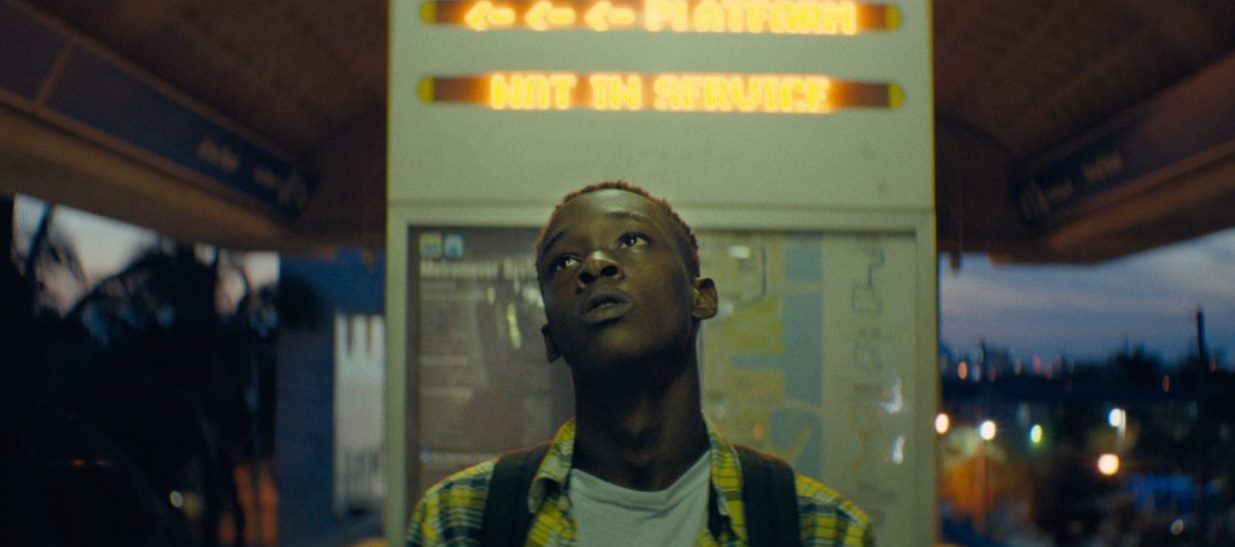
Moonlight is a revelation; the most beautiful gift to cinema in countless years. An incandescent poem wrought in light and sound, it swirls with love at the intersection of race, sexuality and masculinity. Starring Trevante Rhodes, Ashton Sanders and Alex Hibbert, who share the lead role of Chiron at three key moments in this young black man’s life, its strength is in its subtlety, and its willingness to break stereotypes of both black and gay men.

A testament to the fear of opening your heart and receiving love in return, Moonlight brings audiences of any gender or sexuality up to speed with the problems of a world that’s still too slow to embrace a nuanced understanding of black lives and queer sexuality and the trials they face every day. It lays bare the brutality of school bullying - particularly of young queer kids castigated for a love they are yet to fully understand – that tars them with agonising shame.


Mahershala Ali, who plays Juan – a drug dealer who takes the youngest Chiron under his wing – with a staggering grace, rightfully claimed Best Supporting Actor. He is the first Muslim actor to be awarded by the Academy.

[Moonlight's writer/director Barry] Jenkins is not queer, but shares a Liberty City upbringing with playwright Tarell Alvin McCraney, a queer man whose unproduced work for the stage – In Moonlight Black Boys Look Blue - eventually became the film Moonlight. They both grew up with drug-addicted mothers, something McCraney touched on as they accepted together the Adapted Screenplay award at the start of the evening. “Thank god for my mother, who proved to me, through her struggles, and the struggles that Naomie Harris portrayed for you, that we can really be here and be somebody, two boys from Liberty City.”

Acknowledging the immensity of that first of three awards and the power of recognition in the Oscars arena, he added, “This goes out to all those black and brown boy and girls and non-gender conforming who don’t see themselves, we are trying to show you you and us, so thank you, thank you, this is for you.”


Above: Ashton Sanders as the teenage Chiron (right)
and Jharrel Jerome as the teenage Kevin in Moonlight.


Jenkins, speaking first, highlighted the importance of diversity on our screens and made his disdain for the divisive new President clear. “All you people who feel that there’s no mirror for you, that your lives are not reflected, the Academy has your back, the ACLU has your back, we have your back and for the next four years we will not leave you alone, we will not forget you.”


To read Stephen A. Russell's commentary in its entirety, click here.


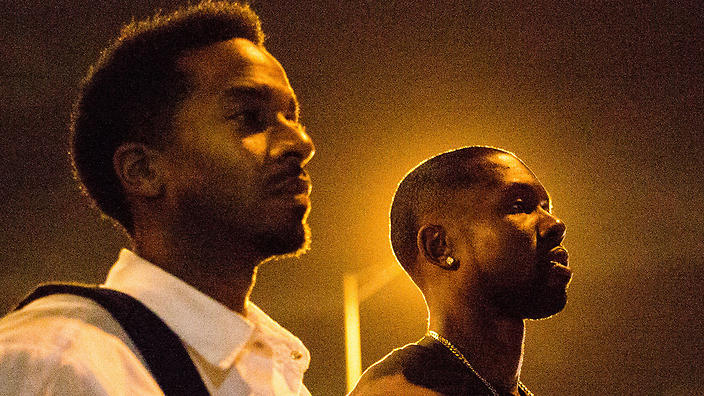
Above: Trevante Rhodes as the adult Chiron (left)
and André Holland as the adult Kevin in Moonlight.


Of course, no film is above informed critique, and recently on Facebook my friend Bill Lindsey offered just such a critique of Moonlight by highlighting its "unrelenting male gaze." Whether gay or straight, says Bill, it remains a distinctly male gaze, one that reduces the two central female characters to "deeply flawed mother figures who tend to be cardboard cutout figures against whose backdrop the *real* action, the male action, of the plot unfolds." Bill also observes that:

The social worker, a female, who tries to assist Chiron as he goes to the dark side, is presented as a scold whose voice he cannot hear, so that we see her lips move as she speaks, but hear no sound. All of this may very accurately depict the male world this film wants us to open our eyes and see in a way we haven't yet seen it — and that objective is laudable. But as Chiron was being hectored and bullied and assaulted in school, how I longed to hear what his female classmates, the African-American females sitting all around him in the classroom, thought about him and what was being done to him.


While appreciating Bill's astute observations, I also appreciate Alan J. McCornick's response to them via Facebook.

Perhaps I'm being overly sensitive and defensive, Bill, because Moonlight is the best movie I've seen in years - one of the best in my lifetime. I share most of your take in [your] very good review, but part company with your final statement about what the movie does not include. I've always felt that's an unfair criticism to make about a work of art. Largely, because what counts in the end is what people actually do, and not what they think about doing. But also because this movie was made by an exceptionally articulate voice, a black gay male voice, and that voice, in my opinion, should be given its day, unencumbered by other messages. What Chiron's female classmates thought is the stuff of another movie, for another day. I'm reminded of that wonderful Alice Walker line, when criticized by black men for not making them more sympathetic in The Color Purple: "You tell your story, and I'll tell mine."


Related Off-site Links:
Forget the Embarrassing Mix-Up. The Real Story is Moonlight’s Historic Win – Aisha Harris (Slate, February 27, 2017).
The Moonlight Best Picture Win is a Vote for Inclusivity in Hollywood – Matthew Jacobs (The Huffington Post, February 27, 2017).
Moonlight Writer Dedicates Film to All POC and Gender-Nonconforming – Zahara Hill (The Huffington Post, February 27, 2017).
Moonlight is First LGBTQ Film to Win Best Picture – Megan Townsend (GLADD, February 26, 2017).
Will Moonlight Finally Change the Way White People See Black Men? – Jeremy Helligar (SBS, March 22, 2017).
Moonlight Undoes Our Expectations – Hilton Als (The New Yorker, October 24, 2016).
Barry Jenkins' Moonlight Makes the Case for Quiet Eloquence at the Toronto International Film Festival – Justin Chang (The Los Angeles Times,September 11, 2016).