Dalloway Day takes place globally on the third Wednesday in June, commemorating the fictional day in mid-June 1923 when the protagonist of Woolf’s novel, Clarissa Dalloway, walks through London to buy flowers for a party she’s hosting that night at her Westminster residence.
Through a stream-of-consciousness style that interweaves Clarissa’s experiences with those of other characters, most notably the shell-shocked veteran Septimus Warren Smith, the novel explores not only Clarissa’s inner life, memories, and reflections on life, love, and death, but the social mores and structure of post-World War One England.
Ahead of Dalloway Day, here’s a fascinating 30-minute documentary by award-winning writer and academic Alexandra Harris that explores how Virginia Woolf's Mrs Dalloway “completely re-imagined what a novel might be.”
[The poem] “Don’t Mention the Children” was written in 2014 by the children’s author, poet and activist Michael Rosen following a Guardian report that the Israeli government had banned a radio advert naming children killed in Gaza.
Gaza is now the deadliest place in the world to be a child. Over 20,000 children have been killed by Israeli forces. The actual number is undoubtedly higher.
These children had names, and favourite subjects in school. They wanted to be teachers, doctors and astronauts when they grew up – the same as children in the UK and across the world.
They were, and still are, someone's everything: their entire universe.
We refuse to allow their suffering to become normalised. We must make their voices heard.
With Save the Children UK and Choose Love, we called on actors, presenters, activists and influencers to use their voices and platforms to ensure these children can never be erased.
The poem was written to expose the silencing of children’s suffering in the face of devastating violence. Since then, the situation for children has only grown worse. Its message remains painfully relevant today.
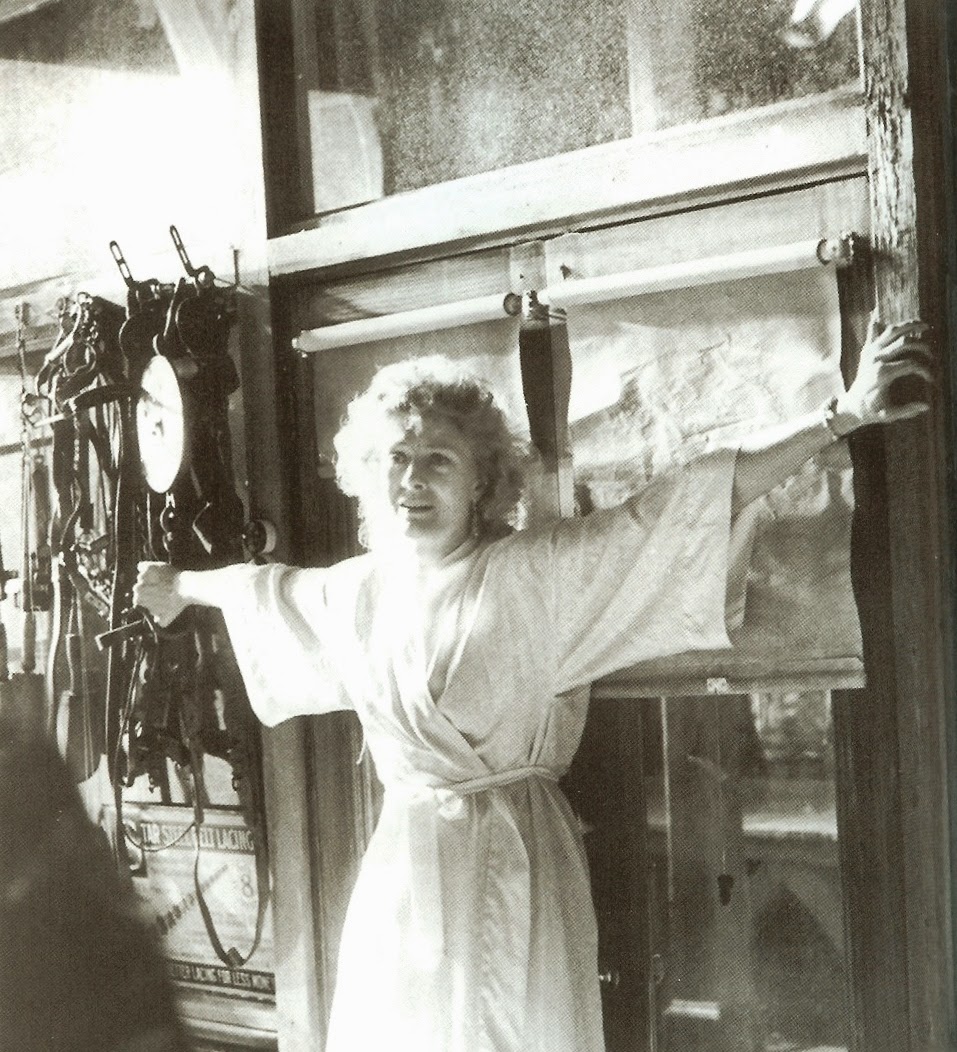
The great actress Vanessa Redgrave (pictured at right earlier this summer at a Gaza protest in the UK) begins and ends the following reading of “Don’t Mention the Children.”
As one YouTube commentator notes: “So happy to see Vanessa Redgrave finally vindicated for her stance decades ago. One speech in 1978 set back a promising career of a brilliant young actress. Now she is being respected and acknowledged by younger generations for her moral courage.”
There are times when, watching Vanessa at her best, it is possible to think that there has never been an actor as extravagantly gifted and expressive as she is, not even Marlon Brando. Like Brando, Redgrave is led by instinct. Her failures, like his, are in Mount Everest areas where most actors wouldn’t even be able to breathe, let alone create. . . . “If there existed something like a dream in which a recipe was concocted to create an ideal actress, that dream would end with an entrance by Vanessa Redgrave,” said Tennessee Williams.
Asked by Charlie Rose in 1995 if she was satisfied as an actress, she said, “Oh, no, because any achievement you may make at any given time, or may know you have made, immediately you arrive at a new state or field. You then perceive whole other fields that you couldn’t perceive until you’d arrived at that particular state.” Redgrave has brought audiences up to fields and vistas that had never before been seen. “I’m lucky,” she said. “When there’s a difficult mountain to climb, I sometimes get chosen to make the climb. Growing up with Shakespeare, as I had to do, you lived with the challenge of what drama can mean as a social experience for people, how important it can be.” Meryl Streep, often called our greatest actress, disagrees with that assessment. She thinks that designation belongs to Redgrave and has referred to Redgrave’s work as “the pinnacle.”
As anyone familiar with this blog would know I'm a great admirer of actress and human rights activist Vanessa Redgrave, who recently was the subject of an insightful interview by The Guardian's Xan Brooks. This interview took place last month at the Cannes Film Festival, where Vanessa's directorial debut, the documentary Sea Sorrow, was shown in the Special Screenings section at the festival.
Brooks' interview confirms my conviction that Vanessa would make a wonderful dinner party guest! Indeed, I'd have her over to one of my gatherings in a heartbeat. For one thing, she always comes across as interesting. thoughtful . . . and a little unpredictable – one minute "like Lewis Carroll’s Queen of Hearts, demanding heads on a plate," the next "contemplative and sad." Undergirding everything about her seems to be a dogged commitment and determination. For as Brooks notes, "her scolding strikes me as being entirely without malice, while those sudden rages can be curiously bracing. If nothing else, they prove that she’s still in the fight, bloodied but unbowed."
And what is Vanessa committed to? I think the answer lies in the quote of hers that I chose for this post's title: "Just being alive, staying human, I think that's infinitely precious."
Amen, sister. Amen.
As well as discussing the refugee crisis and her documentary film that seeks to put a human face to it, Vanessa also talked about the British general election that's taking place tomorrow. Like me, she's hoping that the Labour Party, led by Jeremy Corbyn, is victorious over the current Conservative Party led by Theresa May. Time will tell, I guess.
In the meantime, here, with added images and links, is Xan Brooks' article/interview in its entirety. Enjoy!
______________________________
Vanessa Redgrave: “Democracy Is at Stake.
That’s Why I’m Voting Labour”
By Xan Brooks The Guardian
May 26, 2017
“Still in the fight . . . liable to erupt if she’s prodded”: Vanessa Redgrave photographed last week at Cannes by Mike Marsland for the Observer New Review.
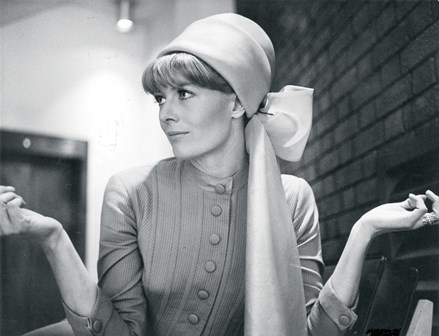
It’s the 70th edition of the Cannes film festival; a birthday to celebrate, an excuse to look back. The list of past Palme d’Or winners scrolls across the screen ahead of the evening premiere. The whole town is studded with pictures from yesteryear. There’s Brigitte Bardot posing on the beach; Godard and Truffaut rallying the masses; Blow Up-era Vanessa Redgrave [left] in a striped mini-dress, the epitome of swinging 60s London. “Oh yeah, very glamorous,” the actor recalls. “I came with Michelangelo Antonioni and Monica Vitti, so I felt I was really in with the cool crowd. Except that we didn’t call it cool in those days. I’m not sure the word even existed back then.”
Fashions shift and time marches on. And Vanessa Redgrave turned 80 this year. She comes picking her way across the hotel garden like a waiter carrying a tray of precious china. Her eyes are bright behind her oval specs; her features as sculpted as those of some beautiful wood statue. I’m tempted to view her as a piece of living Cannes history but suspect the very idea would enrage her. She’s arrived in town like a Fury; she’s on urgent humanitarian business. So she orders an espresso and promptly sets down to work.
Specifically, Redgrave is here to promote the documentary Sea Sorrow, her belated directing debut. Prompted by the 2015 death of three-year-old Alan Kurdi, the film is a shonky but impassioned cri de coeur, spotlighting the plight of the migrants stranded outside Calais and damning the UK government’s efforts to repel them. But this is also, tangentially, Redgrave’s story as well, in that it details her political education in the wake of the Second World War. Sea Sorrow (the title taken from The Tempest) hails the Universal Declaration of Human Rights adopted by the UN General Assembly in 1948 and then lambasts the way its rulings are now being ignored. It suggests that the UK has mislaid its moral compass, drifted away from core principles.
“Not drifted,” she corrects me. “Violated. It has violated these principles and it continues to do so, which I find deeply shameful. The UN signed the Declaration of Human Rights and now we have to employ lawyers to take the government to court to force them to obey the law. Just thinking about that makes my mind go berserk.”
“Vanessa, you see, is here on a mission,” explains Alf Dubs, the Labour peer, who is sitting at the next table. It was Dubs who, aged six, fled Nazi-occupied Prague on the Kindertransport; Dubs, too, who spearheaded an amendment to the Immigration Act 2016, ensuring unaccompanied refugee children safe passage to Britain (a scheme since abandoned by the Home Office). “But it’s fantastic to have Vanessa as the driving force,” he says. “She adds a dimension that we in politics just haven’t got. I’m seeing her as the carrier of the torch.”
I want to talk about Redgrave’s life and career but she is insistent that the film takes precedence; there are vital issues at stake. So we sip our espressos and discuss the rights of the child and the destruction of the “Jungle” camp in Calais and how we live in a dark time that she truly hopes will improve. At one stage in the film, she likens the current era to history plays such as Richard III; the same wanton bloodshed; similarly monstrous main players. I’m guessing she’d cast the likes of Trump and Putin as grotesque Shakespearean villains.
“Well, I’d use the word Shakespearean. Grotesque is your word. I try to be more measured and precise. I mean, I can think of worse epithets for those people you mention, but that’s like Hamlet saying, ‘Who am I to curse?’. You have to go deeper than cursing if you’re making a film.” She pauses to consider. “Yes, some films can curse, but that wasn’t my goal. What I wanted to do was to have people see this film and see these refugees and think ‘that’s one of us’ as opposed to ‘that’s one of them’.”
Out of the blue, she becomes mildly vexed. “Can we talk about the film and not me? You keep trying to bring it back to the personal.”
Oh, come on, I splutter. I’ve barely asked you anything personal at all. In fact, I was just about to come to that . . .
“Can I get you another espresso? To revive your flagging spirits,” Redgrave cackles. “You see what I’m trying to do here. I’m directing you gently away from the subject.”
Too bad, here it comes; there’s too much history to ignore. Redgrave was born into a theatrical dynasty, the daughter of Michael Redgrave and Rachel Kempson. Laurence Olivier announced her birth on stage at the Old Vic and predicted she would go on to be a great actor. Actually, she confesses, her first love was dancing, but she gave that up when she grew too tall. On screen, she has played Mary, Queen of Scots and Anne Boleyn; Guinevere and Mrs Dalloway. Except that her sister – the late Lynn Redgrave – reckoned that she “always thought of herself as Joan of Arc – a touch of the martyr”. Undeniably her best roles contain a kind of agonised intensity. I’m thinking of twisted Sister Jeanne in Ken Russell’s The Devils, or Julia’s doomed anti-fascist crusader. Redgrave comes reeling across the screen like some flayed, tragic thoroughbred.
But her acting career is only half the story – or rather it travels in tandem with her leftwing activism. Back in the early 70s, she threw in her lot with the Workers Revolutionary Party and helped purchase an Edwardian mansion (nicknamed “the Red House”) for use as a Marxist college. Her most notorious moment came during her Oscar acceptance speech for Julia, when she lambasted the actions of “a small bunch of Zionist hoodlums”. Never mind that Redgrave was referring to members of the Jewish Defence League, who had burnt effigies of her in the street. Many assumed she was insulting the whole state of Israel and the resulting uproar had Hollywood running scared.
Four decades on, she remains a polarising figure. Redgrave’s detractors revile her as the archetypal champagne socialist, a rich and privileged actor come to lead the masses along the path of righteousness; tell them how to lead a more worthy life.
Redgrave bridles. She can’t think what I mean. “I haven’t ever told anyone that. Why would you say it? Why go there? All I’m saying in this film is to obey the law. I go to prison if I don’t obey the law. Shouldn’t the UK government obey the law too?”
OK, fair enough. But doesn’t activism sometimes put one at odds with the law? Has she never found herself in violation of laws that she believes are unjust?
“Of course,” she allows. “That’s a legitimate question. But that’s not what we’re talking about. We’re talking about human rights conventions, which are mandatory. And so we are saving lives when we obey the law.”
In the past she has described Jeremy Corbyn in utopian terms, as representing “an English spring”. Today she says she’ll be voting Labour in the June election. “But Jeremy Corbyn is not the issue. I think he’s a loyal party activist. He’s trying to be a loyal leader. But the issue is to go on record against Theresa May and what her government is doing and will continue to do. Democracy is at stake. That’s why I’m voting Labour.”
By this point, I find I’m quite enjoying our joust. Redgrave seems perpetually on a hair trigger, liable to erupt if she’s prodded. But her scolding strikes me as being entirely without malice, while those sudden rages can be curiously bracing. If nothing else, they prove that she’s still in the fight, bloodied but unbowed. Over the past decade she’s lost her younger sister Lynn, her younger brother Corin and – most shockingly – her eldest daughter Natasha, killed while skiing in 2009. For all that, here she is, “Big Van” as John Osborne used to call her, wired on coffee and tearing strips off reporters.
In April 2015 she suffered a heart attack, and it was touch and go for a while. Now she’s quit smoking; hauled herself back from the brink. “I do miss the cigarettes,” she says. “But I’m so glad I haven’t smoked, not even one puff, since I was in hospital. I stopped because I decided that I wanted to live. There was a point in the hospital when I thought that I didn’t, that it was too hard to struggle. Then I decided that no, I had more energy than I thought.”
Life, she explains, has felt more precious since then. She adjusts her position, stares off to the side. A moment ago she was full of imperial fury – like Lewis Carroll’s Queen of Hearts, demanding heads on a plate. Now, all at once, she has turned contemplative and sad.
“Yes,” she says. “You bet I feel it, the preciousness. I mean, I did realise it before, because you know that my daughter was killed in a skiing accident, and so that had already brought it home. And then my sister battled cancer for a long time and she taught me that too, because her life was so precious. So yes, death does remind you that life is both finite and infinitely precious. I mean, it’s one thing to just reel that off. But it’s another to realise that this life is important. I’m talking about our collective lives; the ones we’re all leading. Just being alive, staying human, I think that’s infinitely precious.”
Since we’re talking about life, I figure I can invite her to look back at her own. Any major regrets? Anything she might change? Would she say that hers has been a life lived well? But this is too much to bear; she can’t get over my gumption. Her cackle is almost enough to rattle the coffee cups on the table.
“Oh now, come on,” she explodes. “How can I possibly say? There you go again, trying to bring it back to the personal.” She takes a moment to collect herself. “I don’t think my life has been badly lived – but I don’t think of it that way. And nor should I. I think it would be awful! It would be like I’m speaking at my own funeral, lots of eulogies and stuff. “No!” she says. “No! I’m not prepared to do that, thank you very much.”
Today is the 80th birthday of an actor, activist and all-round inspiring human being whom I've long admired – Vanessa Redgrave.
I've shared in a previous post how and why I came to appreciate and admire Vanessa. In this post I celebrate Vanessa's birthday by sharing (with added images and links) an excerpt from The Guardian's Simon Hattenstone's June 13, 2016 interview of Vanessa in which she talks about ageing, religion, human rights, and the "notorious Oscars speech that stalled her Hollywood career." Enjoy!
It’s always been the eyes with Redgrave. You can see through them into her soul. So blue, so weepy, such longing; she was born to play Chekhov. Which of course, she has done beautifully. Twenty-five years ago, she was a heartbreaking Olga (the spinster teacher who tells her youngest sister, Irina, she would have married “any man, even an old man if he had asked”) in Three Sisters, alongside her real-life younger sister, Lynn, and niece, Jemma.
Redgrave might be most garlanded for her stage work, but she also has six Oscar nominations (Morgan: A Suitable Case for Treatment, Isadora, Mary, Queen of Scots, Julia, The Bostonians, Howards End). When she finally won an Oscar in 1978, for playing the eponymous Nazi resistance fighter in Julia, she gave the most notorious acceptance speech in the Academy’s history, thanking it for refusing “to be intimidated by the threats of a small bunch of Zionist hoodlums”. In the previous year, she had funded a documentary in support of a Palestinian homeland. Effigies of her were burned by the Jewish Defense League, which picketed the Oscars.
Above:As Cleopatra in Tony Richardson’s modern-dress production at the Bankside Globe Playhouse in 1973.(Photograph: Michael Ward/Getty Images)
Right:As Imogen in William Gaskill’s production of Cymbeline, at Stratford in 1962.
Her politics have often attracted more headlines than her acting. She and her brother, Corin, were once leading members of the Workers Revolutionary party. In recent times, she has endured more than her share of tragedy; within the space of 14 months, she lost her oldest daughter, the actor Natasha Richardson (who suffered a traumatic brain injury after a skiing accident at the age of 45), Corin, and in May 2010, [her sister] Lynn (yet another successful Redgrave actor with two Oscar nominations).
. . . Does she still see herself as a revolutionary? “I think every artist is a revolutionary. That’s what Tennessee Williams said, and I think he put it very well.” Why? “The simple answer is you want to help change. Or before you can help change, you want to understand how can change be effected.”
Above:At a social justice rally in 2015. (Photographer unknown)
Left:In the February 15, 1967 issue of Vogue. (Photo: Bert Stern)
You seem such a strange mix of revolutionary and traditionalist, I say.
But she’s not having any of it. “It’s fair for you to say whatever you like, but I’m not going to fall in with it. These labels are so nothing to do with what’s going on today. I think every journalist would do well to drop these outworn, outlived descriptive adjectives. They do not apply to anything, in my view.”
She splutter-hacks again. I ask her if she is OK – she sounds terrible. “I think some dust has caught in my chest.” She smoked all her adult life until the heart attack last year, when she gave up. How is she coping without her cigarettes? “Surprisingly well. I do, now and then, get a withdrawal because I was a big addict.”
Redgrave is dressed in blue top, tracksuit bottoms and blue trainers. She is six foot tall, still an intimidating presence, but there is something frail about her. The heart attack took a lot out of her. Is it true that her lungs are shattered; that she only has 30% capacity? “I’ve no idea,” she says imperiously. “I’ve never said how much of my lungs have been destroyed and I’ve never been told myself, so I don’t know how you know.”
It’s been printed in the newspapers.
“And I’m saying to you, do you believe that?” (The 30% figure is a direct quote from an interview she gave to the London Evening Standard last September, five months after her heart attack.) Did she think she was going to die? “At the time? When I was in hospital I wanted to die,” she says gently. Why? “Because it was just getting too tiring.” Life or being ill?
“Trying to live was getting too tiring. I was with my daughter, and I said, ‘I’m sorry, I just think I’m going to have to give up,’ – knowing she’d be unhappy, of course. And she was wonderful.” How did Joely (yet another successful actor) encourage her to keep living? “By telling me I could. Her saying I could give up released me.”
I have never met somebody who can go from wilfully cantankerous to heartstoppingly tender so quickly; who can make me want to scream with frustration and move me to tears in the same sentence.
“I told her what I thought I had to do . . . just give up. But I had to tell her that because I guess it’s my psychology. I didn’t want to hurt her, but I knew it would hurt her.”
Left:In Tennessee Williams’s Orpheus Descending, directed by Peter Hall, at the Haymarket, London, with Jean-Marc Barr, 1989. (Photograph: Alastair Muir/Rex/Shutterstock)
I know it’s a strange question to ask a Marxist, I say, but do you have faith? She smiles, almost beatifically. “Yes, certainly I do. And the reason why I do is because I don’t consider science and religion two fixed opposites. Human beings have felt the need to explain things that they couldn’t explain, and acknowledge the existence of things they can’t explain but want to.” She is talking so slowly, so deliberately, she could be setting a dictation test.
Above:Vanessa Redgrave and her daughters Joely and Natasha Richardson on the set of Camelot (1967).
So religion and Marxism is another contradiction she is happy to embrace? “Yes, because if you’re not happy to embrace contradictions you’re not going to get very far in understanding anything.”
How does her faith express itself? “By reading, by inquiry, people I have discussions with, sometimes I go to church. It’s a Catholic church, because of the people I know.”
She says she has always had faith; always liked to go to church. As she talks, I can’t help wondering whether she wanted to die because she hoped to be reunited with loved ones that she has lost.
Before the question is out, she cuts me off. “No, don’t go there. Not at all. I just meant physically I felt I couldn’t go on trying to live. Not that life is too painful for me. Not at all. No.”
Right:As Cleopatra in Moving Theatre’s production – which she directed – of Antony and Cleopatra at the Riverside Studios, London, in 1995. (Photograph: Robbie Jack - Corbis/Corbis via Getty Images)
Does working make things easier? “Easier than what?” she snaps. Well, I say, if you have too much time to think, you can drown in grief. “Ah, well, now it seems to me that you are talking about someone who’s a workaholic, or unable to stop being an actor.”
I didn’t mean that, I say, but it’s interesting you take objection to it. “Well, I do. It’s very unlife-enhancing. Very.” But yes, she says, there have been times she has been addicted to work, just as she was to cigarettes.
“It can happen for any number of reasons,” she says. “One is called paying the rent. Or the mortgage.”
You become a slave to rent?
“No, you’re putting words into my mouth.”
And we’re off again. “I’m not putting words in your mouth,” I say.” ‘I’m asking a question.”
“You just have put words into my mouth.”
“No I haven’t. They are my words, my question. You’re very difficult to interview, aren’t you?”
“I don’t think so. I think I’m illuminating. Hahahaha!” She rocks her head back, laughing.
And she really is heaving with laughter so much that I’m now every bit as worried for this dyspeptic national treasure as I was when she was having her coughing fit. We seem to have reached a new understanding. The war is over.
Left:In The Year of Magical Thinking by Joan Didion, based on her memoir, directed by David Hare at the Booth theater, New York, in 2007. (Photograph: Brigitte Lacombe)
I’ve been watching a load of Redgrave films back to back. She started off as a sexy young thing, a symbol of the swinging 60s (in films such as Antonioni’s Blow Up and Morgan: A Suitable Case For Treatment) and gradually moved into ever more miserable territory. So often she seems to die for her politics (Julia) or be punished for her sins (Atonement and Ken Russell’s The Devils) or just be generally angst-ridden (Howards End and The Bostonians). Rarely do we see Redgrave laugh in cinema – and she’s got a lovely laugh.
You have a reputation for being serious, I say. “Well, I am a very serious person.” Has she ever felt she was too serious? “No! And I don’t care how many people in the press have said that. And there have been times when I couldn’t and didn’t laugh, but I think I’ve grown a bit stronger now.”
Has she always wanted her work to have a political purpose? “Not a political purpose. Everybody always jumps to that.” What does she mean? “Well I’ve just noticed, Simon, that people jump to political. Perhaps it’s because they’re talking to me. They know I have been very political. I am also and have been for a long time very not political. It doesn’t mean I don’t have any politics though.”
For a long time, Redgrave has said she is interested in human rights, not politics – and she does have a distinguished record as a human rights campaigner. But I’m not sure that I understand the distinction. She explains, with a devastating simplicity.
“Politics is about divisions. Wherever you come in on the subject there are divisions.” Does she regret the divisions it has caused in her life? “I can’t regret. I can only be thankful for the contribution that it made to my life.”
Is politics a negative word for her now? “It’s not a negative word, it’s negative. Period.”
Human rights, she says, have always been at the heart of her life – politics just sidetracked her. She talks of Hitler’s genocide, and how Chamberlain refused visas for thousands of Jewish refugees right until the end of 1938. “I know this history like it’s my family history, though it’s not, really. But it has obsessed me, because I was a child of the Second World War and I wanted to know if what happened could happen again, how could we stop them.”
How did she feel when she was labelled anti-semitic following The Palestinian? “That was absurd, calling me anti-semitic. Everybody has a right to think whatever they want about anybody, but since I so wasn’t and never have been, what can you do? You think, ‘OK time will pass on that one’.”
But it didn’t. In fact, it damaged her movie career just when she was set to be one of the great Hollywood stars. “Yes,” says Redgrave today, “but that’s not really important. What’s important is what’s crying out in our world for justice – the Israel-Palestine question.”
Looking back, does she wish she had been more careful with her words – that she had not said: “Zionist hoodlums”? “Oh no.” But then she stops and starts again. “Well, I mean I wish I’d written myself a better speech, but that’s not the point, either.” In the end, it comes down to one thing, she says – respect for human rights.
“I am practically at the very end of my life, so it’s a good thing I’m still worried and that I’ve not fallen back into my armchair where the old blues will get me. I’ve still got to do something to help, however tiny it is. I always think of the old Hebrew saying, which is translated roughly into: ‘He who saves one life saves the world’, because it’s pretty ghastly to think of all the people we’re not saving.”
Left:As Queen Margaret with Ralph Fiennes as Richard in Richard III at the Almeida, London, directed by Rupert Goold, in June 2016. "What a voice: low, assured, level. And utterly surprising," wrote Susannah Clapp in The Observer. "She is delivering curses that are usually roared and spat out. Redgrave drops them with deliberation as if she were merely describing the truth." (Photograph: Tristram Kenton for The Guardian)
She has to get back to rehearsals. It has been little more than an hour, but it feels as if we’ve been through a lot together. A lifetime. And that we’ve reached an understanding, of sorts. “I wasn’t looking forward to it, but thank you,” she says. “I don’t like giving interviews when I’m preparing something.”
“Oh, come off it,” I say. “You don’t like giving them, full stop.”
She smiles. “Well, I’m always hopeful, or I used to be always hopeful, that it turned out the journalist was somebody I respected.”
I tell her I’m glad she didn’t give up on life. “Thank you.” She smiles a lovely, warm smile. “Gosh, that’s really sweet of you.”
As she walks off, I ask if she lives in England all the time or part of the year in Italy. She has one last snap for old time’s sake. “In England. But I go to spend time with my husband in Italy, who you didn’t ask me about.”
I apologise, and ask her to tell me about her non-legally-binding marriage to Nero. But she’s halfway out of the door. “I won’t. Thank you, Simon, goodbye.” As she leaves, I shout after her: “Vanessa Redgrave, who is the love of your life?”
With her back to me, she shouts out: “One of the loves of my life is Franco Nero.” And the others? “My children, my relatives, my co-mates who I’m working with. Thank you very much, Simon. Goodbye. Hahaha!”
And now the formidable, forbidding Vanessa Redgrave is laughing like a schoolgirl. “That is the weirdest end to an interview I’ve ever had. Hahahahha!” And she shuts the door, and disappears.
To read Simon Hattenstone's interview with Vanessa Redgrave in its entirety, click here.
Above:Vanessa, photographed by Vicki Archer
– New York, 2009.
Following is what Saragossi and Free say about the latter, under the headline "Vanessa Redgrave: Speaking Out."
“It’s a kinky part of my nature – to meddle.” Like a British Jane Fonda, Vanessa Redgrave came to prominence in the sixties as a beautiful, talented actress, had a famous actor-father, has fought vociferously and passionately for many controversial causes, and has maintained a highly respected career as she crossed from doe-eyed beauty to serious roles.
As at home on the stage as on screen, Redgrave has eschewed almost all trappings of movie stardom, and has resolutely stuck to her own creative path, choosing her roles with increasing deliberation. She often stars in adaptations of stage plays, and has been careful to choose roles that, whilst not reflecting specific left-wing political views, have certainly been selected for their leanings. It's rare to find an actress who will put her beliefs on the line at the expense of her standing in the industry, but Ms. Redgrave has never shied from controversy, be it having full membership of the Workers Revolution Party, lecturing on Marxism, getting jailed at an anti-nuclear demonstration, or passionately supporting the Palestinian cause.
Having been the darling of the sixties stage and screen, and enjoying a personal and professional relationship with director Tony Richardson, she embarked on a stormy relationship with actor Franco Nero, and then one-time Bond Timothy Dalton. As her political activism became more pronounced, so her film work became less prolific. The films that Redgrave has made, however, are as impassioned as she is. Isadora (1968), The Devils (1971), A Quiet Place In The Country (1971) and Julia (1977) all reflect the burning political and sexual activism that have, and still do, run through this uncompromising actress.
Slipping easily in and out of the mainstream, Redgrave remains a challenging figure in the arts. "I've opened my mouth on a lot of subjects,”" she once said. "I thought that the more prestige you get, you have the power to do what you like. It's not true. I am misrepresented very often, but so is everybody with something to say."
– Steve Saragossi and Erin Free Excerpted from "Cinema’s Rebel Femmes" Film Ink
March 8, 2016
Above: Vanessa Redgrave, visiting a refugee centre in Athens, Greece – January 5, 2016. At the media conference that followed her visit to the Elaionas refugee camp, the 78-year-old actress urged the world to help debt-stricken Greece to provide shelter to hundreds of thousands of refugees who are in search of a better life in Europe and the west.
"Greece can't solve this problem and yet Greece has given us the most important lesson of all, the lesson of humanity", she said, thanking personally "all those helping the refugees from all over the world."
My friend Rick recently saw the film Foxcatcher and had this to say about it:
Sad, dark, beautiful. The actors are excellent, especially Channing Tatum who is heart-breaking. And Vanessa Redgrave comes in for two scenes and takes over the screen.
I'm actually considering seeing the film just for those two scenes with Vanessa! This is because I've long admired this accomplished and beautiful actress, though, in all honesty, I couldn't tell you exactly when my interest and admiration began. I think it was when I was in my early 30s, in the mid-late 1990s. A key moment was definitely in December 1999 when my paternal grandmother, Nanna Smith, asked me to pick out some items to include as part of her Christmas gift to me. Along with a nice shirt, I included Vanessa's 1991 autobiography which, if I recall correctly, I found in a bookstore in Tamworth, a rural city close to my hometown of Gunnedah. After reading Vanessa's autobiography I started going out of my way to not only find and watch her films on DVD, but to also learn more about her achievements in theatre and film, her passion for social justice, and the price she's paid over the years for her outspokenness on issues of human rights.
Above: Vanessa in 1978, accepting her Academy Award for Best Supporting Actress for her role in the film Julia, about a woman murdered by the Nazi regime in the years prior to World War II for her anti-Fascist activism. During the awards ceremony members of the far-right Jewish Defense League picketed the ceremony and burned effigies of Redgrave to protest her support of the Palestinian cause. (The year before she had financed and produced the TV documentary The Palestinian.) During her acceptance speech, Vanessa thanked the Academy for their refusal to be "intimidated by the threats of a small bunch of Zionist hoodlums whose behaviour is an insult to the stature of Jews all over the world and their great and heroic record of struggle against fascism and oppression." Her remarks drew both cheers and boos from the audience.
Years later, in around 2007, I took it upon myself to totally overhaul the Wikipediaentry on Vanessa, as I discovered it to be quite inadequate. I'm happy to say that the bulk of what I researched and wrote remains on the site, although others have added valuable information, especially in relation to her theatre work, which I wasn't as knowledgeable about as I was her film career and political activism.
This past summer I read Dan Callahan's Vanessa: The Life of Vanessa Redgrave. It's Callahan's book that provides the quote by actor/director Simon Callow that's in this post's title. It's a quote that refers to Jungian psychology, a way of exploring and speaking about the depth dimension of human life that honors the power of (and thus the need for) myth, ritual and a spiritual life. Carl Jung considered "individuation," which was his term for a process of integrating opposites, and thus a journey of transformation, as essential for a person to become whole.
Jungian-influenced author Thomas Moore suggests that whenever imagination achieves unusual depth and fullness, we glimpse the sacred. Through her art, her performances on stage and screen, Vanessa Redgrave consistently moves us to see and imagine with exceptional range and depth. Whether we acknowledge it or not, Moore says, any source of imagination that approaches this richness and depth helps create a religious sensibility. "When they expose the deep images and themes that course through human life, so called secular literature and art serve the religious impulse." (Moore, Care of the Soul, p. 290)
At one point Callahan contrasts Vanessa's "Jungian kind" of acting to her political activism:
In her art, Redgrave is the most empathetic and nuanced of actresses. In most of her adult life as a political ideologue, she was usually the opposite of that, an absolutist who saw only what she wanted to see.
At some point in her life, however, Vanessa, evolved beyond this absolutism. At least that's my sense. And I think a key factor that inspired her to embark on such a journey may well have been her portrayal of transgender doctor and tennis pro Renée Richards in the 1986 television film Second Serve. It was, according to Callahan, "the most challenging role of her career."
In this part, Redgrave would have to play many scenes as a biological man, and she would have to suggest all the various stages of Richard's development both before and after he had his operation to become a female.
Reading Richard's memoir, Redgrave had been taken aback by her own prejudices regarding what she thought of as normal or healthy, and she worked hard to come to a deeper and more nuanced understanding of gender. She threw herself into preparing for the part, cutting off her hair and shaving it at the forehead into a widow's peak. She met with many transsexuals to discuss their lives, but Redgrave didn't meet Richards herself until after the shoot was finished. She latched onto an accurate idea of her as a kind of radical romantic, and this idea gave her the psychological clarity she needed in a role filled with potential traps and unclear byways.
It's not explored in Callahan's work, or discussed in Vanessa's autobiography, but I have to wonder if her commitment to challenge her own prejudices and develop a "deeper and more nuanced understanding of gender" didn't somehow translate into Vanessa's political life. After all, it was around the same time she made Second Serve that she began moving away from overt and strident political activism with organizations like the Revolutionary Workers' Party to human rights work with groups like UNICEF, which are less ideologically obsessed.
She's still very politically and socially aware, of course; still labeled a "leftie" . . . and still outspoken – all of which I admire and find inspiring. For instance (and this is the type of information I made sure to include when I revamped the Wikipedia entry on Vanessa), during a June 2005 interview on Larry King Live, she was challenged on her criticism of the so-called "War on Terror" and on her political views. In response she questioned whether there can be true democracy if the political leadership of the United States and Britain does not "uphold the values for which my father's generation fought the Nazis, [and] millions of people gave their lives against the Soviet Union's regime. [Such sacrifice was made] because of democracy and what democracy meant: no torture, no camps, no detention forever or without trial. . . . [Such things] are not just alleged [against the governments of the U.S. and Britain], they have actually been written about by the FBI. I don't think it's being 'far left'. . . to uphold the rule of law."
Neither do I, Vanessa. Neither do I.
Vanessa is part of the renowned Redgrave acting family (she dislikes the term 'dynasty'). Pictured above, from left,Vanessa, her sister Lynn (1943-2010), and their parents Michael Redgrave (1908-1985) and Rachel Kempson (1910-2003). Absent from this picture is Vanessa's brother Corin (1939-2010). This photo was taken in 1960, on the occasion of Michael and Rachel's silver wedding anniversary. Michael's parents, Roy Redgrave (1873-1922) and Margaret Scudamore (1884-1958), were also actors. Two of Vanessa Redgrave's children also entered the acting profession – Natasha Richardson (1963-2009) and Joely Richardson (born 1965). Vanessa's son Carlo (born 1969) by actor Franco Nero, is a screen writer and film director.
Above: Vanessa and Franco Nero with (from left) Natasha, Carlo and Joely – London, 1970. The father of Vanessa's two daughters is English theatre and film director and producer Tony Richardson (1928-1991).
Above: A lovely portrait of Vanessa Redgrave and Franco Nero from the late 1960s. Franco's romantic involvement with Vanessa began in 1967 when they met on the set of Camelot. In 1969, they had a son, Carlo Gabriel Redgrave Sparanero (known professionally as Carlo Gabriel Nero), a screenwriter and director. After separating for many years, during which they both had relationships with other people, Vanessa and Franco reunited and married on December 31, 2006. Four years later they appeared together in the film Letters to Juliet. Carlo Nero directed his mother in the cinematic adaptation of Wallace Shawn's play The Fever (2004). Franco Nero walked his future step-daughter Natasha Richardson down the aisle when she married actor Liam Neeson in 1994. Her father, Tony Richardson, had died in 1991.
Above: A still from the 2010 romantic drama Letters to Juliet, featuring Vanessa Redgrave and Franco Nero as two lovers reunited after many years apart.
For a lovely interview with Vanessa and Franco conducted just after the filming of Letters to Juliet, click here.
Keeping up with [Redgrave's] film and TV performances has always been a challenge. Her early career is strewn with hard-to-see TV episodes, shorts, and oddities, and though her choice of material is generally consistent, where and how she worked and for whom can seem quite nomadic and peculiar. Past 1990 or so, her work accelerated and became even more random and wayward. The perilous excitement of Redgrave's acting career is that you never know where she will be next or how she will react to her opportunities. Through impatience or love of risk or sheer perversity, she might utterly fail in a major and worthy role, yet in the most unrewarding small part she sometimes boldly clarifies all kinds of conflicting ideas all at once and lifts you out of your seat with her creative reach.
Her instinct is always to pick projects that might be of some socially conscious value, something that might improve us. She once said, in all seriousness, "I choose my roles carefully, so that when my career is finished I will have covered all our recent history of oppression." All of it! And she has certainly covered the waterfront in her work when it comes to oppressed people. Such a statement is more than a little comic, of course, but it is also moving. What other performer would say something like that in all seriousness? And what other performer could lighten such a heavy load of persecution and suffering on screen with spontaneous moments of naughty glee and gurgling laughter, with sudden shafts of light and gulps of air in the darkened places she has led us into?
. . . There are times when, watching Vanessa at her best, it is possible to think that there has never been an actor as extravagantly gifted and expressive as she is, not even Marlon Brando. Like Brando, Redgrave is led by instinct. Her failures, like his, are in Mount Everest areas where most actors wouldn't even be able to breathe, let alone create. His instincts led him to renounce his profession for political activism in favor of the underdog and eventually led to self-indulgence and silence. Hers have led her to highly questionable political activity while she continued to practice her art at the highest possible level of skill and daring. "If there existed something like a dream in which a recipe was concocted to create an ideal actress, that dream would end with an entrance by Vanessa Redgrave," said Tennessee Williams.
Asked by Charlie Rose in 1995 if she was satisfied as an actress, she said, "Oh, no, because any achievement you may make at any given time, or may know you have made, immediately you arrive at a new state or field. You then perceive whole other fields that you couldn't perceive until you'd arrived at that particular state." Redgrave has brought audiences up to fields and vistas that had never before been see, "I'm lucky," she said. "When there's a difficult mountain to climb, I sometimes get chosen to make the climb. Growing up with Shakespeare, as I had to do, you lived with the challenge of what drama can mean as a social experience for people, how important it can be." Meryl Streep, often called our greatest actress, disagrees with that assessment. She thinks that designation belongs to Redgrave and has referred to Redgrave's work as "the pinnacle."
. . . As a young woman, Redgrave said, "Perhaps at the end of my life people will say. 'That old girl certainly tried doing a bloody hell of a lot, didn't she?'" Her repertoire in the theater has been wide-ranging and always unexpected. She might focus on a major playwright, but not on the play you might expect of her. A natural for the perverse Hedda Gabler, she never played that role but made Ibsen's lesser-known The Lady from the Sea a trademark part and performance. A perfect Alma for Summer and Smoke, she instead latched on to one of Tennessee Williams' most difficult plays, Orpheus Descending, and somehow pulled it up to her level and triumphed in it in London and on Broadway.
She's covered most of Chekhov, done Greek tragedy, Brecht, Shaw, Wilde, and Noël Coward, and hurled herself at Shakespeare. She defined his Rosalind for all time, took on his shrew Katherine twice, made one unhappy stab at Lady Macbeth, and tried three times in all to be his Cleopatra, but she was never Ophelia, only briefly Viola, and she was too tall, she thought, for Juliet. Some felt she was phenomenal as Mary Tyrone on Broadway in Eugene O'Neill's Long Day's Journey Into Night. Others felt she walked through the part, as if O'Neill's Irish pessimism was too much for her own naturally hopeful nature. Redgrave will do battle, but she wants to win. She cannot fully function in a defeatist play, however great it is.
Already one of the most sensitive and empathetic artists, the sorrows of Redgrave's later years often brought her to a visual point of static grandeur and silent, agitated remembrance. The harder and more frightening edges of her politics were sanded away, for the most part, until she spoke for more general human rights as represented by UNICEF.
Redgrave made it to the very top of the mountain of human consciousness creatively, and what she has seen and what she has shown us will continue to be of enormous value. The human cost of this artistic mountaineering is there on her face as an elderly woman, and the personal cost, too, for she reached that height only by risking and daring the fathoms-deep sorrows and nothingness of the ocean floor, too.
Of her perseverance in the face of loss, Redgrave said, "You have a will to live. Even if at the same time it seems very attractive just to give up." Giving up is not a luxury that she has ever allowed herself. That is part of being an Englishwoman of her time, place, and class, and it might be said that it is also part of being a Redgrave, but Vanessa has surpassed all others in her family and in her profession when it comes to sheer stubborn survival and blistering anger at injustice and all-encompassing tenderness for others that does not flag or waver.
She will never go soft, but she will never get too hard. That's the wonder of her work. "You can see the weather on her face," said Eileen Atkins. "You can see every emotion passing across like a cloud." Redgrave has said that when she really clicks with a role, there is not even the smallest gap between herself and the woman she is playing. Her commitment to being that woman is total.
"All great English actresses stand in her shadow, and they know it," says Tony Palmer. "Judi Dench, who I know very well, would say that, I think. There's no envy or jealousy or spite about it, or anything bitchy, and this is a bitchy profession. You don't hear bitchery about Vanessa professionally. You know, people get cross about the Workers Revolutionary Party and all that stuff, but not professionally. When Vanessa is in a play in the West End, you see all the other actors and actresses there just watching her, and learning. And maybe we've forgotten Maggie Smith, but I think even Maggie would go along with what I've just said."
"Vanessa enters right into the mythic and the archetypal, and I think that's what she's very much trying to do as an actor," says Simon Callow. "Many English actors are very rigorous intellectually, and they chart the path of the character, and they often inhabit the thoughts of the character. I think that Vanessa isn't as interested in that. She is more interested in entering into these archetypal states. You could almost say, if you wanted to be quite grand about it, that's she's almost a kind of Jungian actress, whereas most actors are Freudian actors. Above all, Vanessa is an intuitive artist, and she lets her imagination respond in ways other actors do not."
Redgrave is the most warm-blooded of all actresses, outstripping heavyweight competitors like Maggie Smith and Meryl Streep with the depth of her need to communicate with us and shake us up, confront us, and soothe us. . . . [Hers] is the most transparent of faces. It is overwhelming in its Italian sun of joy and consistently fretful and querulous whenever Redgrave feels she needs to do what she considers to be the right thing, even if this means – or especially if this means – that she risks not being liked or even being outright hated. Those blue eyes of hers could still be playful in old age, but they could also be foggy and baleful and wounded. She is committed, martyr-like, to feeling ever-fresh and instructive pain for us while amply suggesting all the escape routes and tactile pleasures that can make the worst of life endurable. At this point in her career, she has nothing left to prove and everything to give. "Now and then of course I do think: 'I'm going to die,'" she said [in 2013]. "It will probably take me by surprise."
Following are some images and commentary on just a few of the many films of Vanessa Redgrave. Enjoy!
Above: An iconic image of Vanessa used in promotional material for Isadora, also known as The Loves of Isadora, a 1968 biographical film that tells the story of celebrated American dancer Isadora Duncan.
Above: Vanessa as the tormented Sister Jeanne of the Angels in Ken Russell's The Devils (1971). Notes Wikipedia:
The Devils faced harsh reaction from national film rating systems due to its disturbingly violent, sexual, and religious content, and originally received an X rating in both Britain and the United States. It was banned in several countries, and eventually heavily edited for release in others. The film has never received a release in its original, uncut form in various countries, and is largely unavailable in the home video market.
For a clip of Vanessa as Sister Jeanne in The Devils, click here.
In her 2005 autobiography, Fonda notes the following about her friend and colleague:
There is a quality about Vanessa that makes me feel as if she resides in a netherworld of mystery that eludes the rest of us mortals. Her voice seems to come from some deep place that knows all suffering and all secrets. Watching her work is like seeing through layers of glass, each layer painted in mythic watercolor images, layer after layer, until it becomes dark – but even then you know you haven't come to the bottom of it . . . The only other time I had experienced this with an actor was with Marlon Brando . . . Like Vanessa, he always seemed to be in another reality, working off some secret, magnetic, inner rhythm.
Left: Vanessa in the 1980 CBS television film, Playing for Time.
Playing For Time was based on acclaimed musician Fania Fénelon's experience as a female prisoner in the Auschwitz concentration camp, where she and a group of classical musicians were spared in return for performing music for their captors.
In light of Redgrave's support for the Palestine Liberation Organization (PLO), the decision to cast her as Fénelon was a source of controversy for many. Even Fénelon (at first) objected to her casting. Vanessa was perplexed by such hostility, stating in her 1991 autobiography her long-held belief that "the struggle against antisemitism and for the self-determination of the Palestinians form a single whole."
Above and right: Vanessa as Lady Torrance in the 1990 American television film, Orpheus Descending.
According to actress and playwright Imogen Stubbs, Vanessa's performance in Haymarket Theatre's 1988-89 run of Orpheus Descending is the best performance she's ever seen. Following is how she glowingly describes Redgrave's acting:
Vanessa acts out of instinct – she is an incredibly risky actress. I don't know if it is strategic or how her heart takes her. . . . She has greatness – charisma, bottle, daring, insanity. It is not even technically controlled. You know when an actor is cheating. But Vanessa has that element of catharsis. She is a great role model. I have worked with her and sometimes her decisions in rehearsals are mystifying: she has eccentric, extraordinary, not-to-be analysed instinct.
"Vanessa Redgrave, as the dying Mrs. Wilcox, casts a spell over the whole movie," wrote Roger Ebert, while Vincent Canby observed in his New York Timesreview:
Miss Redgrave is not on the screen long, but hers is a strong performance as a woman not quite in touch with the quotidian world. She looks grandly haggard, as she is supposed to, while her niece, Jemma Redgrave (daughter of Corin Redgrave), is very comic as her spoiled Wilcox daughter.
Above: With Tom Cruise in Mission: Impossible (1996). When discussing the role of the arms dealer known only as "Max," Cruise and director Brian De Palma thought it would be fun to cast an actor "like Vanessa Redgrave"; they then decided to go with the real thing.
In his Varietyreview of the film, Emanuel Levy writes:
Whatever reservations literary and film critics may have about Marleen Gorris’ screen adaptation of Mrs. Dalloway, arguably Virginia Woolf’s masterpiece, one thing is beyond doubt: Vanessa Redgrave’s towering performance in the title role. Perfectly cast, Redgrave portrays a middle-aged society lady, a “perfect hostess” who, thrown into a crisis, reflects upon her life. A highly romantic, deeply melancholy drama, the film offers psychological and existential insights about the inevitable effects — and price — of life choices.
. . . The piece de resistance is the long, heartbreaking monologue that Redgrave delivers upon learning of the suicide of Septimus, whom she never met but with whom she empathizes. As in Orlando, Woolf put a lot of her own personality into a male character, here in the unstable Septimus. Woolf suggests that Mrs. Dalloway is seeing “the truth” whereas Septimus is seeing “the insane truth.” In the end, it is Mrs. Dalloway’s humanistic vision and reaffirmation of life that dominates and hovers over her doubts.
The versatile, luminously beautiful Redgrave renders the kind of performance that is often described as delicious in theater circles. With her richly musical and resonant voice, she conveys brilliantly Mrs. Dalloway’s changing emotions: from exultation to introspection, from deep confusion and irritation to emphatic reconciliation. Remainder of the ensemble, which includes veterans of the British stage and television, is universally impressive.
For a 15-minute "special feature" on the making of Mrs. Dalloway, click here.
Above: Vanessa's portrayal of Edith, a lesbian mourning the loss of her longtime partner in the HBO series If These Walls Could Talk 2, earned her a Golden Globe for "Best TV Series Supporting Actress" in 2000, as well as earning an Emmy Award for "Outstanding Supporting Actress in a TV Film or Miniseries." This same performance also led to an "Excellence in Media Award" from the Gay & Lesbian Alliance Against Defamation (GLAAD). The award honors "a member of the entertainment community who has made a significant difference in promoting equal rights for lesbian, gay, bisexual and transgender people."
Of Vanessa's part in the film, Dana Stevens writes:
Vanessa Redgrave, working with way sub-Shakespearean material, does invent some brilliant bits of business for Queen Bess—in one scene, alone with her closest adviser, she plonks herself unceremoniously down on the base of the throne, reminding us that even sixteenth-century monarchs must have had their moments of unfiltered intimacy.
In October, Vanessa discussed her latest film with other cast members at the 2014 New York Film Festival. Wrote Eric Eidelstein about Vanessa's contribution in this panel discussion:
A sassy, but modest Redgrave first asserted that she did not "create the presence" of her character, but rather she channeled it. Redgrave plays [the lead character's] icy aristocratic mother, a woman he desperately tries to impress throughout Foxcatcher. Having starred in what seems like thousands of roles, Redgrave spoke about the essential things that draw one to a project – the script, role, producers and director. At one point, though, she called Foxcatcher "a masterpiece." High praise from a film legend.
Finally, I share a excerpt from the film The Fever (2004), a psychological drama produced by HBO Films, directed by Redgrave's son Carlo Gabriel Nero, and based on the 1990 eponymous play by writer/actor Wallace Shawn. A review in The New York Times describes Shawn's play as a, "controversial study of the growing chasm between the first and third world." The same newspaper describes the film adaptation as, "a drama that employs animation and thought-provoking first-person monologues to explore the concept of bourgeois privilege."
I established The Wild Reed in 2006 as a sign of solidarity with all who are dedicated to living lives of integrity – though, in particular, with gay people seeking to be true to both the gift of their sexuality and their Catholic faith. The Wild Reed's original by-line read, “Thoughts and reflections from a progressive, gay, Catholic perspective.” As you can see, it reads differently now. This is because my journey has, in many ways, taken me beyond, or perhaps better still, deeper into the realities that the words “progressive,” “gay,” and “Catholic” seek to describe.
Even though reeds can symbolize frailty, they may also represent the strength found in flexibility. Popular wisdom says that the green reed which bends in the wind is stronger than the mighty oak which breaks in a storm. Tall green reeds are associated with water, fertility, abundance, wealth, and rebirth. The sound of a reed pipe is often considered the voice of a soul pining for God or a lost love.
On September 24, 2012,Michael BaylyofCatholics for Marriage Equality MNwas interviewed by Suzanne Linton of Our World Today about same-sex relationships and why Catholics can vote 'no' on the proposed Minnesota anti-marriage equality amendment.
"I believe your blog to be of utmost importance for all people regardless of their orientation. . . . Thank you for your blog and the care and dedication that you give in bringing the TRUTH to everyone."– William
"Michael, if there is ever a moment in your day or in your life when you feel low and despondent and wonder whether what you are doing is anything worthwhile, think of this: thanks to your writing on the internet, a young man miles away is now willing to embrace life completely and use his talents and passions unashamedly to celebrate God and his creation. Any success I face in the future and any lives I touch would have been made possible thanks to you and your honesty and wisdom."– AB
"Since I discovered your blog I have felt so much more encouraged and inspired knowing that I'm not the only gay guy in the Catholic Church trying to balance my Faith and my sexuality. Continue being a beacon of hope and a guide to the future within our Church!"– Phillip
"Your posts about Catholic issues are always informative and well researched, and I especially appreciate your photography and the personal posts about your own experience. I'm very glad I found your blog and that I've had the chance to get to know you."– Crystal
"Thank you for taking the time to create this fantastic blog. It is so inspiring!"– George
"I cannot claim to be an expert on Catholic blogs, but from what I've seen, The Wild Reed ranks among the very best."– Kevin
"Reading your blog leaves me with the consolation of knowing that the words Catholic, gay and progressive are not mutually exclusive.."– Patrick
"I grieve for the Roman institution’s betrayal of God’s invitation to change. I fear that somewhere in the midst of this denial is a great sin that rests on the shoulders of those who lead and those who passively follow. But knowing that there are voices, voices of the prophets out there gives me hope. Please keep up the good work."– Peter
"I ran across your blog the other day looking for something else. I stopped to look at it and then bookmarked it because you have written some excellent articles that I want to read. I find your writing to be insightful and interesting and I'm looking forward to reading more of it. Keep up the good work. We really, really need sane people with a voice these days."– Jane Gael
"Michael, your site is like water in the desert."– Jayden