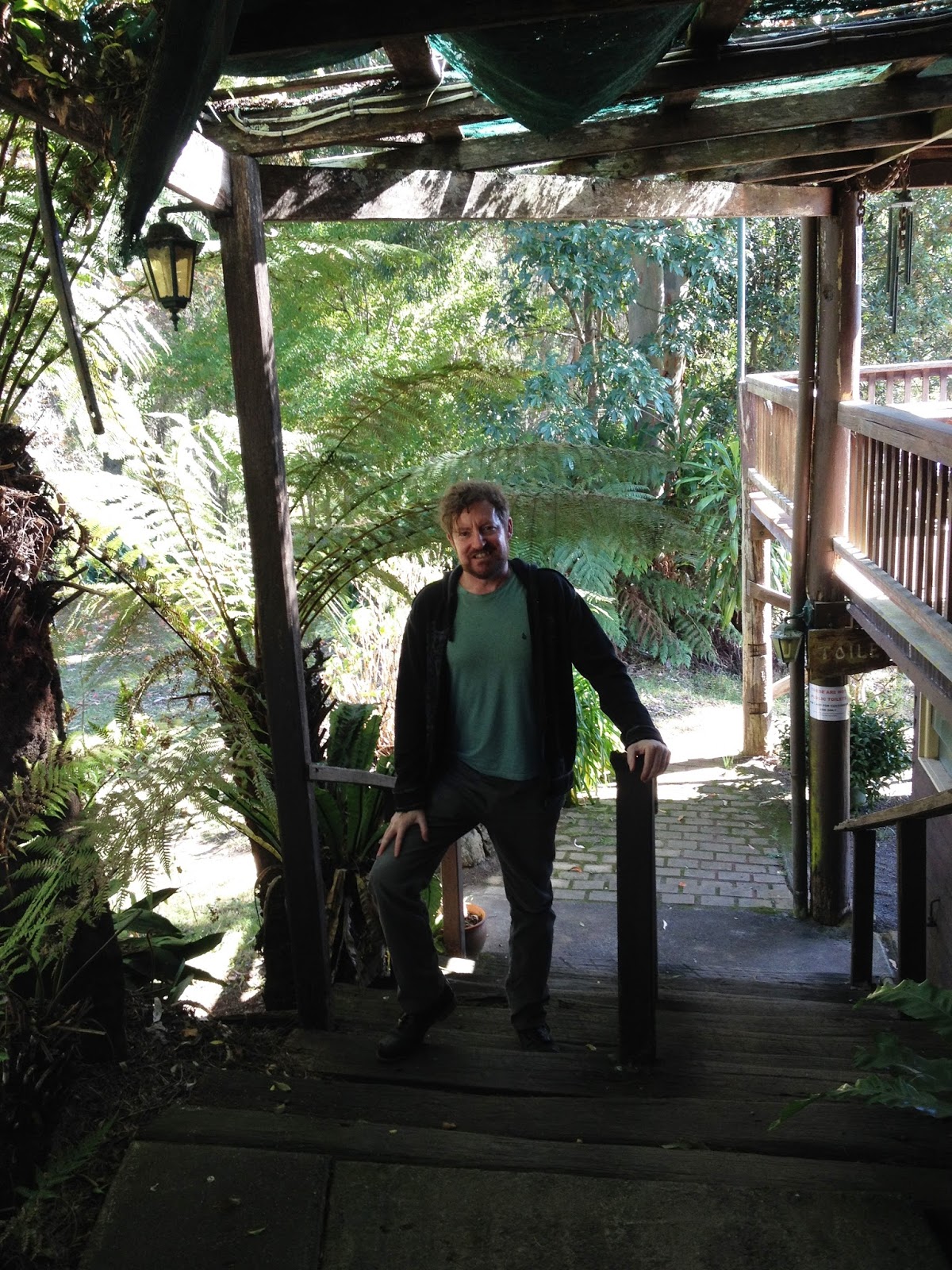
Part 9: Gunnedah

Continuing with my series of posts on my May visit to Australia, I share this evening a few images of my visit with my parents to our hometown of Gunnedah. (To start at the beginning of this series, click here.)
 My parents have lived in Port Macquarie since 2002, and the drive from this town on the Mid North Coast of New South Wales inland to the rural town of Gunnedah takes about four-and-a-half hours.
In traveling across the mountains from the coast to the New England Tablelands the towns and villages one passes through are Wauchope, Walcha, Bendemeer, and Moonbi, and the city of Tamworth.
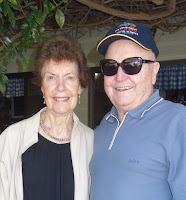 Above right and left: My parents, Gordon and Margaret Bayly, and I at Gingers Creek, a rest stop and "bush resort" in the mountains between Wauchope and Walcha.
For many years logging was a dominant activity in the area around Wauchope and Walcha. The town of Wauchope, for instance, is the location of Timbertown, a popular heritage theme park inspired by the logging industry that formed the basis for the town's early economy and prosperity. Logging still goes on, though with a twist and some controversy. Beyond timber, Walcha is known as the "Pasture Wonderland" as the dominant industry in the area is livestock grazing, mainly Merino sheep but also stud and beef cattle.
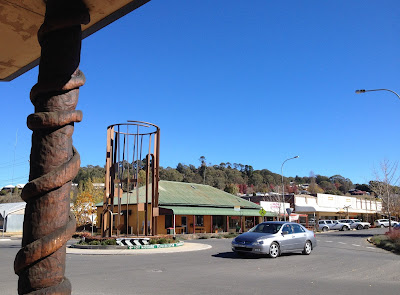
Above: The town of Walcha, located in an area originally occupied by the Dunghutti Aborigines prior to European settlement. In 1818, John Oxley became the first white person to discover the area and the nearby falls which were later to be named Apsley Falls.
The Dunghutti people tell the story of how the Rainbow Serpent created the gorge at Apsley Falls in the Dreamtime. If one walks to one of the viewing platforms and may well see a rainbow in the mist of the falling water. The Rainbow Serpent is said to travel underground from the base of the falls to reappear at the mill hole near Walcha on the Apsley River, 20 kilometres (12 miles) upstream. The site is marked in Walcha by a mosaic made with the ideas and help of the local Dhungutti community.

Above: The post office of the rural city of Tamworth, Australia's "Country Music Capital." The city annually hosts the Tamworth Country Music Festival in late January; the second biggest country music festival in the world. Tamworth is also recognized as the "National Equine Capital of Australia" because of the high number of equine events held in the city and the construction of the world class Australian Equine and Livestock Events Centre, the biggest of its kind in the southern hemisphere.

Gunnedah is located in the Namoi River valley of north-western New South Wales and serves as the major service centre for the farming area known as the Liverpool Plains (above).
The town and its surrounding area were originally inhabited by indigenous Australians who spoke the Kamilaroi (Gamilaraay) language. The area now occupied by the town was settled by Europeans in 1833. Through my maternal grandmother’s family, the Millerds, my family can trace its connection to Gunnedah back to the town’s earliest days. For more about the town’s history and my family’s connection to it, see the previous Wild Reed posts, My “Bone Country” and Journey to Gunnedah.
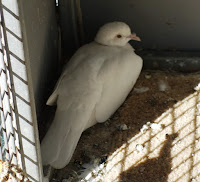 Left: The dove that belonged to my maternal grandmother, Olive Sparkes (1906-1997). I'm thinking this dove must be at least 20 years old. Since Nanna Sparkes' death, the dove has been in the care of my Aunt Ruth, whom I stayed with when I was in Gunnedah. I'm glad this dove is still with us, as hearing it's beautiful and peaceful cooing in the morning is a lovely reminder of Nanna.
 Right: A faded snap shot of my maternal grandparents Olive and Valentine Sparkes.
My grandfather, Valentine Sparkes (1890-1971), was a survivor of the First World War. He moved to Gunnedah in the 1930s from down south in Victoria. He married the widow Olive Louis (nee Millerd) and together they made a home in Little Conadilly Street in Gunnedah . Here they raised Olive's two children, Eric and Fay, from her first marriage, and had four children of their own: Margaret (my Mum), Catherine (who died in infancy), Michael, and Ruth.
Valentine was a writer and one of the last short stories he wrote was about the kinship that developed between me as a young child and one of his fowls – a white rooster. You can read this story here.

Above: Looking across the western edge of Gunnedah towards the Kelvin Hills, which I hiked in my youth – and most recently in 2000.

Above and below: Two views from Gunnedah's Porcupine Lookout of the Breeza Plains.
As I note elsewhere at The Wild Reed, part of the 2006 film Superman Returns was filmed on the plains near the village of Breeza, 25 miles south of Gunnedah.


Above and below: Some of the beautiful eucalyptus trees on Porcupine Hill that caught my eye! These photos were taken in the late afternoon of Tuesday, May 25, 2016.


Above and below: Later that evening my parents and I enjoyed dinner with relatives and friends at the Gunnedah Services and Bowling Club. This establishment has special significance for our family as my paternal grandmother, Belle Smith (1919-2005), worked here for many years as the Catering Manager. At that time it was known as the Gunnedah Servicemen's Club.
Pictured with me above are Jillian, Jo, and Noah.

Above: Mum (at left) with (from left) longtime family friend Gwen, mum's younger sister Ruth, and sister-in-law Valda.
I'm sorry to say that dear Aunty Val passed away quite unexpectedly just a few weeks after this photo was taken. She is missed by many, especially her beloved husband Michael, daughter Alicia, and three grandchildren. I had already returned to the U.S. when Val died and so was unable to attend her funeral in Gunnedah, My parents did, however, and, by all accounts, it was a very well-attended and loving tribute to a woman greatly respected and loved by her family and the community.

Above: Happy times with Aunty Val and Mum – May 25, 2016.

Above: Val's husband (and my uncle) Michael with longtime family friend John Sills.

 Above: Family friends Gary, Peter, and John.
Right: My childhood friend Dianne and her partner.

Left: With another dear childhood (and neighborhood) friend, Louise.

 Above: Dad with longtime family friends Gwen (right) and Wendy (one of Gwen's and her late husband Ray's three daughters).
Right: Gwen and Aunty Ruth catch up on the latest!

Left: Ruth's son (and my cousin) Greg with (from left) Sally, John, and Noah.

Above: When I heard that young Noah was especially looking forward to seeing me, I made sure to call into a bookstore as we passed through Tamworth earlier that day on our way to Gunnedah. Here I bought him a copy of the wonderful novel by Michael Ende, The Neverending Story. It's definitely one of my all-time favorite books. And I hope it becomes that for Noah too!

 Above: Family friends (from left) Heather, Delores, and Wendy.
Right: My childhood friend (and next-door-neighbor) Jillian and her husband David.
NEXT: Townsville
See also the previous Wild Reed posts:
• Australian Sojourn, March 2015: Part 12 – Gunnedah
• A Visit to Gunnedah (2014)
• Journey to Gunnedah (2011)
• This Corner of the Earth (2010)
• An Afternoon at the Gunnedah Convent of Mercy (2010)
• My "Bone Country" (2009)
• The White Rooster
• Remembering Nanna Smith
• One of These Boys is Not Like the Others
• Gunnedah (Part 1)
• Gunnedah (Part 2)
• Gunnedah (Part 3)
• Gunnedah (Part 4)
• Australian Sojourn, May 2016: Part 1 – Maroubra
• Australian Sojourn, May 2016: Part 2 – Morpeth
• Australian Sojourn, May 2016: Part 3 – Melbourne
• Australian Sojourn, May 2016: Part 4 – Hanging Rock
• Australian Sojourn, May 2016: Part 5 – Albury
• Australian Sojourn, May 2016: Part 6 – Goulburn
• Australian Sojourn, May 2016: Part 7 – Exeter
• Australian Sojourn, May 2016: Part 8 – Port Macquarie
Images: Michael J. Bayly.

Continuing with my series of posts on my May visit to Australia, I share this evening a few images of my visit with my parents to our hometown of Gunnedah. (To start at the beginning of this series, click here.)

In traveling across the mountains from the coast to the New England Tablelands the towns and villages one passes through are Wauchope, Walcha, Bendemeer, and Moonbi, and the city of Tamworth.

For many years logging was a dominant activity in the area around Wauchope and Walcha. The town of Wauchope, for instance, is the location of Timbertown, a popular heritage theme park inspired by the logging industry that formed the basis for the town's early economy and prosperity. Logging still goes on, though with a twist and some controversy. Beyond timber, Walcha is known as the "Pasture Wonderland" as the dominant industry in the area is livestock grazing, mainly Merino sheep but also stud and beef cattle.

Above: The town of Walcha, located in an area originally occupied by the Dunghutti Aborigines prior to European settlement. In 1818, John Oxley became the first white person to discover the area and the nearby falls which were later to be named Apsley Falls.
The Dunghutti people tell the story of how the Rainbow Serpent created the gorge at Apsley Falls in the Dreamtime. If one walks to one of the viewing platforms and may well see a rainbow in the mist of the falling water. The Rainbow Serpent is said to travel underground from the base of the falls to reappear at the mill hole near Walcha on the Apsley River, 20 kilometres (12 miles) upstream. The site is marked in Walcha by a mosaic made with the ideas and help of the local Dhungutti community.

Above: The post office of the rural city of Tamworth, Australia's "Country Music Capital." The city annually hosts the Tamworth Country Music Festival in late January; the second biggest country music festival in the world. Tamworth is also recognized as the "National Equine Capital of Australia" because of the high number of equine events held in the city and the construction of the world class Australian Equine and Livestock Events Centre, the biggest of its kind in the southern hemisphere.

Gunnedah is located in the Namoi River valley of north-western New South Wales and serves as the major service centre for the farming area known as the Liverpool Plains (above).
The town and its surrounding area were originally inhabited by indigenous Australians who spoke the Kamilaroi (Gamilaraay) language. The area now occupied by the town was settled by Europeans in 1833. Through my maternal grandmother’s family, the Millerds, my family can trace its connection to Gunnedah back to the town’s earliest days. For more about the town’s history and my family’s connection to it, see the previous Wild Reed posts, My “Bone Country” and Journey to Gunnedah.


My grandfather, Valentine Sparkes (1890-1971), was a survivor of the First World War. He moved to Gunnedah in the 1930s from down south in Victoria. He married the widow Olive Louis (nee Millerd) and together they made a home in Little Conadilly Street in Gunnedah . Here they raised Olive's two children, Eric and Fay, from her first marriage, and had four children of their own: Margaret (my Mum), Catherine (who died in infancy), Michael, and Ruth.
Valentine was a writer and one of the last short stories he wrote was about the kinship that developed between me as a young child and one of his fowls – a white rooster. You can read this story here.

Above: Looking across the western edge of Gunnedah towards the Kelvin Hills, which I hiked in my youth – and most recently in 2000.

Above and below: Two views from Gunnedah's Porcupine Lookout of the Breeza Plains.
As I note elsewhere at The Wild Reed, part of the 2006 film Superman Returns was filmed on the plains near the village of Breeza, 25 miles south of Gunnedah.


Above and below: Some of the beautiful eucalyptus trees on Porcupine Hill that caught my eye! These photos were taken in the late afternoon of Tuesday, May 25, 2016.


Above and below: Later that evening my parents and I enjoyed dinner with relatives and friends at the Gunnedah Services and Bowling Club. This establishment has special significance for our family as my paternal grandmother, Belle Smith (1919-2005), worked here for many years as the Catering Manager. At that time it was known as the Gunnedah Servicemen's Club.
Pictured with me above are Jillian, Jo, and Noah.

Above: Mum (at left) with (from left) longtime family friend Gwen, mum's younger sister Ruth, and sister-in-law Valda.
I'm sorry to say that dear Aunty Val passed away quite unexpectedly just a few weeks after this photo was taken. She is missed by many, especially her beloved husband Michael, daughter Alicia, and three grandchildren. I had already returned to the U.S. when Val died and so was unable to attend her funeral in Gunnedah, My parents did, however, and, by all accounts, it was a very well-attended and loving tribute to a woman greatly respected and loved by her family and the community.

Above: Happy times with Aunty Val and Mum – May 25, 2016.

Above: Val's husband (and my uncle) Michael with longtime family friend John Sills.


Right: My childhood friend Dianne and her partner.

Left: With another dear childhood (and neighborhood) friend, Louise.


Right: Gwen and Aunty Ruth catch up on the latest!

Left: Ruth's son (and my cousin) Greg with (from left) Sally, John, and Noah.

Above: When I heard that young Noah was especially looking forward to seeing me, I made sure to call into a bookstore as we passed through Tamworth earlier that day on our way to Gunnedah. Here I bought him a copy of the wonderful novel by Michael Ende, The Neverending Story. It's definitely one of my all-time favorite books. And I hope it becomes that for Noah too!


Right: My childhood friend (and next-door-neighbor) Jillian and her husband David.
See also the previous Wild Reed posts:
• Australian Sojourn, March 2015: Part 12 – Gunnedah
• A Visit to Gunnedah (2014)
• Journey to Gunnedah (2011)
• This Corner of the Earth (2010)
• An Afternoon at the Gunnedah Convent of Mercy (2010)
• My "Bone Country" (2009)
• The White Rooster
• Remembering Nanna Smith
• One of These Boys is Not Like the Others
• Gunnedah (Part 1)
• Gunnedah (Part 2)
• Gunnedah (Part 3)
• Gunnedah (Part 4)
• Australian Sojourn, May 2016: Part 1 – Maroubra
• Australian Sojourn, May 2016: Part 2 – Morpeth
• Australian Sojourn, May 2016: Part 3 – Melbourne
• Australian Sojourn, May 2016: Part 4 – Hanging Rock
• Australian Sojourn, May 2016: Part 5 – Albury
• Australian Sojourn, May 2016: Part 6 – Goulburn
• Australian Sojourn, May 2016: Part 7 – Exeter
• Australian Sojourn, May 2016: Part 8 – Port Macquarie
Images: Michael J. Bayly.