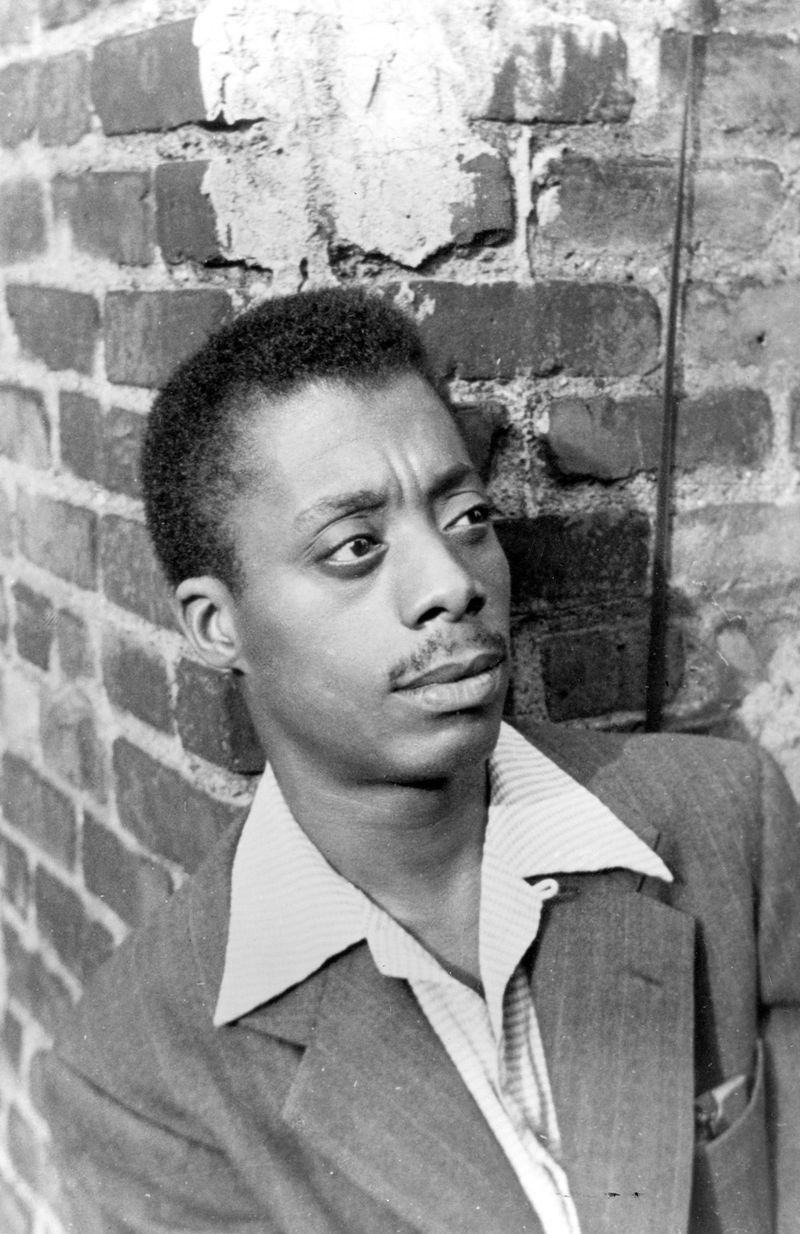
Showing posts with label James Baldwin. Show all posts

Friday, August 05, 2022

Cornel West on the Legacy of James Baldwin


In an age of mendacity and criminality, which is our own, just telling the truth and having integrity is revolutionary. It’s subversive. It’s counter-cultural. James Baldwin . . . [brings] the rich tradition of eloquence, of truth-telling, witness-bearing, soul-stirring writing. . . . [Baldwin] is someone who refused to allow his fire to be dampened by overwhelming bleakness and darkness. And that’s a beautiful thing.

– Dr. Cornel West


This past Tuesday, August 2, was the 98th anniversary of the late American writer and activist James Baldwin.

To (belatedly) mark the occasion I share the following 2017 video of Dr. Cornel West discussing Baldwin’s legacy.


Related Off-site Links:
5 Things You Didn’t Know About James Baldwin – Tracy Shapley Towley (Book Riot, August 2, 2022).
James Baldwin’s Blueprint for the LGBTQ+ Rights Movement – Tre’vell Anderson (Out, May 19, 2019).
James Baldwin on Being Gay in America – The Village Voice (June 22, 2018).
James Baldwin’s Black Queer Legacy – Anthony James Williams (Electric Lit, March 23, 2017).
James Baldwin’s Sexuality: Complex and Influential – Mashaun D. Simon (NBC News, February 7, 2017).
James Baldwin, a Guide in Bleak Times – JoAnn Wypijewski (The Nation, January 21, 2015).
American Lives: James Baldwin, “Lifting The Veil” – NPR (July 15, 2011).

See also the previous Wild Reed posts:
• James Baldwin’s Potent Interweavings of Race, Homoeroticism, and the Spiritual
• Something to Think About – December 29, 2015
• Radical Returnings
• Cornel West on Responding to the “Spiritual Decay That Cuts Across the Board”
• “Two of the Most Dedicated and Enlightened Heroes of Present Day America”
• Cornel West: Quote of the Day – December 3, 2020


Thursday, February 18, 2021

Quote of the Day

I love that Audre Lorde is getting attention today (Google is featuring her in a series of graphics at its search page). As a Black lesbian, she lived intersectionality in the very same way James Baldwin and Bayard Rustin lived it as Black gay men – spending time on two crosses, Bayard Rustin called it.

In a talk I gave some years back at an international religious studies conference, I said that, if I had my druthers, the canon of classic works people in seminaries read as part of their education would include people like Audre Lorde and not just Karl Barth and Thomas Aquinas.

Many folks in the audience looked shocked, but I believed that then and believe it now. People doing pastoral ministry need to understand and appreciate lives different from their own, since, as Russian poet Konstantin Simonov said, “There is no such thing as foreign suffering.”

– William D. Lindsey
via Facebook
February 18, 2021


Related Off-site Links:
The Essential Audre Lorde – Charlotte Lieberman (Writing on Glass, February 13, 2021).
The Legacy of Audre Lorde – Roxane Gay (The Paris Review, September 17, 2020).
Google Doodle Celebrates Poet and Civil Rights Activist Audre Lorde’s 87th Birthday – Coral Murphy Marcos (USA Today, February 18, 2021).

See also the previous Wild Reed posts:
• Making the Connections
• Remembering and Reclaiming a Wise, Spacious, and Holy Understanding of Homosexuality
• “And Still We Rise!” – Mayday 2015 (Part I)
• “And Still We Rise!” – Mayday 2015 (Part II)


Friday, June 07, 2019

James Baldwin's Potent Interweavings of Race, Homoeroticism, and the Spiritual


Since 2009 I've shared every year during the month of June a series of "Queer Appreciation" posts. Each series is comprised of a number of informed and insightful writings to mark Gay Pride . . . or, as I prefer to call it (since 2011), Queer Appreciation. I always try to include in each series a diverse range of writers and topics; and, in general, the writings I share are positive, proactive and celebratory.

Without realizing it at the time, my Quote of the Day last Friday serves well as the first post in this year's Queer Appreciation series. I continue the series today with an excerpt from Michael Cuby's essay, "James Baldwin's Queerness Was Inseparable from His Blackness." The springboard for Cuby's piece is the award-winning 2016 documentary film, I Am Not Your Negro which, although not primarily focused on Baldwin's personal history, nevertheless presents him as both unapologetically black and unapologetically queer.

[James] Baldwin's edition of The Last Interview includes a conversation between the author and journalist Richard Goldstein about being gay in America. Obviously, it also touched on blackness – primarily because Baldwin believed that race and sexuality "have always been entwined." But Baldwin's summation of what separates black homosexuals from their white counterparts is still perhaps one of his most insightful lessons.

After Goldstein, who is gay, mentioned feeling distinct from his straight white peers, Baldwin told him that his feelings of "otherness" were the result of feeling like he had been "placed outside a certain safety to which you think you were born." Those of us who are both black and gay, however, experience life quite differently. "The sexual question comes after the question of color," Baldwin told Goldstein. "Long before the question of sexuality comes into it," a black gay person is already "menaced and marked because he's black." While being gay is just one more marginalized identity that black people are forced to contend with, Baldwin explains that for white people, being gay is simply an unexpected anomaly, whereupon they realize that they are no longer at the top of the social food chain. Baldwin maintained that Caucasian feelings of otherness based on sexuality lay in "direct proportion to [their] sense of feeling cheated of the advantages which accrue to white people in a white society." It's not a struggle for them, so much as a "bewilderment and complaint."

According to Baldwin, the origins of racism lay more in white people's refusal to give up power than in any innate desire to truly despise another human being. "They thought vengeance was theirs to take," he said, describing how the colonialist mind works. To him, the dismantling and ultimate destruction of racism could come after white people truly took the time to understand the value of human dignity. But he also acknowledged that such epiphanies don't occur out of the blue – that's why he believed in the possibilities of coalitions. Baldwin admitted that he believed the (white) gay rights movement and the civil rights movement could align themselves, but only because both groups had experienced oppression from others who feared their prosperity. Blacks had dealt with white fears, while queers had dealt with the fears of straight men.

Unfortunately, Baldwin's hopes of an integrated resistance to white supremacy, heteronormativity, cisnormativity, and other dominant American social regimes seem harder to achieve than ever. But his greater lesson is that to be hopeful for the future is not to be ignorant or blind. Baldwin may have put too much faith in the white people that he hoped would grow to see him as human, but he also made sure to hold up a mirror in his work, so they could see just how much they were breaking him (and the black community) down. That's what I Am Not Your Negro does most effectively: It shows its audience how difficult white society makes it for black people to thrive. As someone who was used to being met with resistance both for being black and for being gay, it's no surprise that Baldwin's thoughts on what it means to be disenfranchised in this country were so forthright and profound.

Something about Baldwin's hope for a better tomorrow is uplifting as our nation enters a period of political turmoil. It inspires us to keep pushing through and fighting for the recognition of our humanity – exactly as we are, whether that be gay, queer, or both. As he had it in The Last Interview: "I was not born to be what someone said I was. I was not born to be defined by someone else, but by myself and myself only."

– Michael Cuby
Excerpted from "James Baldwin's Queerness
Was Inseparable from His Blackness
"
VICE
February 3, 2017

_______________________


About James Baldwin, The Encyclopedia of Queer Myth, Symbol and Spirit notes the following.

James Baldwin (1924-1987) was a writer who sought in his life and work to honor his love of men and his African/African-American heritage – embracing spiritual expression and political activism. Exemplary of his artistic interweaving of these dimensions of his life are episodes in the short story "The Outing" (1951), a tale rooted in the Biblical story of David and Jonathan, in which Johnny Grimes realizes, during a church picnic, that he has fallen in love with his friend David Jackson.; and in the novel Tell Me How Long the Train's Been Gone (1968), in which a bisexual Black actor, Leo Proudhammer shares a loving relationship with a radical African-American activist named Christopher. Of this novel, Emmanuel S. Nelson writes, "Baldwin casts the homosexual in a redemptive role. Christopher's name itself . . . suggests his role as a racial savior. But Christopher is also comfortably and confidently gay," the result is a potent interweaving of ethnicity, homoeroticism, and the spiritual.


Related Off-site Links:
James Baldwin's Black Queer Legacy – Anthony James Williams (Electric Lit, March 23, 2017).
James Baldwin's Sexuality: Complex and Influential – Mashaun D. Simon (NBC News, February 7, 2017).
James Baldwin’s Blueprint for the LGBTQ+ Rights Movement – Tre'vell Anderson (Out, May 19, 2019).
James Baldwin on Being Gay in America – The Village Voice (June 22, 2018).
American Lives: James Baldwin, "Lifting The Veil" – NPR (July 15, 2011).
James Baldwin, a Guide in Bleak Times – JoAnn Wypijewski (The Nation, January 21, 2015).


NEXT: John Gehring on Why Catholics
Should Participate in LGBTQ Pride Parades


The Wild Reed's 2018 Queer Appreciation series:
• Michelangelo Signorile on the Rebellious Purpose of Queer Pride
• Liberating Paris: Exploring the Meaning of Liberation in Paris Is Burning
• Stephanie Beatriz on the Truth of Being Bi
• Queer Native Americans, Colonialism, and the Fourth of July


The Wild Reed's 2017 Queer Appreciation series:
• Our Lives as LGBTQI People: "Garments Grown in Love"
• On the First Anniversary of the Pulse Gay Nightclub Massacre, Orlando Martyrs Commemorated in Artist Tony O'Connell's “Triptych for the 49”
• Tony Enos on Understanding the Two Spirit Community
• Making the Connections


The Wild Reed's 2016 Queer Appreciation post of solace, inspiration and hope:
• "I Will Dance"


The Wild Reed's 2015 Queer Appreciation series:
• Vittorio Lingiardi on the Limits of the Hetero/Homo Dichotomy
• Reclaiming and Re-Queering Pride
• Standing with Jennicet Gutiérrez, "the Mother of Our Newest Stonewall Movement"
• Questions for Archbishop Kurtz re. the U.S. Bishops' Response to the Supreme Court's Marriage Equality Ruling
• Clyde Hall: "All Gay People, in One Form or Another, Have Something to Give to This World, Something Rich and Very Wonderful"
• The (Same-Love) Dance Goes On


The Wild Reed's 2014 Queer Appreciation series:
• Michael Bayly's "The Kiss" Wins the People's Choice Award at This Year's Twin Cities Pride Art Exhibition
• Same-Sex Desires: "Immanent and Essential Traits Transcending Time and Culture"
• Lisa Leff on Five Things to Know About Transgender People
• Steven W. Thrasher on the Bland and Misleading "Gay Inc" Treatment of the Struggle to Overturn Prop 8
• Test: A Film that "Illuminates Why Queer Cinema Still Matters"
• Sister Teresa Forcades on Queer Theology
• Omar Akersim: Muslim and Gay
• Catholics Make Their Voices Heard on LGBTQ Issues


The Wild Reed's 2013 Queer Appreciation series:
• Doing Papa Proud
• Jesse Bering: "It’s Time to Throw 'Sexual Preference' into the Vernacular Trash"
• Dan Savage on How Leather Guys, Dykes on Bikes, Go-Go Boys, and Drag Queens Have Helped the LGBT Movement
• On Brokeback Mountain: Remembering Queer Lives and Loves Never Fully Realized
• Manly Love


The Wild Reed's 2012 Queer Appreciation series:
• The Theology of Gay Pride
• Bi God, Somebody Listen
• North America: Perhaps Once the "Queerest Continent on the Planet"
• Gay Men and Modern Dance
• A Spirit of Defiance


The Wild Reed's 2011 Gay Pride/Queer Appreciation series:
• Gay Pride: A Celebration of True Humility
• Dusty Springfield: Queer Icon
• Gay Pioneer Malcolm Boyd on Survival – and Victory – with Grace
• Senator Scott Dibble's Message of Hope and Optimism
• Parvez Sharma on Islam and Homosexuality


The Wild Reed’s 2010 Gay Pride series:
• Standing Strong
• Growing Strong
• Jesus and Homosexuality
• It Is Not Good To Be Alone
• The Bisexual: “Living Consciously in the Place Where the Twain Meet”
• Spirituality and the Gay Experience
• Recovering the Queer Artistic Heritage


The Wild Reed's 2009 Gay Pride series:
• A Mother’s Request to President Obama: Full Equality for My Gay Son
• Marriage Equality in Massachusetts: Five Years On
• It Shouldn’t Matter. Except It Does
• Gay Pride as a Christian Event
• Not Just Another Political Special Interest Group
• Can You Hear Me, Yet, My Friend?


See also:
• Worldwide Gay Pride – 2017 | 2016 | 2013 | 2012 | 2011 | 2010 | 2009 | 2008 | 2007
• A Catholic Presence at Gay Pride – 2013 | 2012 | 2011 | 2010 | 2009 | 2008 | 2007
• Gay Pride: A Catholic Perspective
• Reclaiming and Re-Queering Pride
• Police, Pride, and Philando Castile

Images: Photographers unknown.


Sunday, May 01, 2016

Our New Possibility . . .


Earlier today I attended the 42nd annual In the Heart of the Beast Puppet and Mask Theatre's Mayday parade in Minneapolis.

This year's Mayday theme was "Radical Returnings," and was all about "turning towards each other rather than away from each other, repairing our relationships and the earth, finding redemption and freedom in tune with the turning of the earth and the return of spring."

The two images I share today were part of the parade story entitled "Reparations on Our Soul." Lead artists of this section were Angie Courchaine, Jordan Hamilton, Junauda Petrus, Dee Henry Williams and Amm-Ra Seka. About this parade section the Mayday Celebration program says the following.

Our ancestors were never slaves. Even though they were stuffed in the bottom of boats with pregnant bellies and terrified hearts in awe of evil that would shackle soulful humanity. Some of them jumped off the boat and whisper still from the bottom of the Atlantic. So don't act like you forget. Blackness is our wild and resilient magic. It is time to pay back the debt to our souls.

Sweet ancestral resiliency is our magic. And Wild Seed is our new possibility. Black soul shapeshifts and we alchemized into Prince, Malcolm X and Collard greens, James Baldwin, Basquiat and Angela Davis, Rock and Roll and Toni Morrison, Candied yams and Hip Hop, Mae Jemison and Serena Williams, agricultural advancements, Paul Robeson, Alice Walker, James Brown and Nina Simone and the Nay Nay, Phoenetic Ones and Bro Suns and infiniteness.


More images of Mayday 2016 coming soon!


See also the previous Wild Reed posts:
• "And Still We Rise!" – Mayday 2015 (Part I)
• "And Still We Rise!" – MayDay 2015 (Part II)
• Mystics of Wonder, Agents of Change (Mayday 2014 – Part 1)
• "The Spiritual Dialectic of WONDER?!" (Mayday 2014 – Part 2)
• See the World! (Mayday 2013)
• The End of the World as We Know It (2012)
• "Uproar!" on the Streets of South Minneapolis: Part 1 (2010)
• "Uproar!" on the Streets of South Minneapolis: Part 2 (2010)
• Getting Started: Mayday 2009 (Part 1)
• Celebrating Our Common Treasury: Mayday 2009 (Part 2)
• Mayday and a "New Bridge" (2008)
• The Time is Now! (2006)

Images: Michael J. Bayly.


Tuesday, December 29, 2015

Something to Think About . . .


Related Off-site Links:
A Grand Jury Just Decided Not to Indict the Cop Who Killed 12-Year-Old Tamir Rice – Jaeah Lee (Mother Jones, December 28, 2015).
What Everyone Should Know About The Police Killing of Tamir Rice (2002-2014) – Judd Legum (Think Progress, December 28, 2015).
Tamir Rice Family "In Shock" After Grand Jury Clears Police for Fatally Shooting Boy Holding Toy Gun – Democracy Now! (December 29, 2015).
No One Was Indicted In The Tamir Rice Case. That Was The Plan All Along – Cristian Farias (HuffPost Politics, December 28, 2015).
Nation Mourns Tamir Rice Case as a "Catastrophic and Pernicious Miscarriage of Justice" – Deirdre Fulton (Common Dreams, December 29, 2015).
How A Prosecutor Managed to Blame a 12-Year-Old for Getting Killed By a Cop – Daniel Marans (HuffPost Black Voices, December 28, 2015).
Tamir Rice's Death Resulted From "Officer-Created Jeopardy." So Why Were No Officers Indicted? – Leon Neyfakh (Slate, December 29, 2015).
Tamir Rice and the Value of Life – Charles M. Blow (The New York Times, January 11, 2015).
This Case Proves If Tamir Rice Were White He’d Still Be Alive – Dylan Hock (U.S. Uncut, December 28, 2015).
Tamir Rice Found Guilty of Being Young, Free and Black – Kirsten West Savali (The Root, December 28, 2015).
The Stages of What Happens When There’s Injustice Against Black People – Awesomely Luvvie (December 4, 2014).
The Tamir Rice Case Shows How Prosecutors Twist Grand Juries to Protect Police – Ari Melber (The Washington Post, December 29, 2015).
England Abolished Grand Juries Decades Ago Because They Didn't Work – Bradley Campbell (PRI, December 4, 2014).
Harvard Medical Scientists Say Police Killings Should Be Recorded As Public Epidemic – Dylan Sevett (U.S. Uncut, December 27, 2015).
American Lives: James Baldwin, "Lifting The Veil" – NPR (July 15, 2011).
Gay Will Never Be the New Black: What James Baldwin Taught Me About My White Privilege – Todd Clayton (HuffPost Gay Voices, February 12, 2013).

See also the previous Wild Reed posts:
• "We Are All One" – #Justice4Jamar and the 4th Precinct Occupation: Photos, Reflections and Links
• An Update on #Justice4Jamar and the 4th Precinct Occupation
• Quote of the Day – November 25, 2015
• Rallying in Solidarity with Eric Garner and Other Victims of Police Brutality
• Quote of the Day – June 19, 2015
• "Say Her Name" Solidarity Action for Sandra Bland
• In Minneapolis, Rallying in Solidarity with Black Lives in Baltimore


Monday, June 25, 2012

Gay Men and Modern Dance


The Wild Reed's 2012 Queer Appreciation series continues with a post that also fits well into this blog's ongoing series, The Dancer and the Dance. That's because I'm sharing this evening an excerpt from Julia L. Foulkes' 2002 book Modern Bodies: Dance and American Modernism from Martha Graham to Alvin Ailey. As you'll see, this particular excerpt explores how from its earliest days, modern dance was "distinct from other artistic genres in the groups of people it attracted," including gay men. "Modern dance began and remains a place where people on the edges of society congregate and express themselves," writes Foulkes.

(Note: To start at the beginning of The Wild Reed's 2012 Queer Appreciation series, click here.)

____________________________


Like Picasso, Matisse, and other modernist painters, modern dancers created new ways for people to see themselves, from disjointed, angular composites of body parts to colorful, rounded, fluid outlines. New images came out of new roles. Modern dance was distinct from other artistic genres in the groups of people it attracted: white women (many of whom were Jewish), gay men, and some African American men and women. Women held leading roles on stage and off, replacing the common stage image of the sexual ingenue with that of the pioneering individual who moved her own body with disquieting, abrupt force. Gay men, too, recast the effeminate image of the sissy into a hardened, heroic, dancing American athlete. African American dancers, however, did not find an easy place within this new American art form, even though the theme of African Americans' rise from oppression dominated many of the stories of white modern dancers' choreography, such as Tamiris's Negro Spirituals. In their slighted role, African American dancers and choreographers defined the limits of modern dancers' communal visions, and in their own productions they explored other conceptions of dance, of modern times, and of the United States by thrusting Africa and the Caribbean onto American stages.

This vital new force in the arts inevitably evoked questions about how America could be portrayed in dance, what was American in the arts, and what it meant to be an American. In many ways, modern dance productions portrayed the United States as a society composed of heroic individuals, a theme also found in post office murals and Federal Theatre productions created out of the government-sponsored Works Progress Administration (WPA). One of the most celebrated plays of the era was Thornton Wilder's Our Town (1938), which eulogized Americans' ability to group together quirky individuals in both life and death. But modern dancers enacted a more radical concept. Marginalized groups of gay men, Jewish women, and African American men and women flocked to a fledgling art form that was based on physical expression. Defined by external physical characteristics or so-called deviant sexual practices, the social identities of these dancers shaped the means by which they contributed to defining America. And their physical differences and exploration of body movement showed the limits of pluralism and assimilation in the 1930s and, particularly, the depth and endurance of racial fracture.

Modern dance began and remains a place where people on the edges of society congregate and express themselves. . . . The evolution of modern dance into an esoteric art form illustrates the course of modernism in the United States where social roles reinforced a marginal path. White women, African American men and women, and gay men created in modern dance a malleable art form within which they might re-imagine conventional social roles. But that very malleability and radical re-visioning have kept modern dance on the fringe of the arts and the rim of society.


Modern dance's liminal place, though, lends it importance in offering an original perspective on how the arts reflect and contribute to the struggles and composition of our world. The instructiveness of dance begins with its elusiveness – the active embodiment of idea, practice, or historical era and its fleetingness. The inability to fix or stop the moment of dance allows for continual transformation of our finite bodies. James Baldwin elegantly described the power of performance as "the unmistakable silence in which [the performer] and the audience re-create each other." Dance resides within that hope of re-creation. It offers the possibility that our bodies are not always a prison of flesh and that we can change our physical presentation to the world and alter the way we see ourselves and others.

. . . In the 1930s white gay men succeeded in modern dance due to the strategy Ted Shawn devised to heighten virility and thereby diminish the perceived threat of homosexuality. . . . Shawn and other gay men found in modern dance a way to both display and conceal their circumscribed lives and, in doing so, further substantiated the coded association of the arts with male homosexuality. . . . In general, artists tolerated difference, and once gay men filtered into the arts, other gay men followed. In a society that criminalized homosexual acts, the arts provided a place of relative comfort, acceptance, and community.


NEXT: A Spirit of Defiance


See also the previous Wild Reed posts:
• Reclaiming the Queer Artistic Heritage
• The Trouble with the Male Dancer (Part 1: Challenging Notions of Masculinity)
• The Trouble with the Male Dancer (Part 2: Homophobia and the Male Dancer)
• The Trouble with the Male Dancer (Part 3: Homosexuality and the Male Dancer)
• The Dancer and the Dance
• The Premise of All Forms of Dance
• The Church and Dance
• The Soul of a Dancer
• A Dance of Divine Light
• Seeking Balance

Image 1: "Decades of Dance" – Foster Fiz-Simons of Ted Shawn's Men Dancers (John Lindquist, Harvard Theatre Collection) and Garrett Ammon of Trey McIntyre Project (Jonas Lunqvist).
Image 2: From Men in Motion: The Art and Passion of the Male Dancer by François Rousseau.
Image 3: Ted Shawn Dancers.
Image 4: Some of Ted Shawn's dancers at Jacob's Pillow, Massachusetts.