Showing posts with label Human Sexuality. Show all posts

Sunday, June 29, 2025

Australian Indigenous Culture and the Reality of LGBTI Lives


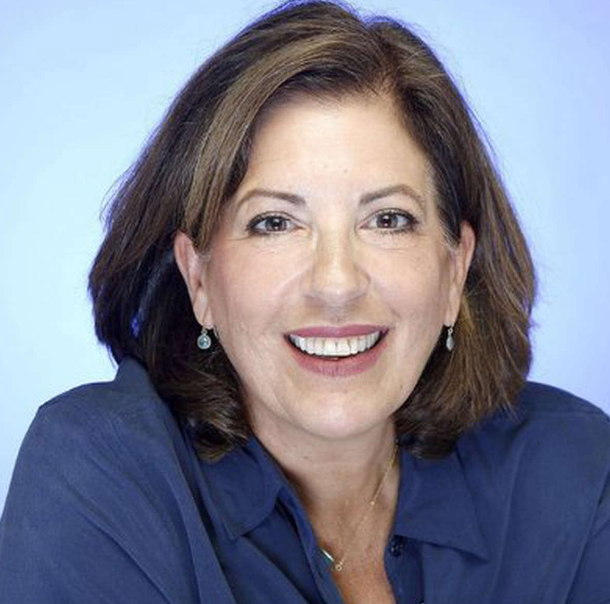
The Wild Reed’s 2025 Queer Appreciation series concludes with an excerpt from an insightful and moving article by Steven Lindsay Ross (right) on his experiences growing-up gay and Indigenous in Australia. It’s a fitting piece to share given that I’m currently back in my homeland to support my mum.

Ross’s article was first published in 2014 by Archer Magazine, “the world’s most inclusive magazine about sexuality, gender and identity.”

__________________

Many Indigenous LGBTI people experience homophobia and transphobia in their own lives. Unfortunately, the perpetrators are often their own people or family.

I was about five years old, I reckon. My father, a Wiradjuri man, and I were getting out of our old family Valiant. We lived in what was called “the new mission,” in Macauley Street in Deniliquin, New South Wales. All the blacks had been moved to Deniliquin from Moonacullah Mission some 20 years earlier.

The charming houses built for the Moonacullah Aborigines were fibro and erected on the fringes of town, not far from the sewerage plant. A stiff northerly breeze carried the smell of raw faeces into our street, and if there was an operational issue with the works, the town’s sludge would come bubbling up into our bathrooms. Not exactly a welcoming experience of assimilation.

Deniliquin was, and still is, a pretty town on the Edward River (Koletch, in our Wamba Wamba language). Ever since I can remember, the sign coming into town announced that there were 8000 people living there.

On this particular summer day, after my father had been looking after me (I sit in the corner of the local TAB while he bets on the horses), we arrived back in Macauley Street to discover he’d left the house keys inside. He ordered me to climb through the window to open the door, but I refused. His response was to verbally abuse me and, for the first time in my life, I was called a “poofter.” I didn’t know what this word meant, but, considering the tone of its delivery, I knew it couldn’t be a good thing.

Over the following years I heard this word a lot more, and figured out its meaning. Given my pre-pubescent romance with another boy, I soon knew I was this thing.

This was the prism through which I saw my early sexuality. In the community I lived in, I did get a sense that homosexuality was not a good thing within our mobs. And, of course, like all homophobia and all bigotry, these attitudes were designed to de-humanise me, to marginalise me and to keep me down.

In 1978 my mother wisely left my father and moved to Sydney with my sister and me. Mum moved in some pretty funky and arty circles and we were often at bohemian parties in Balmain. My sister and I would hide under my mother’s skirt while mysterious white people drank and danced and ate exotic food.

The host of these parties was known as Aunty Sharon, a redhead with striking features and a beak-like nose, who spoke beautifully and loved hugging us kids. She was my mother’s boss and she lived in Waterview Street, Balmain, with her girlfriend.

My mother never had to explain any of this to me and I lapped up the experience, as any curious child would. I loved our visits to Aunty Sharon, and the look and smell of her house. My favourite thing was to fall asleep cuddling her life-sized Wonder Woman cushion.

In hindsight, these were formative years that helped to empower my sexual identity and sense of self-worth. My mother never sheltered us from these influences. She knew I was gay all my life, I suspect, and when I finally came out to her in 1991, she said “surprise, surprise”.

My mother is a proud Wamba Wamba and Muthi Muthi woman and she knows her culture, her ancestors and the way forward for her people. She spent her life working for the mob and instilling her knowledge into future generations through environmental work, weaving and storytelling.

My father, on the other hand, is highly colonised and, in my opinion, a tragic figure of a man who was never there for any of his children. When I came out to my father, he told me he used to bash people like me. Whenever we fought, homophobic insults were not off limits.

I have seen this prejudice in other families in Deniliquin, too – we must have been a queer little community, given how many gay and lesbian relatives I have. One experience that springs to mind is that of my cousin Henry, who is transgender. Henry blossomed into Violet during her teen years. Not knowing how to deal with this change, her brothers were brutal and violent.

Violet moved to Newcastle and rarely returned home. Despite all this, there remained a staunch set of sisters, nieces, nephews and cousins who adored her, kept in regular contact and resisted, berated and belittled those small-minded brothers.

This group also provided powerful protection for the rest of us LGBTI kids growing up. Hopefully, the prejudice of the old uncles dies with them.

We were also lucky enough to have Elder LGBTI people guide us through our childhood and coming-out phases. Small country towns are not the most hospitable places for young black kids, let alone young black LGBTI kids.

That said, homophobia still finds fertile ground in our communities. In late 2013, a boxer by the name of Anthony Mundine unleashed a homophobic rant on Facebook following an episode of Redfern Now. Mundine’s comments released a flood of memories for black LGBTI people like me, and gave room for more Indigenous people to express their homophobic beliefs.

If anything good came from Mundine’s incendiary comments, it was the chance for collective self-reflection for Aboriginal LGBTI people, along with their families and supporters. For every person who supported Mundine there were dozens who spoke out against his narrow-mindedness, promoting the loving acceptance of gays and lesbians in our community. And it has also encouraged support and advocacy for black LGBTI peoples in local and broader representations.

The contrast between my mother’s open-hearted embrace of my sexuality and my father’s hateful reaction made me contemplate the idea raised by Mundine about the place of homosexuality in so-called “traditional” Aboriginal culture. There are indications from some cultures around the world that diverse sexuality is an integral part of “traditional” indigenous life – for example, the Sistergirls of the Tiwi Islands, or the Two-Spirit movement found among some Native American cultures.

There is also a logical and reasonable approach to this argument: Aboriginal people have been in Australia for more than 60,000 years in what many anthropologists describe as a triumph of survival and mathematics. Given the overwhelming evidence that homosexuality is biological, it is logical to assume that homosexuality would have been a part of such a social equation. It is estimated that there have been four billion Aboriginal people In Australia since the dawn of time. Four billion, and not one gay person? That just defies belief.

Some argue that our culture would have oppressed such behaviour. This raises some interesting questions, as well as some colonial mythologies. Which traditional Aboriginal culture is being referred to here? When white people colonised Australia, there were hundreds of Aboriginal cultures. To know the mores and values of every single Aboriginal culture would be a major feat of anthropological prowess – one of which I doubt Mundine and his ilk are capable.

This argument also ignores the major diversity between groups, and indeed within them. This is why a homogenous approach to government policy doesn’t work, and why a consensus on constitutional reform will probably never work. We are as diverse as any other ethnicity and this must be acknowledged to really move forward.

This idea of “traditions” is also dangerous because it glues us to the past, rendering us immovable and static. It also sets up a system of haves and have-nots – those who have maintained their “traditional” culture, and those who have lost it.

All cultures change, and Aboriginal people would not have survived for so long had they not been adaptive and dynamic.

As for gay people being accepted in Aboriginal communities, I know a dozen or more black LGBTI people who are strong and powerful leaders in their communities. Some have led their mobs to successful native title consent determinations – a role that is built on trust. A native title case would include holding secret knowledge of sacred sites, family histories and land management practices, not to mention being entrusted to negotiate on behalf of thousands of claimants.

This responsibility would not be given lightly. It is a position that involves trusting a person’s character. The fact that LGBTI people have been entrusted in these processes speaks volumes for the support we have within our communities.

Of course, there will be narrow-minded people in our communities, too. We may dislike the Fred Niles, George Pells or Tony Abbotts of mainstream culture, but we are not surprised that those voices exist in a liberal democracy. There are narrow-minded indigenous people. There are also indigenous fundamentalists, climate-change deniers, racists and misogynists.

When I think of these people, or when I hear their bullshit in the media, I think of my accepting, unsurprised mother. I think of my sisters fighting for my rights, and defending my cousin Violet, and I remember the embrace of that Wonder Woman cushion.

– Steven Lindsay Ross
From “Homosexuality and Aboriginal Culture:
A Lore Unto Themselves
”
Archer Magazine
October 20, 2014


NEXT:
June Vignettes


Related Off-site Link:
Embracing Queer Indigenous Australia – Todd Fernando (Pursuit, May 16, 2022).

See also the previous Wild Reed posts:
• Jojo Zaho: “Let Your Faboriginality Shine Through”
• Recognising and Honoring Australia's First Naturalists
• Clyde Hall: “All Gay People, in One Form or Another, Have Something to Give to This World, Something Rich and Very Wonderful”
• Terence Weldon: Quote of the Day – November 12, 2011
• John Corvino on the “Always and Everywhere” Argument Against Gay Marriage
• Same-Sex Desires: “Immanent and Essential Traits Transcending Time and Culture”
• Prayer of the Week – November 14, 2012
• Thanks, Mum!

The Wild Reed’s 2025 Queer Appreciation series:
• What the Bible Really Says About Gender Justice
• Remembering the “Out, Proud and Vivid” Sylvester
• Exploring the Meaning and History of “Two-Spirit”


Thursday, June 19, 2025

Exploring the Meaning and History of “Two-Spirit”


The Wild Reed’s 2025 Queer Appreciation series continues with an excerpt from a very informative article from the website of the Canadian Museum of Human Rights. Written by Scott de Groot, this article focuses on the Indigeous term “Two-Spirit,” its history and meaning.

__________________

In the beginning, Turtle Island was queer. Put another way, gender and sexuality were not understood in binary, “either/or” terms before the arrival of Europeans.

Across Indigenous North America, some people lived their lives as neither men nor women. Some were seen as combining – even transcending – masculine and feminine characteristics. They performed important social roles, held knowledge, led ceremonies, reared children, married and lived in same‐sex relationships.

Of course, Turtle Island was not simply a queer nirvana. Various customs and taboos governed gender and sexuality. Social norms varied greatly between First Nations. But a common thread throughout these nations was the lack of strict division of people into two opposing camps of men and women based on biology. No single system of morality forbade and condemned same‐sex and same‐gender relationships. These things only appeared later with Christianity and colonialism.

Indigenous languages have many words and expressions for people we would now call Two‐Spirit. Cree contains at least six. In Anishinaabemowin, there are at least four.

. . . [In the mid‐20th century] the Red Power movement arose to demand sovereignty and self‐determination for Indigenous peoples throughout Turtle Island (what is now Canada and the United States). Simultaneously, the Gay Liberation movement challenged homophobia, asserted gay pride and encouraged queer people to come out of the closet. Queer Indigenous activists were influenced by these two movements, but also experienced marginalization within both of them. Gay liberationists tended to denounce colonialism abroad – such as in Vietnam – while ignoring settler colonialism at home. They sometimes expressed racist attitudes and colonial standards of beauty. Red Power circles tended to be homophobic and emphasized macho gender roles, while ignoring Indigenous forms of sexual and gender diversity.

Drawing on some aspects of these movements while abandoning others, queer Indigenous activists opted to create independent organizations that would better address their needs. The first of these groups, Gay American Indians was founded in San Francisco in 1975. Others included American Indian Gays and Lesbians in Minneapolis, Gays and Lesbians of the First Nations in Toronto, WeWah and BarCheeAmpe in New York City, and Nichiwakan in Winnipeg.

Queer Indigenous activists on both sides of the Canada/United States border saw the need for greater communication, relationship‐building and coordination. They established an annual international gathering. In 1988, the first was hosted by American Indian Gays and Lesbians in Minneapolis. A second was held at a wilderness site in Wisconsin in 1989.

These events brought queer Indigenous people together to socialize, share their experiences and ideas, engage in cultural and spiritual practices, and learn from one another. A third gathering was held in Manitoba in the summer of 1990. It took place at a wilderness site outside Winnipeg, near Beausejour, Manitoba, along the banks of the Brokenhead River.

. . . At this gathering, participants discussed and debated Two‐Spirit as a term. It seemed to link contemporary LGBTQ+ experiences with Indigenous traditions, histories and worldviews. And it arrived at the perfect time. Many community members were already searching for alternatives to offensive, colonial terms such as berdache, which had been used by missionaries and anthropologists. Ultimately, attendees at the 1990 gathering embraced Two‐Spirit as a new and positive expression of who they were. They did not seek to define Two‐Spirit in a narrow way.

Two‐Spirit was not intended to supplant other LGBTQ+ identities. It can easily coexist with terms such as gay or trans in an individual’s self‐understanding. Similarly, it was not meant to replace specific terms for non‐binary sexuality and gender in Indigenous languages. Rather, it acts as a contemporary umbrella term that fosters pan‐Indigenous interconnections.

Simply put, Two‐Spirit was (and is) about self‐determination, rejecting colonial labels, building community and reconnecting with long‐suppressed aspects of Indigenous histories and cultures, including spirituality.

– Scott de Groot
Excerpted from “What Is Two‐Spirit?”
Canadian Museum of Human Rights
March 26, 2024


NEXT:
Australian Indigenous Culture
and the Reality of LGBTI Lives


See also the previous Wild Reed posts:
• Tony Enos on Understanding the Two-Spirit Community
• North America: Perhaps Once the “Queerest Continent on the Planet”
• Clyde Hall: “All Gay People, in One Form or Another, Have Something to Give to This World, Something Rich and Very Wonderful”
• Terence Weldon: Quote of the Day – November 12, 2011
• John Corvino on the “Always and Everywhere” Argument Against Gay Marriage
• Same-Sex Desires: “Immanent and Essential Traits Transcending Time and Culture”


Wednesday, August 14, 2024

Christina Cauterucci on the Olympics Moment That Shows Where the Anti-Trans Movement Has Brought Us

The Wild Reed’s 2024 Queer Appreciation series continues with the sharing of what I consider to be one of the best articles written to date on the Olympics controversy involving Algerian boxer Imane Khelif. This article, written by Christina Cauterucci, was first published August 6 by Slate.

As a friend of mine observes, Cauterucci's article is “spot on” in showing that “just as homophobia harms straight men and women, transphobia harms cisgender men and women.”

_____________________

For the past week, anti-trans advocates have waged a ruthless war of disinformation against Olympic boxer Imane Khelif. The Algerian woman, who is neither a man nor transgender, has been dragged by right-wing politicians and cultural commentators, who have called her a man and a biological male.

As Khelif has advanced in her weight class, these voices have gotten louder, arguing that the 25-year-old athlete should be disqualified and that airing her fights against female competitors is glorifying gender-based violence. Their lie has spread so quickly and penetrated the mainstream discourse so deeply that even the Boston Globe ran with it, publishing a print headline identifying Khelif as a “transgender boxer.” (The Globe later apologized and issued a correction, but the print issue had already gone out. The damage was done.)

It is a vicious, opportunistic campaign that has nothing to do with the truth of Khelif’s eligibility or her medical statistics. People who are ideologically invested in the demonization of trans and gender-nonconforming people – or who have achieved cultural relevance by stoking fear about the rising visibility of trans people in public life – simply saw a shady boxing organization make claims about a failed “gender test” and decided to try to ruin an Algerian woman’s athletic career. Even for those of us who have closely followed the rise of the anti-trans right in recent years, the pure bad-faith malice of this crusade is breathtaking.

It began when news resurfaced that the International Boxing Association had disqualified Khelif and another female boxer, Taiwan’s Lin Yu-ting, from the 2023 world championships for allegedly flunking a gender test. The International Olympic Committee database originally noted that the IBA had found Khelif to have elevated levels of testosterone, but the IBA now claims that Khelif has XY chromosomes. However, the association has not produced any documentation of any test or published whatever regulations Khelif and Lin supposedly failed to meet. The IOC has reiterated that the two boxers meet every standard of Olympic eligibility for women’s boxing.

More importantly, the IBA should not be considered a reliable source. The IOC stripped it of its Olympic status back in 2019, amid concerns about poor governance, corruption, and the then president’s alleged connections to organized crime. Khelif has competed in women’s boxing for years without issue – she placed fifth in her weight class in the Tokyo Olympics in 2021 and won second place at the IBA’s 2022 world championships. The IBA disqualified her at its 2023 tournament only after she beat a previously undefeated Russian woman. It was suspicious timing for a Russian-led (and until recently Russian-funded) organization that had already been cast off by the IOC for being untrustworthy.

None of this matters to those who’ve been using Khelif as sacrificial fodder for their war on trans people. In recent days, Donald Trump, Elon Musk, J.D. Vance, various Republican senators, J.K. Rowling, and all manner of right-wing commentators have slandered Khelif. In a post on X, Vance called her “a grown man pummeling a woman.” Trump vowed on his Truth Social account to “KEEP MEN OUT OF WOMEN’S SPORTS!” They vilified Khelif with such fervor that her father felt compelled to release her birth certificate and childhood photographs, a degrading but seemingly necessary effort to prove that she was assigned female at birth and raised as a girl.

It’s possible that some of Khelif’s detractors didn’t know the facts of the situation when they posted – that they saw tweets and right-wing media headlines calling her a man and assumed she was transgender without bothering to confirm. That doesn’t make their actions any more defensible. It would be equally wrong to misgender a trans athlete and accuse them of fraud for competing in a sporting event for which they’re duly eligible. And if these conservatives don’t have enough faith in their arguments to check the facts, are willing to take the risk of smearing an innocent woman for the sake of political expediency, and refuse to correct themselves when others point out their error, they are just as vile as those who spread deliberate lies.

Of course, many of the people who’ve joined the pile-on, like Rowling, know exactly what they’re doing. Rowling shared an article about Khelif that explained the nuances of human sex—that, for instance, it’s possible for women to have XY chromosomes or higher-than-average testosterone levels — yet maintained that Khelif is a man who should be exiled from professional boxing. As evidence, Rowling and her ilk are posting photos of Khelif that supposedly show she is too masculine to be a woman. That these people, who claim to advocate for women’s rights – including those who, like Rowling and many other British anti-trans advocates, self-identify as feminists — are penalizing a woman for being too strong and insufficiently feminine should tell you everything you need to know about their intellectual honesty. The anti-trans movement is not just out to police and punish transgender people. Its natural conclusion is a society that enforces repressive gender norms for everyone.

Khelif should be an icon for supporters of women’s rights and girls in athletics. As a teen, she shone as a soccer player in her rural town in spite of cultural norms that discouraged girls from playing. Local boys had a problem with it; when they tried to fight her, she’d dodge their punches, which reportedly awakened her interest in boxing. She overcame barriers of sexism and poverty to excel in the sport, raising money with her mother to afford bus fare to training sessions because her father believed that it was inappropriate for girls to box. If anyone has suffered the classic hardships of women in sports, it’s Khelif.

Many of Khelif’s defamers have pointed to the tears of Angela Carini as evidence of the cruelty of allowing so-called “men” to compete in women’s sports. Carini, an Italian boxer who fought Khelif last week, abandoned their bout after just 46 seconds, complaining of pain in her nose. She refused to shake Khelif’s hand (she has since apologized) and began to cry in the ring. In the video of the match, Khelif looks confused as to why Carini is quitting and awkwardly tries to pat her on the shoulder. Rowling posted a screenshot of the moment on X. “Could any picture sum up our new men’s rights movement better?” she wrote. “The smirk of a male who’s knows he’s protected by a misogynist sporting establishment enjoying the distress of a woman he’s just punched in the head.”

To sum up the anti-trans movement, I’d like to present another image from the past week. On Saturday, Khelif beat a Hungarian boxer, guaranteeing herself at least a bronze medal. (She competes in the semi-finals Tuesday.) After her victory, she addressed a press scrum while appearing to cry. “I want to tell the entire world that I am a female and I will remain a female,” she said.

This is where the anti-trans movement’s disingenuous calls to “protect women” have brought us: a woman in tears, having been ridiculed for her appearance and humiliated on an international stage, at the moment she achieves her Olympic dreams.

– Christina Cauterucci
Slate
August 6, 2024


UPDATE: Algerian Boxer Imane Khelif
Wins Olympic Gold in Face of Controversy

– Becky Sullivan and Fatima Al-Kassab
NPR News, August 9, 2024)

Above: Imane Khelifat at the 2024 Paris Olympics. (Photo: Aytac Unal/Anadolu via Getty Images)


NEXT:
A Powerhouse Performance of One of
the First Gay Liberation Anthems


Related Off-site Links and Updates:
Boxer Imane Khelif Wins Gold to Cap an Olympics Marked by Scrutiny Over Her Sex – Greg Beacham (AP News, August 9, 2024).
She Won Boxing Gold. Now Imane Khelif Has Filed a Harassment Complaint Over Claims She’s a Man or Transgender – Natalie Stechyson (CBC News, August 12, 2024).
JK Rowling and Elon Musk Named in Imane Khelif Cyberbullying Lawsuit – Nadia Khomami (The Guardian, August 14, 2024).


See also: 2024 Paris Olympics Highlights and Lowlights: From Hijab Bans to Social Cleansing to Boxing Gold – Democracy Now! (August 12, 2024).


See also the previous Wild Reed posts:
• In St. Paul Schools, “Trans Advocacy Is Always Advocacy for Everyone”
• Accounting For the Backlash
• The Bigger Box of Crayons We All Deserve
• Judith Butler on the Reactionary Movement and Fascist Trend Opposed to Diverse Ideas About Gender
• Rai Benjamin: “It Went My Way . . . and That’s All I Can Ask For”

For the previous posts in the 2024 Queer Appreciation series, see:
• “Let Us Be the Incarnation of Inclusion”
• Durrand Bernarr, “a Genre-Bending Talent”
• Kyle Kvamme, Advocate for LGBTQIA+ Refugees
• Remembering Paco Jamandreu, Evita’s Gay Friend and Confidant

Monday, April 08, 2024

Quote of the Day

As a transwoman, I am told by [the new Vatican document, “Dignitas Infinita: On Human Dignity”] that I am playing God and misapplying my moral freedom. This is not the reality of my life. My journey to self-acceptance was through realizing my self-worth as God’s creation. My choice to transition and affirm my gender was rooted in my search for existential dignity and social dignity.

This document classifies my identification as “determining one’s identity and future independently of others, without regard for one’s membership in the human community.” This could be nothing further from my truth. I made one choice and that was to live. This choice has let me continue my membership in this living human community. For a document that condemns the death penalty, I can’t help but mourn the irony of church leaders wanting to doom me and others like me to a life headed toward a serious mental health crisis instead of affording me the moral dignity to find my truth as reflected in the diversity of love God’s image holds.

I wish the Vatican would see my inalienable dignity and move with respect and love for us transgender and non-binary folks.


Related Off-site Links:
Vatican Condemns Surrogacy, Gender-Affirming Surgery, and Gender Theory in New Doctrinal Note – Christopher White (National Catholic Reporter, April 8, 2024).
Vatican Document on Human Dignity Fails LGBTQ+ People – Francis DeBernardo (New Ways Ministry, April 8, 2024).
The Strawman of “Gender Theory” in the Vatican’s New Document – Fr. Daniel Horan (New Ways Ministry, April 8, 2024).
A Letter to Catholics About the Vatican’s “Dignitas Infinita” (“On Human Dignity”): We Are With You – The Board and Staff of DignityUSA (April 8, 2024).

UPDATES: New Vatican Document Condemns Gender Transitions and Undefined “Gender Theory” – Robert Shine (New Ways Ministry, April 9, 2024).
What Transgender Catholics and Their Allies Are Saying About “Dignitas Infinita” – Robert Shine (Bondings 2.0, April 10, 2024).
“A Painful Lack of Understanding”: Theologians Respond to Vatican’s Latest Declaration – Brian Flanagan (New Ways Ministry, April 11, 2024).
Gender Identity Should Be on Synod Agenda – And It Is Now, Writes Paul Elie – Robert Shine (New Ways Ministry, April 15, 2024).

See also the previous Wild Reed posts:
• Angela Kade Goepferd on the “Manufactured Controversy” Targeting Gender-Affirming Care
• The Bigger Box of Crayons We All Deserve
• Transgender in America Today
• Accounting for the Backlash
• Celebrating Every Body
• Three Radical (Religious) Ideas for Queer Liberation
• Gabbi Pierce on the “Evolution of Gender”
• Judith Butler on the Reactionary Movement and Fascist Trend Opposed to Diverse Ideas About Gender
• Francis DeBernardo: Quote of the Day – September 21, 2016
• Terry Weldon: Quote of the Day – August 20, 2015
• Samantha Allen: Quote of the Day – August 14, 2015
• Catholics Recognize and Celebrate the Truth of Transgender People: “Their Quest for Authenticity Is a Quest for Holiness”
• Lisa Leff on Five Things to Know About Transgender People
• Trans 101
• Putting a Human Face on the “T” of “GLBT”
• Shannon Kearns’ Transgender Day of Remembrance Message: “We Are Beloved Children of the Universe”
• Beyond the Hierarchy: The Blossoming of Liberating Catholic Insights on Sexuality
• When “Guidelines” Lack Guidance

Image: Maddie Marlett proclaiming the Gospel and delivering the homily at Dignity/New York’s 2023 annual Pride Liturgy at St. John’s in the Village Church, West Village, NY.


Monday, December 18, 2023

Francis DeBernardo on the Pope’s “Early Christmas Gift” to LGBTQ+ Catholics

I share this evening a statement released earlier today by Francis DeBernardo, Executive Director of New Ways Ministry.

This statement is in response to the Vatican announcement of a new declaration approved by Pope Francis that opens the path for LGBTQ+ people’s relationships to be blessed in the Roman Catholic church.

_______________

Pope Francis gave LGBTQ+ Catholics an early Christmas gift this year by approving blessings for same-gender couples. The Vatican doctrinal office’s previous claim that “God does not bless sin” has been uprooted by the new exhortation, “God never turns away anyone who approaches him!”

It cannot be overstated how significant the Vatican’s new declaration is. Approving blessings for same-gender couples is certainly monumental. But Pope Francis goes further than that by stating that people should not be subjected to “an exhaustive moral analysis” to receive a sign of God’s love and mercy. Such a declaration is one more step Pope Francis has taken to overturn the harsh policing of pastoral care all too common under his predecessors, John Paul II and Benedict XVI.

In contrast, Pope Francis desires pastoral care in which, in the declaration’s words, “every brother and every sister will be able to feel that, in the Church, they are always pilgrims, always beggars, always loved, and, despite everything, always blessed.” By opening blessings to same-gender couples, the institutional church now expands the ways that LGBTQ+ Catholics can know God’s love. And this declaration benefits not only the couples blessed, but every queer person and ally who has had a difficult relationship with the church.

This declaration is proof that church teaching can – and does – change. The Dicastery for the Doctrine of the Faith has now overturned in full its 2021 statement prohibiting queer blessings because, it claimed, “God does not bless sin.” And how does change happen? Formal approval in teaching often recognizes what people are already doing pastorally and theologically. Practice precedes teaching. So, too, with LGBTQ+ blessings.

For decades, the laity, joined by some religious and clergy, have called for greater inclusion of same-gender couples. In the past few years, this call has become louder in places like Germany, where the Synodal Way process approved such blessings earlier this year. The question of blessings has been a contentious point in Germany, sparking criticism from the Vatican and even Pope Francis. His decision now to approve blessings shows the pope is willing to listen, learn, and respond meaningfully to God’s people, something every church leader should be doing.

When I had the honor of meeting Pope Francis this past October, one of his statements that most impressed me was that a thing he is most upset about in the church is priests who chastise people in the confessional. That time, he said, should be a time of welcome, love, and mercy, not a punishment. This new declaration about blessing same-gender couples is an example of that kind of pastoral attitude.

LGBTQ+ Catholics worldwide welcome this early Christmas gift, which brings them much closer to being full and equal members of the Church they love so dearly.

– Francis DeBernardo
New Ways Ministry
December 18, 2023


Related Off-site Links:
In Major Doctrinal Shift, Vatican Officially OKs Catholic Blessings for Gay Couples – Christopher White (National Catholic Reporter, December 18, 2023).
Pope Francis Allows Blessings of Couples in Same-sex Relationships – Gerard O’Connell (America, December 18, 2023).
Pope Francis Allows Priests to Bless Same-Sex Couples – Jason Horowitz (The New York Times, December 18, 2023).

See also the previous Wild Reed posts:
• A Church of Both Roots and Branches
• A Church That Can and Cannot Change
• Progressive Catholic Perspectives on the U.S. Supreme Court’s 2015 Marriage Equality Ruling
• Acknowledging, Celebrating, and Learning from Marriage Equality's “Triumphs of Faith”
• Progressive Catholic Perspectives on the Legacy of Pope Emeritus Benedict XVI
• Beyond the Hierarchy: The Blossoming of Liberating Catholic Insights on Sexuality – Part I | II | III | IV | V | VI | VII | VIII
• Joseph O’Leary: Quote of the Day – May 31, 2014
• Knowing What to Do, Knowing Why to Stay
• The Catholic Church and Gays: An Excellent Historical Overview
• Be Not Afraid: You Can Be Happy and Gay
• The Many Manifestationsof God’s Loving Embrace
• Trusting God’s Generous Invitation

Image: Peggy Collins.


Friday, July 21, 2023

Celebrating Every Body

The Wild Reed’s 2023 Queer Appreciation series continues with an informative op-ed by Democracy Now!’s Amy Goodman and Denis Moynihan.

This op-ed highlights Every Body, a new documentary film about the reality of intersex individuals.

______________

A wave of exclusion is sweeping the nation, in state legislatures and federal courts, including the Supreme Court. Major targets of this marginalization are members of the LGBTQIA+ community. Last week, a federal appeals court affirmed Tennessee’s ban on gender-affirming care for transgender youth. The American Civil Liberties Union said in a statement after the decision, “This ruling is beyond disappointing and a heartbreaking development for thousands of transgender youth, their doctors, and their families. . . . We will continue to challenge this law until it is permanently defeated.”

While trans people are most openly and consistently in the crosshairs, another group is suffering as well: intersex people. A remarkable documentary called Every Body is now hitting theaters, exposing the extent of the abuse heaped on this community, highlighting the vibrant movement for justice and human rights for intersex people growing worldwide. Every Body is a powerful, must-see documentary directed by Oscar-nominated filmmaker Julie Cohen.

According to Planned Parenthood, intersex – the “I” in LGBTQIA+ – is an umbrella term that describes bodies that fall outside the strict male/female binary. This could be “a person with both ovarian and testicular tissues. Other intersex people have combinations of chromosomes that are different than XY.” An estimated 1.7% of people have some intersex characteristics.

Historically, the medical establishment in the U.S. subjected most intersex people to surgery to “correct” them, often as children or infants. Many children were not told they are intersex or that they had an operation. Others were told to keep quiet by doctors and/or their parents to avoid stigma and shame.

While trans youth are increasingly being prevented from seeking gender-affirming care, including surgery, intersex people are often subjected to surgery without their knowledge. Many trans care bans make an exception to allow surgery on intersex infants and children, which too often is done without real informed consent.

The medical and emotional trauma resulting from these nonconsensual surgeries has been immense. Every Body features three remarkable intersex activists: River Gallo (they/them), Sean Saifa Wall (he/him) and Alicia Roth Weigel (she/they). They highlight the wide variation in how intersexuality presents itself and the incredible courage underpinning the movement for intersex inclusion and justice.

“On my medical records, it was noted that I had a small phallus and undescended testes,” Saifa Wall said on the Democracy Now! news hour. “They just made the arbitrary decision to assign me as female and raise me as a girl, but I never felt like a girl.”

“My mom had two children before me who also had AIS [Androgen Insensitivity Syndrome],” Saifa continued. “They were born during the ’60s, when the protocol was to remove undescended testes. Those surgeries were done in infancy. . . . What I experienced, what other people have experienced, are civil rights and human rights violations.”

Every Body includes intersex activist Alicia Roth Weigel’s 2017 testimony before a Texas Senate committee in opposition to bills that would have discriminated against transgender people and their ability to use public restrooms:

“I have XY chromosomes . . . I was born phenotypically female on the outside with a woman’s anatomy, but with internal testes instead of ovaries. They were subsequently removed.”

Roth Weigel appeared on Democracy Now! and explained, “I am a proud Texas woman who is fighting against our high rates of maternal mortality in the state, fighting for body autonomy across the spectrum of all human rights, including free and fair access to abortions. I think bringing the intersex movement intersectionally into the women’s movement is a really important fight.”

Intersex activists are fighting for their rights. Roth Weigel explained, “New York City was the first city to pass an ordinance that formally condemned surgeries and outlawed them in New York Health + Hospitals public health system. It also mandated a public awareness campaign for parents and doctors of intersex children, so that they can make better-informed decisions than any of our parents were able to, often at the hands of misinformation provided to them by the medical community.” This ordinance has now been replicated in Austin, Texas, and is now being considered in the New York state legislature.

“The state of New York is going to be running a public awareness campaign to raise visibility of the existence of people like the three of us and so many others in our movement,” declared Roth Weigel.

Director Julie Cohen said she hopes Every Body promotes “more openness, more understanding, less shame and secrecy, more pride.”

“Understanding that there is a broad spectrum of what normal can be and what beauty and pride can be . . . is part of what this film is all about.”

– Amy Goodman and Denis Moynihan
“Everybody Should See Every Body”
Democracy Now!
July 13, 2023


NEXT: Three Radical (Religious) Ideas
for Queer Liberation


Related Off-site Links and Updates:
What is Intersex? – PlannedParenthood.org.
Every Body: New Film Shines Spotlight on Intersex Community’s Fight for Recognition and Bodily Autonomy – Democracy Now! (June 12, 2023).
What Does it Mean to Be Intersex? Every Body Sheds Light on Little-known Subject – Jocelyn Noveck (AP News, June 28, 2023).
For the Intersex Community, Every Body Exists on a Spectrum – Terry Gross (NPR News, July 5, 2023).
Every Body’s Filmmaker Julie Cohen Recounts Her Remarkable Journey – Focus Features (July 18, 2023).
Every Body Review – Matt Zoller Seitz (RogerEbert.com, June 30, 2023).
Sex and Gender are Binaries? Sorry, That’s a Scientific Falsehood – Ash Zemenick (San Francisco Chronicle, June 1, 2023).
Here’s Why Human Sex Is Not Binary – Agustín Fuentes (Scientific America, May 1, 2023).
Biological Science Rejects the Sex Binary, and That’s Good for Humanity – Agustín Fuentes (Sapiens.or, May 11, 2023).

See also the previous Wild Reed posts:
• Introducing the Catholic Community to the ‘B’ and the ‘T’ of ‘GLBT’ and Presenting the ‘I’: Bisexuality, Transgenderism, and Intersexuality
• Angela Kade Goepferd on the “Manufactured Controversy” Targeting Gender-Affirming Care
• The Bigger Box of Crayons We All Deserve
• Judith Butler on the Reactionary Movement and Fascist Trend Opposed to Diverse Ideas About Gender
• Gabbi Pierce on the “Evolution of Gender”
• Francis DeBernardo: Quote of the Day – September 21, 2016
• Terry Weldon: Quote of the Day – August 20, 2015
• Samantha Allen: Quote of the Day – August 14, 2015


Tuesday, July 04, 2023

Accounting for the Backlash

LA Times columnist Robin Abcarian (right) recently shared her perspective on the reasons for the backlash against transgender individuals and gender-affirming care that we’re currently experiencing in the U.S.

My sharing of the following excerpt from Abcarian’s May 30 piece comprises the fourth installment of The Wild Reed’s 2023 Queer Appreciation series. (To start at the beginning of this sries, click here.)

________________

Why are we stuck in the middle of a moral panic about sexuality and gender identity? Why now?

According to the Associated Press, nearly 500 anti-LGBTQ+ bills have been introduced in state legislatures this year. At least 17 states have passed laws that restrict or ban gender-affirming care for transgender minors.

It’s happening because ginning up fear about the “corruption” of children is a tried and true technique for rallying the far right.

Because same-sex marriage is legal and transgender people have made extraordinary strides.

Because the Christian right needed a new bogeyman after the Supreme Court overturned Roe vs. Wade, neutralizing an issue that has animated the Republican base and turned out votes for decades.

Because Americans have grown relaxed about the LGBTQ+ community. A 2020 survey conducted by GLAAD, an LGBTQ+ advocacy group, and Procter & Gamble found that 75% of people who do not identify as gay or trans or queer – that is, a supermajority – were comfortable with seeing non-straight folks in marketing campaigns.

And, last but hardly least, it’s happening because the number of Americans who do identify as LGBTQ+ has exploded. A February Gallup poll based on the aggregated data of 10,000 people found that nearly 20% of Generation Z, those born between 1997 and 2004, identified as LGBTQ+. By comparison, only 2.7% of Baby Boomers identified that way.

This change is astonishing and proof that the stigma so long attached to gay, non-binary and transgender people may finally be starting to fade away. Cue the backlash.


NEXT: Celebrating Every Body


See also the previous Wild Reed posts:
• Angela Kade Goepferd on the “Manufactured Controversy” Targeting Gender-Affirming Care
• The Bigger Box of Crayons We All Deserve
• Transgender in America Today
• In This “Global Fascist Moment,” a Message to the Target Corporation: Giving In to Fascism Doesn’t Prevent Violence. It Emboldens It
• Trans 101
• Lisa Leff on Five Things to Know About Transgender People
• Judith Butler on the Reactionary Movement and Fascist Trend Opposed to Diverse Ideas About Gender
• Gabbi Pierce on the “Evolution of Gender”
• “This Is Indeed Part of My Queer Agenda”
• Catholics Recognize and Celebrate the Truth of Transgender People: “Their Quest for Authenticity Is a Quest for Holiness”
• Francis DeBernardo: Quote of the Day – September 21, 2016
• Terry Weldon: Quote of the Day – August 20, 2015
• Samantha Allen: Quote of the Day – August 14, 2015

Related Off-site Links:
The Big Myth About the Supposed “Anti-Trans” Backlash – Sarah Posner (MSNBC.com, June 23, 2023).
Court Ruling Gets Right What Corporate News Often Gets Wrong About Gender-Affirming Care – Alex Koren (Common Dreams, June 24, 2023).
How Pro-Trans Rights Lawmakers Can Fight the Right Wing’s Weaponization of Courts – Jessie Ulibarri and Leigh Finke (Common Dreams, June 26, 2023).
The Gender Spectrum – Carrie Kilman (LearningForJustice.org, Summer 2013).


Thursday, June 29, 2023

The Bigger Box of Crayons We All Deserve


The Wild Reed’s 2023 Queer Appreciation series continues with the sharing of the TEDx talk that Dr. Angela Kade Goepferd gave in Minneapolis in September 2020.

You may recall that the previous (and first) installment of this series spotlighted the work of Dr. Goepferd, a pediatrician and the medical director of the Children’s Minnesota Gender Health program.

Entitled “The Revolutionary Truth About Kids and Gender Identity,” Dr. Goepferd’s TEDx talk is described by one YouTube viewer as “getting to the heart of the [gender-affirming care] conversation” by advocating for “letting people be themselves and then supporting them, not trying to ‘correct’ them. Such a simple idea, but very difficult for people to accept.”

The 16-minute video of Dr. Goepferd’s talk is followed by the transcript of that part of it which particularly resonates with me.


It is my foundational belief that we all know who we are from a very young age, including the truest expression of our gender identity. And we actually spend most of our lives searching for the words and the tools and the safety and the agency to share ourselves with the world.

Queer author and activist Leslie Feinberg said, “Gender is the poetry we write with the language we are taught.”

If we give kids the language, if we open the [full] box of crayons [for them], they will tell us who they are.

So, no, this is not a “trend” or a “fad.” I think this is the revealing of a truth, a truth that has always existed. And kids can’t draw the truth of themselves with just one crayon [a pink or a blue one]. . . . Kids today are seeing more and more LGBTQ folks; we are giving them a bigger box of crayons, and they are actually drawing for us more imaginative pictures of what it means to be a boy or a girl or something in between than many of us can ever remember.

And so what is our job as parents, as pediatricians, as aunts, uncles, grandparents, friends, neighbors, teachers?

Our job is to listen; our job is to ask interesting questions and then listen for the answer.

Who are you? What do you like? What makes you feel like you?

And when kids begin to show themselves to us, we support them without steering; we reveal our own gender identities. We ask and share names and pronouns.

What I’ve learnt in my role as a pediatrician in the last fifteen years, and as a pediatrician that specializes in the care of transgender and gender-diverse kids, is that these kids don’t need me to figure them out. They need me to listen, to really listen, and to help them amplify the voice that’s inside them. They need me to help them be heard.

And when these kids begin to show themselves to us, when they start down that brave journey of self-discovery, we remind them that they are beautiful and strong and resilient. And most importantly, we love them, we fully and fiercely and wholeheartedly love them.

If we do this, our kids will draw for us the most beautiful pictures of who they are. They will write for us the beautiful poetry of their identities. And in doing this, they will expand the world of gender – and not just for them but for all of us. Because how many of us were given just two crayons to choose from but longed for a bigger box? How many of us weren’t given the right tools of language to describe our own identities?

You see, in loving and supporting transgender and gender-diverse kids, we’re not only helping them be more free and true versions of themselves, we’re helping all of us have the language we need to discover ourselves.

Leslie Feinberg also said, “My right to be me is tied with a thousand threads to your right to be you.”

Because, after all, we all deserve a bigger box of crayons.

– Dr. Angela Kade Goepferd


NEXT: Transgender in America Today


Related Off-site Links:
Dr. Angela Kade Goepferd Pioneers Gender-Affirming Care for Kids – Nicole Ki (MPR News, June 1, 2023).
The Good Doctor: Angela Kade Goepferd, MD – Susan Swavely (Lavender, January 12, 2023).
The GOP’s War on Trans Kids Relies on Myths about a “Progressive” Europe – Alex Koren (The Stranger, April 6, 2023).
Young Children Do Not Receive Medical Gender Transition Treatment – Kate Yandell (FactCheck.org, May 22, 2023).
The Big Myth About the Supposed “Anti-Trans” Backlash – Sarah Posner (MSNBC.com, June 23, 2023).
Court Ruling Gets Right What Corporate News Often Gets Wrong About Gender-Affirming Care – Alex Koren (Common Dreams, June 24, 2023).
How Pro-Trans Rights Lawmakers Can Fight the Right Wing’s Weaponization of Courts – Jessie Ulibarri and Leigh Finke (Common Dreams, June 26, 2023).
The Gender Spectrum – Carrie Kilman (LearningForJustice.org, Summer 2013).

UPDATE: Gender-Affirming Surgeries for Trans People Have Tripled in Three Years. Experts Explain “Significant” Increase – David Artavia (Yahoo! News, August 23, 2023).

See also the previous Wild Reed posts:
• Angela Kade Goepferd on the “Manufactured Controversy” Targeting Gender-Affirming Care
• Trans 101
• Lisa Leff on Five Things to Know About Transgender People
• Judith Butler on the Reactionary Movement and Fascist Trend Opposed to Diverse Ideas About Gender
• Gabbi Pierce on the “Evolution of Gender”
• “This Is Indeed Part of My Queer Agenda . . .”
• Maebe A. Girl: A “Decidedly Progressive Candidate” for Congress
• Catholics Recognize and Celebrate the Truth of Transgender People: “Their Quest for Authenticity Is a Quest for Holiness”
• Francis DeBernardo: Quote of the Day – September 21, 2016
• Terry Weldon: Quote of the Day – August 20, 2015


Sunday, January 29, 2023

Ditching the Crime, Keeping the Sin: Thoughts on the Pope’s Call to Decriminalize Homosexuality

I was heartened to see my friends Brian McNeill and Paula Ruddy quoted in an article in yesterday’s Star Tribune.

Entitled, “Pope’s Support Lifts LGBTQ Community,” this article highlighted the reactions of local reform-minded Catholics to Pope Francis’ recent statement that “homosexuality is not a crime.” The Pope went on to call on Catholic bishops in countries with anti-gay laws to stand against these “unjust” laws and to recognize all people’s dignity.

It seems praise-worthy enough, but let’s just be very clear here: the supreme overlord of a feudal monarchical system to whom the vast majority of his “subjects” (straight and gay) do not listen when he speaks on matters of sex and sexuality, is being roundly applauded for stating that while “homosexual activity” is still a “sin,” it should not be considered a “crime.”


Ditching the crime, keeping the sin

For reasons that I’ll go into shortly, I’m not particularly impressed with the Pope’s attempts to ditch the crime / keep the sin. Others, however, are impressed, and believe the Pope's words are going to make a real difference in the world. My friend Brian McNeill states in yesterday’s Star Tribune article that, “We here in the U.S. can advocate and lobby the church on improving their position on LGBTQ issues without any consequences. In 67 countries in the world, it’s illegal to be LGBTQ and in 11 countries, it merits the death penalty under certain circumstances.” Building on such an observation, James Martin, SJ contends that the Pope’s call to decriminalize homosexuality will save lives.

I have two thoughts about this. First, I question Brian’s assertion that advocating and lobbying the church to “improv[e] their position on LGBTQ issues” is without consequence in the United States. True, no one’s going to be jailed or executed for being gay, but a Catholic high school teacher, for instance, could not do the advocacy work that I did 10 years ago, and which Brian continues to do today, without fear of losing their job.

Second, to Fr. James Martin’s point, one has to ask: How many of the governments that criminalize homosexuality are open to being influenced by the Roman Catholic Church? I also find myself wondering how serious world governments actually take the church on matters of sexuality and justice given the scope, gravity and, yes, criminality of the church’s own clergy sex abuse scandal.

Regardless, Pope Francis urges bishops, other clergy members, and lay Catholics (the entire church, in other words) to actively work for the abolition of laws that criminalize homosexuality. This call is, without doubt, historic. So for that reason alone it is a step forward, and I can understand why many are praising and celebrating it.


Making the connections

Yet in the midst of this celebration, my heart compels me to ask: Why can’t we all get past needing to rely on the words of any type of overlord, including the benevolent Pope Francis, to recognize – and do – the right thing by ourselves and others when it comes to important issues relating to human experience, relating to our experience?

And let’s go even deeper. Regardless of the good and positive things Pope Francis may say about, well, anything, they all could be denounced and reversed by the next pope. That’s the problem with feudal monarchies like the Vatican; everything is dependent on the will of the overlord. Also, while it’s true that Pope Francis chooses not to emphasize troubling terms such as “intrinsically disordered” to describe the homosexual orientation, that language and understanding is still part of official church teaching on morality. It’s there ready to be emphasized and extolled by the next (and less pastorally-sensitive) overlord. Can you see the problem here?

So here’s what I’m waiting to celebrate: the abolition of Roman Catholicism’s clerical caste and the complete transformation of the papacy as we know it. (And, yes, there are non-overlord models of the papacy out there.*). Only with such radical transformation will we see the establishment in the church of a way of talking about sexual matters that is open to and shaped by all people’s experience of God in their sexual lives and relationships.

The Roman Catholic Church does not have such an inclusive and reality-based way of talking about sex and sexuality; it does not have, in other words, an actual sexual theology, i.e., a way of talking about God in relation to human sexuality. It has instead a marriage theology, one that posits that it is only within a church-approved marriage (i.e., one man and one woman, with every sex act open to procreation) where sex is “godly,” not sinful.

Gay people, of course, don’t fit into such an understanding of marriage. How could they when this understanding does not reflect the diversity of human sexuality? Instead, human sexuality and the meaning and sacredness of sex are all narrowly reduced to – and defined by – the church-approved understanding of marriage. Said another way, a definition of marriage is defining acceptable sexuality and its expression. The Pope recently reinforced this when he offered a “clarification” of his remarks on homosexuality and sin. “When I said [homosexuality] is a sin,” the Pope wrote, “I was simply referring to Catholic moral teaching, which says that every sexual act outside of marriage is a sin.”

In an interview I did with him back in 2005, “modern mystic” Chuck Lofy highlighted the problem with this limited way of thinking about sexuality.

Human experience of God within the full range of human sexuality has not been recognized or valued [by the Vatican]. What’s valued is a system of logic. So for the pope it is logical that when you think of the penis and the vagina, the point of sexuality is to procreate within the framework of heterosexual marriage. It’s a logical, intellectually-based paradigm. But it doesn’t align with human experience in the real world.


And speaking of the church’s moral teaching, here’s something else that’s a reality for many LGBTQ Catholics: It is very difficult to separate the anti-gay behavior of individuals and governments from the anti-gay teaching of the Roman Catholic Church. When the church hierarchy labels LGBTQ people’s longing for relational intimacy as “intrinsically evil” and “objectively disordered,” it gives subtle permission for anti-gay behavior. If such behavior – on the part of either individuals or governments – is going to be denounced by the church as “unjust” then so too should the church’s language and theology that fuel and justify it. The church, and, yes, that includes Pope Francis, needs to recognize the connection between its own anti-gay language and how the internalization of this language leads to anti-gay behavior and actions, including the passing of anti-gay laws.


Moving on

For many years I dedicated my time and energy to educating Catholics about the need for radical change within the church. I did so as the executive director of both the Catholic Pastoral Committee on Sexual Minorities (CPCSM) and Catholics for Marriage Equality MN, as editor of The Progressive Catholic Voice, as a board member of the Catholic Coalition for Church Reform (CCCR), and as the author of Creating Safe Environments for LGBT Students: A Catholic Schools Perspective (Haworth Press, 2007).

I don’t regret my time working for church reform, renewal and transformation – nor my reasons at the time for doing so. But after a good twelve years of such work there came a time when I no longer felt called to continue it. I did what I did, and I did it well. I came to a point, however, when I needed to focus on my own transformation and journey, and leave the transformation and journey of the Roman Catholic Church to those who still felt motivated and inspired to engage in such important work.

I realized that, for me, life is way too short to take on, long-term, an institution like Roman Catholicism. Plus, on a practical level, such work was not financially sustaining. Also, we have the ability to walk away from this particular feudal system and not have it impact us in any kind of retaliatory way. We can move on with our lives, and that’s exactly what I did. And I have to say that my life is all the more satisfying and richer for it.

Of course, not everyone has to “move on” from Roman Catholicism to experience a satisfying and rich life. Many have this experience while staying within the church and working for change. I continue to have great admiration and respect for such individuals – locally and nationally. I’m thinking not only of my friends Brian and Paula but also Marianne Duddy-Burke, Mary Hunt, Jeannine Gramick, Francis DeBernardo, Bob Shine, Joan Chittister, Margaret Farley, Jamie Manson, Ilia Delio, Paul Lakeland and many others. May their work help transform the church.


For more on my journey, see the introduction to this Wild Reed post.


* One Catholic theologian who advocates for a team model for the papacy is theologian Mary Hunt. Speaking on Pacific Radio’s Democracy Now! program shortly after the selection of Cardinal Ratzinger as Pope Benedict XVI in April 2005, Hunt said:

I still favor and put out to your listeners, a possibility: the notion of an international team for the papacy. If the papacy is supposed to be a symbol of unity and not a person with authority, then it makes much more sense in a post-modern time to think not about one person . . . but in fact to think about an intergenerational, international team of men and women who could in fact meet and lead a billion people using technology and travel as a way to bring many voices into the discussion. So we’re really pushing for a horizontal model of church, not the vertical one that Cardinal Ratzinger represents.

For more discussion on non-overlord models of the papacy, click here and here.


Related Off-site Links:
The AP Interview: Pope Says Homosexuality Not a Crime – Nicole Winfield (AP News, January 25, 2023).
In Papal First, Francis Backs Decriminalization of Homosexuality – Christopher White (National Catholic Reporter, January 25, 2023).
Pope Francis’s Call to Decriminalize Homosexuality Worldwide Will Save Lives – James Martin, S.J. (Outreach, January 25, 2023).
Pope Francis’ LGBTQ Comments Are Not Surprising But Sincere, Gay Vatican Adviser Says – Leila Fadel and Jan Johnson (National Catholic Reporter, January 26, 2023).
Pope Clarifies Homosexuality and Sin Comments in Note – Nicole Winfield (AP News via ABC News, January 28, 2023).

UPDATE: What Lasting Impact Will Pope Francis’ Condemnation of Criminalization Laws Have? – Robert Shine (NewWaysMinistry.org, February 8, 2023).

See also the previous Wild Reed posts:
• Catholic Church Can Overcome Fear of LGBT People
• A Catholic’s Prayer for his Fellow Pilgrim, Benedict XVI
• Vatican Stance on Gay Priests Signals Urgent Need for Renewal and Reform
• It’s Time We Evolved Beyond Theological Imperialism
• Getting It Right
• Astounded
• Progressive Catholic Perspectives on the U.S. Supreme Court’s 2015 Marriage Equality Ruling
• Progressive Thoughts on Recent Developments in Ireland, El Salvador and the U.S.
• More Progressive Catholic Perspectives on Ireland’s Historic Gay Marriage Vote
• Progressive Catholic Perspectives on the Legacy of Pope Emeritus Benedict XVI
• LGBT Catholics Respond to Synod 2014’s Final Report
• Beyond the Hierarchy: The Blossoming of Liberating Catholic Insights on Sexuality – Part I | II | III | IV | V | VI | VII | VIII
• Hans Küng: “The Gospel of Jesus Christ is Stronger Than the Hierarchy”
• Mary Hunt: Quote of the Day – April 17, 2013
• Beyond Papalism
• Progressive Perspectives of the Papacy – Part I | II | III | IV | V
• No Patriarchal Hierarchy, No Rigid Conformity
• Rome Falling
• Re-Forming “the Vatican” Doesn't Mean Destroying the Church
• Pan’s Labyrinth: Critiquing the Cult of Unquestioning Obedience
• What the Vatican Can Learn from the X-Men
• Roger Haight on the Church We Need