Showing posts with label Moving Beyond LGBT Equality to Queer Liberation. Show all posts

Thursday, September 15, 2022

Tarot: A Compass For Journeying Toward the Truth of Who We Are and Who We Can Be


The Wild Reed’s 2022 Queer Appreciation series concludes by coming full circle with the sharing of a second excerpt from Queering the Tarot.

Yet unlike the first excerpt, which highlighted the words of Cassandra Snow, the author of Queering the Tarot, tonight’s excerpt is from the book’s foreword, written by Beth Maiden (right).

__________________


Why is it that queer folks are drawn to tarot and other witchy, magical, or esoteric practices? I believe it has to do with a righteous reclaiming of the marginal spaces we inhabit. As we embrace what makes us different, we turn to tools and practices that have themselves been ridiculed or shamed. I spoke about the value of queer magic recently in an interview with queer designer and moon-witch Sarah Gottesdiener.

Queers – especially those with other intersecting marginal identities – tend to exist in the spaces the mainstream neglects; beautiful, scruffy, overgrown edgelands where we can experience a little freedom, support each other to thrive, where we get real about our pain, and where we continually look outwards. We have to look outwards because as well as being reviled and scapegoated, queers are also exotified and tokenised, and the radical spaces we create are rapidly gentrified and commodified, claimed by the mainstream and sold back to us in plastic packaging. This is always painful, but I think queer folks are used to it. It can be fuel for the fire. We push boundaries and move a little further out of the mainstream, where we discover new sources of inspiration, create new kinds of magic.

We work to liberate ourselves and each other. Queers understand that personal and collective liberation are interwoven and are used to supporting and uplifting each other in a way that runs counter to the me me me messages of the mainstream. We critique what we are offered (or sold) and turn it on its head.


To a world that categorizes us as non-normative, we say, “Your loss! We’ll build our own communities, economies, and structures of care right over here.” Picking up affordable, accessible practices like tarot, astrology, and herbalism – folk tools that to the capitalist white hetero-patriarchy are useless because they can’t be neatly explained, co-opted, and sold – is part of this radical community-building process. We use tarot to better understand and care for ourselves and our communities.

. . . Too often, mainstream discourse on LGBTQ+ experiences focuses on how queers are “just like everyone else.” We hear about “same love,” we talk about how we are all human, we fight for permission to enter the patriarchal, capitalist institutions of matrimony, and so on. I frequently hear confused voices drifting over from the mainstream, asking: Why do you need your own special hairdressers? Do you still need Pride, now that gays can get married? Why would you seek out a queer therapist? and so on.

These questions contain their own answers; their very asking shows us why and how much we do need these things. While, of course, it’s important to talk about human commonalities, while, of course, love is love, and while for many LGBTQ+ people, a seat at the mainstream table is a revolution in itself, it’s also the case that the queer experience is different from the hetero experience (depending on other intersecting circumstances such as race, class, mental health, or body type, often vastly so).

We need our own hairdressers, visibility parades, therapists, and so on because so often the people and institutions around us do not get it (or choose not to). Hetero-normative society doesn't know what it is like to have a stylist alter that haicut you’ve asked for in order to make your gender expression fit their comfort zone, doesn’t know how it feels to be continually assessing the fluctuating cost of speaking in your own voice, wearing the clothes you choose, or simply touching your lover’s hand. Hetero-normative society doesn’t see the shame and the fear every queer person has confronted (or will at some point need to confront) that is the result of growing up categorized as not “normal.” No single queer person I know (regardless of how supportive their family may be) has been immune to this shame and fear. Queer identity – with all of this shame and fear, and with its pride and its resilience and its deep, unconditional love, too – is a maze through which we walk, or crawl, or fly, or drag ourselves, or dance, or dream, or fall, or fuck, as we journey toward the truth of who we are and who we can be. Tarot is a compass for navigating that maze with curiosity, consciousness, honesty, and compassion.

– Beth Maiden
Excerpted from the foreword
to Cassandra Snow’s book,
Queering the Tarot
Weiser Books, 2019
pp. xiii-xv


Related Off-site Links:
Queer Tarot – Terra Loire (Queer Majority).
10 LGBTQ+ Tarot Books That Deserve a Spot on Your Bookshelf – Erika W. Smith (Cosmopolitan, June 27, 2022).

For previous installments in The Wild Reed’s 2022 Queer Appreciation series, see:
• Cassandra Snow on Reclaiming the Word “Queer”
• Tian Richards’ Message to Queer Youth: “Every Part of Your Identity Is a Superpower”
• Gabbi Pierce on the “Evolution of Gender”
• Afdhere Jama’s “Love Song to the Queer Somali”
• “Creative Outsider, Determined Innovator”: Remembering Berto Pasuka
• “Queer Love Is My Divine Companion”
• Dyllón Burnside: “For Me, the Term Queer Just Opens Up Space”

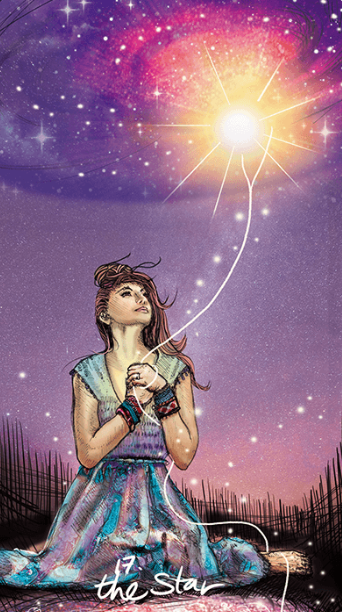
Opening image: The Black Queer Tarot
Image 2: Beth Maiden.
Images 3 and 4: Divine Diversity Tarot
Image 5: The Light Seer’s Tarot


Monday, June 07, 2021

“A Book About Revolutionary People That Feels Revolutionary Itself”

Since 2009 I’ve shared every year during the month of June a series of “Queer Appreciation” posts.

Each series is comprised of a number of informed and insightful writings to mark Gay Pride . . . or, as I’ve preferred to call it since 2011, Queer Appreciation.

I always try to include in each series a diverse range of writers and topics; and, in general, the writings I share are positive, proactive and celebratory.

I start this year’s Queer Appreciation series with an excerpt from Scott W. Stern’s review of Aaron Lecklider’s Love’s Next Meeting: The Forgotten History of Homosexuality and the Left in American Culture.

_______________________


Back in October, a mini-viral tweet asked writers, “Give the worst possible elevator pitch for your book.” Aaron S. Lecklider, a professor of American studies at the University of Massachusetts Boston, replied, “Queer people actually were national security risks.”

The jokey tweet alludes to a violent history: that of the “Lavender Scare,” the mid-century moral panic in which federal and state officials purged thousands of queer people from government employment on the grounds that “sexual perverts” were “perhaps as dangerous as the actual Communists,” as one Republican politician put it in 1950. The Lavender Scare – intimately connected to but ultimately distinct from the McCarthyite “Red Scare” – contributed immensely to hateful popular understandings of queerness as a psychological disease and a danger to “normal” people.

It also led much of the burgeoning gay rights movement to insist that queers were not dangerous – at least, so long as they were clean-cut, white, bourgeois, and conformed to conventional gender norms.

Implicit in this commitment to “respectable queerness” was an erasure of the presence of queer people who did not fit neatly into normative boxes. Post-Stonewall, those who were often marginalized and ignored included the radical queers that threw bottles at Stonewall, founded the Gay Liberation Front (GLF) and Street Transvestite Action Revolutionaries (STAR), and fundamentally changed the trajectory of the early years of the HIV/AIDS epidemic. But what of the radical queers in the years before the Lavender Scare? Who were they?

One stab at answering this question is Lecklider’s invigorating new book Love’s Next Meeting: The Forgotten History of Homosexuality and the Left in American Culture – the one about how queer people “actually were national security risks.” Indeed, writes Lecklider, in the first half of the twentieth century, “a broad cross-section of sexual dissidents . . . took advantage of their space on the margins of American society to throw themselves into leftist campaigns.” In other words, queer people were abundant among American radicals decades before the rise of an organized mass movement for gay rights. And while much of the scholarship on queer history “discounts the Old Left due to its perceived homophobia,” Lecklider locates a “counter-history where possibility, visibility, and resistance converged at the intersection of homosexuality and the Left.”

. . . Lecklider has supplemented his archival sleuthing with insightful interpretations of “cultural works” – novels, poems, and memoirs – many of which reveal far more of a queer presence on the Left than, say, the official records of the Communist Party. The result is a startling and joyful work of scholarship, a book about revolutionary people that feels revolutionary itself.


To read Scott W. Stern’s review of Aaron Lecklider’s Love’s Next Meeting in its entirety, click here.


NEXT: Remembering Dusty Springfield’s
“Daring” 1979 Gay-Affirming Song


See also the previous Wild Reed posts:
• Remembering the Stonewall Uprising on Its 50th Anniversary
• The Queer Liberation March: Bringing Back the Spirit of Stonewall
• Historian Martin Duberman on the Rightward Shift of the Gay Movement
• Reclaiming and Re-Queering Pride
• Recovering the Queer Artistic Heritage


The Wild Reed's 2020 Queer Appreciation series:
• Zaylore Stout on Pride 2020: “What Do We Have to Be Proud Of?”
• Francis DeBernardo on the U.S. Supreme Court Ruling on Title VII: “A Reason for All Catholics to Celebrate”
• Mia Birdsong on the “Queering of Friendship”
• The Distinguished Rhone Fraser: Cultural Critic, Bibliophile, and Dramatist
• “To Walk the World Without Masks”
• What We Are Hoping and Fighting For


The Wild Reed's 2019 Queer Appreciation series:
• Quote of the Day – May 31, 2019
• James Baldwin’s Potent Interweavings of Race, Homoeroticism, and the Spiritual
• John Gehring on Why Catholics Should Participate in LGBTQ Pride Parades
• A Dance of Queer Love
• The Queer Liberation March: Bringing Back the Spirit of Stonewall
• Barbara Smith on Why She Left the Mainstream LGBTQI Movement
• Remembering the Stonewall Uprising on Its 50th Anniversary
• In a Historic First, Country Music’s Latest Star Is a Queer Black Man
• Historian Martin Duberman on the Rightward Shift of the Gay Movement
• Queer Black Panther


The Wild Reed's 2018 Queer Appreciation series:
• Michelangelo Signorile on the Rebellious Purpose of Queer Pride
• Liberating Paris: Exploring the Meaning of Liberation in Paris Is Burning
• Stephanie Beatriz on the Truth of Being Bi
• Queer Native Americans, Colonialism, and the Fourth of July


The Wild Reed's 2017 Queer Appreciation series:
• Our Lives as LGBTQI People: “Garments Grown in Love”
• On the First Anniversary of the Pulse Gay Nightclub Massacre, Orlando Martyrs Commemorated in Artist Tony O'Connell’s “Triptych for the 49”
• Tony Enos on Understanding the Two Spirit Community
• Making the Connections


The Wild Reed's 2016 Queer Appreciation post of solace, inspiration and hope:
• “I Will Dance”


The Wild Reed's 2015 Queer Appreciation series:
• Vittorio Lingiardi on the Limits of the Hetero/Homo Dichotomy
• Reclaiming and Re-Queering Pride
• Standing with Jennicet Gutiérrez, “the Mother of Our Newest Stonewall Movement”
• Questions for Archbishop Kurtz re. the U.S. Bishops' Response to the Supreme Court's Marriage Equality Ruling
• Clyde Hall: “All Gay People, in One Form or Another, Have Something to Give to This World, Something Rich and Very Wonderful”
• The (Same-Love) Dance Goes On


The Wild Reed's 2014 Queer Appreciation series:
• Michael Bayly’s “The Kiss” Wins the People's Choice Award at This Year's Twin Cities Pride Art Exhibition
• Same-Sex Desires: “Immanent and Essential Traits Transcending Time and Culture”
• Lisa Leff on Five Things to Know About Transgender People
• Steven W. Thrasher on the Bland and Misleading “Gay Inc” Treatment of the Struggle to Overturn Prop 8
• Test: A Film that “Illuminates Why Queer Cinema Still Matters”
• Sister Teresa Forcades on Queer Theology
• Omar Akersim: Muslim and Gay
• Catholics Make Their Voices Heard on LGBTQ Issues


The Wild Reed's 2013 Queer Appreciation series:
• Doing Papa Proud
• Jesse Bering: “It’s Time to Throw 'Sexual Preference' into the Vernacular Trash”
• Dan Savage on How Leather Guys, Dykes on Bikes, Go-Go Boys, and Drag Queens Have Helped the LGBT Movement
• On Brokeback Mountain: Remembering Queer Lives and Loves Never Fully Realized
• Manly Love


The Wild Reed's 2012 Queer Appreciation series:
• The Theology of Gay Pride
• Bi God, Somebody Listen
• North America: Perhaps Once the “Queerest Continent on the Planet”
• Gay Men and Modern Dance
• A Spirit of Defiance


The Wild Reed's 2011 Gay Pride/Queer Appreciation series:
• Gay Pride: A Celebration of True Humility
• Dusty Springfield: Queer Icon
• Gay Pioneer Malcolm Boyd on Survival – and Victory – with Grace
• Senator Scott Dibble’s Message of Hope and Optimism
• Parvez Sharma on Islam and Homosexuality


The Wild Reed’s 2010 Gay Pride series:
• Standing Strong
• Growing Strong
• Jesus and Homosexuality
• It Is Not Good To Be Alone
• The Bisexual: “Living Consciously in the Place Where the Twain Meet”
• Spirituality and the Gay Experience
• Recovering the Queer Artistic Heritage


The Wild Reed's 2009 Gay Pride series:
• A Mother’s Request to President Obama: Full Equality for My Gay Son
• Marriage Equality in Massachusetts: Five Years On
• It Shouldn’t Matter. Except It Does
• Gay Pride as a Christian Event
• Not Just Another Political Special Interest Group
• Can You Hear Me, Yet, My Friend?


See also:
• Worldwide Gay Pride – 2017 | 2016 | 2013 | 2012 | 2011 | 2010 | 2009 | 2008 | 2007
• A Catholic Presence at Gay Pride – 2013 | 2012 | 2011 | 2010 | 2009 | 2008 | 2007
• Gay Pride: A Catholic Perspective
• Police, Pride, and Philando Castile

Image: Photographer unknown.


Monday, July 06, 2020

What We Are Hoping and Fighting For


.
The Wild Reed’s 2020 Queer Appreciation series concludes this evening with excerpts from BuzzFeed contributor Alexey Kim's wonderful photo-essay on this year's Queer Liberation March for Black Lives and Against Police Brutality in New York City.

During the June 28 march, Kim photographed a number of participants, invited them to say why they were participating, and asked them about their hopes for the future. The resulting compilation of images and comments is well worth checking out in its entirety. Following is just a snippet of Kim's inspiring and hope-filled project. Enjoy!


Says Joel Rivera (pictured in this post's opening image):

I guess it's kind of cliché: I hope for equality. I hope that if I was to go on a train . . . I wouldn't face any harassment. I hope that there is a new system that doesn’t see the color of your skin but sees the content of your character. That's what Martin Luther King said.

I hope that every single person in the world, now that’s crazy, but I hope that every single person in the world finds love in their heart. If you have love, it doesn't matter your sexuality, your gender identity, your skin color, because you will just love everybody. And honestly, I take it back when I said it was a stretch. It should not be a stretch to be able to love everyone, but some people just make it so difficult.


Says Katie Rose Summerfield (pictured with her children above):

I am an artist and a human in the world who cares about the humanity of all people. I think it’s essential that we show up for our brothers and sisters who have not been treated with any fairness, kindness, justice, or humanity for hundreds of years. And it’s time that we all be accomplices in the fight for abolition of white supremacy, racism, police brutality, and inequality across everything.

My hopes for the future are that everybody in the world, everybody in America, feels safe to live in [. . .] as they are, to be exactly who they are, to be loved tirelessly and fearlessly, and for everyone to feel safe.


Above (from left): Terence Edgerson, Samy Nemir Olivares, and Luis Mancheno.

Says Terence:

What brought me here today was trans rights, Black Lives Matter, and equality for all. . . . We are marching together to be with all my sisters and brothers and non-binary folks.

My hope for the future is that I won’t have to be out on the streets saying “Trans Lives Matter”; I won’t have to be out on the streets saying “Black Lives Matter”; I won’t have to be on the streets saying “Black Trans Lives Matter.”

It’s beautiful that we are saying those [thing], but the reason that we are out here saying [them] is because we are continuously killed and there is no justice and we have to keep fighting and protesting. I’m hoping for the future that we no longer have to be out on the streets fighting against the state, and [the] state will side with us, and they will give us protection so that Black trans girls will have protection, Black people will have protection. We want to fight against people that are killing us.


Says Samy:

I'm here because this is the real Pride. It started 51 years ago with Sylvia Rivera and Marsha P. Johnson – a riot against police brutality – and we are still criminalized and oppressed by the state and the police forces. So we need to continue organizing, running for office, voting, and getting engaged with our community to actually fight for change, including social justice and a [city] budget that really helps our community.

So we are honoring that life and that spirit of resistance. This is what this march is [about] – to bring that rioting spirit to actually fight for equal justice.

I really hope that we don’t have to fight against the state and discrimination, that we live in [a] society that honestly honors our lives, that we have full respect and we have full equality and justice. And that starts with the Equality Act, but we need so much more.

Legal marriage equality [happened], but that just got us the right to love. Now we need the right so we can walk in the streets without violence and being murdered, so the moment that no Black trans women are being killed in the streets, when people are not discriminated at work, when all the eradication of discrimination happens. That’s why we are truly here; that’s why we are marching.

We are not only celebrating that we could march because of the history of our movement, but because there is so much work to be done.

This is just the city’s Pride as Black Lives Matter rally, because the most important, impacted members of our LGBTQ community are the LGBTQ people of color: Black trans women, Latinx, undocumented queer immigrants. . . . It is a movement of solidarity.

Fighting for racial justice is to fight for queer rights; fighting for queer rights is fighting for racial justice. So we are not only standing in solidarity with Black Lives Matter, we also have Black queer lives, we also have immigrant Latinx queer lives and people of color. So this is a movement of solidarity, but we are both because our struggles are very interconnected. That’s why this Pride, this Queer March is so powerful, because it combines the intersectional lives and identities that we all live and they have been oppressed for so long and this is the moment for liberation.


Says Luis:

I am here with my friends and my community. This is our family. Until all of us are liberated, every single person in our community is liberated – trans, Black, queer, nonbinary, Latino people – the queer community will not stop until all of us are fully equal.

And at the end, us browns and Black people, we are also protesting against the mainstream LGBTQ community which has for so long discriminated against us, discriminated against our most vulnerable members. And we are saying today: This is the Pride that we want; this is the Pride that we celebrate and nothing from now on in the future will be less.


Says Rollerena (pictured above center):

My hope for the future is the blue wave on election day, that everybody gets out there and votes; votes with their conscience and gets this horrible regime out of office.


Says Bones Jones:

I am here today at the Queer Liberation March to liberate humanity, honestly. People of the LGBTQIA+ community are the backbone of how culture moves in this country. So I am here to support humanity in this outfit, have a good time, and support those who need support.

My hope for the future is that all people have the same rights, the same opportunities, the same abilities. We’ve seen what happens year after year after year when it comes to these things. It gets us nowhere to just oppress one group of people, so my hope and my wish is that we all just get the equal rights, equal opportunities, and just live in peace, celebrate in peace, love in peace, have sex in peace.


Says Cory Walker:

I am out here celebrating Black and brown trans lives and just witnessing a revolution.

It’s been a beautiful way to emerge back into the new world and to be in New York City is such a blessing. Because this is kind of where that kind of liberation began: going to Stonewall and just feeling that energy. I feel like the ancestors are really here. I’m taking it moment by moment; it’s really a lot to digest, but it’s everything we’ve been asking for, so. I think this is our time.

Oh, [I have] so many [hopes]. I would say for everyone, every being who enters this plane, this earth, this physical experience, to know that there is so much worthiness and rightness in their existence.

I would love for kids to be born knowing that there is a reason that they are here and that they have the power, that their evolution and their natural flow is going to look so specific for them, and that’s beautiful. And I want the people who maybe didn’t have that, who are kind of learning that about themselves now, I want them to heal and be graceful knowing that they always did and survived the best way they knew how.

And for people to just have more empathy and compassion and to really see each other again more, maybe for the first time. We are all kind of seeing ourselves for the first time. I think we are all being initiated into ourselves. So, my hope for the future, my hope for now, really, [is] just to continue [the] celebration.


To experience Alexey Kim's photo-essay, “This Is The Future Queer Liberation Protesters Are Fighting For,” in its entirety, click here.


Related Off-site Links:
Queer Liberation March Floods New York Streets – Harry Reis (Yahoo! News, June 28, 2020).
Pride Can’t Go Back to What It Was Before – Spencer Kornhaber (The Atlantic, June 30, 2020).
On Stonewall Anniversary, the NYPD Launched a Brutal Unprovoked Attack on LGBTQ People – Bil Browning (LGBTQ Nation, June 29, 2020).

For previous posts in the The Wild Reeds' 2020 Queer Appreciation series, see:
• Zaylore Stout on Pride 2020: “What Do We Have to Be Proud Of?”
• Francis DeBernardo on the U.S. Supreme Court Ruling on Title VII: “A Reason for All Catholics to Celebrate”
• Mia Birdsong on the “Queering of Friendship”
• The Distinguished Rhone Fraser: Cultural Critic, Bibliophile, and Dramatist
• “To Walk the World Without Masks”

See also the previous posts:
• The Queer Liberation March: Bringing Back the Spirit of Stonewall
• Reclaiming and Re-Queering Pride
• Remembering the Stonewall Uprising on Its 50th Anniversary
• Michelangelo Signorile on the Rebellious Purpose of Queer Pride
• Standing with Jennicet Gutiérrez, “the Mother of Our Newest Stonewall Movement”
• Historian Martin Duberman on the Rightward Shift of the Gay Movement
• Barbara Smith on Why She Left the Mainstream LGBTQI Movement
• Police, Pride, and Philando Castile
• Making the Connections
• Worldwide Gay Pride – 2017 | 2016 | 2013 | 2012 | 2011 | 2010 | 2009 | 2008 | 2007
• A Catholic Presence at Gay Pride – 2013 | 2012 | 2011 | 2010 | 2009 | 2008 | 2007
• Gay Pride: A Catholic Perspective

Images: Alexey Kim.


Sunday, June 28, 2020

Mia Birdsong on the “Queering of Friendship”


.
The Wild Reed's 2020 Queer Appreciation series continues with an excerpt from Mia Birdsong's insightful June 20 Salon article, “The Queering of Friendship: Rethinking Platonic Relationships, Guided by LGBTQ Models.” It's an article that's actually an excerpt from Mia's book, How We Show Up: Reclaiming Family, Friendship, and Community.

The idea of platonic boyfriends/girlfriends/partners and “Boston marriages” (a 19th-century phrase describing two women who shared a life and lived together without the support of a man) has been around for a while. Back in the day, sometimes these relationships were actually sexual relationships between folks who couldn't be out as gay because it was illegal, socially unacceptable, and dangerous. But sometimes they were intimate non-sexual friendships.

A more modern umbrella term for these relationships is queerplatonic. The word was coined, defined, and redefined by asexual and aromantic people to describe a relationship that is not romantic, but emotionally closer than what we generally think of as friendship. The “queer” part is not about sexuality, but about the queering of our ideas about what relationships look like. As writer and activist Shon Faye puts it, “Queer is about removing labels and replacing them with a question. It is a side eye and a challenge back to mainstream society and politics. It says, 'I don't know the answer, but why are you asking the question?'” Queering relationships is rejecting the restraints of convention, but it's also liberatory truth-finding. It allows us to look at a relationship (and so many other things) stripped of preconceptions and ask, What is this really? What are the components? What is happening inside of it? Anyone of any sexual orientation, gender, or other relationships status can be in a queerplatonic relationship.

Having more language and examples that articulate a way to be in relationship with others outside conventional understanding is affirming because I have, and want more, relationships like that. Even though I'm not aromantic or asexual, the paths people with those identities are forging to be wholly who they are makes room for the rest of us too. People are living into identities that aren't accepted or even recognized by society at large. Their insistence on self-definition creates space for all of us to be self-determined in our identities.

. . . “I think of my family as a queer family even when it's full of straight people. This is an unconventional approach to family,” Gabi, who is queer, transgender, and genderqueer, told me, reflecting on the idea that “queering” is about bucking convention — not just for its own sake, but because it's what actually works. They told me, “I love the defiance of the bumper sticker 'Not gay as in happy but queer as in fuck you.'”

. . . Perhaps part of our challenge in thinking expansively about our friendships is that we're limited by the word friend. Like community, the word friend has come to be so broad as to have lost meaning. We can have thousands of “friends” on social media, including people we have never met and make no effort to know. Friend can describe a work acquaintance whose personal life you know nothing about or a close intimate with whom you share history and your realest self. There are beautiful words in languages other than English that get at some of the richness and variety of friendship, like the Gaelic phrase anamcara, which literally translates as “soul friend”; or the Aramaic havruta, which means “friend” and, depending on your brand of Judaism, can mean a person with whom you study the Torah or someone with whom you engage in self-education; or the Japanese nakama, which can mean “buddy” or “people who you can trust in all things.” And then there is the Black American practice of applying familial words to friends who are like family, like auntie or brother. Knowing that there are other words supports my ability to see the possibilities that were previously obscured to me even if I never use them.

While part of what I'm working toward is flattening the relationship hierarchy, I'm also clear that my friendships are part of what keep my marriage working. I get a range of love, affirmation, attention, inspiration, perspective, and engagement that isn't dependent on my husband or the state of our relationship. My husband, as wonderful as he is, does not have much to offer me when it comes to some things that are important to me, like narrative change strategy or Black feminist liberation (and I don't have much to offer him when to comes to music creation or particle physics). When I am pissed at him, my friends allow me to vent, but also move me toward empathy and reconciliation. And there is a deep joy and rightness with the world that I get from sitting in the presence of my closest girlfriends, loving one another, laughing, eating, drinking, and being unapologetically ourselves, something that no man will ever give me.


To read Mia Birdsong's article on the queering of friendship in its entirety, click here.


NEXT: The Distinguished Rhone Fraser:
Cultural Critic, Bibliophile, and Dramatist


For previous installments in the The Wild Reeds' 2020 Queer Appreciation series, see:
• Zaylore Stout on Pride 2020: “What Do We Have to Be Proud Of?”
• Francis DeBernardo on the U.S. Supreme Court Ruling on Title VII: “A Reason for All Catholics to Celebrate”

See also the previous Wild Reed posts:
• Manly Love
• Reclaiming the Power of Male Touch
• Edward Sellner on the Archetype of the Double and Male Eros, Friendships and Mentoring
• Remembering a Daring Cinematic Exploration

Image 1: Getty stock image.
Image 2: Photographer unknown.


Saturday, September 07, 2019

Historian Martin Duberman on the Rightward Shift of the Gay Movement

I realized today that with my sudden need to return to Australia last month I did not finish this year's Queer Appreciation series, one comprised of informed and insightful writings to mark Gay Pride . . . or, as I prefer to call it (since 2011), “Queer Appreciation.”

In a previous installment of this year's series I shared black feminist author and activist Barbara Smith's critique of the contemporary gay rights movement. In today's installment I share a similar critique by historian, author and activist Martin Duberman (right), who writer Jonathan Kozol describes as "a deeply moral and reflective man who has engaged the greatest struggles of our times with an unflinching nerve, a wise heart, and a brilliant intellect." . . . Yes, definitely my kind of guy!

Actually, I find both Duberman's and Barbara Smith's insights interesting and relevant – including personally relevant. After all, both identify the early-mid 1990s, which was the time I relocated to the U.S. from Australia, as the critical point when the gay movement in the U.S. shifted markedly to the right. In the 25 years since, I've witnessed (and often proactively sought to disrupt and correct) this unfortunate shift.

The words of Duberman that I share today are excerpted from the memoir section of The Martin Duberman Reader: The Essential Historical, Biographical, and Autobiographical Writings (The New Press, 2013).

_______________________


The effect of AIDS on public opinion had [by 1992] become a double-edged sword: heightened fear of dreaded gay “carriers” counter-balanced by increased sympathy for their suffering. President Clinton’s new administration in 1992 exemplified the contradiction: when his initial impulse to lift the ban on gay and lesbians serving openly in the military met with a barrage of opposition, he scurried for cover, settling with relief on a “compromise” solution of “Don’t Ask, Don’t Tell” that all at once fully exploited the military service of gay people while pretending they didn’t exist as human beings.

At the core of homophobia, it has always seemed to me, lies the central fear of “differentness.” Why the full, splendid spectrum of humanity should inspire terror in some people rather than joyful wonder is a puzzler. What can be learned from a neighbor whose expressions, habits, and values are a duplicate of one’s own? “Nothing!” exults the crowd, “and that’s exactly the way we like it. It was hard enough learning the dominant social codes; having finally mastered them, and feeling accepted and comfortable, let us alone!”

Yet the softening of homophobia was real. In a culture with a profoundly contradictory heritage of conformity and permissiveness, the way forward would necessarily be gradual (though only if the demands were for full and instant change; you ask for the whole pie in order to get a portion of it) and would periodically be marked by retreats – yet the fact would remain that nowhere else in the world was there a comparably vibrant and effective gay rights movement. In the 1970s, when the first gay civil rights measures were submitted to public referendum, only 29 percent of the voters reacted favorably; by the early nineties, the percentage had risen to 39 percent – and would continue to rise.

In 1993,a Newsweek article wrote us up as “the new power brokers” (a weird exaggeration) and the cover of an issue of New York magazine read “The Bold, Brave New World of Gay Women.” Yet the early nineties also saw a 30 percent increase in assaults and hate crimes against gay people. The dragon of homophobia had hardly been slain. The slow increase in respect and acceptance amounted to no more than a fragile inclusion,and the inclusion was pretty much confined to those gay people who looked and behaved like “normal” folks – meaning primarily middle-class white men who put their faith in polite lobbying, eschewed confrontational tactics, and shied away (as the seventies gay movement had not) from left-wing issues relating to racism, sexism, and economic inequality. The April 25, 1993 March on Washington, which I took part in, exemplified the turn away from “extremist” ACT-UP zaps; to me it seemed a bland, juiceless event more parade than protest – especially when contrasted with the earlier marches in 1979 and 1987.

. . .[B]y the mid-nineties many in the gay world, and particularly in the more tolerant urban areas, chose to believe that equality was around the corner, bound to happen, that a little more tidying up around the edges – perhaps best done by pushing the freaks as far off-stage as possible – and the struggle would be over.

Paralleling the rise of optimism about the goal of converting AIDS to a “manageable disease” was a surge of conviction that as a people we were now unstoppable. Some prominent gay leaders and organizations, and in particular Elizabeth Birch and the influential (largest and wealthiest) Human Rights Campaign, were entirely in accord with the goal of assimilation and with fostering an image of gay people that would accelerate that process. That meant replicate themselves, featuring one segment only of a diverse gay community: mostly white, educated, well-spoken folks who dressed for success and held mainstream values.

Those gay people with left-wing politics saw assimilationism as defeat and deceit – a misrepresentation of the many different communities that constituted the gay world and a denial of the subversive potential of our distinctive values and perspectives. The lefties didn’t want to serve openly in the military; they wanted to destroy the war machine. They didn’t want to settle down into traditional marital relationships, nor give them privileged status; they wanted to challenge sexual monogamy, gender stereotyping, and traditional patterns of child rearing.

But left-wing gays had shrunk by the mid-nineties, in contrast to the early seventies, to a small, nearly silent voice in the community as a whole. The majority of gay people chose to see themselves as “just folks”; their highest aspiration was to join the mainstream, not to challenge its orthodoxies.

Many ACT-UP chapters had ceased to operate by the late 1990s and others had refocused their efforts on the global issue of getting affordable versions of the new drugs to poor countries. By this point the gay movement as a whole had drifted decidedly to the right, with the issues of gay marriage and gays in the military leapfrogging to the top of the agendas of the most powerful movement organizations (and especially the Human Rights Campaign). As early as 1994, during the celebrations of Stonewall’s twentieth-fifth anniversary, one of the top fund-raising events – to the disgust of everyone one inch left of center – was held on the deck of the aircraft carrier Intrepid; for weeks before, ads for credit cards with rainbow flags appeared in the gay male press. That press, incidentally, was itself becoming unrecognizably different from the politically aware publications (New York Native, QW, etc.) that had once held sway. By the late nineties, the popular favorites were Genre (specializing in poolside swimwear) and OUT, which as late as 2008 boasted a five-man fashion department, but not a single literary, theater, or politics editor.


NEXT: Queer Black Panther


For previous installments in The Wild Reed's 2019 Queer Appreciation series, see:
• Quote of the Day – May 31, 2019
• James Baldwin's Potent Interweavings of Race, Homoeroticism, and the Spiritual
• John Gehring on Why Catholics Should Participate in LGBTQ Pride Parades
• A Dance of Queer Love
• The Queer Liberation March: Bringing Back the Spirit of Stonewall
• Barbara Smith on Why She Left the Mainstream LGBTQI Movement
• Remembering the Stonewall Uprising on Its 50th Anniversary
• In a Historic First, Country Music's Latest Star Is a Queer Black Man

See also the previous Wild Reed posts:
• A Lose/Lose Situation
• Making the Connections
• Michelangelo Signorile on the Rebellious Purpose of Queer Pride
• Reclaiming and Re-Queering Pride


Friday, June 28, 2019

Remembering the Stonewall Uprising on Its 50th Anniversary


Above: Village Voice photographer Fred McDarrah took this photo near the Stonewall Inn on June 28, 1969. (Photo: Getty Images)


Fifty years ago today, at 1:30 in the morning on June 28, 1969, New York City police officers raided a gay- and trans-friendly bar called the Stonewall Inn on Christopher Street in Greenwich Village. As the police began dragging some of the patrons out, the community fought back, sparking three days of unrest and rioting. Their historic resistance launched the modern-day LGBTQ movement and became known as the Stonewall uprising.

To mark this momentous event I continue this evening The Wild Reed's 2019 Queer Appreciation series by sharing an excerpt from Andy Thayer's essential article, "Why Stonewall Matters Today," published last Saturday, June 22, 2019 by Jacobin.

Stonewall, Thayer reminds us, "wasn’t just an uprising for LGBT rights — it was also part of a broader movement that fought racism, war, and poverty." To go beyond today’s "tepid gay activism," Thayer says, we need to remember and embody anew the uprising's anti-capitalist spirit.

________________________________


The police raid on New York’s Stonewall Inn fifty years ago this month is widely viewed as the most pivotal event in LGBT* history, spawning a movement which prompted many millions around the globe to come out of the closet and fight for their freedom. But for all its significance, the movement launched by the 1969 Stonewall Rebellion remains poorly understood today, even by many radical LGBT people who sing its praises.

Black Lives Matter activists today make the legitimate complaint that “moderates” defang the radical ideas of such bold predecessors as Martin Luther King, Jr, Ella Baker, Malcolm X, and the Black Panther Party by either outright distorting their ideas or ignoring them altogether. Likewise, on this half-century anniversary of Stonewall, we should expect similar treatment from “mainstream” LGBT people, liberals and conservatives alike, for whom Stonewall is an occasion for vacuous self-congratulation, and parades of rainbow-themed beer floats and politicians.

Stonewall was a profoundly radical event, and not just because a multiracial group of LGBT people rioted for a few nights against the police, turning a routine aspect of anti-gay oppression on its face.


The Stonewall movement unapologetically challenged generations of gender stereotypes, a huge contrast with the moderate “homophile” movement that had preceded it. Whereas homophile activists had obsessed at proving how “normal” and “unthreatening” LGBT people were to society as it already existed, Stonewall-era activists consciously saw society itself as sick and in need of radical revision.

Whereas today only a radical minority of LGBT activists decry racist violence by the police and US military to the point of calling for the abolition of both institutions, during the Stonewall era, many LGBT activists supported the overtly revolutionary Black Panther Party as it faced a nationally coordinated campaign of police violence.

Whereas today most LGBT nonprofits have nothing to say about Americas war’s abroad, or worse, wrap themselves in US patriotism, most local Stonewall-era organizations adopted the name “Gay Liberation Front” (GLF) in conscious solidarity with Vietnam’s “National Liberation Front” fighting against US troops. They rejected US nationalism and hoped the Vietnamese would defeat the United States and force it out of their country.

In short, the Stonewall movement was the antithesis of respectability politics, representing instead a radical anti-oppression politics that thoroughly critiqued all of US society.


Stonewall Wasn’t Unique

Despite some ham-fisted attempts to whiten the event, most firsthand accounts note that the Stonewall Inn was a lower-class “dive bar” with a racially mixed clientele, including sexual minorities of all sorts. Recent years have seen vigorous debates about the gender identity, race, and sexual orientation of the person who threw the first brick in retaliation for the police raid, endlessly trying to determine if it was a trans woman of color who threw the brick, a lesbian woman (race unspecified) who actively struggled as police threw her into a squadrol, or someone else entirely.

But aside from debunking any notion that it was the upper-crust, Human Rights Campaign cocktail-sipping crowd who rebirthed our movement, the debate is pointless. That’s because the riot at Stonewall wasn’t unique.

There were at least three other LGBT riots in reaction to violent police raids on LGBT venues between 1966 and 1969. Furthermore, given how poorly documented Stonewall was at the time — just a snarky Village Voice article and a few photographs — it’s likely that there were other LGBT riots around the same time that are now lost to history.

What made Stonewall special was not the riot itself, but the specific historical context in which it took place, and how that context in turn prompted LGBT people to begin organizing a radical movement in the weeks and months following. It was the post-riot organizing, not the riot itself, which caused it to gain iconic status in our history.


To read article "Why Stonewall Matters Today" in its entirety, click here.


NEXT: In a Historic First, Country Music's
Latest Star Is a Queer Black Man


Related Off-site Links:
At Stonewall, Thousands Celebrate 50th Anniversary of LGBTQ Uprising – Ali Swenson and Jennifer Peltz (Associated Press via The Huffington Post, June 28, 2019).
Stonewall Was the Moment Queerness Glitter-Bombed the World – Sharon Kleinbaum (The Nation, June 28, 2019).
History Professor Looks Back on Pivotal LGBTQ Protests – Ivan Natividad (SF State News, June 17, 2019).
They Were Both at the Stonewall Riots, But Separately. Now They're Married – Jeremy Hobson (WBUR.com, June 27, 2019).
50 Years On, the Radical Promise of Stonewall Is Still Unmet – Samantha Allen (Crosscut, June 28, 2019).

For previous installments in The Wild Reed's 2019 Queer Appreciation series, see:
• Quote of the Day – May 31, 2019
• James Baldwin's Potent Interweavings of Race, Homoeroticism, and the Spiritual
• John Gehring on Why Catholics Should Participate in LGBTQ Pride Parades
• A Dance of Queer Love
• The Queer Liberation March: Bringing Back the Spirit of Stonewall
• Barbara Smith on Why She Left the Mainstream LGBTQI Movement


Wednesday, June 26, 2019

Barbara Smith on Why She Left the Mainstream LGBTQI Movement


NOTE: This post serves as the sixth installment in The Wild Reed's 2019 Queer Appreciation series.


Throughout the month of June, The New York Times is doing a series of articles in which they ask 10 prominent members of the LGBTQI community (or "L.G.B.T.Q. community" as they write it) to reflect on their experiences in the decades after the Stonewall uprising. One of the people featured in this series is black feminist author and activist Barbara Smith, who talks about her disillusionment with the mainstream LGBTQI movement and why she ultimately left it.

Given my own disillusionment with much of the movement and my long-time efforts to instead make wider connections, I appreciate Smith's recollections and perspective, finding them both insightful and affirming.

Following, with added images and links, are Barbara Smith's reflections on her "life after Stonewall."

_________________________


I have not been active in the organized L.G.B.T.Q. movement for a long time.

I enthusiastically participated in the first National March on Washington for Lesbian and Gay Rights in 1979. About 100,000 of us were there from around the country, a good turnout but much smaller than subsequent marches – when being out and proud was less dangerous.

At the second national march, in 1987, I was invited to be one of eight major speakers. It was exhilarating to speak before a crowd of nearly one million people. At the same time, it was devastating to see the vast AIDS quilt on display in one place for the first time, symbolizing so much human loss.

I felt ambivalent about the 1993 march. For me it was overly focused on gays in the military and in presenting our community as an affluent consumer group to win favor from the corporate mainstream. This supposed affluence was not even real except for a privileged sector of largely white gay men.

In 1999 the tight circle of organizers of the Millennium March in Washington reflected how narrow and hierarchical the movement had become. A group of us established the multiracial Ad Hoc Committee for an Open Process. Ted Beck, Mandy Carter, Chandra L. Ford, Kara Keeling and I wrote an open letter to the march organizers titled “Will People of Color Pay the Price?” Our efforts at opening up the organizational process were not successful. I did not attend the 1999 march or any subsequent ones. For me the Millennium March was the last straw.

I prefer to put my energy into multi-issue organizing. In the 1970s and 1980s, I co-founded the Combahee River Collective, a black feminist group, and Kitchen Table: Women of Color Press to give women of color, lesbians of color and even gay men of color a voice.

Three decades later, despite some genuine efforts to increase diversity, especially in progressive movement circles, exclusivity and elitism still divide us. We have won rights and achieved recognition that would have been unimaginable 50 years ago, but many of us continue to be marginalized, both in the larger society and within the movement itself.

One in four people in the L.G.B.T.Q. community experienced food insecurity in 2017. Twenty-four percent of lesbians and bisexual women earn less than the federal poverty line. L.G.B.T.Q. youth have a 120 percent higher risk of experiencing homelessness than heterosexual, cisgender youth.

Black men who have sex with men have the highest rates of new H.I.V. diagnoses. People who are transgender, particularly transgender women of color, experience appalling levels of violence, and this violence is exacerbated by poverty and racism.

These statistics show it is not possible to achieve justice in a vacuum. Marriage equality and celebrity culture will not solve it. Neither will political agendas focused on unquestioned assimilation. Gaining rights for some while ignoring the violation and suffering of others does not lead to justice. At best it results in privilege.

Unless we eradicate the systemic oppressions that undermine the lives of the majority of L.G.B.T.Q. people, we will never achieve queer liberation.

– Barbara Smith
The New York Times
June 19, 2019


NEXT: Remembering the Stonewall Uprising
on Its 50th Anniversary


Related Off-site Links:
Barbara Smith Is Still One of Feminism's Most Essential Voices – Dianca London Potts (Shondaland, February 15, 2018).
Know Barbara Smith: One of Our First Proud, Out Black Lesbians – Janet Mock (Out, February 12, 2019).
Ain't Gonna Let Nobody Turn Me Around – Barbara Smith's Official Website.

See also the previous Wild Reed posts:
• Michelangelo Signorile on the Rebellious Purpose of Queer Pride
• Reclaiming and Re-Queering Pride
• Police, Pride, and Philando Castile
• Making the Connections
• Standing with Jennicet Gutiérrez, "the Mother of Our Newest Stonewall Movement"
• Steven W. Thrasher on the Bland and Misleading "Gay Inc" Treatment of the Struggle to Overturn Prop 8
• A Lose/Lose Situation
• The Queer Liberation March: Bringing Back the Spirit of Stonewall

Image 1: Getty Images via Shondaland
Image 2: Photographer unknown.
Image 3: Photographer unknown.
Image 4: Mickalene Thomas.


Friday, May 31, 2019

Quote of the Day

This Pride Month there’s a lot to be mad about. . . . If the gatekeepers of our community (those powerful, mostly white, cis, able-bodied wealthy nonprofit directors, CEOs, political insiders) really believed in what our ancestors and transcestors at Stonewall were fighting for, we would see more elevating of grassroots Black and Brown leadership, the people who actually carry the torches lit by the founders of our movement. We would see more money going into efforts supporting those who are low income, incarcerated, homeless, and sex workers. . . . We would see less of an interest in bringing on token queer and trans people – many who already have major platforms and little-to-no connection to the community throughout the rest of the year – in Pride campaigns to support organizations with million-dollar budgets that do work that never directly touches the most marginalized groups within our communities.

– Raquel Willis
Excerpted from “50 Years Later,
Pride Month Is a Disgrace to Our Ancestors
”
Out
May 31, 2019


NEXT: James Baldwin's Potent Interweavings
of Race, Homoeroticism, and the Spiritual


Related Off-site Links:
How the Queer Liberation March Wants to Bring Pride Back to Its Activist Roots – Zachary Zane (Rolling Stone, May 15, 2019).
New York City Gets Ready for the Battle of the LGBT Pride Marches – Tim Teeman (The Daily Beast, May 16, 2019).
James Baldwin’s Blueprint for the LGBTQ+ Rights Movement – Tre'vell Anderson (Out, May 19, 2019).
One Hot New York Night in 1969 Changed the World – Amarra Mohamed (LGBTQ Nation, May 30, 2019).
Activist Miss Major Recounts the First Night of the Stonewall Uprising – Raquel Willis (Out, May 31, 2019).
6 Major Moments in Queer History Beyond the Stonewall Uprising – Elyssa Goodman (Them, June 27, 2018).
Pride Is Still an Elitist White Gay Fantasy – Phillip Henry (Them, June 28, 2018).
Challenging Trump With Powerful Black Queer Stories – Richard A. Fowler (The Huffington Post, October 23, 2017).

See also the previous Wild Reed posts:
• Michelangelo Signorile on the Rebellious Purpose of Queer Pride
• Reclaiming and Re-Queering Pride
• Making the Connections
• A Lose/Lose Situation

Image: ManualRedeye.com