Monday, October 17, 2022

Vaccines and GMOs: Two Very Different Debates

I found the following article when compelled to seek information about the difference between the anti-vaccine movement and the anti GMO (genetically modified organism) movement.

What prompted this seeking on my part was a corporate media piece I read that lumped anti-COVID vaxxers with those opposed to GMOs. As someone who has long questioned and protested GMOs and yet is supportive of vaccines, I was interested in finding an informed and scholarly examination of why one could indeed be opposed to the former while supportive of the latter.

The article I found that most resolutely provides just such an examination is by Laura-Anne Minkoff-Zern and Rick Welsh. It was published five years ago in Renewable Agriculture and Food Systems, a journal publication of Cambridge University Press.

______________________


The Difference Between the Vaccine
and the GMO Food Debates


By Laura-Anne Minkoff-Zern
and Rick Welsh


Renewable Agriculture and Food Systems
September 7, 2017

We are in a political moment where science is under attack. We recently attended one of the over 600 marches throughout the USA, where scientists and others rallied behind defending and protecting proven scientific facts as well as the resources necessary to fund important research. At the march, we saw numerous posters conflating the anti-vaccine and the anti-GMO movements – insinuating that to be skeptical of either is to be anti-science. This comparison was flouted at many of the marches and throughout social media for specific reasons. The agriculture biotechnology industry wishes its products to viewed as unfairly criticized by misinformed and misguided individuals and groups in the same way that activists who argue some vaccines can cause autism are viewed. There has been a move among skeptics themselves to make this analogy pointing to similarities in the industrial organization of the vaccine and GM crop sectors. However, despite that argument, and the fact that there are popular movements in opposition to vaccines and GM crops, the parellels end there.

For instance, the fears of ‘anti-vaxxers’ are based on a widely discredited theory. And, vaccines provide widespread and indisuputable public benefits. Many of us living in developed countries no longer have to fear measles, diphtheria, tetanus, cholera, plague, typhoid, tuberculosis and many other diseases. The anti-vaccine movement, which has been gaining steam in recent decades, has harnessed anti-scientific fears of a safe practice, which saves the lives of millions of people each year. On the other hand, while a majority of studies find foods with genetically modified ingredients to be safe for human consumption, there are a minority of studies that find problems and these tend to involve kidney and liver functions. The minority studies are immediately attacked by industry and sympathetic academics, which discourages more investigation. Though we do not argue that GM crops, or the foods derived from them, are unsafe, there are other reasons to be skeptical of GM crops. Reasons that find no parellel in the vaccine controversy.

For example, the largest percentage of genetically engineered food crops are those that have been developed to be tolerant to herbicides (Ht crops), which are sold to farmers from the same companies that sell them the Ht seeds. The widespread adoption of these crops has resulted in the development of herbicide-tolerant weeds, which in turn require the development of crops tolerant of additional herbicides. This requires farmers to pay for additional pesticide applications. In poorer nations especially, this can lead to increasing amounts of farmer debt.

Additionally, because companies that develop and sell genetically modified seeds have legal patents over their use, they can and do sue farmers with trace amounts of patented genetic material in their fields who do not have a licensing agreement with the company. Even if the presence of the patented material is caused by drifting pollen.

Still many people argue that GM cropss are necessary to ‘feed the world’ – that we have a lack of food available and that genetically modified crops, with their promoted higher yields, are the only way to feed a growing world population. Yet, genetically modified crops have not proven to be able to sustainably increase yields, and in some cases, have decreased yields. The truth is we already produce sufficient food to feed the world’s population. The issue is not availability, but the lack of purchasing power or effective distribution to those in need. Therefore, it is proven that we do need vaccines to ehance public health; while similar arguments cannot be made plausibly for GM crops.

Despite this fact, the FDA is about to spend US$3 million on a PR campaign promoting the ecological, humanitarian and health benefits of GM crops and the foods derived from them, as part of the new federal budget agreement. This is a clear use of public funds being used to benefit private corporations with few or no public benefits. Rather than increase spending which primarily or soley benefits private companies and undermines the rights of farmers, we need to see an increase in policies and funding for sustainable agricultural practices as well as innovative ways to get resources and food into communities where it is lacking. Public incentives for grocery stores that pay living wages to open in food deserts and funds to support existing projects such as urban gardens and food hubs will help feed hungry communities – not increasing the use of a suite of technologies with serious shortcomings.

By labeling convincing and well-founded political and economic critiques of GM crops as anti-science, we are doing a disservice to a true understanding of science and relatedly, of sustainable and renewable food systems. While it is valid for people to be concerned about vaccines and their health and safety – it is a closed case. Alternately, in the case of GM crop, the concerns are less about safety and more about a broader set of issues – namely political and economic ones which are yet to be addressed by GM crop proponents.


Laura-Anne Minkoff-Zern is an Assistant Professor of Food Studies in Falk College at Syracuse University. She is currently working on a book, titled, The New American Farmer: Race, Immigration, and the Struggle for Sustainability.

Rick Welsh is the Falk Family Endowed Professor of Food Studies in Falk College and Chair of the Department of Public Health, Food Studies, and Nutrition at Syracuse University and Editor-In-Chief for the journal Renewable Agriculture and Food Systems.


See also the previous Wild Reed posts:
The State of the COVID Pandemic: “We’re Collectively Walking An Immunity Tightrope”
On the Second Anniversary of the Coronavirus Pandemic, Words of Gratitude and Hope
Difficult Choices
A COVID Start to 2022
Out and About – Autumn 2021
Renae Gage: Quote of the Day – November 28, 2021
COVID Observations From a General Surgeon
Richard LaFortune: Quote of the Day – August 20, 2021
Something to Lament
A Pandemic Year
Out and About – Spring 2020
Memes of the Times
The Lancet Weighs-in on the Trump Administration’s “Incoherent” Response to the Coronavirus Pandemic
Examining the Link Between Destruction of Biodiversity and Emerging Infectious Diseases
Hope and Beauty in the Midst of the Global Coronavirus Pandemic
Signs of the Times: The March for Science – April 22, 2017


Friday, October 14, 2022

It Begins . . .


The "it" being, in the words of Minnesota Public Radio meteorologist Paul Huttner, the "measurable snowfall season" in Minnesota.

Continues Huttner:

Winter is coming.

That was the clear message from the atmosphere over Minnesota Friday morning. Periods of snow showers fell as expected from around the Twin Cities northward overnight Thursday into Friday morning.

This was the earliest measurable snow in four years in the Twin Cities, since Oct. 14, 2018. It’s about two weeks earlier than the typical average in early November.


Following are some photos I took earlier today.


See also the previous Wild Reed posts:
Autumn Snowburst (2020)
After the Season’s First Snowstorm, a Walk Through the Neighborhood (2019)
Autumn Snowfall (2017)
Just in Time for Winter
Winter’s Return (2014)
A Taste of Winter (2010)
First Snowfall (2010)

Images: Michael J. Bayly.


Thursday, October 13, 2022

The State of the COVID Pandemic: “We’re Collectively Walking An Immunity Tightrope”

I received both my COVID-19 booster shot and my annual flu shot today at work.

I did so at a time when COVID-19 is killing approximately 3,000 people each week here in the U.S. . . . So, no, contrary to what some people are saying, including President Biden, the pandemic is not over. The problem with this kind of "false declaration," say progressive commentators and medical experts, is that they undermine support for public health measures and bolster right-wing efforts to cut funding for vaccines, tests, and treatments.

Journalist David Axe recently had a piece published in The Daily Beast in which he offers a timely and clear-sighted assessment of the current state of the COVID pandemic. Following is an excerpt.

_______________________


We have the tools to defeat COVID. But “the reality is nobody is using the tools,” James Lawler, an infectious disease expert at the University of Nebraska Medical Center, told The Daily Beast.

[The] highly contagious and immune-evasive [COVID subvariant] BQ.1.1 is poised to take advantage of an increasingly vulnerable global population as antibodies from vaccinations and past infection gradually wear off in coming months. The question isn’t whether a fresh wave of infections is coming. It’s exactly when.

. . . One of the most important trends, as the COVID pandemic grinds toward its fourth year, has been the “decoupling” of the infection rate from the death rate. The worst day for COVID cases was Jan. 18, when 3.8 million people caught the virus.

But by then tens of millions of people were vaccinated – and hundreds of millions more had natural antibodies from past infection. At the same time, our arsenal of therapies was expanding. Which explains why the worst day for COVID deaths didn’t coincide with the worst day for infections. Instead, it occurred almost exactly a year earlier: Jan. 20, 2021, when nearly 18,000 people died.

The decoupling trend has endured. The case rate fluctuates wildly, but the death rate – despite a few bumps here and there – mostly keeps inching downward. But if BQ.1.1 drives the next COVID wave, as seems increasingly likely, it’s possible the decoupling could reverse somewhat as treatment options diminish.

Fortunately, the latest mRNA boosters from Moderna and Pfizer are still highly effective against BQ.1.1. There’s a good reason for this. Moderna and Pfizer formulated the new bivalent boosters specifically to provide immunity against BA.5. BQ.1.1 is a form of BA.5, albeit with additional mutations.

Of course, the bivalent boosters only help if you get them. And a deepening sense of complacency in many countries has translated into lower and lower vaccine uptake. “Vaccine uptake collapsed and will keep going down,” Ali Mokdad, a professor of health metrics sciences at the University of Washington Institute for Health, told The Daily Beast.

In the U.S., 80 percent of people have gotten at least one COVID shot; 67 percent completed a full course of vaccine – either two doses of mRNA or a single dose of certain other vaccines. Just 33 percent got the first round of boosters, which became available last fall. And only 10 percent got the bivalent boosters that regulators began rolling out in August.

The numbers aren’t much better in other developed countries – and far worse in developing countries. And that means the world is mostly depending on antibodies from past infection to prevent a catastrophic wave of new cases and deaths.

But natural antibodies eventually fade. “In terms of variables, the major one is the rate at which natural immunity will wane,” Michael said. It’s possible a helpful degree of immunity from past infection endures for a year or more. It’s also possible it disappears after six months or so.

Epidemiologists agree, however, that natural immunity does eventually fade away – and vaccine uptake is too low to compensate for this population-wide loss of antibodies. BQ.1.1 or some other highly-contagious new subvariant is just waiting for our defenses to slip. A new wave of infections could come as early as this winter. Or lingering antibodies could delay it. [Some] computer models predict a surge in cases starting in April.

Sooner might actually be better for humanity. As bad as BQ.1.1 is, it’s not the last word on SARS-CoV-2’s evolution. “It has a lot of potential mutations, still,” Mokdad said of the virus. “The flu virus keeps on mutating and this one is no different.”

New and potentially worse subvariants will follow BQ.1.1. Even if these new subvariants continue to evade antibody therapies, a steady rollout of new boosters would probably protect us. But we as a species just can’t be bothered to get vaccinated.

So we’re counting on catching and surviving COVID, and building up natural antibodies, in order to prevent potentially worse COVID in the future. We’re collectively walking an immunity tightrope.

It’s easy to slip and fall. If you’re not current on your boosters and your antibodies from past infection wear off before you catch COVID again, you could be in big trouble. Especially if you catch BQ.1.1 or an even more evasive subvariant. One that shrugs off some of our best drugs.

That’s the individual prognosis. The outlook for humanity as a whole is equally worrying. Lawler for one said he thinks COVID will be with us pretty much forever. Like the flu. But much worse than the flu.

– David Axe
Excerpted from “This Deadly COVID Twist
Is Like Nothing We’ve Seen Before

Daily Beast
October 11, 2022


Related Off-site Links:
Biden Rebuked for Claiming “Pandemic Is Over” as Hundreds Die of COVID Each Day in U.S. – Kenny Stancil (Common Dreams, September 19, 2022).
What Are BA.2.75 and BQ 1.1? The Two Emerging COVID-19 Subvariants Raising Concern Among Infectious Disease Experts – Olivia Bowden (ABC News, October 8, 2022).
Will There Be a COVID Winter Wave? What Scientists Say – Ewen Callaway (Nature, October 3, 2022).
COVID Inaction Leaves U.S. Facing “Major Storm Without Even an Umbrella in Hand,” Experts Warn – Kenny Stancil (Common Dreams, October 7, 2022).
Analysis Shows That Vaccination Could Have Prevented 3 in 5 U.S. COVID Deaths Since June 2021 – Kenny Stancil (Common Dreams, April 22, 2022).
An Equitable Roadmap for Ending the COVID-19 Pandemic – Mitsuru Mukaigawara, Ines Hassan, Genevie Fernandes, Lois King, Jay Patel and Devi Sridhar (Nature, April 5, 2022).
COVID-19 Vaccines Saved an Estimated 20 Million Lives in One Year – Jim Wappes (CIDRAP News, June 24, 2022).
For Now, Wary U.S. Treads Water With Transformed COVID-19 – Carla J. Johnson (AP News, July 3, 2022).
“Reinfection Wave”: Ed Yong on BA.5 Omicron Variant Spread Amid Mask Mandate Rollbacks and Funding CutsDemocracy Now (July 14, 2022).

See also the previous Wild Reed posts:
Dr. Anthony Fauci: Quote of the Day – April 28, 2022
On the Second Anniversary of the Coronavirus Pandemic, Words of Gratitude and Hope
Difficult Choices
A COVID Start to 2022
Out and About – Autumn 2021
Renae Gage: Quote of the Day – November 28, 2021
COVID Observations From a General Surgeon
Richard LaFortune: Quote of the Day – August 20, 2021
Something to Lament
A Pandemic Year
Out and About – Spring 2020
Memes of the Times
The Lancet Weighs-in on the Trump Administration’s “Incoherent” Response to the Coronavirus Pandemic
Examining the Link Between Destruction of Biodiversity and Emerging Infectious Diseases
Sonya Renee Taylor: Quote of the Day – April 18, 2020
Marianne Williamson: In the Midst of This “Heartbreaking” Pandemic, It’s Okay to Be Heartbroken
Hope and Beauty in the Midst of the Global Coronavirus Pandemic
The Calm Before the Storm
A Prayer in Times of a Pandemic

Wednesday, October 12, 2022

Buffy Sainte-Marie on Indigenous Peoples’ Day: “There’s an Awful Lot of Work Yet to Be Done”

Singer-songwriter, educator, and activist Buffy Sainte-Marie, for whom I have great admiration and respect, has long called for the repudiation and dissolution of what’s known as the “Doctrine of Discovery.” In marking Indigenous Peoples’ Day this past Monday, Democracy Now!’s Amy Goodman interviewed the “legendary” Buffy.

“My take on Indigenous Peoples’ Day is that there’s an awful lot of work yet to be done,” says Buffy. She goes on to discuss the violent legacy of the Doctrine of Discovery as instituted in the Americas and the importance of implementing positive representations of Indigenous figures and culture in the education system.


Related Off-site Link:
Goodbye, Columbus? Here’s What Indigenous Peoples’ Day Means to Native Americans – Emma Bowman (OPB, October 10, 2022).


See also the previous Wild Reed posts:
Words of Wisdom on Indigenous Peoples’ Day
Something to Think About – October 9, 2020
Something to Think About – October 9, 2017
Something Special for Indigenous Peoples Day
Buffy Sainte-Marie's “America the Beautiful”
Buffy Sainte-Marie: The Pope’s Apology Is “Just the Beginning”


For The Wild Reed’s special series of posts leading-up to the November 10, 2017 release of Medicine Songs, see:
For Acclaimed Songwriter, Activist and Humanitarian Buffy Sainte-Marie, the World is Always Ripening
Buffy Sainte-Marie: “I’m Creative Anywhere”
Buffy Sainte-Marie Headlines SummerStage Festival in NYC’s Central Park
Buffy Sainte-Marie, “One of the Best Performers Out Touring Today”
The Music of Buffy Sainte-Marie: “Uprooting the Sources of Disenfranchisement”
Buffy Sainte-Marie: “Things Do Change and Things Do Get Better”
Buffy Sainte-Marie’s Medicine Songs


For The Wild Reed’s special series of posts leading-up to the May 12, 2015 release of Buffy’s award-winning album, Power in the Blood, see:
Buffy Sainte-Marie and That “Human-Being Magic”
Buffy Sainte-Marie’s Lesson from the Cutting Edge: “Go Where You Must to Grow”
Buffy Sainte-Marie: “Sometimes You Have to Be Content to Plant Good Seeds and Be Patient”
Buffy Sainte-Marie’s Power in the Blood


For more of Buffy Sainte-Marie at The Wild Reed, see:
Buffy Sainte-Marie's “America the Beautiful”
A Music Legend Visits the North Country: Buffy Sainte-Marie in Minnesota and Wisconsin – August 2016
Carrying It On . . . Into the New Year
Two Exceptional Singers Take a Chance on the “Spirit of the Wind”
Photo of the Day – January 21, 2017
Buffy Sainte-Marie Wins 2015 Polaris Music Prize
Congratulations, Buffy
Happy Birthday, Buffy! (2016)
Happy Birthday, Buffy! (2018)
Happy Birthday, Buffy! (2019)
Happy Birthday, Buffy! (2020)
Happy Birthday, Buffy! (2021)
Actually, There’s No Question About It
For Buffy Sainte-Marie, a Well-Deserved Honor
Buffy Sainte-Marie: Singing It and Praying It; Living It and Saying It
Buffy Sainte-Marie: Still Singing with Spirit, Joy, and Passion
Something Special for Indigenous Peoples Day
Buffy Sainte-Marie: “The Big Ones Get Away”


Wednesday, October 05, 2022

Norman Solomon’s “Objective Look at U.S. Foreign Policy”

Journalist, media critic, activist, and author Norman Solomon is one of just a few commentators on U.S. politics and world events in whom I place my trust. (Others include Phyllis Bennis, Cornel West, Marianne Williamson, and Naomi Klein.)

Recently, Solomon was interviewed by John Rachel of CounterPunch. Following are some of the things he said in this interview that I found particularly insightful and salient.


_________________


Setting the boundaries of dominant discourse – with reiteration and omission – is crucial to guiding and determining U.S. foreign policy as well as discouraging the spread of dissent. The very notion that U.S. military spending is “defense” spending gets any discussion off to a badly distorted start. I wouldn’t be against spending that is truly for defense, but right now only a small proportion of the Pentagon budget deserves to be in that category. The U.S. maintains about 750 military bases overseas and is currently engaged in military operations in 80 countries. As I put it in a recent article for Truthout, “Leaders of the U.S. government never tire of reasserting their commitment to human rights and democracy. At the same time, they insist that an inexhaustible supply of adversaries is bent on harming the United States, which must not run away from forceful engagement with the world. But the actual U.S. agenda is to run the world.” It’s an agenda propelled and implemented largely by corporate power, with tremendous profits being made – mostly by huge corporations; military contracting is a sacred cash cow for the oligarchy. The warfare state is a corporate state.

It’s been said that the United States is in search of enemies, and certainly there’s an unending supply – especially when trying to run the world as much as you can. Of course the world is filled with many people and forces eager to concentrate undue power and oligarchic wealth in the hands of a few, and the United States is hardly responsible for that reality. That said, the U.S. government is the leading international lawbreaker and killer in this century – it’s really not a debatable fact, it’s a matter of looking at the numbers of deaths from the U.S. wars on Afghanistan and Iraq alone. “Do as we say, not as we do” has never been a very convincing message. What the world needs is a single standard of human rights and international law. Hypocrisy in Washington does not justify Russia’s murderous war on Ukraine, or vice versa.

. . . Democracy has always been a combination of mirage and reality even in the best of times in the United States. Virtually every change for the better that we can be proud of in U.S. history came from the bottom up, not from the top down, of the existing power structures. The fight for democracy is never-ending. Joe Hill said, “Don’t mourn, organize!” There’s no better advice available in a few words. . . . Martin Luther King Jr. spoke of the imperative need for militant nonviolent action. Progressive social movements that organize effectively with such an approach have enormous potential to help create a truly better world.


For John Rachel’s complete interview with Norman Solomon, click here.


Related Off-site Links:
NormanSolomon.com
Fairness and Accuracy in Reporting
Institute for Public Accuracy
RootsAction.org
Articles by Norman Solomon at Common Dreams

For more of Norman Solomon at The Wild Reed, see:
Norman Solomon: Quote of the Day – July 14, 2022
Progressive Perspectives on Nina Turner’s Election Loss
Norman Solomon: Quote of the Day – July 8, 2021
Norman Solomon: Quote of the Day – December 16, 2020
Progressive Perspectives on the 2020 U.S. Election Results
Bernie Sanders and the Corporate Media
Progressive Perspectives on Joe Biden’s Presidential Run
Progressives and Obama

See also the previous Wild Reed posts:
Rallying to End U.S. Militarism
Cultivating Peace
Marianne Williamson: Quote of the Day – November 11, 2021
Caitlin Johnstone: Quote of the Day – November 11, 2018
Progressive Perspectives on Memorial Day
The War Racket
Saying “No” to Endless U.S. Wars
Vigiling Against Weaponized Drones
Walking Against Weapons
General Strike for Peace
A Deeper Perspective on What’s Really Attacking Democracy
John Pilger on Resisting Empire


Friday, September 30, 2022

Out and About – Spring 2022


With the spring equinox recently been and gone, it’s long overdue that I share the Spring 2022 installment of The Wild Reed’s “Out and About” series.

I think a large part of my delay in staying up-to-date with this series is to do with the trying time I’ve had for most of this year with sciatic nerve pain in my left leg, a pain which at times has been quite debilitating and exhausting.

My work, too, as chaplain with the Palliative Care team at Mercy Hospital in Coon Rapids, MN, also takes a lot of me, even as I continue to find such work deeply meaningful and thus rewarding.

And so on that more positive note, here is a look back at the people, places, and experiences that were most meaningful to me earlier this year in the spring of 2022.


Above: Standing at right with fellow members of Mercy Hospital’s Palliative Care team – May 3, 2022. Back row from left: Kate, Amy, Jenna, and me. Front row from left: Maddie, Steph, and Nikki.

Mercy’s Palliative Care team is comprised of incredibly competent and caring health care professionals, and I’m honored to be the interfaith spiritual care provider (or chaplain) on this team.

For words of gratitude and hope that our team received at around the time of the second anniversary of the coronavirus pandemic (March 11, 2022), click here.

In the northern hemishpere this year, the spring equinox occurred on Sunday, March 20. To celebrate the occasion my friends Joan and Matt hosted a “Welcoming Spring” party at their home in Mendota Heights, MN.

Above (from left): Zach, Joan, Cree, Geoge, Ian, Matt, and John.

Above: Lisa, Brent, Kathleen, and Joan – March 20, 2022.


Above: Out with my dear friend Joan at The Market at Malcolm Yards – Tuesday, March 29, 2022.


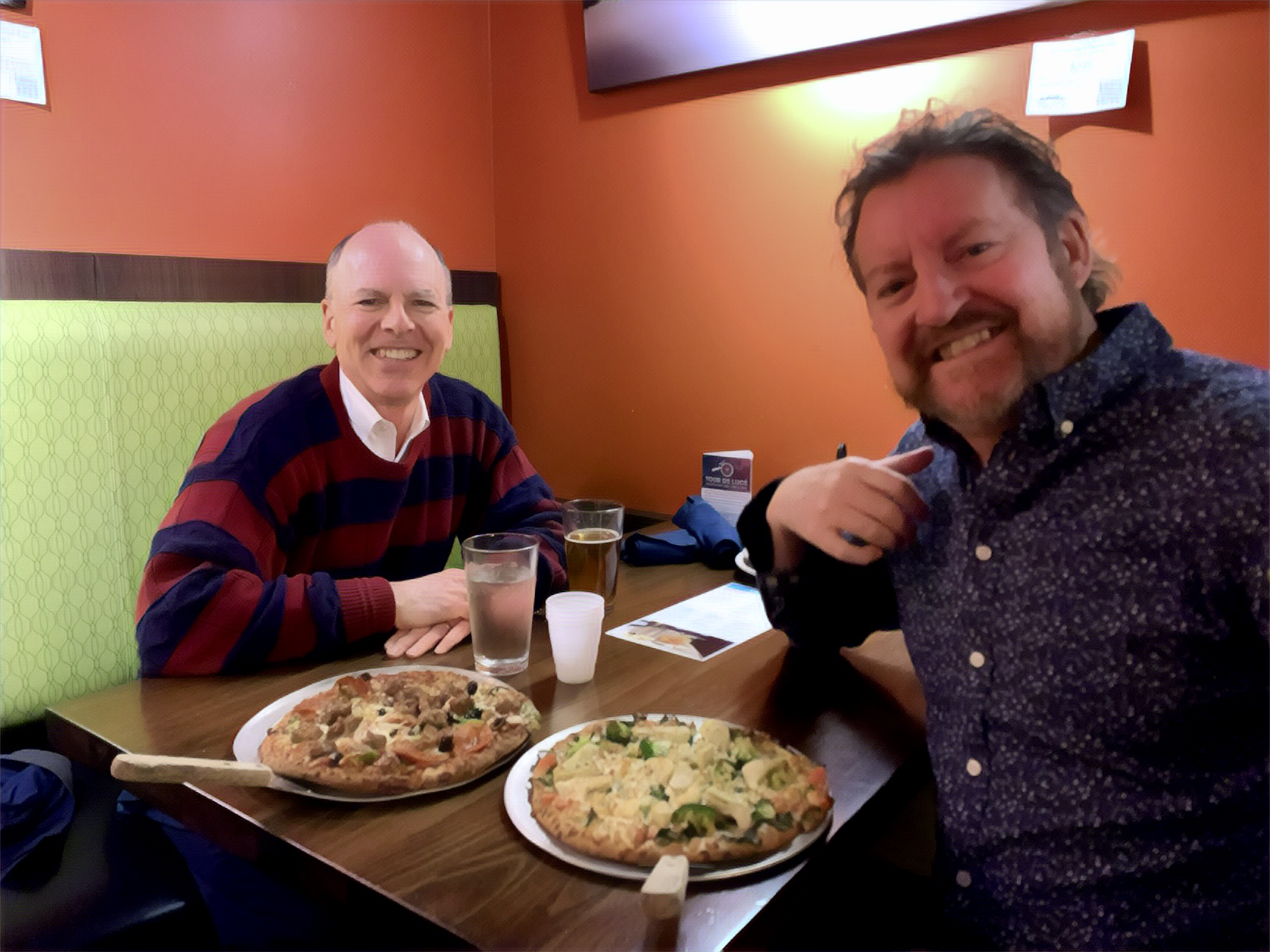
Above and Left: On the evening of Tuesday, April 12, my friend John and I enjoyed dinner at Pizza Lucé followed by an evening out at the Orpheum Theatre in downtown Minneapolis where we saw the musical, The Prom.

Above: That’s Phil and Dee in front while clockwise from left it’s Liana, Fred, Madeline, Alicia, Scott, Noelle, and John – Easter Sunday, April 17, 2022.

Above: “FeLINE FUN” with Amelia! 😸


Above: More friendship and fine food at the always welcoming home of John and Noelle, also known as The French Quarter. That’s Scott and Alicia in front while clockwise from left it’s Madeline, Fred, Dee, Phil, me, Noelle, and John – Sunday, April 24, 2022. . . . Oh, and Eddie the Wonder Dog is also pictured!


Above and right: Lunch with friends John and Jane at Owamni, “a modern Indigenous full service establishment” – April 24, 2022.

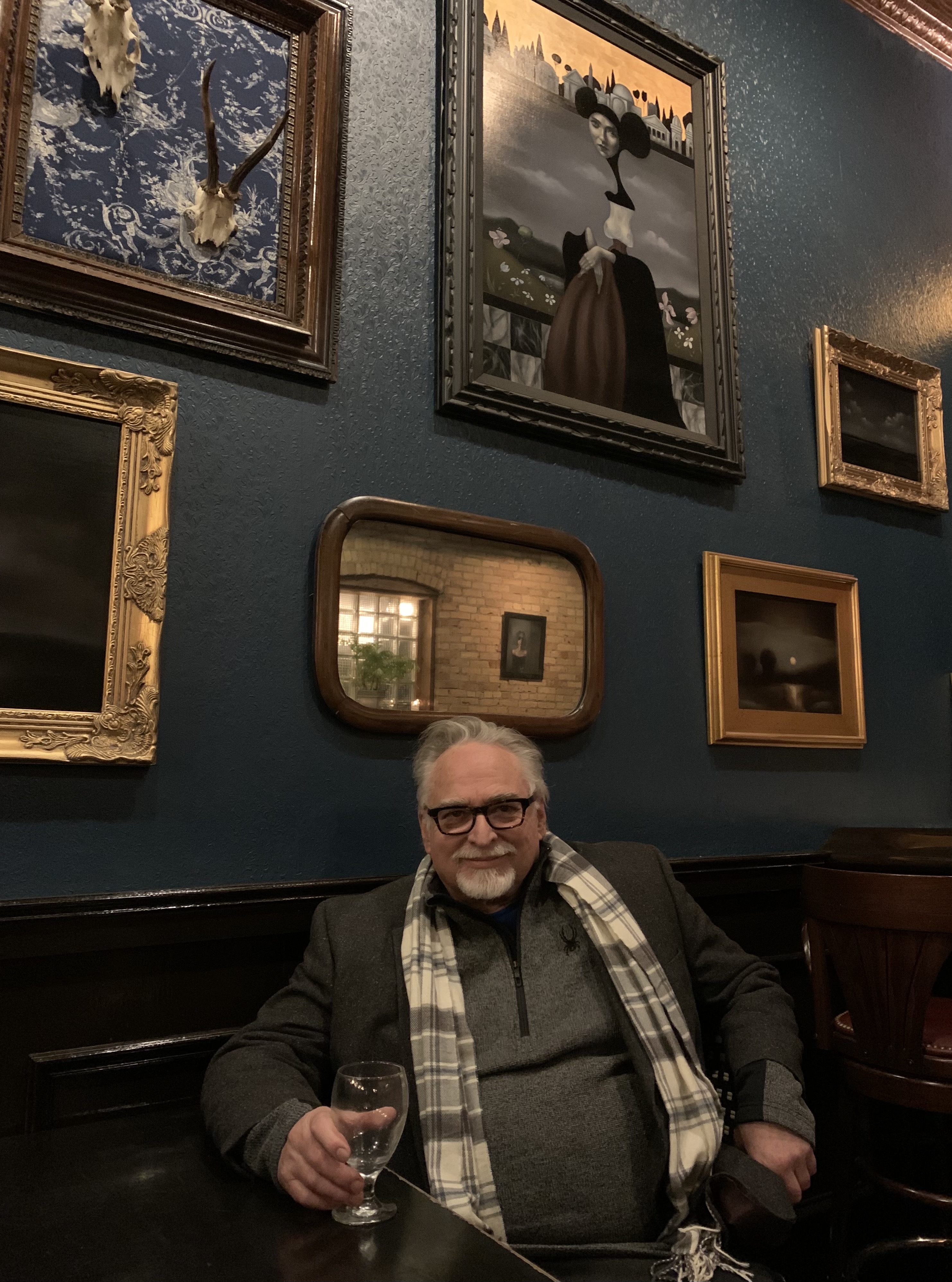
Above: My friend Mike, looking very distinguished! – Thursday, April 21, 2022. Mike and I were at the North East Social in northeast Minneapolis after seeing the musical play, Jelly’s Last Jam at the nearby Ritz Theater.

Above: A springtime walk with my dear friend Carol – May 30, 2022.


Above and below: Portraits of my “best mate in the States,” Deandre – Saturday, April 30, 2022

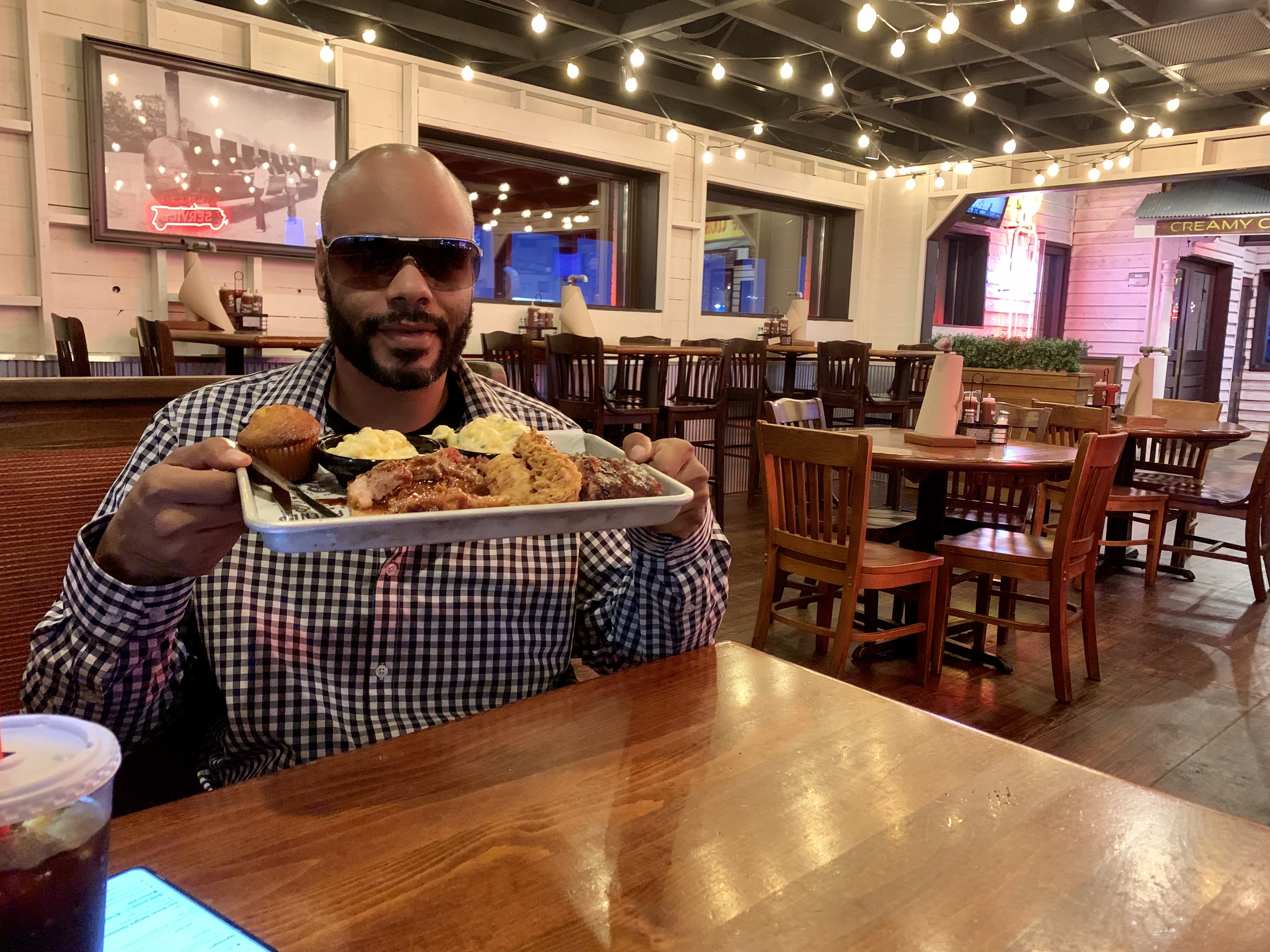
Above: Deandre at Famous Dave’s Bar-B-Que Restaurant, Roseville, MN – Friday, May 13, 2022

Above: Deandre at Tracy’s Saloon, Minneapolis – Thursday, May 26, 2022.

Above and below: My attic abode (and sanctuary) in south Minneapolis. For more images, click here.)

Above: After a pandemic-induced hiatus, Queer Movie Night returned on Saturday, May 7 at the home of my friend Ed. Pictured from left: Rico, Mike, Omar, Alex, me, and Ed.


We gathered at 6:00 p.m. for a potluck meal and comradery, and then watched the 2021 Estonian romantic war drama Firebird.

Directed, co-written, and co-produced by Peeter Rebane (in his feature directorial debut) and based on Sergey Fetisov’s memoir The Story of Roman, Firebird stars Tom Prior (who also co-wrote and co-produced), Oleg Zagorodnii, and Diana Pozharskaya. Set in the Soviet Air Force during the Cold War, the film tells the true story of forbidden love between a private and a fighter pilot.

Firebird had its world premiere at the 35th BFI Flare: London LGBTIQ+ Film Festival on March 17, 2021. The film also screened at the 45th Frameline: San Francisco International LGBTQ+ Film Festival on June 27, 2021, where it won an honorable mention for Best First Feature. Firebird was released in cinemas internationally by Roadside Attractions on April 29, 2022.

in his review of the film for the San Jose Mercury News, Randy Myers writes that Firebird is “a glossy and classy melodrama that soars with passion and is elevated by strong production values, heartfelt performances, and a story arc that journeys to unexpected destinations.”

Above: Ed, Omar, and Mike – Queer Movie Night, May 7, 2022. Host Ed has a wonderful collection of artwork from around the world, including the delightful statuette of Pan, pictured center.

Above: Taking advantage of the warm spring sun for a work-related meeting outside at the French Meadow Bakery, Minneapolis – Tuesday, May 10, 2022.

Above: Friends Calvin, Seth, Joseph, and Kathleen – Wednesday, May 18, 2022.


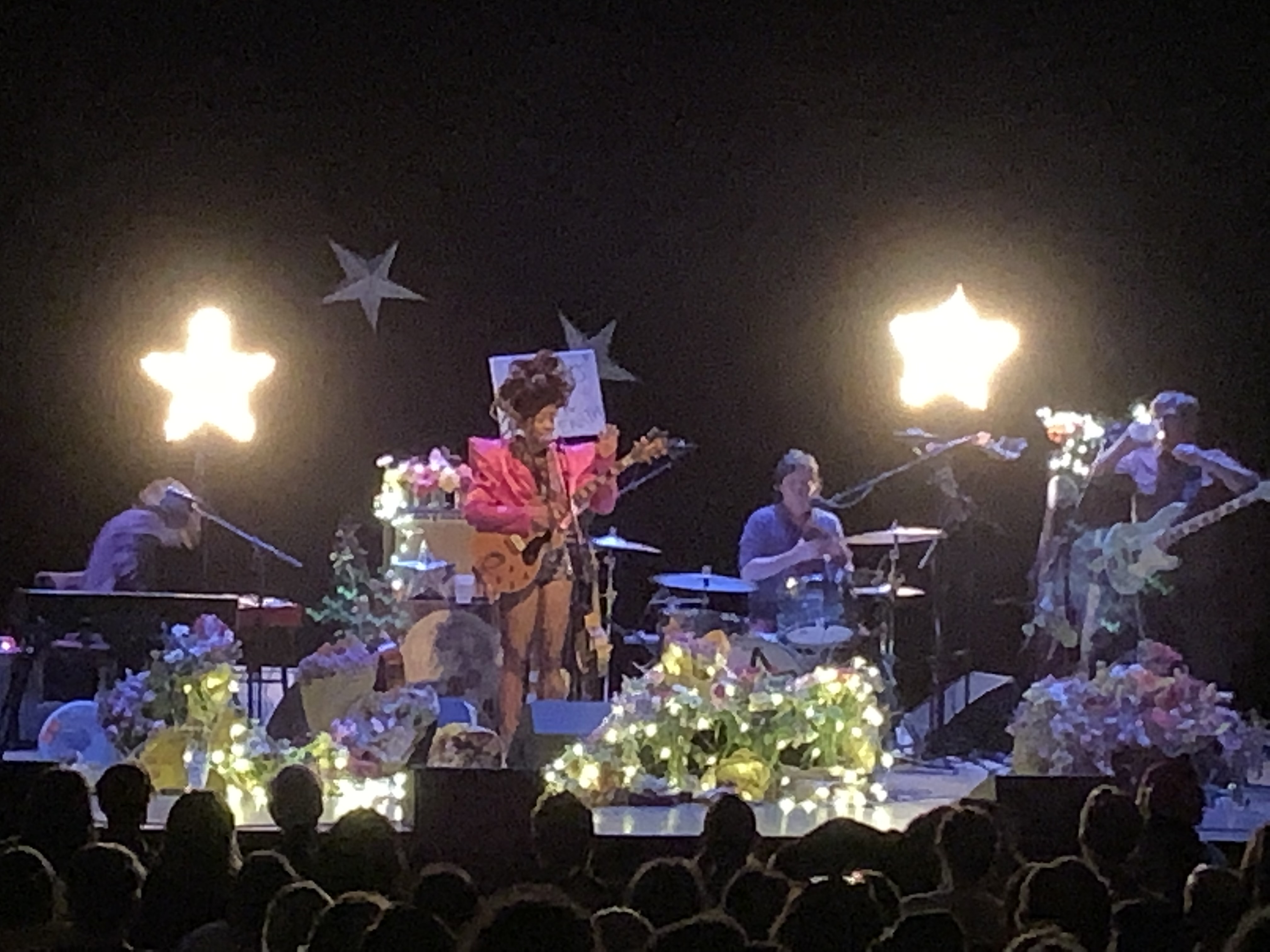
Above and left: On the evening of Friday, May 20, my friend Joan and I enjoyed dinner at Crave followed by a wonderful concert by Chastity Brown, who’s been described as “a banjo-playing soul-singer” and “a rocking, rolling encyclopedia of roots music.”

Above: On the evening of Friday, June 3, 2022, I shared a meal with my friends Jeffrey and Pete in their new home in the North Loop area of Minneapolis. Later they introduced me to a TV series that I’d long heard good things about yet had never actually seen: Ted Lasso.

Above: With friends at Bryant Lake Bowl and Theater in Minneapolis – May 14, 2022.

Above: With my dear friend Joan at Revival Smoked Meats – Wednesday, June 15, 2022

Above: On Sunday, June 12, my buddy Raul and I visited the Minneapolis Institute of Art In particular, we wanted to experience the museum’s 2022 Pride Self-Guided Tour.

This tour seeks to “highlight queer artists and themes through a small selection of artworks spanning centuries and social epochs. Some pieces include the multicultural perspectives of ritual and religion; others are more explicit in their portrayal of life through a queer lens.”

Right: “The Two Sailors” (1937) by Pavel Tchelitchew.

Above:: Contemplating one of my favorite works at the Minneapolis Institute of Art, Kehinde Wiley’s “Santos Dumont – The Father of Aviation II” (2009).

About this painting the Pride Self-Guilded Tour aide notes the following.

Kehinde Wiley is best known for his large-scale portraits of Black men depicted in poses that cast them as kings, prophets, and saints in the tradition of “old master” canvases, reminiscent especially of Renaissance and Baroque painting.

Wiley met the two young men featured in this painting in Rio de Janeiro, Brazil. The subjects chose to position themselves as the two “fallen heroes” in a well-known public monument [left] dedicated to one of Brazil’s pioneer aviators, Alberto Santos-Dumont.


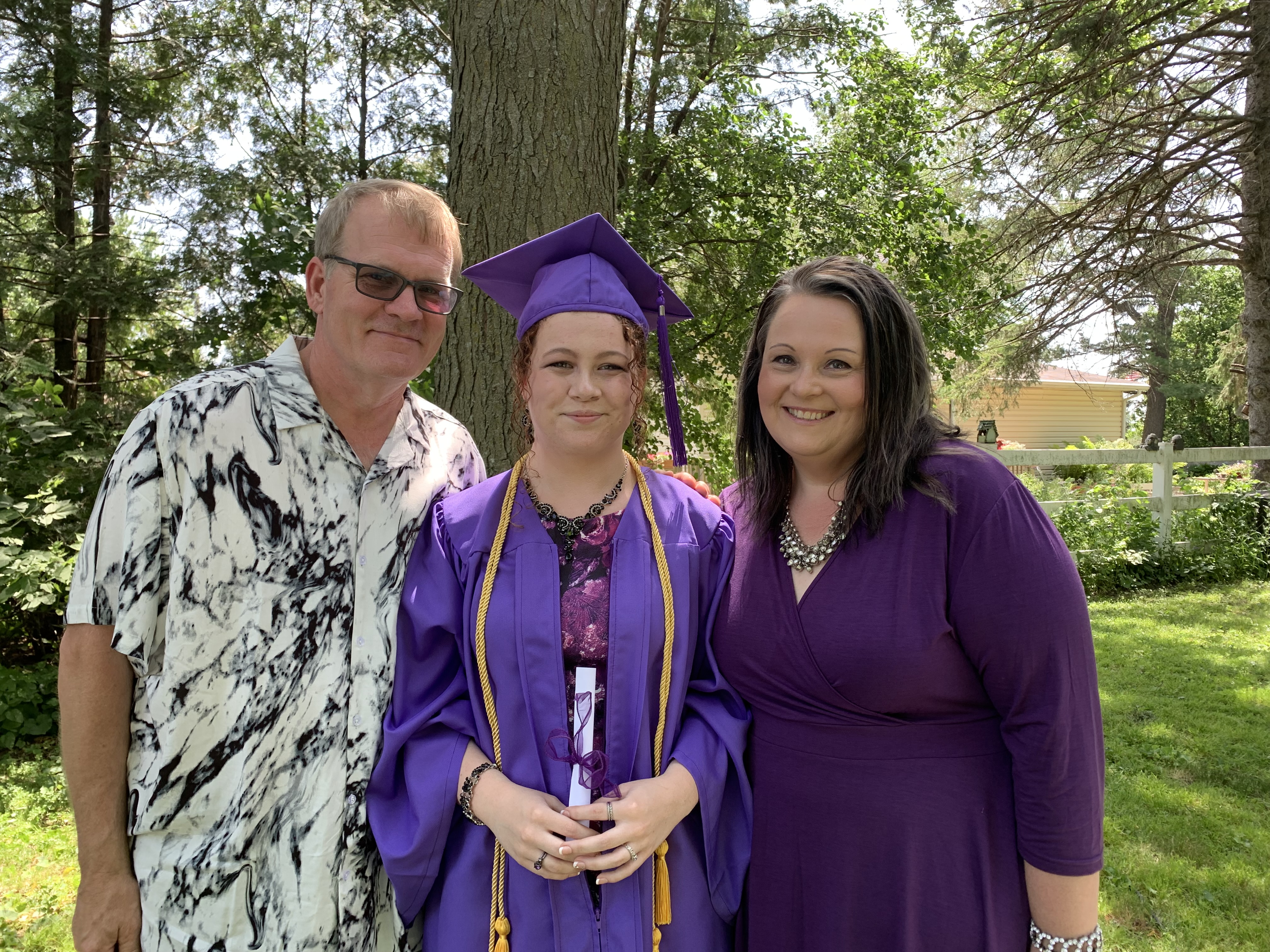
On Saturday, June 18 I had the honor of delivering remarks at my young friend Amanda’s high school graduation party, held at her grandmother’s farm in rural Minnesota.

Amanda’s mother is my good friend Angie, whom I’ve known since my earliest days in the U.S.

In the picture above, Amanda is pictured with Angie and her dad Bryan.

Above: Pelican Lake, Glenwood, MN – Saturday, June 18, 2022.


Above: A spring 2022 self portrait.


NEXT: Summer 2022


Spring 2022 Wild Reed posts of note:
Imbolc: Festival of Light
Spring Hiatus
Beltane: A Time of Hope and Renewal
Yahia Lababidi: “Poetry Is How We Pray Now”
Celebrating Tuesday’s Progressive Wins in the Midst of the Ongoing “War for the Future of the Democratic Party”
Returning to the Mind of God
“We’re Standing in the Place Where a Black Man Was Lynched in Public”
“For the Love of Our Children, Let’s Not Shut Up”
Cernunnos
Spring . . . Within and Beyond
Cassandra Snow on Reclaiming the Word “Queer”
From the Palliative/Spiritual Care Bookshelf
The Kate Bush Renaissance of 2022
Remembering Julee Cruise and Her Signature Song
Ascension
Bernie Sanders: “Now Is the Time to Make Democracy Work”
“A Kind of Elemental Force”
Tian Richards’ Message to Queer Youth: “Every Part of Your Identity Is a Superpower”

See also the previous Wild Reed posts:
Out and About – Autumn 2021
Out and About – Summer 2021
Out and About – Spring 2021
Out and About – Winter 2020-2021
Out and About – Autumn 2020

For previous Out and About series, see: 2007 | 2008 | 2009 | 2010 | 2011 | 2012 | 2013 | 2014 | 2015 | 2016 | 2017 | 2018 | 2019 | 2020 | 2021

Images: Michael J. Bayly.