Saturday, January 15, 2011

"Flooded-In but Loving Life"

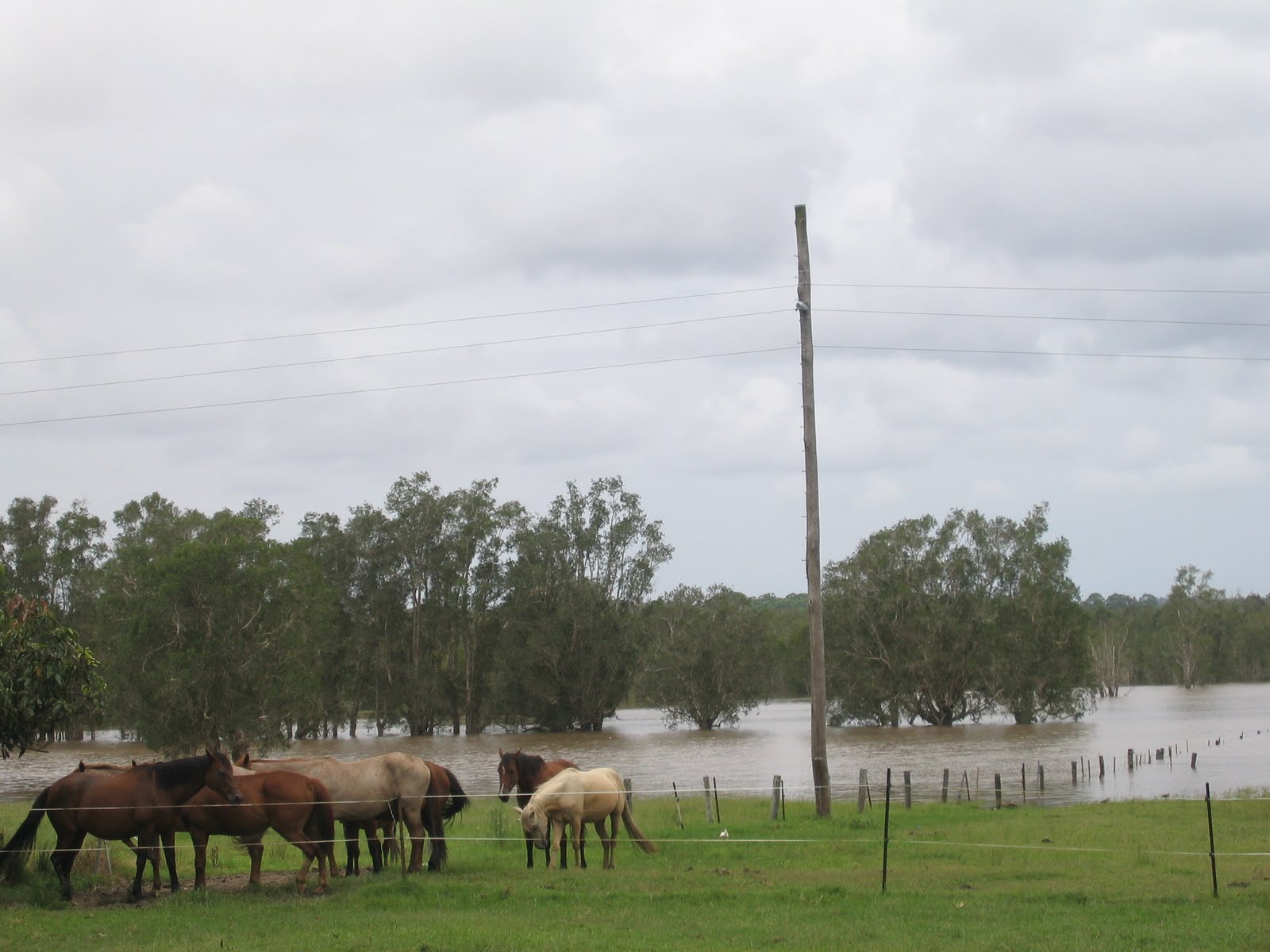
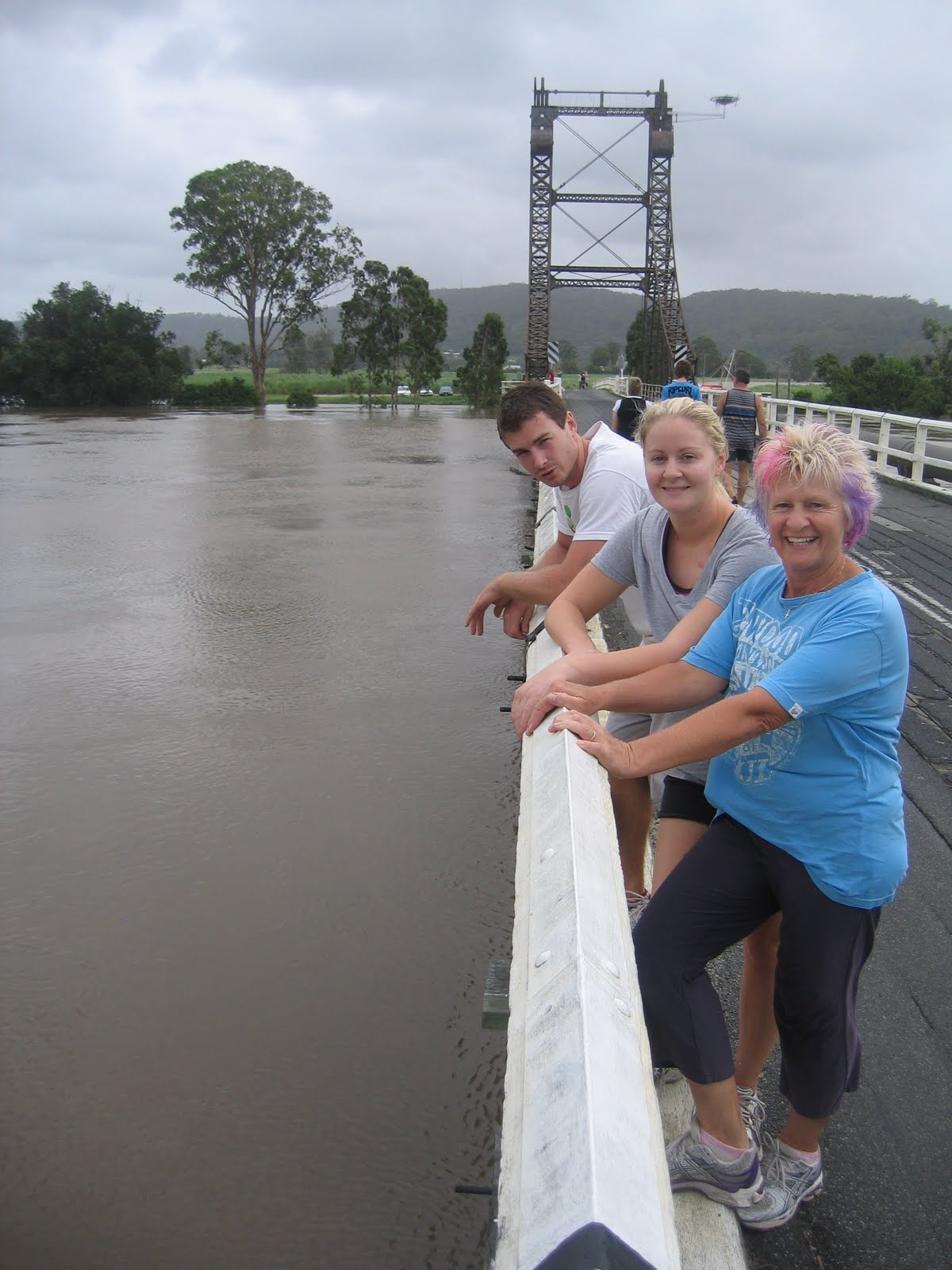
That's how my good friend Bernie recently described our situation here in Maclean. She was responding to a friend who phoned inquiring about how she and the rest of the McGowan family were dealing with the extensive flooding that has taken place here in northern New South Wales and further north in south eastern Queensland. In many parts of these areas – including the Queensland capital of Brisbane – the floods have been quite devastating. To date 16 people have been reported killed, 53 reported missing, and tens of thousands evacuated from their homes.

Above right: My friends Bernie (front), Mim and Raphael.


Above: Looking toward Maclean across swathes of flood water
and a kangaroo-dotted paddock.


How did I get to be flood-bound in Maclean? Well, as I've noted previously, I'm here with members of the McGowan family – all of whom are dear friends and some of whom live just outside of Maclean. My plan was to spend a couple of days with them after attending the wedding of the eldest McGowan son in the coastal town of Kingscliff, 200 kilometres north of Maclean.


Above: The extended McGowan family. From left: Bernie, Tess, Maisy, Dominica,
Mim, Collette, Kristy, Jeremiah, Raphael, Iggy, Bartley, Victor and Mike
– Kingscliff, New South Wales, January 8, 2011.


On the day I was to return to my parents' home in Port Macquarie (January 11), the waters of the Clarence River rose and cut access from Maclean to the Pacific Highway, preventing the southbound bus service I was scheduled to travel on to Port Macquarie from reaching me. Since then the Pacific Highway itself has been cut at nearby Harwood.

Above left: With my friend Raph, waiting for the bus that would never arrive!


Raph and Mim were also prevented from returning to the Sunshine Coast where they live and work, while Mike's brother Bartley was prevented from returning to his home in Melbourne. Both Mike and Bernie are unable to travel to their workplaces in nearby Grafton. It's been this way for four days now. Hopefully things will clear up by the weekend.


Above (from left): Mim, Ig, Raph, Bernie, Mike and Bartley.


So, my friends – especially those of you in the U.S. who have been e-mailing me, concerned about my whereabouts and safety – I want to assure you that I'm quite safe, just stranded for a little while.

But I'm with friends and, while we're certainly keeping those who have been most impacted by these terrible floods in our thoughts and prayers, we also remain thankful for being alive, being together and being able to love life in the midst of the situation we currently find ourselves.

Following are some images of our life here in flooded-in Maclean.


Wednesday, January 12, 2011

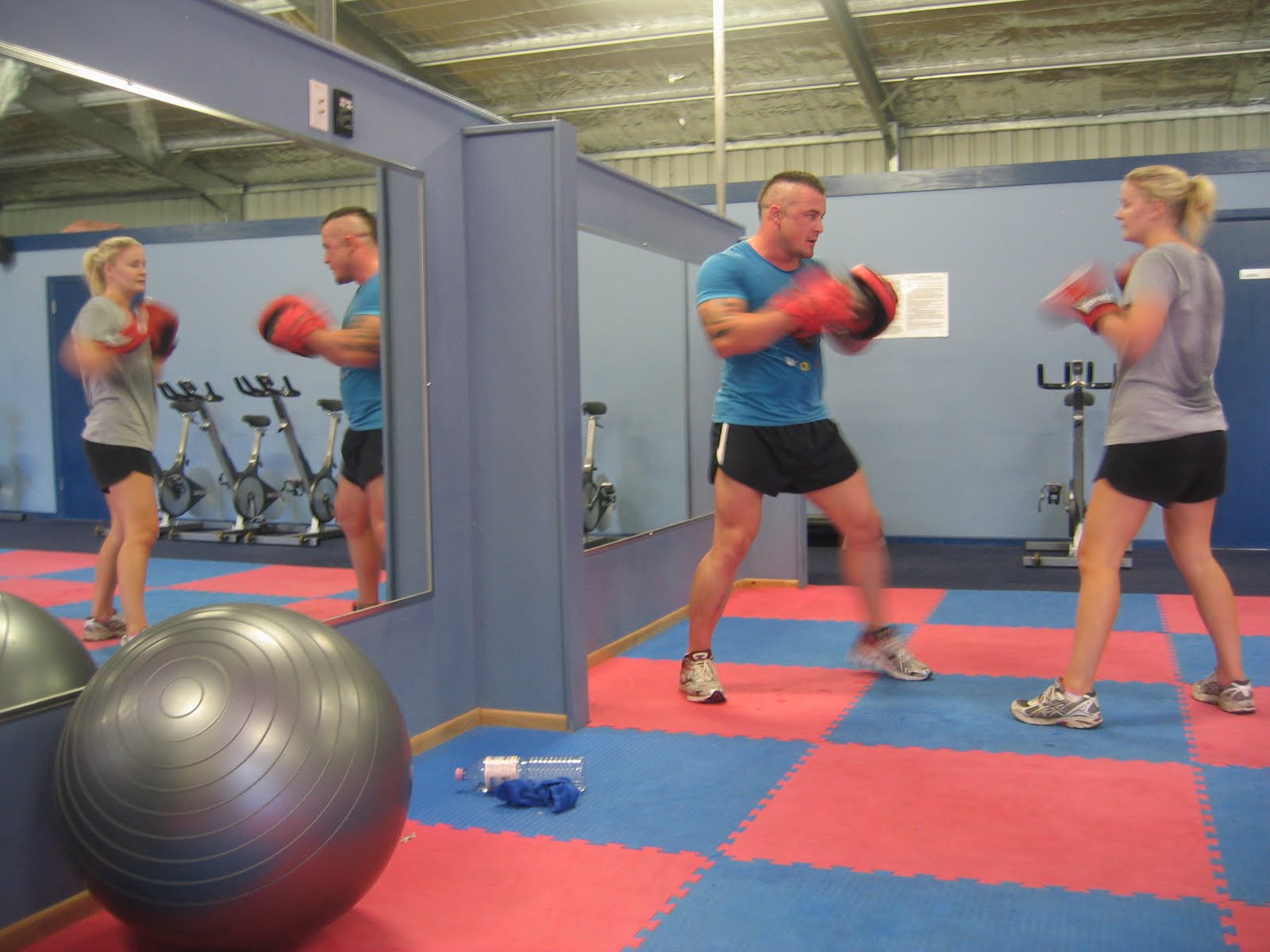
Above: Iggy.


Above: Ig helps manage and staff the local gym.
In this picture he gives his sister Mim some tips on boxing.


Thursday, January 13, 2011


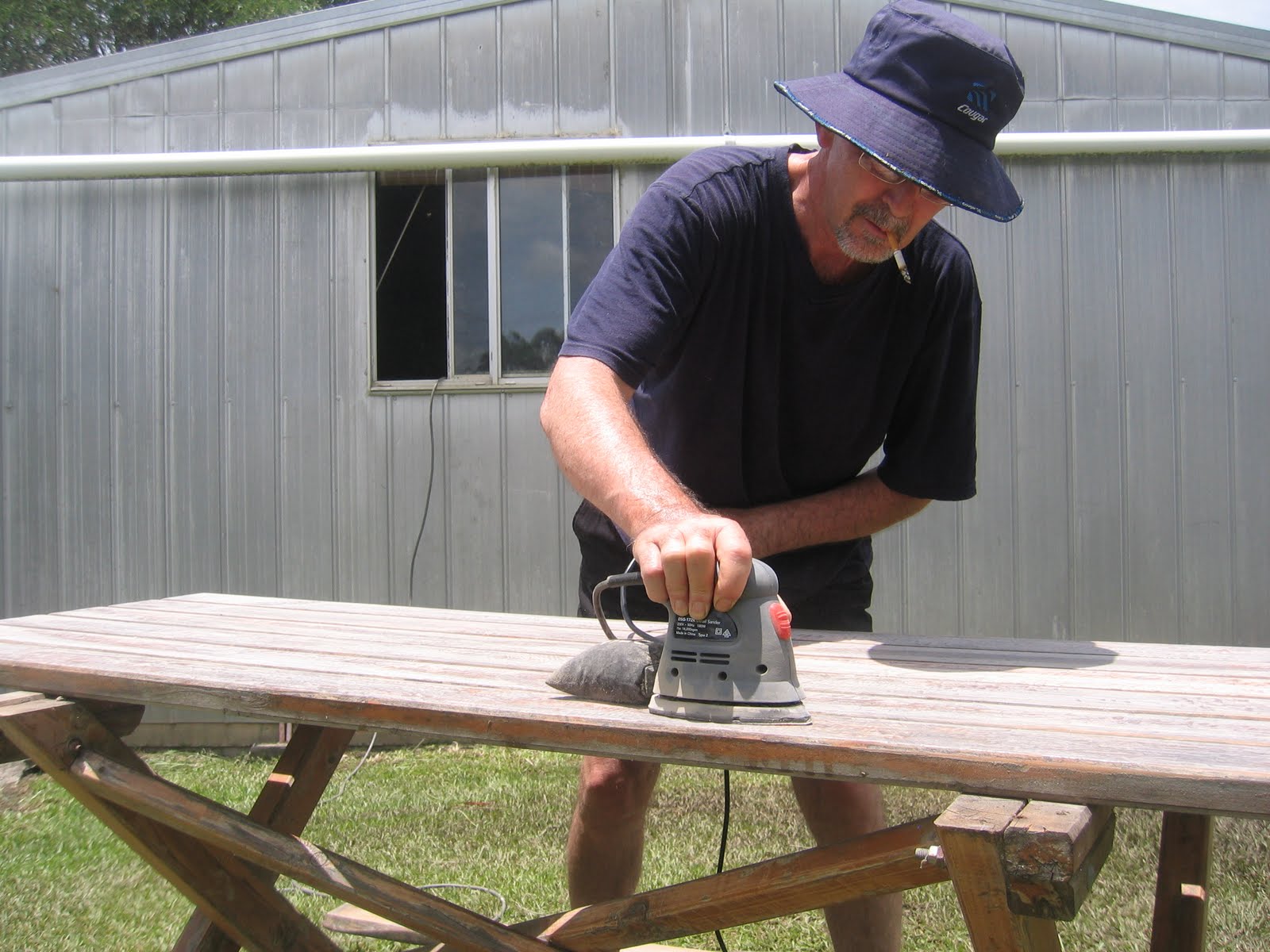
Today was quite sunny and so we spent much of it working outside doing yard work.


Above and left: Mim and Raph take turns mowing the grass on a ride-on lawn mower.


Above: Taking the dogs for a walk.


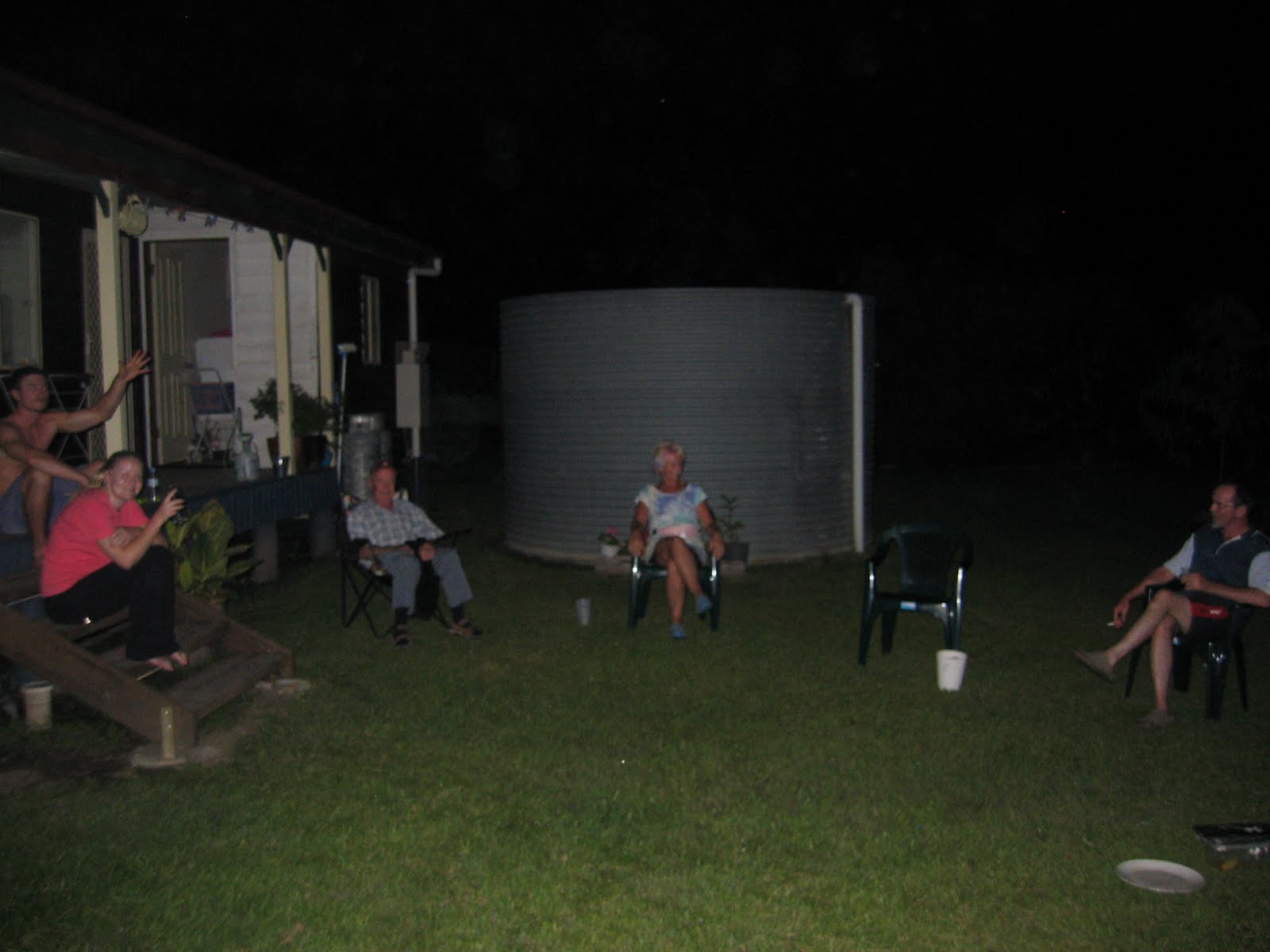
Above: Relaxing after a hard day of yard work.


Friday, January 14, 2011


Above: Doesn't the yard look great?


Above: But there's still work to be done!


Above: Visiting the Maclean Lookout.


Above: Bernie and Mim.


Above: Raph, enjoying the sunny weather.


Above: With the winding contours of the Clarence River on the left, this image
clearly shows the extent of the flooding that has isolated the town of Maclean.


Saturday, January 15, 2011


Some more jobs around the yard were completed today along with time spent relaxing in the hammock that was put up by Raph on Thursday. Then in the afternoon, Bernie, Raph, Mim and I traveled to the coastal spot known as Broom's Head. The road to this part of the coast has recently been reopened. Access to the Pacific Highway, however, remains blocked by flood waters.


Above: This look of mine is way too serious for the t-shirt I'm wearing!


Wednesday, January 12, 2011

Rising Waters


As the flood crisis in Queensland reaches its peak, here in northern New South Wales the township of Maclean has been cut off by the rising waters of the Clarence River. It could be three days before they recede and I'm able to return to Port Macquarie.

There's no way to reach the Pacific Highway from the town, and even if there was a way to get out, travel south would be disrupted by major flooding at Grafton.

The televised images of people stranded on their rooftops in various parts of southeast Queensland and of the thousands being forced out of their homes in Brisbane prevent me from complaining in the least about our situation here in Maclean – just south of the Queensland border. We're experiencing nowhere near the degree of devastation and danger that so many others are.


Still, we are in a way cut off from the rest of the world. If I wanted to be dramatic about it I could say we're "under siege" by the rising waters. That's actually a phrase we're hearing a lot on the news to describe quite a few towns and settlements – even the central business district of Brisbane.

Earlier today, my friend Raph and I drove into Maclean from his parents' place a few miles out of the town. We bought supplies and photographed the rising flood waters. Yesterday we took the road to the coastal town of Yamba. This morning we discovered that road covered by water.

At a petrol station we overheard a police officer say that there was no way out of the town. "If you wanted to leave," we heard him tell a motorist, "you should have left this morning."


Later we walked across the McFarlane Bridge (above). The Clarence River has overflown its banks near the bridge, flooding the yards and houses of a number of residents (below).


Above: Children playing in the flood waters.


Above: The grocery store in which Raph and I went shopping. It backs onto the Clarence River and has been flooded in previous floods.


Above: Overall, the store was well-stocked. But as you can see, a few items where unavailable.


Left and below: Stocking up on supplies.


Above: The historic Maclean Hotel.


Above: It isn't only some food supplies that are currently unavailable.


Above: No going to Yamba today!


NEXT: "Flooded-In but Loving Life"


See also yesterday's Wild Reed post:
The Australian Floods


Recommended Off-site Links:
Flooding Closes Pacific Highway
– The Northern Star (January 12, 2011)
Brisbane Flood Leaves City Centre Deserted as Thousands Flee – Alison Rourke (The Guardian, January 12, 2011).
Brisbane on Edge of Catastrophic Flood Peak – ABC News (January 11, 2011).
Living through Apocalypse Maybe – Nick Evans (Sydney Morning Herald, January 12, 2011).

Images: Michael J. Bayly.

Tuesday, January 11, 2011

The Australian Floods

I'm currently in the town of Maclean, in what's known as the Lower Clarence region of north eastern New South Wales.

This past weekend I was in the coastal town of Kingscliff (two hours north) for the
wedding of my friends Jeremiah and Kristy. I take a bus back to Port Macquarie later this evening.

I'm staying in Maclean with members of the
McGowan family – some of whom live here. We were all shocked to see on the news this morning the devastation in Toowoomba wrought by yesterday's flash flooding. It's being described as an "inland tsunami," one that to date has claimed the lives of at least eight people. Seventy others have been declared missing.


Here in Maclean, the Clarence River is beginning to flood – though no roads as yet have been cut, or people evacuated from their homes. That's not the case in the Queensland capital of Brisbane where whole suburbs are being evacuated ahead of anticipated major flooding.

Earlier today my good friend Raph and I drove to the center of Maclean and then on to the coastal town of Yamba. Following are some photos of our travels.


Above: The swollen Clarence River at Maclean.


The Pacific Highway crosses the Clarence near Maclean
via the Harwood Bridge. In the photo above, water from the river
laps the road
connecting Maclean to Yamba.


Above and below: Yamba, New South Wales. Note how brown
the ocean looks. That's from the flood waters of the Clarence River
flowing into the sea at Yamba.


Update (9:30 p.m.): The highway's been cut from Brisbane to the south, so the bus service that was scheduled to pick me up this evening in Maclean has been canceled. Raph and his sister Mim are also unable to return north to the Sunshine Coast. It looks like we'll all be having another day or two in Maclean.

We're quite safe. For us it's more a matter of inconvenience than of danger. My thoughts and prayers go out to those further north, in and around Brisbane. They're facing the worst flooding in over one hundred years.


NEXT: Rising Waters


Recommended Off-site Links:
Thousands Flee Brisbane, Flash Floods Kill Nine – Eddie Safarik (Sydney Morning Herald, January 11, 2011).
Death Toll Set to Rise After Flash Floods – ABC News (January 11, 2011).
Australian Floods: Timeline – The Telegraph (January 11, 2011).


Images 1 and 7: Raphael McGowan.
Images 2-6: Michael Bayly.


Monday, January 10, 2011

In the Garden of Spirituality – Alan Lurie


“We are not on earth to guard a museum,
but to cultivate a flowering garden of life.”

– Pope John XXIII


The Wild Reed’s series of reflections on religion and spirituality continues with an excerpt from Rabbi Alan Lurie's January 6, 2011 Huffington Post article "The Allure of Narcissistic Spirituality."

____________________


My acting definition [of spirituality] is, "The experience of a transformative connection." In other words, spirituality is experienced – it is not a concept or construct. It transforms us. It changes how we act, think and feel in all environments. And it is a connection – a profound contact with something and someone outside of our selves.

All three of these components are needed in order for spirituality to occur, but the most essential is that it be a connection – between a person and the Divine, or between one person and another. Spiritual practices are designed to facilitate these connections, and begin with the knowledge that we have two selves: an ego-self and a true-Self. The ego-self is built on our strategy for ensuring that we are physically safe, stemming from our interpretation of the experiences of our lives (primarily our childhood) in which we determined what was required in order to survive. The ego-self may need to impress, dominate or control and sees others as either threats or tools. There is nothing inherently wrong with the ego-self; it is a necessary structure put in place so that we can survive in physical reality. But it is not who we really are, and we can not make a spiritual connection from it. Our true-Self, however, which is often referred to as our soul, contains the very purpose that we incarnated, and is in constant connection with Spirit/Consciousness/Creation/God. It sees others as fellow souls with equally needed purposes, and has compassion for the suffering that comes from the ego-self's attachment to things.

Spiritual practices help us to loosen the grip of the ego-self and to connect to the true-Self, so that we can live purposefully, be of service and participate in love. The central Biblical injunction to "Love your neighbor as yourself" is usually interpreted to mean that we must learn to love others, with the assumption that we already love ourselves. Literally translated, though, this line actually reads, "And you will [in the future tense] love your fellow in the same way that you love yourself." In other words, we will love another to the extent and in the way that we love ourselves. If you are harsh with yourself, you will be harsh with others. If you can not forgive yourself, you can not forgive others. In this way, this line is not a commandment, but is a statement of fact. The truth is that most of us do not love ourselves very well, and consequently we hurt others. This is why spiritual practices so often seek to teach us how to love ourselves, so that we can better love others. Real love naturally flows in two directions.

Spiritual practices become narcissistic, though, when the ego-self hijacks the process and assumes that it is the object of self love, becoming enamored of looking in the mirror and claiming that its reflection is the true-Self. Then we loose our way, forgetting that the purpose of learning to love ourselves is to become more open, kind and effective in interactions with others, and instead of opening our hearts with humility and compassion, we assume a position of superiority – exactly what the ego desires for its safety.


Recommended Off-site Link: Yesterday It Was Spiritual Abuse, Today Spiritual Narcissism. They Go Hand In Hand and Side By Side – Colleen Kochivar-Baker (Enlightened Catholicism, January 8, 2011).

See also the previous Wild Reed posts:
• The Real Crisis
• An Offering of Ashes
• Beyond Papalism
• Roger Haight on the Church We Need
• Keeping the Spark Alive: An Interview with Modern-Day Mystic Chuck Lofy


Sunday, January 09, 2011

Saturday, January 08, 2011

Happy Birthday, Layne


My niece Layne celebrates her 18th birthday today.


Happy Birthday, Layne!


I'm currently in Kingscliff, in the northeast corner of New South Wales, for the wedding of my friends Jeremiah and Kristy, and so I'll miss celebrating with Layne and other family members in Port Macquarie today. I hope you have a wonderful day, Layne, and an enjoyable party tonight with your friends!


Left: Earlier this month the entire Bayly family gathered in Port Macquarie and celebrated both Layne's birthday and my nephew
Brendan's.


Above: Layne with Grandma Bayly (my Mum!).


See also the previous Wild Reed posts:
Happy Birthday, Layne (2010)
Happy Birthday, Layne (2009)
Happy Birthday, Layne (2008)


Wednesday, January 05, 2011

Catholicism's Future is "Up to the Laity"

So say three senior fellows of the Woodstock Theological Center in Washington: Fr. Thomas J. Reese, Dolores R. Leckey and Fr. Raymond Kemp. The three spoke last month at at “The Future of the Church: A Woodstock Forum on Sources of Hope,” held at St. Joseph’s University in Philadelphia. Following is a brief excerpt from Jerry Filteau's coverage of the event in the January 4 issue of The National Catholic Reporter.

______________________________


Panelists at a recent Woodstock forum in Philadelphia urged lay Catholics to grab the reins and set the course for the church’s future.

“We are becoming a do-it-yourself church” for the laity, said Jesuit Fr. Thomas J. Reese, one of three senior fellows of the Woodstock Theological Center in Washington who spoke at “The Future of the Church: A Woodstock Forum on Sources of Hope,” held at St. Joseph’s University in Philadelphia Dec. 5.

The U.S. Catholic hierarchy today is fearful and defensive, a far cry from the collaborative, pastorally transformed hierarchy that emerged during and after the Second Vatican Council, said Dolores R. Leckey, former longtime head of the U.S. Conference of Catholic Bishops’ Secretariat for Laity, Family, Women and Youth, and a noted writer on spirituality.

It’s up to the laity to take responsibility for where the church goes in the years to come . . .

[Reese] cited the return to biblical scholarship and spirituality among the major causes for hope in the Catholic church today.

The Catholic focus on social justice attracts young Catholics, “especially when this work is seen not just as kind of an appendix to Christianity, as being a Catholic, but is integrated into our spirituality, as part of who we are, so it becomes part of who we are as Christians – for many young Catholics this becomes attractive,” he said.

On the church’s immediate prospects for the future, “maybe God knows what she’s doing,” he said. “If you don’t have clergy, maybe the job’s yours.”

Leckey and Kemp struck similar notes on lay responsibility for the church’s future.

Leckey, who recently completed a book, The Laity and Christian Education, in the Paulist Press “Rediscovering Vatican II” series, said the Second Vatican Council in the 1960s is one of the chief reasons for her hope for the future of the church.

“What happened there was a monumental conversion of consciousness” among the world’s 2,500 Catholic bishops, she said, and one key area of that was recognition of the role of the laity, by virtue of their baptism, in the church’s mission of ministry and spreading the Gospel in the world.

She contrasted the conciliar view of the laity with the prevailing preconciliar view best expressed by Pope Pius X in the early 20th century when he said, “The one duty of the laity is to allow themselves to be led like a docile flock, to follow their pastors.”

Besides re-envisioning the church as the pilgrim people of God, the council stressed the universal call to holiness and changed the ongoing narrative of the church’s life, making it more biblically and liturgically centered, she said.

Today, she noted, 85 percent of the ministers in U.S. parishes are laity, most of them women.


To read Filteau's article in its entirety, click here.


Recommended Off-site Links:
Fr. Thomas Reese on All Things Hopeful – Colleen Kochivar-Baker (Enlightened Catholicism, January 5, 2011).
The Call of the Baptized: Be the Church, Live the Mission – Paul Lakeland (The Progressive Catholic Voice, September 19, 2010).
Creating a Liberating Church – Rosemary Radford Ruether (The Progressive Catholic Voice, July 15, 2010).
Who Is Responsible for Church Reform? – Paula Ruddy (The Progressive Catholic Voice, April 2008).


See also the previous Wild Reed posts:
Why the Bishops Are Being Ignored
A Time to Re-Think the Basis and Repair the Damage
"I Love the Radical Catholic Church"
To Whom the Future of the Catholic Church Belongs


Monday, January 03, 2011

Quote of the Day

.
In a controversial book . . . Roman Catholic-turned-Episcopal priest Alberto Cutié lashes out against his former church, calling it "misogynistic," "disconnected" and an "institution that continues to promote old ideas."

. . . Secretly, Cutié writes [in Dilemma: A Priest's Struggle with Faith and Love] he had come to doubt much of the church's teachings as early as 2003, after several run-ins with church hierarchy and after a growing disillusion with "bishops too concerned with their own images" during child sex-abuse crises.

In several passages, Cutié blames the church's celibacy policy for the dwindling clergy pool and the child sex-abuse scandals. He also accuses church leaders of being hypocrites and says they tacitly accept secret homosexual and heterosexual relationships among priests but disapproved of his because it became public.

"There are so many homosexuals, both active and celibate, at all levels of clergy and Church hierarchy that the church would never be able to function if they were really to exclude all of them from ministry," Cutié writes.

The priest's critiques – he also expresses anger that many priests are too-quickly "abandoned to sink or swim" when accused of sexual crimes – are not unique. But rare is such a public airing of grievances against the archdiocese by a former insider.

– Jaweed Kaleem
"Priest Alberto Cutié Lashes Out Against His Former Church"
The Miami Herald
January 3, 2010


Recommended Off-site Link:
Padre Alberto Cutié Eyes Sins and Sensibility in New Book – Aída Bardales (New York Daily News, January 5, 2011).


See also the previous Wild Reed posts:
For Father Alberto Cutié, "Love Triumphs"
Weakland and Cutié: Making the Connections
Quote of the Day -- November 21, 2010
Let's Face It: The Catholic Church is a Gay Institution
A Fact That Should Neither Be Surprising Derogatory


Sunday, January 02, 2011

Happy Birthday, Brendan!

.
My youngest nephew Brendan celebrates his 13th birthday today.

Happy Birthday, Brendan!


The entire Bayly family are currently gathered in Port Macquarie and, earlier this evening, we had a celebration for both Brendan and my niece Layne who turns 18 later this month. (I'll do a special post for Layne on her actual birthday!)


Left: Pictured with my four nephews: From left, Liam, Mitchell, Brendan and Ryan.


Right:
Brendan's parents, my brother Chris and sister-in-law Cathie.

In the (American) summer of 2008 Brendan and members of his family visited me in Minnesota. For images of this special time, see here and here.


Above: Brendan is quite the tennis player.
A champion in the making, I dare say!


See also the previous Wild Reed posts:
Happy Birthday, Brendan (2010)
Happy Birthday, Brendan (2009)
Happy Birthday, Brendan (2008)


Quote of the Day

[Those who seek to justify Bishop Thomas J. Olmstead's removal of St. Joseph's Hospital's Catholic status after a pregnancy was terminated in order to save the life of a mother] place pregnancy and pregnant women in a different and unique class when it comes to self defense. In this case it seems a pregnant woman is not engaging in an act of self defense, but an act of promoting her survival at the expense of the child. She is not defending her life. She is selfishly promoting her own survival. The idea that a mother might be defending the right of her other children to have a mother does not enter this equation. Nor does the fact that in this case both mother and child would die. Two deaths, half orphaned children, and a widower were God's will for this family. God sometimes allows difficult situations to test us and thwarting his will is cowardly and faithless. Hmmm . . .

This kind of thinking allowed one commenter to compare Sr. McBride's failure to let both mother and child die with Abraham's willingness to off his son Isaac. I guess the implication was that Sr. McBride failed the test of acting in accordance with God's will. The commenter called this kind of situational obedience a 'terrible beauty'. I tend to see it as spiritual selfishness and moral cowardice. If that's the kind of God Catholics are supposed to believe in, I'm not much of a Catholic. I could not in conscience waste a mother's life I could save for some hugely abstract moral thought about the sanctity of fetal life or obeying an especially bizarre notion of God's Will. Especially in view of the fact there are other children in the equation and the Church makes all kinds of loop holes for other types of killing and murder.

Which is the point I keep coming back too. Why is pregnancy the one situation in which one life must at all times be subordinate to another? Why does pregnancy automatically demand the sacrificing of the maternal life to the pre-born life? I don't get this as there is no such situation for men. We do not tell a father that he must donate his two kidneys to a child in renal failure even though said donations won't allow the child to live and will certainly result in his own death. In point of fact, Catholicism doesn't demand any father donate any part of himself at any time to insure the life of one of his children. Catholicism only demands that kind of ultimate sacrifice of pregnant women. Why is this? What makes fetal life more innocent and precious than day old post born life – or any other life? What makes fetal life important enough to mandate excommunication when it's ended directly, but this is not true for any other time in any other human life – except the Pope's life? Come to think of it Phoenix mother equals Ali Agca doesn't make much moral sense either.

Quite frankly it boggles my mind that a fetus is deemed more important than the life of a mother who already has four children, even when the fetus can't be saved. This then isn't about life per se, it's about a principle in Canon Law. And in Olmstead's case, he is not defending life or Canon Law, he is using Canon Law to promote his own authority. That's just mind blowing to me. Where is the living Jesus in this move? I guess like the pregnant mother, Jesus too is subordinate to Canon Law and Olmstead's authority. Olmstead has certainly shown this is so because he has also decided there will be no Masses nor Eucharistic presence at St Joseph's. Olmstead has decreed no Jesus will be present at St Joseph's. He has used Canon Law to directly abort Catholic Jesus from St Joseph's.

– Colleen Kochivar-Baker
"Olmstead Aims and Fires Canon Law at St. Joseph's"
Enlightened Catholicism
December 26, 2010


Recommended Off-site Links:
Phoenix Diocese Strips St. Joseph's Hospital of Catholic Status – Michael Clancy (The Arizona Republic, December 22, 2010).
The Moral Analysis Rejected by Bishop Olmsted – Grant Gallicho (Commonweal, December 21, 2010).
Bishop Olmsted's Reckless Decision – Michael Sean Winters (National Catholic Reporter, December 22, 2010).
No Direct Abortion at Phoenix Hospital, Theologian Says – Jerry Filteau (National Catholic Reporter, December 23).
Phoenix Controversy Highlights Rift Between Catholic Hospitals and Clerical Caste – Daniel Burke (The Huffington Post, December 23, 2010).
Catholic Hospitals vs. the Bishops – Anne Hendershott (The Wall Street Journal, December 31, 2010).


See also the previous Wild Reed posts:
The Church's Teaching on Abortion: Unchanged and Unchangeable?
The Bishops and Obama (Part 1)
The Bishops and Obama (Part 2)
Rome Falling
What the Notre Dame Controversy is Really About and What's Really at Stake
It's Still Out There
Responding to Bishop John "We Are at War" Finn
American Catholics and Obama
As for the Bishops . . .


Saturday, January 01, 2011