Friday, June 17, 2011

Mary Hunt's Response to Archbishop Dolan's "Truth Claims that Do Not Hold Water"

New York Archbishop Timothy Dolan has been in the news recently, warning that gay marriage poses, among other things, an "ominous threat" to society.

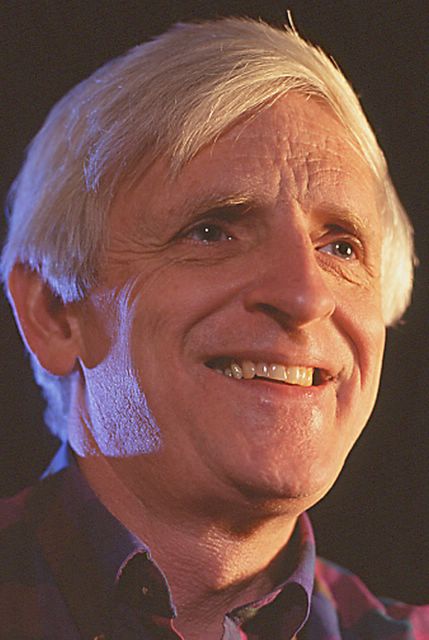
According to Catholic feminist theologian Mary E. Hunt (pictured at left), Dolan's statements are "simply a last-ditch effort" by the Catholic clerical caste to rally support to prevent the New York State Legislature from voting for marriage equality. Hunt has responded to the archbishop's unwarranted scare-tactics with a calm and well-reasoned essay first published at ReligionDispatches.organd reprinted in its entirety below.

___________________________________


Archbishop’s Theology is Wearing No Clothes

By Mary E. Hunt

ReligionDispatches.org
June 16, 2011


Many readers of Archbishop Timothy Dolan’s blog think there is layer upon layer of deep theological thinking about natural law, church-state relations, and the like. I am here to assure such well-meaning colleagues that nothing of the sort lurks in these lines.

As New York State moves closer and closer to approving same-sex marriage, Dolan becomes, as Peter Montgomery points out, increasingly histrionic unto hysterical. His remarkable blog entry, “The True Meaning of Marriage,” will endure as the intellectual last wag of the dog’s tail on a question that has long been solved in the minds of many Catholics.

Timothy Dolan apparently subscribes to the Sarah Palin School of Research: saying it makes it so. Showing zero familiarity with the ample body of evidence that marriage is a changing institution, he pronounces the “undeniable truth” about what marriage means. One may not like that marriage has changed over time, and one may not think it ought to change over time, but these proclivities are not license to pass over the historical reality before us. Everyone understands and expects disagreement, but no one is fooled by truth claims that do not hold water.

His argument about marriage as “the cornerstone of civilization and culture from the start” (as if he could prove it) has the tint of the National Organization for Marriage’s talking points. It is no less false when a bishop repeats it than when NOM prints it. One could argue that tribes, not marriages, were fundamental. But to do so would pass over the fact that around the world over millennia there have been many ways to organize society; marriage as we know it today being but one of them.

Most troubling in this high-strung piece (“please, not here,” he squeals several times) is what feminist theologian and philosopher Mary Daly called “reversals” or “inversions”—the intellectual strategy of turning things upside down and inside out so as to end up with the very opposite of what is intended. For example, Dolan describes how China and North Korea supposedly “‘redefine’ rights, relationships, value, and natural law” on a regular basis via “communiqués from the government,” versus how we exalted Westerners handle the issues. In doing so, he describes exactly how the Vatican operates.

Another reversal is his take on certain rights “like that of a child to be raised in a family with a mom and a dad.” He offers not the slightest hint of irony about the right of a child to be raised by two moms or two dads, or one mom or one dad, or any other permutation of the many ways good people try to provide for children that he actively seeks to thwart.

Incredibly, he asserts that “our beliefs should not be viewed as discrimination against homosexual people.” (What are they then?) Again, without even a tad of self-consciousness he states: “The Church affirms the basic human rights of gay men and women” while passing completely over the right to same-sex marriage, adoption, and discrimination-free jobs—all of which the Roman Catholic institution has distinguished itself by opposing.

Then he allows as to how “the state has rightly changed many laws to offer these men and women hospital visitation rights, bereavement leave, etc.” Each and every one of these rights has been hard won over against the monumental preaching, teaching, and lobbying of the Roman Catholic Church, of which Archbishop Dolan is a longtime employee. To call this statement disingenuous would be to understate the matter.

As I said, Dolan’s post is simply a last-ditch effort by the Catholic lobby to rally support to prevent the New York State Legislature from voting for marriage equality. It is not a deeply-reasoned theological argument that deserves an equally deeply-reasoned response. To claim otherwise is to buy into the smoke and mirrors that some religious professional employ to ply their trade.

Fortunately, we live in a society where citizens like Mr. Dolan are entitled to their opinions, however spurious their claims may be. But not even Catholics are under any obligation to privilege such nonsense simply because he has an ecclesial title. “The True Meaning of Marriage” is emerging before our eyes, state by state, court by court, heart by heart. Archbishop Dolan may not think it’s “true,” but I daresay the many facets of marriage continue to unfold without benefit of such clergy.


Mary E. Hunt, Ph.D., is a feminist theologian who is co-founder and co-director of the Women's Alliance for Theology, Ethics and Ritual (WATER) in Silver Spring, Maryland, USA. A Roman Catholic active in the women-church movement, she lectures and writes on theology and ethics with particular attention to liberation issues.


Related Off-site Links:
Same-Sex Marriage Bill in New York – Paul Moses (Commonweal, June 17, 2011).
NY Marriage Bill Hits Snags on Religion Questions Associated Press via 365Gay.com (June 17, 2011).
U.N. Resolution Recognizes Gay Rights, NY Catholic Leader Says Comparing Gay Struggle to Civil Rights Struggle "Odious" – William D. Lindsey (Bilgrimage, June 17, 2011).
Gay Marriage: New York, Not North Korea – Amy Davidson (The New Yorker, June 15, 2011).
Is the Catholic Hierarchy Overstepping Its Bounds in Marriage Equality Fight? – Alvin McEwen (Holy Bullies and Headless Monsters, June 9, 2011).
Opponents of Marriage Equality Confident of Defeating Last-Minute Push – Michael Tracey (ReligionDispatches.org, June 13, 2011).
Could Obama ‘Evolve’ All the Way to Gay Marriage Equality Next Week in New York? – Chris Rovzar (New York Times, June 15, 2011).

See also the previous Wild Reed posts:
Tips on Speaking as a Catholic in Support of Marriage Equality
Responding to Bishop Tobin's Remarks on Gay Marriage
Marriage Equality: Simple Answers to NOM's Complicated Lies
Joseph O'Leary Responds to Carson Holloway's Arguments Against Gay Marriage
Stephanie Coontz on the Changing Face of “Traditional Marriage”
Patrick Ryan on the "Defense of Traditional Marriage" Argument Against Same-Sex Marriage
Nathanial Frank on the Natural Law Argument Against Same-Sex Marriage
Evan Wolfson on the "Basic Biology" Argument Against Same-Sex Marriage
Marianne Duddy-Burke on Religious Liberty vs. Same-Sex Marriage
Joseph Palacios: "The Church is Not the Victim"
A "Fruit" Reflects Upon the Meaning of "Fruitfulness"


Image: Michael J. Bayly.

Quote of the Day

[This resolution] really is a key part in setting a new norm that gay rights are human rights and that that has to be accepted globally."

It talks about the violence and discrimination that people of LGBT persuasion experience around the world and that those issues ... need to be taken seriously. It calls for reporting on what's going on, where people are being discriminated against, the violence that is taking place, and it really puts the issue squarely on the U.N.'s agenda going forward.


– Suzanne Nossel
Deputy Assistant Secretary of State for International Organizations,
quoted in "U.N. Council Passes Gay Rights Resolution"
by Jill Dougherty
CNN
June 17, 2011


Related Off-site Links:
U.N. Backs Gay Rights for First Time Ever – Frank Jordans (Associated Press, June 17, 2011).
U.N. Council Passes Protection of Gay Rights Associated Press via USAToday.com (June 17, 2011).


Image: A gay rights activist in Calcutta, India, participates in a July 2, 2009, rally celebrating the groundbreaking ruling by the Delhi High Court decriminalizing homosexuality. The United Nations issued its first condemnation of discrimination against gays, lesbians and transgender people on Friday, June 17, 2011, in a cautiously worded declaration hailed by supporters as a historic moment. Members of the U.N. Human Rights Council narrowly voted in favor of the resolution put forward by South Africa, against strong opposition from African and Islamic countries. (AP Photo/Sucheta Das)

Tuesday, June 14, 2011

Dusty Springfield: Queer Icon

.

Laurence Coleman's take on the word "queer" in his exploration
of Dusty Springfield as a queer icon, has got me thinking that June
should really be "Queer Appreciation" month
rather than "Gay Pride" month!


The Wild Reed’s "Gay Pride 2011" series continues with an insightful exploration by Laurence Cole of how, conceptually, the term “queer” is different from other words used to describe sexuality.

This exploration is excerpted from Cole’s 2008 book, Dusty Springfield: In the Middle of Nowhere, which, in examining the late British vocalist as a cultural icon, focuses on the “boundary-breaking, category-evading aspects of [her] iconography whereby binary positions like male-female, black-white and straight-gay were, and are, undermined, and assumptions about class, celebrity, even identity are questioned.” As a result, Cole contends that Dusty Springfield “functions as a queer, rather than a gay or lesbian, icon.”

All of which challenges me to think of the month of June as being more about Queer Appreciation than Gay Pride!

___________________________________


Like “quantum,” “queer” disrupts and destabilizes received ideas of fixity and normality, and wriggles out of being pinned down as yet another system of classification. In David Halperin’s view, “it acquires its meaning from its oppositional relationship to the norm. Queer is, by definition, whatever is at odds with the normal, the legitimate, the dominant.” Alexander Doty too sees queer readings or discourses as containing “a wide range of positions within culture that are . . . non-, anti- or contrastraight”; though it is not clear whether he equates “straight” with “heterosexual” or “normal,” the ambiguity itself serves queer purposes which are almost always shifting, multivalent and indeterminate.

Unlike gay,” “lesbian,” “straight” and “bisexual,” “queer,” as applied to sexuality, questions assumptions that identity can be described by means of labels and categories. Whilst the other words seek to name and affirm identity in terms of sexuality, “queer” troubles the very notion that identity ever stays still long enough to be positioned or given any name at all – in sexual, or indeed any referential terms. Thus, when Alan Sinfield enjoins us “to entertain more diverse and permeable identities,” he pluralises the word to raise the possibility of several identities for each person rather than a fixed one which is permanent and stable.

From queer perspectives, the very concept of identity becomes suspect; as Annamarie Jagose suggests, “queer is always an identity under construction, a site of permanent becoming.” The word “identity” presupposes that human nature is known, understood, and sorted [yet it can be that] the more we learn about our behavior and its unconscious motivations, the more unfathomable we become to ourselves. Does it make sense for any slippery and imprecisely delineated human being to claim and affirm a personal sexual identity? The fact that we believe we are in a position to do so, and are busily sticking this or that label on to ourselves and others, may be thought to conform the scale of the self-delusion.

. . . For much of the last century, of course, “queer” functioned as a term of abuse for homosexuals, and – like the use of “nigger” by black people – was rarely used outside camp, self-mocking contexts by those it disparaged. Although the word seemed to be dying out in the Seventies and Eighties, in the early Nineties – inspired by thinkers like Foucault, Judith Butler and Eve Kosofsky Sedgwick – it was recycled by a later generation f sexual non-conformists into a proud and defiant self-affirmation f how they regarded themselves and their positions in mainstream society. In the USA especially, “queer theory” developed credentials as a term for the academic study of dissident human sexuality.

Since the original meanings of “queer” connect with being “across” or “athwart” or “betwixt and between,” “neither one thing nor the other but floating here and there and nowhere,” the word fitted in well with deconstructionist ideas of undecidability and estrangement, gaps, fissures and discontinuities. In Suzanne Walters’ words, “queer” is “the perfect postmodern trope, a term for the times, the epitome of knowing ambiguity.” With its more recent negative homosexual connotations already associating the word with deviant forms of sexuality, “queer” has become, over the past twenty years, a resonant semantic questioner and subverter of what Michael Warner has called “regimes of the normal.”

Because “queer” is more inclusive of potentials and open to possibilities than “gay,” “lesbian,” “heterosexual” or even the more open-ended “bisexual,” as well as uninterested in promoting identity categories and disrespectful of boundary markers, it welcomes the broader crossings of those who feel they don’t easily fit into these types of socially constructed sexuality groupings – people otherwise ignored or invisiblised such as: transgendered, intersexed, asexual, celibate, and sexually self-contained people; those who sense they slip and slide – at different stages of their lives and in varying moods – from one thing to another but don’t consider themselves bisexual; or people who say they are “lesbian” or “bi” or “gay” for reasons of social expediency. Even people who are “straightforwardly heterosexual” in their patterns of thought and choice of partners may consider themselves as functioning queerly if they feel capable – even if only imaginatively – of moving anywhere along the sex and gender, or even class and race, lines of inquiry, and choose to align themselves with those who do so in practice. “Queer” and “straight” are not necessarily incompatible bedfellows.

In the end, we are all queer in some sexual way or other for, whatever our object of choice during sexual activity, there may be an incongruity between the events taking place in the bedroom and the pictures which form on our heads. About masturbation fantasy scenarios we know next to nothing. How many of us, indeed, are fully aware of what is happening in our psyches during any kind of sexual arousal, never mind in the shifts and turns of our emotional involvement with others? The inner realm of sexual fantasy – what is going on in our minds when we get turned on – is likely to be almost as queer as subatomic movements at the quantum level. And we probably know and understand as little, or even less, about the material scurrying around in those dark and inaccessible recesses of desire.

. . . Dusty Springfield never publicly defined her sexuality in any socially sanctioned terms; we look in vain for an unequivocal statement like “I am a lesbian” or “I am a bisexual.” Despite – or because of – her refusal to put herself into any box or wear any label, she has had boxes and labels assigned to her. . . . The more one reads the remarks she made about her sexuality, and sexuality in general, the more one sees how thoroughly she resisted being fitted into a standard-issue uniform on these matters – and thus the queerer she gets. The motivations behind her statements were, in all probability, defensive and sometimes made when she felt her back was against the wall. Nonetheless, her words told truths about her nature which may not have surfaced in less challenging circumstances. On an everyday, practical level, they could be viewed as the “half-truths” or “obfuscations” I earlier suggested they were; seen from the perspectives of this section, however, they read like words of wisdom from the mouth of a queer theoretician.

– Laurence Cole
Dusty Springfield: In the Middle of Nowhere
pp. 97-101


NOTE: For the next in this series, click here.

To start at the beginning of this series, click here.


See also the previous Wild Reed posts:
A "Truly Queer Theory" on Sex
The New Superman: Not Necessarily Gay But Definitely Queer
The Thorpedo’s "Difficult Decision"
Dan Furmansky: "Why We Have Pride"
Gay Pride as a Christian Event
Quote of the Day – March 6, 2011


For The Wild Reed’s Gay Pride 2010 series, see:
Standing Strong
Growing Strong
Jesus and Homosexuality
It Is Not Good To Be Alone
The Bisexual: “Living Consciously and Consistently in the Place Where the Twain Meet”
Spirituality and the Gay Experience
Recovering the Queer Artistic Heritage
A Catholic Presence at Gay Pride
Worldwide Gay Pride

For The Wild Reed's Gay Pride 2009 series, see:
A Mother’s Request to President Obama: Full Equality for My Gay Son
Marriage Equality in Massachusetts: Five Years On
It Shouldn’t Matter. Except It Does
Gay Pride as a Christian Event
Not Just Another Political Special Interest Group
Can You Hear Me, Yet, My Friend?
A Catholic Presence at Gay Pride
Worldwide Gay Pride


Sunday, June 12, 2011

Quote of the Day

As a theologian I am trying to ponder how the recent events of Catholic history can be seen through the eyes of the Holy Spirit. Is there some good that come out of so much anguish, so much betrayal, so much disappointment with the false direction the church has taken under Pope John Paul II and Ratzinger? And I come to a clear conclusion that Yes, the Holy Spirit is still at work in the events of deconstruction and reconstruction that are at hand. It is time to restart the church. Let many of its forms go; let them die as they are doing.

. . . The “s” word rarely gets used these days but I think that schism properly summarizes what the past two papacies have been about. They deliberately turned their back on a valid Ecumenical Council and in doing so are in schism. This means that its appointed cardinals and bishops are in schism. They do not represent the lineage of the church. This opens up whole new possibilities of seeing the church anew. All the Yes men and sycophants that have lined up at the papal trough for a piece of the power these recent decades are seen for what they are in their transparent reality.

. . . I believe, the most important direction that religion needs to go in its reconstruction—that is spirituality, the experiential dimension of religion. The mystical-prophetic tradition I have been recovering including the Cosmic Christ, Hildegard, Aquinas, Eckhart, Julian and others, together with today’s post-modern science, offers new and deeper expressions of healthy religion. They are among the treasure to take from the burning building.

Let us remember what Thomas Aquinas taught about religion. That it is, he felt, primarily a virtue, that is a habit that persons carry within them. Indeed, for Aquinas religion’s essence is Gratitude. Gratitude for existence. This means that institutions are NOT what religion is primarily about. What goes on in the heart and mind and gives birth to outer form is what is at the essence of religion. This means that social constructs like basilicas, cathedrals, churches, vaticans, popes, cardinals, bishops, canon laws, etc. are on the periphery of real religion. And they render themselves religiously irrelevant when their thrust at certain times of history is very far from the love and compassion and service that Jesus preached. They have more to do with accumulation of power and prestige and institutional and personal ego.


– Matthew Fox
"Interview on The Pope's War"
MatthewFox.org


Recommended Off-site Links:
The American Catholic Conference: Küng Starts Things Off But I Write About Fox – Colleen Kochivar-Baker (Enlightened Catholicism, June 11, 2011).
Tongues of Fire Burning the Building Down – Jayden Cameron (The Open Tabernacle, June 12, 2011).

For more of Matthew Fox at The Wild Reed, see:
The Gifts of Homosexuality

See also the previous Wild Reed posts:
Catholicism's Future is "Up to the Laity"
The Vision of Vatican II
Keeping the Spark Alive: An Interview with "Modern-Day Mystic" Chuck Lofy
In the Garden of Spirituality – Jeanette Blonigen Clancy
In the Garden of Spirituality – Adrian Smith
In the Garden of Spirituality – Paulo Coelho
In the Garden of Spirituality – Ron Rolheiser
In the Garden of Spirituality – Joan Chittister
What It Means to Be Catholic
Beyond Papalism
A Return to the Spirit


A Prayer for Pentecost


By Joan Chittister, OSB


The Holy Spirit embodies the life force of the universe, the power of God, the animating energy present in all things and captured by none. On this great feast of Pentecost, the coming of the Spirit of God, I invite you to pray with me:


May the Gifts of the Holy Spirit
bring fire to the earth
so that the presence of God
may be seen
in a new light,
in new places,
in new ways.

May our own hearts
burst into flame
so that no obstacle,
no matter how great,
ever obstructs the message
of the God within each of us.

May we come to trust
the Word of God in our heart,
to speak it with courage,
to follow it faithfully
and to fan it to flame in others.

May the Jesus
who filled women
with his Holy Spirit
fill the world and the church
with new respect
for women's power and presence.

Give me, Great God,
a sense of the Breath of Spirit
within me as I . . .
(State the intention
in your own life at this time
for which you are praying.)

Amen.


Saturday, June 11, 2011

Hans Küng: "The Gospel of Jesus Christ is Stronger Than the Hierarchy"

In some parallel universe I'm not only a renowned dancer but Hans Küng is pope! Or better still, he's part of the team of diverse people that makes up the papacy!*

Back in this universe, however, I still have trouble touching my toes, while Catholic priest and theologian Hans Küng (pictured at right) addresses the faithful not in St. Peter's Square but in places like Detroit.

Yes, as you may know, Küng addressed the
American Catholic Council in the Motor City yesterday via a video-taped interview. Over 1000 people are attending the ACC this weekend – including a number of my friends from the Twin Cities.

Following are excerpts from Jerry Filteau's National Catholic Reporter article about Kung's inspiring and hopeful message to the ACC.

_________________________________


Famed theologian Fr. Hans Küng has called for a “peaceful” revolution by world Catholics against the absolutism of papal power.

He made the call in a video message June 10, the first evening of a conference in Detroit of the American Catholic Council.

“I think few people realize how powerful the pope is,” Küng said, likening papal power today to the absolute power of French monarchs that the French people revolted against in 1789.

“We have to change an absolutist system without the French Revolution,” he said. “We have to have peaceful change.”

Küng, who was perhaps the most famous of the theological experts at the Second Vatican Council nearly 50 years ago, was born in Switzerland but spent most of his life teaching at the University of Tubingen, Germany.

Now 83, Küng is ecumenical professor emeritus at Tubingen and rarely travels for health reasons, so his message to the ACC was delivered in the form of a half-hour videotaped interview with American theologian Anthony T. Padovano, conducted last year at Küng’s home. [Note: Padovano will be the keynote speaker at the Twin Cities-based Catholic Coalition for Church Reform's September 17 Synod of the Baptized: "Making Our Voices Heard."]

John Hushon, co-chairman of the ACC, said the conference, being held June 10-12 at Detroit’s Cobo Hall had more than 1,800 registered participants, from at least 44 states and 13 foreign countries.

In the interview with Küng, played on two giant screens in one of the convention center’s main rooms, the theologian predicted change in the church despite resistance from Rome. Vatican II “was a great success, but only 50 percent, he said.

On the one hand, he said, many reforms were realized, including renewal in the liturgy, a new appreciation of Scripture, and other significant changes such as recognition of the importance of the laity and the local church and various changes in church discipline.

“Unfortunately the council was not allowed to speak about the question of celibacy, about the question of birth control and contraception. Of course, ordination of women was far away from all the discussions,” he said.

“Many documents of the council are ambivalent documents because the Rome machinery – the Roman Curia – was able to stop any movement of reform, to stop it not completely, but half way.”

“What also I did not expect,” he added, was “that we could have such a restoration movement as under the Polish pope, and the German pope now.”

When asked what reasons he had for hope of reform in the church today, he answered that hope today is “sometimes a little difficult” in the face of a restorationist hierarchy, but “the world is moving on, going ahead, with or without the church” and “I believe the Gospel of Jesus Christ is stronger than the hierarchy.”

Referring to current crises in the church – clerical sexual abuse of minors, the shortage of priests, alienation of women and youth – he said, “Humanity learns most by suffering” – whether in the church or in the recent U.S. economic crisis. Even though many economists and others saw the economic meltdown coming, “it was not possible to have a law in Congress before the catastrophe,” he said.

He said he thinks at least some Vatican officials are similarly recognizing that change is needed in the church.

“If we do not learn now, we have to suffer more – more priests will be leaving, more parishes will be without pastors, more churches will be empty” and more young people and women will leave the church or dissociate internally from it, he said. “All these are indications, I think, that we have to change now.”

Chief sponsors of the American Catholic Council are three independent Catholic groups seeking changes in the church: Voice of the Faithful, CORPUS and FutureChurch.

Hushon said when the ACC was formed three years ago it sought to create a “big tent dialogue among all” sectors of the U.S. church, independent of partisan or ideological lines, but “group after group, bishop after archbishop, said no, or ignored us.”


To read Filteau's article in its entirety, click here.


* One Catholic theologian who advocates for a team model for the papacy is Mary Hunt. Speaking on Pacific Radio’s Democracy Now! program shortly after the selection of Cardinal Ratzinger as Pope Benedict XVI in April 2005, Hunt said:

I still favor and put out to your listeners, a possibility: the notion of an international team for the papacy. If the papacy is supposed to be a symbol of unity and not a person with authority, then it makes much more sense in a post-modern time to think not about one person . . . but in fact to think about an intergenerational, international team of men and women who could in fact meet and lead a billion people using technology and travel as a way to bring many voices into the discussion. So we’re really pushing for a horizontal model of church, not the vertical one that Cardinal Ratzinger represents.

For more discussion on the papacy, see here.


Recommended Off-site Links:
The American Catholic Council: Küng Starts Things Off But I Write About Fox – Colleen Kochivar-Baker (Enlightened Catholicism, June 11, 2011).
American Catholic Council, Detroit – First Impressions – Brian Coyne (Catholica Forum, June 11, 2011).
Hans Küng Says Only Radical Reforms Can Save the Catholic Church – Anli Serfontein (ENInews via The Progressive Catholic Voice, May 10, 2011).
The American Catholic Conference – A Place Where No Roman Catholic is Allowed to Go – Colleen Kochivar-Baker (Enlightened Catholicism, June 7, 2011).
Catholics Speak Out in Nationwide Listening Sessions – ACC via The Progressive Catholic Voice (May 15, 2011).
American Catholic Council to Convene in Detroit in June – Jerry Filteau (National Catholic Reporter via The Progressive Catholic Voice, May 2, 2011).
Reflections on an Ordination Golden Anniversary – Eric Hodgens (The Swag via The Progressive Catholic Voice, April 13, 2011).
Launching a Council of the Baptized in St. Paul and Minneapolis – CCCR (The Progressive Catholic Voice, March 30, 2011).
Listening Sessions Underway in the St. Paul-Minneapolis Local Church The Progressive Catholic Voice (March 17, 2011).


See also the previous Wild Reed posts:
Hans Küng: Still Speaking from the Heart of the Church
"We Are Facing a Structural Problem . . ."
Staying on Board
No Patriarchal Hierarchy, No Rigid Conformity


Wednesday, June 08, 2011

Happy Birthday, Liam


In Australia today my nephew Liam celebrates his 19th birthday!


Happy Birthday, Liam!


The image of Liam at right was taken in January of this year at Swallows' Ledge.


Left: Liam (seated second from left) with his brothers and cousins Sami and Layne – Port Macquarie, Australia, January 2011.


Right: With my four nephews. From left: Liam, Mitch, Brendan and Ryan – Port Macquarie, January 2011.


Above: Enjoying breakfast on the roof! From left: Brendan, my Dad, Mitch, Liam, my sister-in-law Cathie, Ryan, and my brother Chris – January 2011.

In the American summer of 2008, Liam and his family visited me in Minnesota. For images of our time together, see here, here, here, here, here and here.


See also the previous Wild Reed posts:
Happy Liam, (2010)
Happy Birthday, Liam (2009)
Happy Birthday, Liam (2008)
"Like Persephone of Myth . . ." (January 2011)
The Bayly Family – January 2010
The Bayly Family – January 2009
The Bayly Family – July 2006


Heat Wave

At around 3:30 p.m. yesterday the temperature in the Twin Cities topped 103 degrees!

According to the US National Weather Service, "the record high temperature for the month of June is 104 degrees, set June 27, 1934. The last time it was 103 degrees in the Twin Cities was on July 23, 1940. However, it did reach 104 degrees on July 24th 1941, and 105 degrees on July 31st 1988."

The day before yesterday was an incredibly hot one too! It seems appropriate, then, to share the following video clip from 1967 of the great Dusty Springfield performing the Martha and the Vandellas classic, "Heat Wave"!


As I note on my website Dusty Springfield: Woman of Repute:

Dusty's love and respect for black soul music and the musicians who produced it ensured that she played a pivotal role in getting Motown artists recognized in Britain. Her efforts culminated in her invitation of a selection of artists from the Detroit-based label to London for a special appearance on the Friday night, cult music TV show, Ready, Steady, Go! It also ensured that when Dusty toured South Africa in 1964 she stipulated in her contract that she would only perform before non-segregated audiences.

Upon her arrival, the South African government demanded that she alter the contract. Dusty refused, and after playing a series of concerts in Cape Town to mixed audiences, she and her entourage where placed under house-arrest. Strictly speaking, Dusty wasn't deported, as her return airfare wasn't paid for. Nevertheless she was, in her own words, "drummed out of the country."

"I wasn't making any major statement," she would later remark in her typically deprecating manner, "I just thought it was morally the right thing to do."


Pictured above right and at left:
Dusty singing with Martha and the Vandellas on the 1964 Ready, Steady, Go! Motown special. For Martha's recollections of her friend Dusty Springfield, click
here.


Related Off-site Links:
Dusty from the Soul – Sharon Davis (Blues & Soul, Vol.564, 1990, via Dusty Springfield: Woman of Repute).
Let's Talk Dusty


Sunday, June 05, 2011

Joseph O'Leary Responds to Carson Holloway's Arguments Against Gay Marriage

Recently on his blog Catholic commentator Joseph O'Leary (right) offered a thoughtful and insightful critique of Carson Holloway's essay, "Same-Sex Marriage and Human Flourishing," in which Holloway contends that "public recognition of unions contrary to human flourishing will hurt, not help, the happiness of those who participate in them."

Although I'm loathe to reproduce Holloway's uninformed diatribe at The Wild Reed, I nevertheless do so as O'Leary's responses to its key points are well worth sharing. This is because Holloway's article reiterates the common arguments of those hostile and/or dismissive of same-sex marriage and gay people in general. The more we can share and thus educate ourselves about the critiques and challenges to such arguments the better we can advocate for respect, compassion and justice for LGBT individuals, couples and families.

__________________________________________


Same-Sex Marriage and Human Fulfillment

By Carson Holloway

ThePublicDiscourse.com
June 1, 2011


Public recognition of unions contrary to human flourishing
will hurt, not help, the happiness of those who participate in them.


Joseph O'Leary's response: Gay couples do in fact flourish humanly on the stability, mutual support, and affective realization that their union generates. This phenomenon is never adverted to by the author, who really does not seem to care very much about the human flourishing of real human beings.

Is there anything of substance to be gained for homosexuals from the current quest for same-sex marriage?

At its inception, the “gay rights” movement could reasonably present itself as a struggle against societal oppression. Forty years ago, American law in most states punished homosexual acts as criminal offenses. In many cases the penalties attending such laws were severe. In Bowers v. Hardwick—the 1986 Supreme Court decision upholding Georgia’s anti-sodomy statute—Justice Lewis Powell observed with understandable concern that the law at issue in that case permitted a sentence of up to twenty years in prison for the commission of a single homosexual act. In addition to such a legal landscape, homosexuals confronted a rather censorious culture. Mainstream America not only looked upon homosexual acts with disapproval, but also treated homosexual persons as objects of ridicule (at best) and hostility (at worst).

This is not to concede the claim often deployed by gay rights activists that such traditional laws and mores were based upon nothing but an irrational and malicious hatred of homosexuals. Such a claim unjustly overlooks ancient philosophical and religious beliefs that deeply influenced the Western understanding of the purposes of human sexuality, an understanding that included principled grounds upon which to view homosexual acts as morally disordered. It is, after all, hardly plausible that such beliefs were invented for no other reason than to justify hatred of homosexuals. It is to admit, however, that society’s earlier strictures against homosexuality could reasonably be viewed—even by those who still today disapprove of homosexual conduct—as uncharitable and excessively punitive.

O'Leary: By the same reasoning, one might argue that Jews should not be too uppity; after all it is only 66 years since we used to put them in concentration camps; or Blacks, whom we kindly relieved from being our slaves.

Homosexuals today face a markedly changed legal and cultural environment. Criminal anti-sodomy statutes, seldom enforced in the first place, have now been declared unconstitutional by the Supreme Court in Lawrence v. Texas (2003). Moreover, the Lawrence decision has been greeted by very little protest even from the most conservative defenders of traditional sexual morality, most of whom, despite their disapproval of homosexual acts, have no interest in seeing such acts punished as crimes. Indeed, American culture overall is more tolerant of homosexuality now than it has ever been. The ridicule and anger that homosexuals once faced is no longer mainstream but is now itself the object of mainstream disapproval.

O'Leary: By the same token, it might be argued that ridicule of Jews is now disapproved of and that those who disapprove of the Jewish religion no longer persecute it. So why should there be movements defending Jews against defamation, for example?

Despite these changes, the gay rights movement persists. Having succeeded in changing American law and culture to such a remarkable extent in such a short time, it has moved on to a new quest, the quest for same-sex marriage. This new goal is different in kind from the ones already achieved: it is not so much a demand to be freed from evils imposed by society as it is a demand for positive public benefits, specifically the benefits that attend marriage. It is a mistake, however, to think that the same-sex marriage movement is aimed primarily at acquiring the material benefits and legal prerogatives that accompany publicly recognized marriage. The aim, rather, is equality of public recognition or approval.

O'Leary: This is what Mark Shea calls “gay blackshorts on the march” – but as in the case of inter-racial marriage or Jewish-Christian marriage, it does not seem to be such an unreasonable request. Which is why it is winning the battle of public opinion, and is also being taken up by reputable theologians.

This is most obvious in the ongoing federal lawsuit brought against California’s constitutional provision defining marriage as a union of one man and one woman, a suit that has no other object but equal recognition of—that is, equal public status or honor for—homosexual relationships. California already has a law recognizing the domestic partnerships of committed homosexual couples. That law affords homosexual relationships some measure of public status, and it bestows upon them the same legal benefits as heterosexual marriage. The extent of California’s legal “discrimination” against homosexuals, then, is that the state has sought to reserve a traditional and honorable title for heterosexual unions. This is all that is at issue in the Proposition Eight lawsuit, and it demonstrates that the aim of the same-sex marriage activists behind it is equality of public recognition.

O'Leary: If that is all that is at issue, the Proposition Eight people made a huge tactical error in spreading the message that gay were out to destroy marriage and corrupt our children.

It is not clear, however, that the quest for same-sex marriage offers any substantive good to those on whose behalf it is so insistently demanded. Put another way, it is hard to see why such an absolute equality of public recognition should be essential to the happiness of homosexuals. Let me explain.

The strongest argument against same-sex marriage—in the sense of the argument with the deepest philosophic roots, or the argument that gets to the most fundamental issues at stake—is that homosexual activity is contrary to the natural law. This argument is either true, or it is not.

O'Leary: There is no considered and rational argument on the matter. Those who declare that homosexual acts are against natural law usually have not examined the case against this view. They have to maintain that the homosexual orientation itself is unnatural, which has never been established by rational argument or observation. Also, they generally do not know what Natural Law means, and confuse it with biologistic taboos. Holloway is a fan of Larry Arnhart, who has attempted to reground Natural Law in Darwinism: see here. If I were Arnhart, I would be embarrassed to see my thought put to such use. I reviewed Arnhart's first book (on Aristotle's rhetoric) favorably, and would be surprised to find him backing primitivistic conceptions of natural law. I see that another reader of Arnhart has refuted someone with the same views as Holloway: see here.

If it is true, then publicly sanctioned same-sex marriage will contribute nothing substantial to the happiness of homosexuals. There are various understandings of natural law, but all present the natural law as a reality that exists independent of human opinion, a rule for human flourishing that human beings can ignore only at their own peril. On this view, the real issue in human happiness is the moral quality of our lives and not how they are regarded by society at large. As Socrates explains to his young interlocutors in Plato’s Republic, the actual being of the soul, and not its mere seeming, is decisive for human happiness. That is to say, happiness is the fruit of the proper functioning of the human soul, so that character, and not reputation or opinion, is the source of genuine flourishing. On this understanding, Socrates explains, a just soul, one ruled according to reason, is happier than an unjust one, regardless of whatever praises are heaped upon the successfully unjust man by a corrupted public opinion.

Accordingly, if homosexual conduct really is, as its natural law critics contend, a perversion of human desires and capacities, a wrenching of them away from their natural purposes, then such conduct will be a source of frustration and unhappiness regardless of whether society bestows its “recognition,” and hence its approval, on it. On this view, there is nothing of substance to be gained from same-sex marriage even for homosexuals. Indeed, if traditional natural law theorists are correct in their assessment of homosexual conduct, then same-sex marriage would be not only pointless but positively damaging, to the extent that it could mislead people to their own harm by bestowing a spurious respectability on an objectively disordered way of life.

O'Leary: The false psychology that sees gays as wrenching sex away from its natural heterosexual expression shows the Neanderthal character of this appeal to natural law.

But of course the proponents of same-sex marriage adamantly deny the truth of the traditional natural law critique of homosexual conduct. On the contrary, they hold that this natural law critique is, despite its philosophic pretensions, a mere prejudice with no basis in nature or reason. For them, homosexual relationships are naturally enriching to those who desire them, and for that reason they deserve the same public recognition that heterosexual unions enjoy. Once again, however, Socrates’ point about the priority of nature to opinion, or of being to seeming, of soul to reputation, indicates that, if this view is correct, same-sex marriage would be nothing more than a needless addition to a naturally fulfilling undertaking.

O'Leary: It is absurd to appeal to Socrates on this. The priority of being over seeming could not mean for Socrates the priority of biologistic definitions of sex over the instinct of Eros (which is predominantly homosexual in Socrates and Plato).

In Socrates’ time, the philosophic life was largely held in disrepute, thought to be the province of the unmanly and the politically unserious. According to Socrates, however, this negative reputation posed no serious impediment to his happiness precisely because the pursuit of wisdom is by nature a source, indeed the highest source, of human happiness. To take a less lofty example, contemporary American society loads massive amounts of attention and honor on sports at all levels, and hardly any at all on chess. This huge disparity in recognition, however, makes no difference at all to the true chess lover: precisely because he experiences chess as fulfilling his natural faculties and desires he has no interest in what other people think about his love for the game. Indeed, if the supposed lover of chess were to demand indignantly that his activity deserves recognition on a par with other games, we would rightly suspect that there is, in fact, some deficiency in the intrinsic satisfactions of chess that he seeks to make up through the more superficial satisfactions of recognition or public honor. In sum, if our activities are the genuine seat of happiness, then the quest for “recognition” of same-sex unions is really just the pursuit not of a reality but of a mere appearance.

The preceding argument does not hold that reputation is a matter of complete indifference. We are sociable beings. Hence we crave honor and feel the sting of disgrace. Accordingly, gays would be pursuing something of serious value if they were trying to overcome disgrace. But they do not now live in disgrace. Their lives are now viewed as a legitimate minority alternative. Their being known as homosexuals does not preclude their winning public recognition on other grounds. They are, again, merely seeking equality of public recognition. But this is not a making up of some serious deficiency, and it is in fact the kind of mild lack that is endured by everyone who pursues some love that is tolerated but not wholly understood or endorsed by the public at large. (We might also add that it is strange for a movement that began by presenting itself as a bold repudiation of conventional morality now to be demanding conventional recognition.)

O'Leary: It is true that the gay movement has changed. But surely a moral thinker should be happy with this, rather than wishing that it had remained devoted to repudiating conventional morality? Also, it is very unphilosophical to treat “recognition” as a surface matter – as Fichte and Hegel showed, it is essential to human dignity and happiness.

There is, moreover, a further emptiness in this quest for equal recognition. The progress of same-sex marriage in American politics has been almost entirely the result not of legislation but of litigation. The final, national victory of same-sex marriage, if it comes, will come as the result of a ruling of the Supreme Court of the United States issued not only without the consent of a majority of Americans, but even against the legally expressed will of majorities in a majority of states. Public recognition of same-sex marriage is demanded as a sign of equal public acceptance, but the mode in which it is being sought ensures that the acceptance will be fraudulent. It will be in fact not a public acceptance but the acceptance of a legal and political elite that is able to force its will on the public.

O'Leary: The rights of Blacks and Jews did not have to wait for a numerical majority to be recognized; the rule of law is not dependent on mob sentiment; and in any case polls show increasing popular support for gay marriage or civil unions.

Given the substantial—unprecedented, in fact—toleration and freedom that homosexuals already enjoy, and given the inevitable sense of grievance that a victory through litigation will produce in the defenders of traditional marriage, the proponents of same-sex marriage should ask themselves whether it is really worthwhile to exert themselves so much, and to so roil the politics of their country, in the pursuit of absolute equality of recognition.

O'Leary: The sense of grievance referred to will prevail among the dwindling group of the disgruntled in any case. The entire essay reeks of a distancing and condescending attitude to gays, to say the least, as if the author had never met a gay individual.


Carson Holloway is political scientist and the author most recently of The Way of Life: John Paul II and the Challenge of Liberal Modernity (Baylor University Press).

O'Leary: Once again the papacy gets itself associated with dismal and meretricious anti-gay arguments. (HT/Mark Shea)


See also the previous Wild Reed posts:
Tips on Speaking as a Catholic in Support of Marriage Equality
Responding to Bishop Tobin's Remarks on Gay Marriage
Marriage Equality: Simple Answers to NOM's Complicated Lies
Nathanial Frank on the Natural Law Argument Against Same-Sex Marriage
Evan Wolfson on the "Basic Biology" Argument Against Same-Sex Marriage
Marianne Duddy-Burke on Religious Liberty vs. Same-Sex Marriage
Joseph Palacios: "The Church is Not the Victim"
A "Fruit" Reflects Upon the Meaning of "Fruitfulness"


Saturday, June 04, 2011

Gay Pride: A Celebration of True Humility

As I have done so for the last two years, I’ll be sharing during the month of June a series of posts marking Lesbian, Gay, Bisexual, Transgender and Intersex (LGBTI) Pride Month – generally referred to simply as "Gay Pride."

To get The Wild Reed’s Gay Pride 2011 series underway, I share this evening excerpts from a very thoughtful and illuminating commentary by Steve Lenius, pictured at right. In this commentary, one that was first published in the June 2-15 issue of Minnesota's Lavender magazine, Lenius reflects upon the meaning of Pride.

___________________________________


. . . According to the thinking in certain theological circles, [LGBTI people throughout the month of June] are celebrating not just one of the Seven Deadly Sins, but the worst and most serious of them – the one that gives rise to the other six.

It gets worse. Over the centuries, people have formulated pairings of the Seven Deadly Sins and the demons who represent them. In at least two of these paintings, pride is as associated with Lucifer, the foremost of those "lost angels."

Let's define our terms here. Pride (and its synonym, hubris) is a translation of the Latin word "superbia," which means excessive love of self – thinking that one is better and/or more important than everyone else.

Dante defined it as "love of self perverted to hatred and contempt for one's neighbor." Lucifer supposedly fell from heaven, and became a lost angel, because of his desire to compete with God.

That's not we're celebrating. . . . [LGBT Pride celebrations] are not about saying we're better than anyone else. They are about saying, and believing, that we're as good as anyone else.

We are able to do so despite all the hateful messages we've heard, and all the hateful things done to us over the years. Whether it's whom we love or how we love, many people have felt, and continue to feel, so threatened by people like us that they do their best to paint us as sick, twisted, immoral, perverted, and evil. They tell themselves and the rest of the world very loudly that they are not like us.

When confronted with people saying things like this, I remember that often, they are speaking first and most loudly to themselves, and to the part of themselves they feel they need to disown. For their sake, I hope one day, they will be able to accept and integrate that part of themselves. They will be happier, and they will no longer need to bully us to make themselves feel better or more righteous.

Fortunately, many people don't feel a need to attack us. . . . [T]hey don't perceive us as a threat, and they can accept us and support us as we are. They are allies, and we are blessed to have them.

. . . Back to theology: The Seven Deadly Sins, of course, have a counterpoint in the Seven Virtues, each one of which directly opposes one of the sins. The virtue opposite pride is humility, which through the centuries has been described as "knowing ourselves as we truly are," with the corollary of not getting uppity and thinking we can challenge . . . God (see Lucifer, above).

This is "true humility," as opposed to "false humility," which in insincerely pretending to be lesser, lower, or something other than what we truly are in order to receive approval and praise. False humility is pretty much universally condemned.

To me, that definition of false humility sounds like staying in the closet in order to receive society's approval. But . . . true humility – knowing ourselves as we truly are and living our life authentically – is what a Pride celebration is all about.

– Steve Lenius


NOTE: For the next in this series, click here.


See also the related Wild Reed posts:
Dan Furmansky: "Why We Have Pride"
Gay Pride as a Christian Event
Quote of the Day – March 6, 2011

For The Wild Reed’s Gay Pride 2010 series, see:
Standing Strong
Growing Strong
Jesus and Homosexuality
It Is Not Good To Be Alone
The Bisexual: “Living Consciously and Consistently in the Place Where the Twain Meet”
Spirituality and the Gay Experience
Recovering the Queer Artistic Heritage
A Catholic Presence at Gay Pride
Worldwide Gay Pride

For The Wild Reed's Gay Pride 2009 series, see:
A Mother’s Request to President Obama: Full Equality for My Gay Son
Marriage Equality in Massachusetts: Five Years On
It Shouldn’t Matter. Except It Does
Gay Pride as a Christian Event
Not Just Another Political Special Interest Group
Can You Hear Me, Yet, My Friend?
A Catholic Presence at Gay Pride
Worldwide Gay Pride


Quote of the Day

. . . Although I appreciate [the] words [of] Bishop Sullivan [on LGBT inclusion], I can't help but notice he is another retired Bishop and wonder if Catholicism has reached a point where only retired bishops are free to act Christ like as opposed to Catholic like. It seems only retired bishops are allowed to see and state truth, while active bishops are stuck with deception and fantasy. Of course retired bishops are free of the need to pander for money and I know that has a great deal to do with their equal freedom to state truth.

Bishop Sullivan is not quoting statistics about [Catholic support of LGBT people and rights] that apply to the hierarchy. The stats he quotes pertain to the laity. The hierarchy is pandering to right wing money and they are teaching exclusion, discrimination, and outright bigotry. They call this defending religious freedom. I call it masking a form of economic slavery. "Pander to Caesar for the things that are Caesar's, and take from God the things that are God's" seems to be the verse of the day when it comes to the official stance on LGBT issues. The laity is no longer buying this message and it seems neither are some of our retired bishops. . . .


– Colleen Kochivar-Baker
"A Catholic Bishop with a GLBT Message of a Different Sort"
Enlightened Catholicism
June 4, 2011


See also the previous Wild Reed posts:
An Australian Bishops "Radical" Call for Reform
Italian Cardinal Calls for "New Vision" for Sexuality