Friday, March 23, 2007

John Allen on the Censuring of Jon Sobrino

Jesuit Fr. Jon Sobrino (pictured below) was censured last week by the Vatican. Sobrino, of course, is one of the great pioneers of liberation theology, aspects of which have long been a bone of contention for both Pope Benedict XVI and the Congregation for the Doctrine of the Faith.


Yet as National Catholic Reporter columnist John L. Allen, Jr. astutely
notes, the Notification from the Congregation for the Doctrine of the Faith on Sobrino “is not really [about] old arguments over liberation theology and Marxism, but rather more recent debates over the uniqueness and singularity of Jesus Christ.”

Accordingly, Allen observes that the Notification on Jon Sobrino “is of a piece . . . not with the 1984 ‘Instruction on Certain Aspects of the Theology of Liberation,’ but rather the 2001 document ‘Dominus Iesus,’ and the proper analogy is not to 1980s-era investigations of Leonardo Boff or Gustavo Gutiérrez, but rather to notifications over the last six years regarding Jesuits Roger Haight* and the late Jacques Dupuis.”

Following are excerpts from Allen’s report on Sobrino’s censuring by the Vatican:


Surveying the contemporary scene, the Vatican’s core theological concern is that, in the name of cultural and religious pluralism, traditional doctrines about Christ as the Son of God and Savior of the World gradually will be drained of their content. Theologians may continue to use the old vocabulary, but what they mean by it will mutate, and over time the Second Person of the Trinity will be replaced with a merely human Jesus analogous to other great religious founders and prophets.

Christology is, to this way of thinking, the “canary in the coal mine” for the impact of religious relativism on Catholic doctrine. Once the decision is made that it’s arrogant to impute a special truth value to Christianity, then traditional claims about Christ have to be understood as “metaphors” or “symbols,” rather than as statements of fact. If that’s allowed to happen, then Christian doctrines become a sort of religious poetry, rather than a body of teaching grounded in ultimate reality.

. . . Confusion on Christology, as the pope sees it, ultimately brings us back to liberation theology. If the objective truth of teachings on Christ is set aside, Ratzinger has observed, then some other reason has to be found for holding onto them. Usually, that reason is their purported social utility – that they promote liberation of the poor and oppressed. As Ratzinger has put it, such a move marks the triumph of orthopraxis over orthodoxy. Religious relativism, he believes, ends in a kind of liberation theology by default.

. . . Benedict’s concern is not just a matter of defending what he regards as a core truth of the faith. He also believes that defective Christological doctrines can have two dangerous consequences:

(i) If Christ is not understood as the lone and unique savior of the world, then Christian missionary efforts may be undercut, something the pope believes has already happened to some extent in the post-Vatican II church;

(ii) If Christ is seen as merely a human being, then Christian service to the world could be reduced to a “purely sociological” endeavor, as opposed to something that points to a spiritual message about supernatural redemption and salvation.

Given all that Benedict XVI and his team at the Congregation for the Doctrine of the Faith believes to be at stake, this is likely not the last time we’ll hear from the Holy See about debates in Christology. In that sense, this week’s notification on Sobrino is not so much a remembrance of things past, but a sign of things to come.

To read John Allen’s article, “Sobrino’s Notification: A Sign of Things to Come,” in its entirety, click here.

* For an insightful article regarding the Congregation for the Doctrine of the Faith’s censuring of theologian Roger Haight, click here.


NOTE: The National Catholic Reporter's March 23 editorial offers the opinion that, “The broad legitimacy of the [Congregation for the Doctrine of the Faith’s] concern over protecting the boundaries of belief does not justify the particular process followed in [Sobrino’s] case, or the particular conclusions reached.

The editorial goes on to note the following:

Those who know Sobrino testify to his personal integrity, and to the solidity of his Catholic faith. His heroism over the years in standing up for the marginalized and oppressed is beyond question. This history suggests that his theology ought to be given the benefit of the doubt, and presumed to be orthodox unless it is obviously otherwise.

Moreover, Sobrino said that a number of theologians reviewed the two books in question prior to publication, and found them free of doctrinal error. One quipped that if he were to apply the same “hermeneutics of suspicion” used by the Vatican to the encyclicals of Pope John Paul II, he could find plenty of heresy there, too. Sobrino himself says he does not recognize his theology in the notification.

It is hardly “dissent” to observe that the current process -- in which the targeted theologian is basically a bystander, and much of the review is carried out by people seemingly determined to find heresy -- is not constructive. A more generous and creative way of doing business is urgently needed.

Imagine, for example, if the doctrinal congregation had invited Sobrino and other liberationists to collaborate on a joint document about dangers to be avoided in Christological exploration. Such a text would have had much greater impact than a unilateral declaration from authority.


Recommended Off-site Links:
Text of the Notification from the Congregation for the Doctrine of the Faith on Sobrino
“Censure Dismays Priest’s Supporters,” Los Angeles Times, March 15, 2007.
“The Sentence Against Theologian Jon Sobrino is Aimed at Entire Continent,” Sandro Magister, Free Republic, March 20, 2007.
A Concise History of Liberation Theology by Leonardo and Clodovis Boff
Christ’s History, and Ours by Gustavo Gutierrez

See also the previous Wild Reed posts:
“Understanding Jesus’ Divinity” in Reflections on The Da Vinci Code Controversy
Revisiting a Groovy Jesus (and a Dysfunctional Theology)

Tuesday, March 20, 2007

Celebrating the Feast of St. Joseph


Earlier this evening I attended a special celebration of the Feast of St. Joseph hosted by the Sisters of St. Joseph of Carondelet and Consociates, St. Paul Province.

The evening’s celebration included a beautiful Eucharistic Liturgy in the Henrietta Rauenhorst Ballroom at the College of St. Catherine. This liturgy concluded with Mary Virginia Micka, CSJ, reciting the poem Joseph of Dreams by Alice Smith, CSJ (1899-1987).


Joseph of Dreams

Joseph of Dreams, guard well the poor.
Be a strong bar upon the door.
Be a broad window all day long
to let in sun and wild bird song.

Set a new loaf upon the board

to fill the poor one’s scanty hoard.
With strength and patience bless the lives
of all poor men and all poor wives.

Listen to their children call

when they are cold and tired and small.
Stir up the fire and keep it bright
on all their hearths at fall of night.

Build a dry roof above the heads

of poor folk dreaming in their beds.
Bring peace to all poor souls who lie
afraid and lonely when they die.

Joseph of dreams, in that last hour

be a great light. Be a strong tower.

Alice Smith, CSJ
1899-1987


Image: St. Joseph, Shadow of the Father

See also the previous Wild Reed posts:
Beginning the Process
Reflections on Associate/Consociate Programs by Joan Chittister
Gunnedah (Part 2)

Monday, March 19, 2007

An Energizing and Spirited Weekend


“Energizing” and “spirited” are two words that come to mind when describing New Ways Ministry’s Sixth National Symposium on Catholicism and Homosexuality, held this past weekend at the Sheraton Bloomington Hotel in Minneapolis.

Of course, as a speaker at the symposium, and the organizer and main staff person for CPCSM’s informational booth, it was also a somewhat exhausting event. The downside of being a presenter is that you miss out on attending all the other great presentations. And by all accounts, there were many excellent speakers, offering insightful analysis, ideas, and commentary on the state of the Catholic Church in relation to the lives, experiences, and insights of its lesbian, gay, bisexual, and transgender (LGBT) members.

For instance, professor of Christian ethics at Yale University Divinity School, Margaret Farley, RSM, discussed “Matrimony and Same-Sex Relationships”; British theologian and author James Alison explored, among other things, “The Gift of Faith and Growing Up GLBT”; Professor of New Testament and Christian Origins at the Chandler School of Theology, Luke Timothy Johnson examined “Scripture and Homosexuality”; while best-selling author Gregory Maguire shared his experience of “Gay Parenting in a Sacramental Church.”

Margaret Farley, RSM

In addition to the various presentations, there were also opportunities on Saturday night for “open space sessions” for networking and discussion of special interest topics, suggested and led by symposium participants. Topics included, “Catholic Psychotherapists,” “Lesbian Nuns and Religious Community Leaders,” “LGBT and Allied Young Adults,” “Parents of LGBT Daughters and Sons,” and “From Re-covering Catholic to Re(dis)covering Catholic.”

Over the course of the next few weeks, as I listen to the audiotapes of the various plenary sessions and workshops, I’ll endeavor to share, via The Wild Reed, the salient points of some of these Spirit-filled and energizing presentations.

Timothy Luke Johnson

Today, however, I’d like to simply give a general overview of the weekend and share the inspiring message of one of the symposium’s speakers, Helen Prejean, CSJ, who offered “closing reflections” on Sunday.


A forum for much-needed Church discussion

The title of the symposium, “Outward Signs: Lesbian/Gay Catholics in a Sacramental Church,” echoes the oft-memorized definition of “sacrament” provided by the Baltimore Catechism of 1891: “A sacrament is an outward sign instituted by Christ to give grace.”

The organizers of the symposium note that the sacraments of the Catholic Church are “essential to the way we understand our lives, our relationships, our purpose and ministry in the world, our community of faith, and our connection to the divine. Coinciding as they do with the major turning points in our personal development, they become for Catholics major guideposts for how we live and love.”

The organizers also acknowledge that, “Underlying the major controversies and debates surrounding lesbian/gay issues in the Catholic Church . . . has been the more basic theological question of sacramentality. Whether it be the vexing question of the definition of marriage in civil and ecclesial sectors, the banning of gay men from the ordained priesthood, the denial of the Eucharist to lesbian/gay people in committed relationships, or the refusal to allow children of lesbian/gay couples to be baptized, these difficult questions call the Catholic community to examine, reflect, and discuss some of the most basic features of our religious identity.”

Accordingly, the primary goal of last weekend’s New Ways Ministry symposium was to provide a forum whereby the profound “lack of discussion about sacramentality as it relates to lesbian/gay persons” could be identified and addressed. Such an ongoing discussion is needed, say the organizers, as without it we’ll continue to experience “a serious erosion of the Church’s understanding of the sacramental life and further alienation of lesbian/gay Catholics from the Church.”


“Catholic, Liberal, Faithful”

The high level of interest in such a forum was demonstrated by the large number of people – gay and straight – who, despite attempts by Archbishop Harry Flynn to dissuade attendance, came from across the nation to add their voice to the much-needed discussion on sacramentality as it relates to the lives and relationships of LGBT people.

At one point during the three days of listening and discussion, New Ways Ministry executive director Frank DeBernardo noted that a total of 542 people were in attendance: 298 laypeople, 135 religious sisters, 15 religious brothers, 43 priests from religious orders, 51 diocesan priests, one deacon, and two bishops.

The St. Paul Pioneer Press reported that those who gathered “came . . . to sympathize, strategize and celebrate their faith and community.” Some wore t-shirts with the message, “Catholic, Liberal, Faithful.”

The newspaper also quoted attendee Dick Jaco, who observed that, “Twenty or 30 years ago, you couldn’t be out in your church, and now you can.” Despite such advances, Jaco was nevertheless adamant that “there’s still so much to do, so many minds to educate.”


The Minneapolis Star Tribune noted Saturday that “a protest forecast by Catholic Parents Online for the opening of ‘this scandalous event,’ as Colleen Perfect of that group called it, failed to materialize Friday evening.”

The lone sign-waver told the newspaper that “homosexual practice is a sinful violation of church doctrine.”


Waking and rising

Yet according to Sister Helen Prejean, author of the best-selling book Dead Man Walking, and internationally-renowned advocate against the death penalty, it is the Church’s doctrine on homosexuality that is sinful, as it fails to recognize “the full dignity of all human beings.”

Sister Helen Prejean

Speaking on Sunday at the close of the symposium, Prejean noted that the first steps in denying and “removing” a human being is to declare them “somehow not quite human, not like how we are . . . to say that they’re ‘disordered’” – a reference to the language used by the Vatican to describe the orientation of gay people. Such terminology, she said, fails to recognize the full dignity of all human beings and is thus the “greatest form of disrespect.”

Accordingly, “to not stand with LGBT people would be a sin,” declared Prejean to thunderous applause.


Prejean said that she is hopeful as she’s convinced that “people are waking and rising,” and that this will “change the Church.”

“When dialogue starts, the bread starts rising,” she said. “The yeast, the Holy Spirit, is in our hearts.”

Sister Helen Prejean’s remarks seemed particularly appropriate given that she had just joined with the symposium attendees in a liturgy which incorporated prayers from the Didache, an early Christian catechism, that correspond with the Christian practices of Consecration and Communion.

Bread and wine were placed on each table in the hotel banquet room, at which attendees had gathered in small groups. As we reverently shared these gifts with one another, we prayed that we may become the Body of Christ for each other, for our Church, and for the world. It was a very powerful experience, a Eucharistic experience. For as Helen Prejean noted, “The presence of Christ is not only in certain gatherings. The presence of Christ is here today.”

Amen, sister!


Image 1-3: Zac Willette
Image 4:
Michael Bayly

See also the previous Wild Reed posts:

Trusting God’s Generous Invitation
News Ways Ministry Symposium in the News, Again
In the News
“Receive What You Are, the Body of Christ”
Who Gets to be Called “Catholic” - and Why?
My Rainbow Sash Experience
Reflections on the Primacy of Conscience
The Question of an “Informed” Catholic Conscience
A Catholic’s Prayer for His Fellow Pilgrim, Benedict XVI

Saturday, March 17, 2007

Trusting God's Generous Invitation


A Reflection on Archbishop Flynn’s denial of Eucharist to attendees of New Ways Ministry’s Sixth National Symposium on Catholicism and Homosexuality, Minneapolis, March 16-18, 2007.

One of the hymns I grew up with in Australia was Come As You Are by Fr. Paul Gurr. It’s just a simple little hymn, but its message packs quite a wallop:

Come as you are, that’s how I want you.
Come as you are, feel quite at home.
Close to my heart, loved and forgiven.
Come as you are, why stand alone?

Of course, for the majority of my high school friends, the idea of not being accepted for who you are never crossed their minds. It was different for me, however, as at age fourteen I realized (or, more accurately, feared) that I was gay.

Later, when I was in college, there was a popular billboard campaign that featured a presumably naked man luxuriating in the sinuous white folds of Sheridan bed sheets. I can recall casting furtive glances at this image and being aware that it stirred within me powerful forces of both desire and bitterness.

Yes, bitterness. For you see, I was a Catholic and the Vatican had just released a new document that made it clear that my desire to experience love and physical intimacy with another man was “intrinsically disordered.” And if I were to dare act on this deep longing, which then, as now, I truly did experience as “intrinsic” (the Church at least got that part right) I would be committing a “mortal sin.” I’d be damned. My future life seemed so bleak and hopeless.

Yet still the words of that hymn from my childhood stayed with me – like a warm, indestructible light flickering deep within. It restored my hope, and perhaps even saved my life.

No need to fear, love sets no limits.
No need to fear, love never ends.
Don’t run away shamed and disheartened.
Rest in my love. Trust me again.

I’ve come a long way – geographically and spiritually – since those days as a young, closeted gay man. But I’m still a Catholic – a Catholic gay man. Yet, like the vast majority of gay men, I don’t fit either of the dehumanizing stereotypes promoted by some within my Church; I am neither a martyr to celibacy nor an irreligious hedonist consumed by promiscuity.

I also know that the words of that simple hymn have nurtured me on my long journey of self-discovery and acceptance, and that they continue to speak more truth about what it means to be Catholic – gay or straight – than any document put forth by the Vatican.

Indeed, years of prayer, study, and just plain living have told me that, on the matter of homosexuality, the Vatican is wrong. It’s that simple. Despite this, my faith in the spirit of compassion, the spirit of generous welcome and inclusion at the heart of Catholicism, has never wavered. Through long years of struggle I’ve come to trust this spirit, this transforming love of God within each one of us. To me, this love should be what we’re all about as Catholics.

That’s why it’s been so painful to hear of Archbishop Harry Flynn’s recent directive informing New Ways Ministry that it does not have his “permission” to celebrate Eucharist at its Sixth National Symposium on Catholicism and Homosexuality, and to hear of the symposium organizers’ decision to comply with this directive and deny communion to the 500 people in attendance.

Jesus is very clear about Eucharist: He says, “Take and eat.” I’m troubled when we start putting conditions on this generous invitation. Denying communion fails to emulate the generosity of Jesus, fails to resound the “come as you are” invitation of our loving God. It’s never an act of pastoral care, and if our bishops are to be anything, they should be pastoral – especially towards those already marginalized by society.

For despite Will and Grace, Queer Eye for the Straight Guy, and all those other rather superficial acknowledgments of homosexuality offered by our culture, gay people continue to be denied many basic rights. It’s a great shame when our Church leaders decide to deny them their basic rights as baptized Catholics as well. The Catholic Church should be bigger than that.

Come as you are, that’s how I love you.
Come as you are, trust me again.
Nothing can change the love that I bear you.
All will be well.
Just come as you are.

With all respect to Archbishop Flynn and the organizers of the symposium, I have to say that it was a serious misstep in our shared journey as Catholics to deny communion to symposium participants. These are Catholics who have struggled mightily to come to a place where, in good conscience and with their integrity intact, they can proclaim their truth as Catholics guided by God’s spirit of compassion discerned in their lives.

I invite the archbishop to take steps to heal the wounds brought about by the unfortunate decision to deny communion. Perhaps a special Mass of healing and reconciliation could be held to which all Catholics – gay and straight – would be welcomed and accepted; an invitation free of questions, judgments, conditions.

Instead, there would simply be an abundance of trust in God’s ability to inspire any necessary change in people’s lives through such a warm and generous welcome.

And if there’s any uncertainty about what music to use at communion time, I know the perfect hymn.

_______________________________


NOTE:
Although the Minneapolis Star Tribune declined to publish my reflection on Archbishop Flynn’s denial of Eucharist, the following letter from my friend Brian McNeill was published by the paper yesterday.


Inconsistent Flynn

Who's confusing Catholics? In the Sept. 9, 2004, edition of the Catholic Spirit, Archbishop Harry Flynn, in the article "Eucharist: a Source of Healing and Unity," stated with respect to Catholic politicians receiving communion: "It is my strong belief that the Eucharist is a source of healing and unity and that it should not be an occasion for political scrutinizing and judgments. As a bishop, I am committed to engaging the laity in transforming the world. It is my hope that the teachings of the church will assist Catholics to examine the positions of candidates and make choices based on Catholic moral and social teaching. But I do not believe that it is my responsibility or anyone else's responsibility to pass judgment on Catholics as they proceed to the Communion table."

Since its founding, New Ways Ministry, which is sponsoring a symposium today in Bloomington on gay Catholics, has been utterly consistent in its position that it is trying to build bridges between GBLT Catholics and the hierarchy.

Flynn has decided he will not allow any priest or bishop to preside at a Eucharistic liturgy during this conference (Star Tribune, March 14). "I am concerned that this symposium may well cause significant confusion to members of the faithful in this archdiocese, as well as others who have knowledge of it," he said.

It is confusing to Catholics when their archbishop first says he will not pass judgment on Catholics coming to the altar to receive communion in 2004, and then in 2007 refuses communion to 500 Catholics attending a conference in Bloomington who have done nothing more than listen to some speakers with whom he has some differences.

Brian McNeill, Minneapolis;
president, Dignity Twin Cities


See also the previous Wild Reed posts:
News Ways Ministry Symposium in the News, Again
In the News
“Receive What You Are, the Body of Christ”
Who Gets to be Called “Catholic” - and Why?
My Rainbow Sash Experience
Reflections on the Primacy of Conscience
The Question of an “Informed” Catholic Conscience
A Catholic’s Prayer for His Fellow Pilgrim, Benedict XVI
Casanova-Inspired Reflections on Papal Power - at 30,000 Ft.
Beyond a PC Pope
Authentic Catholicism: An Antidote to Clericalism

Wednesday, March 14, 2007

New Ways Symposium in the News, Again

If you’re in the Twin Cities, then you’re no doubt already aware of the “controversy” surrounding Archbishop Flynn’s letter to New Ways Ministry stating that because the organization does not have his “permission,” it cannot celebrate Eucharist at its Sixth National Symposium on Catholicism and Homosexuality, scheduled to take place this weekend in Minneapolis.

In his February 23 letter to New Ways Ministry (and to the three retired Catholic bishops who were to preside at the symposium’s Eucharistic celebration), Archbishop Flynn said that he was “concerned about some of the topics listed, and also about some of [the] featured speakers who are known to have publicly contested Church teaching.”

“As a result,” the Archbishop said, “I am concerned that this symposium may well cause significant confusion to members of the faithful in this Archdiocese, as well as others who have knowledge of it.”


In response to the archbishop’s letter, Francis DeBarnado, executive director of New Ways Ministry, issued a media release yesterday in which he stated: “We believe the Symposium will not cause confusion, but instead, will offer clarity. New Ways Ministry and the speakers at its programs are pledged to responsible discussion on the issue of homosexuality, and we are very clear about what is presented as official Church teaching, what is presented as theological reflection, and what is the opinion of Catholics in the pews. None of the presentations at this educational event will differ significantly from discussions that occur daily at Catholic colleges and universities.”

New Ways Ministry’s media release goes on to say that “those attending the Symposium (over 500 registrants at the latest count) are clearly part of the Catholic mainstream – about half of the participants are priests or religious men and women; about half are lay members involved in professional ministry or are parents of lesbian daughters or gay sons. Almost all are highly educated people who are familiar with the issues being discussed and have the intellectual ability to make distinctions. Denying Eucharist to people who have committed their lives to the Church causes greater scandal to the Church than does a public discussion of homosexuality. The denial of Eucharist at this meeting is particularly sad since the theme of the event is sacramentality.”

Yet despite all of this, New Ways Ministry has agreed to comply with the archbishop’s directive. There will be no Eucharistic celebration at the symposium.

As executive director of the Catholic Pastoral Committee on Sexual Minorities (CPCSM), I was asked yesterday by reporters from both the Minneapolis Star Tribune and the St. Paul Pioneer Press to comment on this latest development.

Following are the two articles in which my comments appear. I’ve also submitted a commentary to the Star Tribune on this matter – one that, if not published by the paper, I will post on the Wild Reed on Saturday.

_________________________________

Gay Catholic Meeting to Obey Archbishop’s Communion Ban
By Pamela Miller
Star Tribune
March 14, 2007


The chief organizer of a symposium on ministering to gay Catholics planned for this weekend in Bloomington said Tuesday that participants will comply with a letter from Archbishop Harry Flynn forbidding communion at the event.

But Francis DeBernardo, executive director of New Ways Ministries, which organized the Friday-through-Sunday conference at the Sheraton Bloomington, said conferees are “very disappointed” by Flynn’s directive.

More than 500 people are registered for the sixth annual symposium, called “Outward Signs: Lesbian/Gay Catholics in a Sacramental Church.”

According to DeBernardo, Flynn wrote: “I am concerned about some of the topics listed, and also about some of your featured speakers who are known to have publicly contested church teaching. As a result, I am concerned that this symposium may well cause significant confusion to members of the faithful in this archdiocese, as well as others who have knowledge of it.”

Copies of Flynn’s letter were also sent to three retired bishops who were to be communion presenters – Leroy Matthiessen of Amarillo, Texas; Francis Hurley of Anchorage, Alaska, and Joseph Sullivan of the New York City borough of Brooklyn.

Archdiocese spokesman Dennis McGrath reiterated Tuesday that the archdiocese does not condone attendance at the conference and that the church already has standards for ministering to gays. He said that Flynn’s letter to DeBernardo was “confidential” and should not have been shared.

Meanwhile, Matthiessen said Tuesday that he will reluctantly honor a request from “Catholic authorities” to stay away from the conference.

“I had very much wanted to be there to support people who are ministering to parishioners of a different orientation,” said Matthiessen, who said he couldn’t reveal exactly who made the request.

Michael Bayly, executive director of the Minneapolis-based Catholic Pastoral Committee on Sexual Minorities, said participants are likely to conclude that “gay people . . . can be sacrificed in the institutional church’s efforts to impose a very rigid and narrow idea of what it means to be Catholic.”

“All of this is a betrayal of the spirit of generosity and compassion at the heart of Jesus’ life and message,” he said. “It’s disheartening.”

Conferees will be urged to attend mass at churches near the Sheraton Bloomington, DeBernardo said. “We are not a conference of radicals out to destroy the church, but people, both gay and straight, who love our church.”

Note: You’ll notice that my comment was truncated. Here’s the quote in full that I provided Pamela Miller of the Star Tribune:

“I think [the symposium] participants will rightly perceive this directive as just another indication that gay people, along with divorced people and those who, for whatever reason, don’t ‘toe the party line,’* can be sacrificed in the institutional Church’s efforts to impose a very rigid and narrow idea of what it means to be Catholic. I think all of this is a betrayal of the spirit of generosity and compassion at the heart of Jesus’ life and message. It’s dehumanizing. I feel like we’re witnesses the eroding of the Church into a ‘leaner and meaner’ design – one that has no place for us. It’s very disheartening.”

* My reference to divorced people and “those who, for whatever, don’t ‘toe the party line’” was made in response to the recently released papal Apostolic Exhortation, Sacramentum Caritatis. In this document, Pope Benedict XVI reaffirms the Church’s teaching that Catholics who divorce and remarry cannot receive communion. He also states that Catholic politicians have a moral duty to oppose such things as gay marriage, abortion, and euthanasia.


No Mass at Event About Gay Catholics
By Tad Vezner
Pioneer Press
March 14, 2007


A national symposium to explore the conflict between homosexuality and Catholicism is set to take place in the Twin Cities area this weekend.

But one thing participants won’t be able to do — as they have in every other city where the symposium has taken place since 1977 — is celebrate Mass.

The symposium, “Outward Signs: Lesbian/Gay Catholics in a Sacramental Church,” is the sixth such meeting sponsored by New Ways Ministry — an organization dedicated to creating “a gay-positive ministry of advocacy and justice for lesbian and gay Catholics,” according to the organization’s literature.

Archbishop Harry Flynn, of the Archdiocese of St. Paul and Minneapolis, sent a candid letter last month to New Ways, stating concern about the symposium's topics and featured speakers “who are known to have publicly contested Church teaching.”

Flynn prohibited symposium participants from celebrating Holy Eucharist, saying to do so might mislead Archdiocese members into believing the speakers’ views had the church’s sanction.

“Hopefully, that will at least minimize potential confusion and scandal,” Flynn’s letter concluded.

Archdiocese spokesman Dennis McGrath said the reason for prohibiting the Eucharist at the symposium was simple: “There’s certain rules of the church that are inviolate. The Eucharist is the heart of our faith. There just isn’t much elbow room there.”

Francis DeBernardo, executive director of New Ways Ministry, said the group tried for several weeks to negotiate with the archbishop through several bishops who were to attend the symposium.

“This does seem a little harsh for a couple of reasons,” DeBernardo said of Flynn’s decision. “We have known Flynn as a good and pastoral man when it comes to lesbian/gay issues. So we were surprised that he made this decision. He has been willing to dialogue and compromise. He hasn’t been a stone wall, as some other bishops have been.”

The negotiations failed late last week.

And Tuesday, one of the bishops expected to attend the symposium left a voice message with DeBernardo saying he had “been told not to come.”

“I think there was a Vatican intervention,” DeBernardo said late Tuesday, saying he had yet to reach Bishop Leroy Matthiesen, of Amarillo, Texas, to get an explanation for his dropping out.

Matthiesen did not immediately return a call for comment Tuesday evening.

Two other bishops scheduled to participate in the symposium — Archbishop Francis Hurley, of Anchorage, Alaska, and Bishop Joseph Sullivan, of Brooklyn, N.Y. — were still expected to come, DeBernardo said. And participants were urged to attend Mass in nearby churches rather than at the hotel where the symposium will take place.

Michael Bayly, executive director of the Minneapolis-based Catholic Pastoral Committee on Sexual Minorities, a grass-roots coalition promoting acceptance of gay people in the Catholic Church, said Flynn’s decision was reflective of a trend.

“I think it reflects a wider change in climate in the Catholic Church. There’s a more narrow and rigid interpretation of what it means to be Catholic,” Bayly said.

Flynn’s decision “is a betrayal of the core of our Catholic faith,”* Bayly said. “The church should be big and wide enough to support diverse opinions. For God’s sake, it’s Catholic — it’s universal.”

The symposium has been organized every several years on different topics relating to homosexuality and Catholicism, with an emphasis on finding common ground. The Eucharist has been celebrated in Washington, St. Louis, San Francisco, Chicago, Pittsburgh and Louisville — though the New Ways Ministry did run into problems at its most recent event in Kentucky.

There, DeBernardo said, Archbishop Thomas Kelly told New Ways Ministry that he had been told by the Vatican not to allow the Eucharist — a decision that lies with the head of the diocese under church law.

Kelly invited conference participants to instead attend Mass at his cathedral — but New Ways Ministry declined and conducted the Eucharist anyway, saying Kelly’s letter fell short of forbidding the sacrament.

“We saw it as a loophole,” DeBernardo said.

DeBernardo said he sees the same Vatican influence being exerted in the Twin Cities, given that Flynn’s letter was copied to three top Vatican officials.

McGrath said he didn’t know whether Flynn had consulted with the Vatican and was not able to reach the archbishop Tuesday.

But regardless, “the Archdiocese has policies that are fully in accord with the teachings of the Vatican,” McGrath said.

This is not the first time issues related to homosexuality have created controversy with the Archdiocese. Last year, Flynn supported a proposed state constitutional amendment banning gay marriage. The year before, Flynn ruled that gay-rights supporters could not receive Holy Communion while wearing rainbow-colored sashes because the practice was seen as a protest of Catholic teaching.

The symposium will begin at 7 p.m. Friday and end at 2 p.m. Sunday at Sheraton Bloomington, 7800 Normandale Blvd. New Ways Ministry said more than 500 people have registered, about half of them church leaders.

* What I noted (but was left out of the Pioneer Press article) was that the spirit of generosity and compassion at the heart of Jesus’ life and message is at the core of our Catholic faith. It is this spirit that is “betrayed” when Eucharist is denied.


See also the previous Wild Reed posts:
In the News
“Receive What You Are, the Body of Christ”
Who Gets to be Called “Catholic” - and Why?
My Rainbow Sash Experience
Reflections on the Primacy of Conscience
The Question of an “Informed” Catholic Conscience
A Catholic’s Prayer for His Fellow Pilgrim, Benedict XVI
Casanova-Inspired Reflections on Papal Power - at 30,000 Ft.
Beyond a PC Pope
Authentic Catholicism: An Antidote to Clericalism

Monday, March 12, 2007

New Online Book Explores Progressive Christianity

Dr. Delwin Brown, Academic Dean Emeritus of the Pacific School of Religion, hopes that his book Progressive Christian Beliefs will contribute to the building of “a systematic understanding of progressive Christian beliefs and the reasons for them.”


Brown (pictured above) believes that it is “absolutely urgent that progressive Christians become articulate about the transforming faith that is within them.”

“For the sake of our nation as well as the church,” he insists, “we must be able to say what we believe, and why.”

Brown notes that as well as the foundational example of the life and teaching of Jesus, progressive Christianity in the United States draws its inspiration from the witness of evangelical Christians in the middle of the 19th century.

“These first American evangelicals,” says Brown, “were on the front lines of the movements to abolish slavery, to give women the right to vote, to mitigate poverty and overcome sharp class divisions.”


He also observes that these men and women “understood that their progressive, even revolutionary, stances were required of them as Christians. They were not progressives who also happened to be Christians. They were progressives because they were Christians, in order to be faithful to the gospel.”

Progressive Christianity also draws from the witness of the liberal Christian movement around the turn of the 20th century. These people, says Brown, “welcomed progress as a gift of God. They supported the advance of the physical sciences and democratic practices. They led in the analysis and critique of structural injustices in society.”

Finally, Brown is adamant that progressive Christianity “must hear and be transformed by the manifold witnesses of the liberation forms of Christian faith that emerged in the last part of the 20th century and continue with force today.”

He notes that these include “the voices of the racial/ethnic communities, the feminists and womanists, those who have suffered from colonialism, the poor and other previously voiceless people, and indeed the silent cries of the earth itself.”

“The search for truth,” says Brown, “must be undertaken in the company of the powerless. Wisdom and virtue is to be found in all people.”


Delwin Brown has taught for more than forty years at universities and graduate theological schools, and published more than fifty articles and books. He is dedicated to introducing into public awareness “an understanding of the Christian faith that is informed by secular knowledge, committed to causes of justice, and is biblically, historically and theologically responsible.”

Without doubt his book serves as one interpretation of the progressive Christian perspective. It is introductory in character, written for “ordinary people, not specialists,” and is comprised of eight chapters, each from 2500-3000 words.

Beginning February 19, the chapters are being posted serially, every other Monday until May 28.
Two chapters have been posted to date: “Introduction: What Progressive Christianity is Not” and “Bible: Negotiating the Heritage.”

The next chapter, “Christ: Overturning the Categories,” is scheduled to be posted next Monday, March 19.

Brown notes that, “Responses, comments on the responses of others, and general discussion are warmly invited, in fact encouraged. And the changes you may wish to suggest for the final version of this work (to be submitted for publication later this year as a “normal” book) will be considered very seriously, even if every suggestion is not specifically responded to in this web forum.”

For more information about Dr. Brown’s online book, Progressive Christian Beliefs, or to read those chapters of it that have already posted, click here.

To read a 2006 article by Dr. Delwin Brown on “Our Progressive Christian Heritage,” click here.

To read an article co-written by Delwin Brown on “Everyday Theology,” click here.


See also the previous Wild Reed posts:
What’s a Conscientious Faggot to Do?
What the Republican Leadership and the Catholic Hierarchy Have in Common
Comprehending the “Fullness of Truth”
Our Catholic “Stonewall Moment”
In the Garden of Spirituality: Joan Timmerman
The Decline of the Neocaths?

Saturday, March 10, 2007

In the News

Along with author Brian McNaught and New Ways Ministry director Frank DeBarnardo, I'm quoted in an article in today’s Star Tribune about New Ways Ministry’s upcoming National Symposium on Catholicism and Homosexuality.

The symposium represents the largest gathering of Catholic theologians, retired bishops, academicians, and nationally renowned pastoral professionals and advocates dedicated to LGBT issues ever assembled in the Twin Cities area. It is the sixth such symposium - and the first ever for the Upper Midwest - that New Ways has hosted every five years in various areas of the US.

As I noted in a
previous post, I’m looking forward to co-facilitating a workshop, entitled “Breaking Bread: Gay and Lesbian Parish Ministry,” at the New Ways’ symposium, scheduled to take place next weekend at the Sheraton Bloomington Hotel in Minneapolis.

___________________________________


Conference Seeks Warmer Welcome for Gay Catholics

The archdiocese doesn’t approve, but those attending a weekend
symposium say the church is defined by worshipers,
not Vatican pronouncements.

By Pamela Miller
Star Tribune
March 09, 2007

For Michael Bayly, having a national conference on gay Catholics come to town triggers joy and frustration.

“It’s wonderful, but at the same time, the speakers at the conference will be preaching to the choir,” said Bayly, executive coordinator of the Minneapolis-based Catholic Pastoral Committee on Sexual Minorities. “The challenge is, how do we get this discussion out to the great middle ground?”

The gathering, “Outward Signs: Lesbian/Gay Catholics in a Sacramental Church,” will take place next weekend at the Sheraton Bloomington. More than 500 Catholic “decision-makers” – gay and straight – are expected, said Francis DeBernardo of New Ways Ministry, the event’s sponsor.

Speakers and workshop facilitators will include Sister Helen Prejean, who wrote Dead Man Walking; the Rev. Richard McBrien, a University of Notre Dame theology professor; Margaret Farley, a Yale University theological ethics professor; author and corporate diversity consultant Brian McNaught; Gregory Maguire, author of Wicked, on which the Broadway musical was based, and three retired bishops – Leroy Matthiesen of Amarillo, Texas; Francis Hurley of Anchorage, Alaska, and Joseph Sullivan of the New York City borough of Brooklyn.

The Archdiocese of St. Paul and Minneapolis issued this statement about the conference: “We do not endorse or encourage attendance. . . . Our position on the pastoral care of homosexual persons is completely in accord with that of the teachings and policies of the Vatican and the U.S. Conference of Catholic Bishops.”

The Twin Cities were chosen for the sixth annual conference because of growing Midwestern interest in the issue and because a number of Minneapolis parishes – including St. Joan of Arc, St. Frances Cabrini and St. Stephen – welcome gay worshipers, DeBernardo said.

“The Catholic church is a hierarchical institution with rules, but the music of the people who identify themselves as Catholic is more powerful in defining the church,” McNaught said.

“I’m not going to tell people trying to live within the rules that they’re wrong,” he said. “But we all know there are gay Catholics hungering for a sense of belonging and community. The question is, will we participate in their liberation or their further imprisonment?”

Bayly said he often wonders if it’s worth it to stay in a church whose central authority and doctrine disapprove of a quality that he and other gay Christians see as central to their humanity.

“Then I remember that the church is so much more than the Vatican; it’s the people of God,” he said. “That heartens me. At the local, grass-roots level, there is so much that can be done to embody the compassion and justice that I think is at the heart of the Catholic faith.”


For more information about New Ways Ministry's Sixth National Symposium on Catholicism and Homosexuality, click here.

Friday, March 09, 2007

In the Garden of Spirituality: Joan Timmerman


The Wild Reed’s series of reflections on spirituality continues with an excerpt from theologian Joan Timmerman’s book Sexuality and Spiritual Growth.

I had the honor of experiencing Joan (pronounced Joanne) Timmerman as one of my professors at the College of St. Catherine in St. Paul, where I studied in the Masters of Theology program from 1994-1996. In my final year, Joan served as my adviser in the writing of my thesis - one that explored the coming out process of gay men as a spiritual journey.

When people ask me what type of theology I specialize in, I reply, “sacramental.” I have Joan to thank for this, as she was the first to provide me with the words, the theological terminology, I’d long desired to put to certain experiences of my journey as a gay Catholic man. As you’ll see from the following excerpt from Joan Timmerman’s 1992 book, Sexuality and Spiritual Growth, these missing words were the words of sacramental theology.

________________________________


“All Nature is Graced”
Excerpts from Sexuality and Spiritual Growth by Joan Timmerman
Crossroads, New York, 1992

Basic to all religious insight, certainly not just Catholic sacramental theology, is the recognition of the spiritual dimension in all human experience. In this sense the sacramental principle is the most ecumenical idea around.


. . . Generally speaking, when the term “sacrament” is used, the reference is to the ritual acts of the institutional churches, whether the definition is that of the Council of Trent, as outward sign, instituted by Christ, to give grace, or that more common after Vatican II: the official action of the people of God which mediates an encounter with God in Christ. In either formulation the focus is on the ceremony or the “religious” action. By sacramentality I describe rather the truth which is the condition for the possibility of the effectiveness of the ceremony; that is, the Mystery of God is present and accessible through the Spirit who, as the Immanence of God, permeates all things.

The coinherence of God in matter and history precedes all communication about this presence and human modes of perceiving it. This broader way of understanding sacramentality is also the earlier one. The Western church narrowed the understanding of sacrament to the church and its functions after the twelfth century separation from Eastern traditions in which “sacrament” can apply appropriately to any manifestation of God in human life.

Vatican II in Gaudium et Spes broadened the scholastic concept of sacrament by referring to the church as Sacrament. This was particularly significant in the light of the fact that for this document the preferred content of the term “church” was people of God, a return to the early Christian insight that the Mystical Body was the Ecclesial Body. That does not mean to say that there is an eighth sacrament, in addition to the official seven. It means that in this broader sense the term sacrament should not be used in the plural at all. The many rituals are performances of the one sacrament in specific contexts of human need.

By using the term sacrament in this theological sense, we recover it in its original use in patristic theology, where sacramentum is the Latin word used to translate the Greek mysterion. The early structure of the church is sacramental, the Western church would say; in the language of the Eastern church, it is “mystical,” that is, it carries the Mystery of God’s presence and action into the temporal dimension.

This does not mean that it is something abstruse or impossible to understand; it means rather that a hidden-from-the-senses transcendent divine reality reveals itself in a visible way. It is the people who are “mystical.” The natural action or element is capable of such disclosure of the divine to the extent that it is “open,” that is, to the extent that it is ecstatic, free, not closed in upon itself.

Christian understanding of spiritual formation is incarnational. That means that freedom, ecstasy, openness are performed in the flesh, not by escaping from it. By God’s entry into human being, all being, history and nature, is potentially transformed. All reality becomes mediator of Mystery, thus sacramental, to those who can see. All nature is graced.

. . . The sacramental view of reality is an inclusive view; it includes the Mystery of God as manifested in “natural,” that is, sensuously experienced reality. Moreover, a sacramental view recognizes the presence of God mediated not only through the Body (of the Church), but through the body (of the human being); that is, it is communal without thereby relinquishing its personal, intimate, physical locus.

. . . The scandal of the incarnation . . . is also the “scandal” of sexuality as a path for spiritual growth. For such ideas to take hold, the dualistic mentality has to be let go. Actually, a proper theological understanding of sacramentality relates the polarities, without suppressing the tension between them. It affirms that God’s presence is not invented by mental gymnastics but is really real: Christ’s divinity in humanity is its warrant. Through the Spirit the Incarnation is extended and is in reality present among us.

That presence does not communicate itself automatically because like all personal interaction, it has no objective existence; it has intersubjective existence. Like a kiss it does not exist objectively, waiting in a room to be automatically dispensed when people enter. It is a form of self-gift, of presence, depending for its efficacy not just on the action of the giver but also on the receiver. It is, in Rilke’s words, a “transformation of the visible world outside us into an invisible world within.” So it would be false, because affirming more than the truth can bear, to say that God is “present” in sexual life. If the sacramental understanding is absent or misrepresented, God’s gracious self-giving will not be found to be present.

. . . A sacramental view of sexuality requires the reflective inclusion of the spiritual dimension already there; a sacramental theology requires the inclusion of sexuality. The sacramental potential of sexuality does not mean that it is to be taken out of this world into some kind of specially “religious” cult. Karl Rahner perceived the sacramental event, not as a movement from church to world “saving it,” but a movement of the spirit leading from the world, that is, from the innermost personal center of those who are its thinking subjects, carrying normal human secular life to its fulfillment in God.

Put more practically in regard to sexuality, this means that the dynamism of sexuality itself reveals the holiness of human beings and the world in its very secularity.

A Peanuts cartoon strip (by Charles Schultz) shows Linus at the piano. As he plays, the notes of music flow; Snoopy, lying on the doghouse, perceives not notes but dogbones. That is sacramentality. God’s self-expression is rendered in our dimension in a mode that we can appreciate . . . as the desire of our hearts, whatever form it may take.

Excerpted from Sexuality and Spiritual Growth by Joan Timmerman (Crossroads, New York, 1992).


See also the related Wild Reed post:
In the Footsteps of Spring


Image:Ellenborough Fern” by Michael J. Bayly.

See also the previous Wild Reed posts:
In the Garden of Spirituality: Zainab Salbi
In the Garden of Spirituality: Daniel Helminiak
In the Garden of Spirituality: Rod Cameron
In the Garden of Spirituality: Paul Collins
In the Garden of Spirituality: Joan Chittister
In the Garden of Spirituality: Toby Johnson
The Sexuality of Jesus
“Receive What You Are, the Body of Christ”
Keeping the Spark Alive
Sons of the Church: The Witnessing of Gay Catholic Men – A Discussion Guide
Celebrating Our Sanctifying Truth
Soul Deep


Thursday, March 08, 2007

Equality Riders Experience the “Great Dissonance at the Intersection of Catholic Beliefs”


The 2007 Soulforce Equality Ride left Minneapolis yesterday for a two month-long journey – one which will see fifty young lesbian, gay, bisexual, and transgender (LGBT) adults traveling across the nation, visiting and seeking dialogue with administrators and students at Christian colleges that discriminate against LGBT students.

“More than 200 schools have policies that outright ban homosexual behavior, advocacy, or practice,” says Equality Ride co-director Haven Herrin. “Each ultimately leads to marginalizing and silencing of LGBT people.”

Drawing inspiration from the Freedom Rides of the Civil Rights era, the Equality Ride used a single bus and visited 19 colleges last year. Equality Ride co-directors Jake Reitan and Haven Herrin also made the cover of the national LGBT magazine, The Advocate.


This year, the group has charted two buses – one heading east, the other west – and will call in on 32 colleges before returning to Minneapolis at the end of April.

In the March 2 issue of Lavender, “Minnesota’s GLBT magazine,” Equality Ride co-director Haven Herrin shared her thoughts on her upcoming visit to Notre Dame, the “renowned bastion of Catholicism.”

She notes that this particular school is “more nuanced than most,” and that “the university is not so bold as to put an anti-gay policy on the books.” Yet Haven argues that Notre Dame does not have to, owing to the fact that the Catholic Church is explicit in its teaching that the sexual orientation of LGBT persons is “ordered to an intrinsic moral evil.”

Following are excerpts from Haven’s commentary – one in which she not only discusses the situation at Notre Dame, but a number of other “confusing disconnects birthed by the interplay of Catholic Church doctrine and issues of state.”

__________________________________

With its symbolic weight, Notre Dame is necessarily part of a much larger conversation regarding faith and homosexuality.

Notre Dame is in a tough spot. It has no LGBT anti-discrimination policy; refuses to recognize a gay straight alliance (GSA), even while it sanctions Jewish and Muslim student groups; wears the crown, courtesy of The Princeton Review, for being the least gay-friendly school in the nation; and shares in the gravitas of the Catholic Church’s leadership in social justice on some issues.

Yet Notre Dame puts forth a Spirit of Inclusion statement that includes lines like: “We prize the uniqueness of all persons as God’s creatures. . . . We value gay and lesbian members of this community as we value all members of this community.”

It is a politically and intellectually difficult line to walk: Go on record, but not too loudly; welcome difference, but do not accept too wholeheartedly.

I ache for this Cirque du Soleil of Catholic theology – so much twisted reasoning.

Now, try and reconcile this: Notre Dame refuses to allow Equality Ride on campus, but its sister school – Catholic St. Mary’s that sits directly across the street – invited us for dialogue.

What role does prominence play? One naturally wonders why some schools embrace the riders, and some schools slam their doors.

All this occurs on the same field as other confusing disconnects birthed by the interplay of Catholic Church doctrine and issues of state.

In December, a Polish lawmaker proposed a bill that would have made Jesus Christ the honorary King of Poland. But the Roman Catholic Church killed the issue, telling the state to stay out of religious affairs – this is a country that is 95 percent Catholic.

In July 2005, Spain, 94 percent Catholic, legalized same-sex marriage. Two-thirds of Spaniards approved of the law, but Catholic authorities spoke out against it.

Mexico City, the largest city within a 95 percent Catholic Mexico, enacted its own civil union bill in November. It passed handily in the city assembly. Even though the Catholic Church had spoken strongly against similar measures in the past, it was mum on this vote.

Already this year in Italy, a civil union measure was backed by Prime Minister Romano Prodi, and approved by his Cabinet. It now makes its way through the lower house. Pope Benedict XVI calls the bill “subversive.” But prominent Catholic leaders are telling the Vatican to stay out of politics. And 80 percent of Italians support the legislation, in a country where 97 percent of the population is Catholic.

The stakes of this conversation are high. The Pope and other religious leaders – including those of the Anglican Communion, the Latter Day Saints (Mormon), and the Southern Baptists – have set up the “homosexual question” as the litmus test of true faith for our time. High tension reveals rifts in principle and action.

How are Catholics, among others, holding it together? Right now, great dissonance is at the intersection of Catholic beliefs among the population, Catholic policies from the top, and aggregate actions, as citizens wade through the democratic process of reconciling law, religion, and social justice.

The Equality Ride is embroiled in a microcosm of the larger conundrum that arises when three things collide:

1) The recognition of the essential humanity and suffering of a minority group.

2) The resistance to change within the arc of progress from oppression to inclusion.

3) The inexorable and dynamic forward march of faith and application of grace, despite having a figurehead that would not permit personal revelation.

Change frightens fundamentalists. But if they looked closely with a conceptual eye, they could see the stuff that matters – the eternal truths, the universal values – is not going anywhere.

Until we earnestly begin practicing the underlying principles and get beyond literalism, we will remain mired in these tortured acrobatics.

Haven Herrin
Lavender
March 2-15, 2007


To learn more about and/or support the 2007 Soulforce Equality Ride, click here.


Above: Soulforce Equality Ride founder and co-director Jake Reitan, pictured with his parents Randi and Phil – both of whom are dedicated activists for LGBT rights.


Above: Pictured with Soulforce co-directors Jacob Reitan (left) and Haven Herrin (center) are Rev. Donald Samuels, Minneapolis City Council Member and ordained Baptist minister; Brian Mogren, organizer of last year’s send-off for the Equality Riders; and Michael Bayly, executive coordinator of the Catholic Pastoral Committee on Sexual Minorities (CPCSM).

Both of the above images were taken by David McCaffrey, co-founder and vice-president of CPCSM, at last year’s send-off event for the Soulforce Equality Ride.

Monday, March 05, 2007

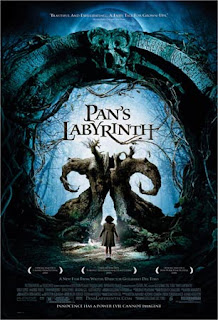
Pan’s Labyrinth: Critiquing the Cult of Unquestioning Obedience


Conservatives and reactionaries of various stripes have been quick to dismiss and condemn Mexican director Guillermo del Toro’s film Pan’s Labyrinth (El Laberinto del Fauno) as “leftist political fantasy.”

Yet perhaps what is pissing them off most about the film has been left unsaid: its critique of unquestioning obedience.


I’d be the first to admit that I have a hard time with violence in films. And Pan’s Labyrinth has a number of disturbingly violent scenes. Yet unlike, say, the average Mel Gibson film, including The Passion of the Christ, the scenes of violence in Pan’s Labyrinth are not gratuitously unending. Rather, they’re brief and serve a purpose; namely, to illustrate the cruel and violent nature of the film’s Captain Vidal and, by extension, the fascist regime of Spain’s General Francisco Franco.

Pan’s Labyrinth opens in 1944. The fascists, under Franco, have largely won the Spanish Civil War, though resistance remains. In a recent interview, the film’s director, Guillermo del Toro, observes that, “Most people think that the Civil War ended in 1939, but in reality the leader of the [rebel] group that was called the Maquis, was executed . . . in the 1960s. The resistance in Spain was very brave, and it held from 1939 into the [time of the film] because they were hoping that the Allies would turn around and help them after World War II. The resistance in Spain was actively involved in, for example, sabotaging the shipping of tungsten from the mines in Galicia to Germany to build the Panzer tanks. So they were really actively fighting the Nazis, and they were evidently rewarded with absolute indifference after the war.”

By 1944 the fascists had claimed victory, and, in the opening sequences of Pan’s Labyrinth, two spoils of this victory – the beautiful and delicate Carmen (Ariadna Gil) and her young daughter Ofelia (Ivana Baquero) – are being brought to Navarra in the north of Spain where Captain Vidal (Sergi Lopez) and his men have set up base in a rambling old house. It is from here that the captain is determined to rout out from the surrounding hills the remaining rebel forces.


Carmen is the captain’s new wife. She is also heavily pregnant with their child. Ofelia is Carmen’s daughter from a previous marriage. Though her mother implores her to call Captain Vidal “father,” Ofelia remains loyal to her real father who worked as a tailor before his death.

Vidal is using Carmen. Her sole purpose seems to be to provide a son for him. Ignoring the advise of Doctor Ferreiro (Alex Angulo), Vidal has had Carmen brought via a rough forest track to his isolated and potentially dangerous outpost on the edge of rebel territory. Once at Navarra, Carmen’s health takes a turn for the worse. “If there is a choice,” Vidal tells Doctor Ferreiro, “save the baby.” Not surprisingly, Vidal has little if any patience or concern for Ofelia.


Paul Bond notes that, “Vidal . . . a stickler for punctuality and military formality, wants his son to be born in Franco’s ‘new Spain’ – which he will create by brute force if necessary. ‘The war is over and we won,’ he says, and he is determined to kill all resisters to prove it. . . . [His] sadistic repression is brought out in some terrible and violent sequences, such as [his] beating a poacher to death with a bottle.”

Soon after her arrival to the violent and sadistic environment of her step-father, Ofelia finds herself caught up in a fantasy world – centered on a vast and crumbling labyrinth in which a faun tells her that she is the long lost princess of another realm, a realm free of lies and violence. In order to return to her rightful home and family, Ofelia must complete a number of tasks outlined by the faun.

That these tasks, along with the frightening creatures she encounters while completing them, mirror the events unfolding in the world beyond the labyrinth, suggest that Ofelia’s adventures are her way of attempting to process and make sense of the brutality and insanity in the “real world” – a state of affairs which her innocent and childlike spirit simply cannot comprehend.


Spain’s brutal reality

Yet as Paul Bond points out: “Because every twist and development of Ofelia’s fantasy world is intimately bound up with and shaped by her experiences, she can never escape life’s horrors. Her fantasy world begins to mirror Spain’s brutal reality. The characters she has created such as the Faun, played by Doug Jones, become ever more sinister. Ofelia confronts monsters, but is unable to triumph over them unequivocally. Reflecting her feelings of impotence, her fantasy tasks are dangerously beyond her. In the hall of the pale man, a chillingly vile Jones again, she barely escapes with her life. And eventually the two worlds meet.”

Before this fateful meeting, the two worlds, says critic David D’Arcy, are rendered thus: “the angular, upright realm of domination, and the dark, curved sanctuaries of the spirit.”

D’Arcy also asks us to “bear in mind that the Spanish Civil War was the war the Fascists won, in spite of lingering resistance that continued for years. It inspired Guernica, Picasso’s huge painting of a nightmarish bombing of a Basque town. This was war against civilians, in which entire cities were bombed.”


“It was also the first modern media war,” continues D’Arcy, “with aerial newsreel footage of battles that were proving grounds for new weapons, post-mortem photographs of dead babies on the covers of newspapers and global fundraising campaigns promoted on posters that were surreal collages.”

Del Toro’s film clearly seeks in many ways to reflect the grotesque style of Picasso. Yet in an interview with D’Arcy, del Toro also notes that he was inspired by Symbolist paintings of the late 19th century.

The film is also dedicated to the act of remembering, of not forgetting the past. This is especially significant given the fact that there remains – even in today’s socialist Spain – elements that seek to gloss over certain aspects of the country’s fascist history.

Says Bond in his review of Pan’s Labyrinth for the World Socialist Website, “Every detail here is aimed at historical memory, from Ofelia’s refusal to forget her real father to comments about Vidal’s father serving in Morocco, the scene of some of the Spanish military’s worst atrocities.”


An “unfair swipe” at the Catholic Church?

Of course, such insights and connections are lost on the many conservative American commentators and reviewers – some of whom not only dismiss the film as “socialist propaganda,” and “leftist political fantasy,” but even imply that Franco was some kind of Catholic conqueror of Communism. Not surprisingly, these and other conservative-leaning pundits, such as Catholic film critic Barbara Nicolosi, are miffed at what they see as del Toro’s “unfair swipe at the Church.”

Unfair? It’s a historical fact that powerful elements within the Catholic Church supported Franco’s fascist regime. As Bond observes, “del Toro’s apparently sincere use of redemptive imagery stands in stark contrast to the actual role of the Catholic Church in Spain. But he does indicate this with the presence of the priest at Vidal’s dinner, offering ecumenical support for the fascist persecution of the resistance.” It must also be noted that the Church benefited handsomely from this “support.”


As the Library of Congress notes: “Roman Catholicism [during the Franco years] was the only religion to have legal status; other worship services could not be advertised, and only the Roman Catholic Church could own property or publish books. The government not only continued to pay priests’ salaries and to subsidize the church, but it also assisted in the reconstruction of church buildings damaged by the war. Laws were passed abolishing divorce and banning the sale of contraceptives. Catholic religious instruction was mandatory, even in public schools. Franco secured in return the right to name Roman Catholic bishops in Spain, as well as veto power over appointments of clergy down to the parish priest level. In 1953 this close cooperation was formalized in a new Concordat with the Vatican that granted the church an extraordinary set of privileges: mandatory canonical marriages for all Catholics; exemption from government taxation; subsidies for new building construction; censorship of materials the church deemed offensive; the right to establish universities, to operate radio stations, and to publish newspapers and magazines; protection from police intrusion into church properties; and exemption of clergy from military service.”

“The proclamation of the Second Vatican Council in favor of the separation of church and state in 1965,” the Library of Congress documents, “forced the reassessment of this special relationship. In the late 1960s, the Vatican attempted to reform the church in Spain by appointing liberals as interim, or acting, bishops, thereby circumventing Franco’s stranglehold on the country’s clergy. In 1966 the Franco regime passed a law that freed other religions from many of the earlier restrictions, although it also reaffirmed the privileges of the Catholic Church. Any attempt to revise the 1953 Concordat met the dictator’s rigid resistance.”

Clearly, del Toro’s rather mild “swipe” at the Catholic Church isn’t “unfair” in the least.


The cult of unquestioning obedience

But, to my mind, it’s not del Toro’s “swipe” at the Church’s support of Franco’s fascist regime that sticks in conservatives’ collective craw. No, I think it’s del Toro’s denouncement of something much more fundamental to reactionary ideology – the cult of unquestioning obedience.

Pan’s Labyrinth makes it clear that Captain Vidal’s acts of arrogant disdain and savage brutality against those who, for whatever reason, don’t fit into his fascist worldview, stem from his profound lack of the creativity and compassion required so as to formulate and ask questions within (and of) a world dominated by fear and violence.

The humane and compassionate actions of Doctor Ferreiro and the housekeeper Mercedes (Maribel Verdu), on the other hand, both of whom are secretly aiding the rebels, are possible, says the film, as a result of their willingness to envision a world beyond Captain Vidal’s fascist fantasy. Their actions are also only possible as a result of their disobedience of Captain Vidal’s orders.


Likewise, Ofelia’s disobedience of the faun’s demand that she hand over her infant brother, proves to be a deeply significant act of courage and integrity. Such acts are beyond the comprehension of her step-father and the world of fascist mythology he seeks to both build and embody.


As Paul Bond observes, “Vidal, bristling with machismo, fails to notice that . . . Mercedes is spying for the resistance. She was invisible to him because she was a woman, she says when finally discovered. Vidal is similarly uncomprehending when he discovers that Dr. Ferreiro has not simply obeyed his orders.”

Highly authoritarian structures – including religious institutions or, at the very least, the reactionary aspects of any given religious tradition – rely on obedience to maintain their sense of authority and control. In Catholicism, for example, unquestioning obedience to the Church is highly valued. Indeed, advancement up the hierarchical chain of command is contingent on unquestioning obedience. Of course, by “Church,” those who champion such obedience are not referring to the Mystical Body of Christ, which, in the egalitarian spirit of Jesus, means all of us.

Rather, Catholic proponents of unquestioning obedience, when referring to “the Church,” generally mean the Vatican, or more precisely, the institutional component of the Church (comprised chiefly of the curia and magisterium) which rose to prominence in the late nineteenth century at a time when many of its members were fearing and denouncing the democratic spirit sweeping across Europe and threatening their own imperial power and influence. As with a number of issues, the Vatican was on the wrong side of history at that particular time. As a result, it’s now, for all intents and purposes, the last remaining absolute monarchy in Europe and, as such, an often irrelevant and embarrassing bastion of reactionary thought and activism.

Understandably, Catholic proponents of unquestioning obedience view “the Church” as, in the words of Catholic columnist and author Chris McGillion, “a kind of club with an inflexible set of rules, to which all its members must subscribe. Those who don’t . . . are made to feel unwelcome; those who question the rules are asked to leave or forced to go.” Such punishment is warranted as for Catholic members of the cult of unquestioning obedience, public dissent from Church teaching is the greatest of sins. Not surprisingly, such Catholics are highly prone to minimizing and
distorting the role of conscience.

Yet important questions need to be asked: Does this “kind of club”-understanding of Church reflect the example of community modeled by Jesus?

Is it the only way to view and understand the reality of Church? Is it even an appropriate way to understand Church?

What are other ways present in our Catholic tradition and experience?

Are some of these more equipped than others to emulate Jesus and thus invite and encourage people to flourish, both individually and communally?


As a gay man within the Catholic Church – a Church I view and experience as being much broader and progressive than simply “the Vatican” – I’ve crossed paths with some Catholics who define themselves in terms of this “club with an inflexible set of rules”-understanding of Catholicism, one focused on the Vatican and unquestioning obedience to it.

Am I saying that obedience has no place in our Catholic faith? Of course not. Nevertheless, I think a way of understanding obedience that is conducive to both individual and communal flourishing is sorely needed. One such understanding has been offered by theologian Diarmuid O’Murchu, who, in his book Poverty, Celibacy, and Obedience: A Radical Option for Life, notes that, “Obedience is not about submitting our will to a higher authority (why then did God give us a will in the first place?) but about exploring and proffering ever new ways to engage responsibly, collaboratively, and creatively with the issues of power and powerlessness that we encounter in daily life. . . . At the end of the day it is not laws but values that touch the depth of our human hearts.”

I’m also not suggesting that there isn’t a place for an institutional component within Catholicism. Yet at the same time, many of us who declare ourselves Catholic don’t recognize the clerical/hierarchical culture of the institutional Church as being an essential component of the Catholic faith.

As I’ve stated in a previous post, I believe we require an institutional church, but it’s not essential that this institution be rigidly hierarchical or dominated by clerics. In fact, many Catholics intuitively sense that such a clerical/hierarchical structure and culture is detrimental to the spirit of the Gospel message. Jesus certainly didn’t model such a structure or culture.

With regards to issues of human sexuality, the clerical/hierarchical culture simply does not reflect for many people – gay or straight – the liberating, life-giving spirit of the Gospel. This doesn’t mean I’m advocating a big sexual free-for-all. I just think that as Catholics, we can do better at recognizing and articulating a sexual theology and ethic that actually reflects people’s experience of God in their relational/sexual lives; a theology that actually cares for and thus listens to people’s real lives in the real world – a world permeated by the sacred.


Spiritual violence

I’ve discovered, however, that there are some gay Catholics (or rather “same-sex attracted” Catholics) who, for whatever reason, can’t or won’t see every aspect of the world – including their God-given sexual orientation and its expression – as infused with God’s loving and transforming presence.

Instead, they rigidly hold to the belief that any sexual orientation other than heterosexual is “ordered to an intrinsic moral evil.” Never mind that countless lesbian and gay Catholic individuals experience God in their loving (and sexually-expressed) relationships with another of the same gender. Such realities are simply not acknowledged, let alone embraced and celebrated.

Now, I’m not for one moment liking Catholics who embrace such a narrow and rigid perspective on homosexuality to the fascists depicted in del Toro’s Pan’s Labyrinth. However, there are ways other than physical by which one can inflict violence on another; and, without doubt, the language currently employed by the Vatican to describe homosexual orientation and the lives and relationship of gay people who, in good conscience, cannot subscribe to such a simplistic description, is spiritually violent and abusive.

And then of course there’s the Vatican’s complicity in the deaths of gay people throughout history – a complicity that some would like to gloss over, not unlike those who would like to gloss over and forget the fascist atrocities in Franco’s Spain. Yet as Joseph O’Leary, among others, powerfully reminds us: “When the Vatican formulated its official apology for the Inquisition [in 1998], the multitudes burnt as heretics and witches were duly remembered. But no mention was made of the thousands of gay people burnt directly by the Papal States down to 1750 and executed in other states with papal approval.”

“‘Sodomites’ were demonized in exactly the same style as ‘witches’ were,” says O’Leary, “and treated with equal brutality. Sixteenth century missionaries had sodomites burnt in the Philippines at the same time as they were having Jews burnt in India. But there is no evidence that this weighs on the Vatican's conscience.”

Barbara Nicolosi bemoans the fact that half of Pan’s Labyrinth is “dripping with brutal realistic violence . . . blood, blood, blood . . . torture, murder, abuse.” Perhaps she should acquaint herself with the history of our own Catholic Church and its treatment of, among others, gay people. Then again, perhaps the bucketfuls of blood spilt in The Passion of the Christ are the only blood she considers worthy of lamenting.

After all, this is a woman who, while noting that “Christians in entertainment . . . should be talking about everything in a godly way,” nevertheless employs the following language to talk about gay men.

“[We’re] getting drowned in heralds for the sodomites-in-saddles fantasy, Brokeback Mountain.”

“I can’t really recommend [Brokeback Mountain]. It isn’t good enough to justify getting the images in your head of men doing their twisted enemas-as-act-of-love thing.”

I guess gay people can be excluded from being talked about in a “godly way.”


Poetic, ecstatic truth

Increasingly, when reading the attempts of folks like Nicolosi to review films, I’m reminded of what Thom Parham once said in response to the question: “Why Do Heathens Make the Best Christian Films?”

“The answer is pretty much the same problem we find with new novelists who want to write Christian fiction,” Parham says. “The Christian novelist is so focused on their ‘message’ that they become preachers (boring) instead of storytellers (fascinating). There is a severe warning for this type of message-driven writing. The result is more akin to propaganda than art, and propaganda has a nasty habit of hardening hearts.”


Judging from the positive reception that has greeted del Toro’s Pan’s Labyrinth (and Ang Lee’s Brokeback Mountain, for that matter), people aren’t discerning a work of propaganda. Hearts are not being hardened. So why do folks like Nicolosi revile such films?

My sense is that she and others are simply not attuned to fascinating storytelling, let alone to what filmmaker Werner Herzog refers to as “the deeper strata of truth in cinema . . . [the] poetic, ecstatic truth [that is] mysterious and elusive” and which can only be reached “through fabrication and imagination and stylization.”


No, the preachers of propaganda (at either end of the political spectrum), like the guardians of orthodoxy, are too stunted in their outlook and outreach to seek and grasp such truth. They’re too preoccupied ensuring unquestioning obedience to a rigidly prescribed way of viewing and reacting to a circumscribed view of the human condition and, in the sphere of religion, a circumscribed view of God’s presence and action in the world.

As such they’re incapable of joining with reviewer Paul Bond in contemplating (much less acknowledging) that Pan’s Labyrinth can be viewed as “a film of great hope and optimism, of defending the imagination under difficult circumstances.”

Creating such a film is “no small thing,” says Bond. “The film ends with a narrative that the princess left only tiny traces of her presence on earth for those able to see them. A single flower blooms on a stunted tree.”

That “stunted tree” is each of us – in one way or another. I appreciate filmmakers like del Toro who can creatively and entertainingly cultivate the blossoming of awareness and compassion in our hearts, who remind us of the possibility, indeed, at times, the absolute necessity of questioning and challenging, resisting and growing.

Although raised a Catholic, del Toro apparently no longer identifies as one – or perhaps more accurately, solely as one. Regardless, his most recent film conveys a deeply spiritual message – one that we all need to hear. For as Joan Cittister, OSB, reminds us: “Spirituality has to do with critiquing . . . . Follow the example of Jesus to question, question, question authority. . . . The courage to question the seemingly unquestionable is the essence of spiritual leadership.”


Recommended Off-Site Link:
Embraced by Many Religions, Labyrinth Allows Broad Discussion of Faith Issues – Matthai Chakko Kuruvila (San Francisco Chronicle, March 7, 2007).

UPDATE: 10 Years Later, Pan’s Labyrinth Still Shines – Travis Newton (Fandom, October 26, 2016).


See also the previous Wild Reed posts:
Reflections on the Overlooked Children of Men
Reflections on Babel and the “Borders Within”
Revisiting a Groovy Jesus (and a Dysfunctional Theology)
Christian Draz’s Critique of Brokeback Mountain
What the Vatican Can Learn from the X-Men
The New Superman: Not Necessarily Gay, but Definitely Queer
Alexander’s Great Love
Reflections on The Da Vinci Code Controversy
Thoughts on The Da Vinci Code

Opening image: Drew Struzan.