Tuesday, July 17, 2018

The Tragedy of the Romanovs, 100 Years On


Today marks the 100th anniversary of the murder of the Romanow family in the Ural city of Yekaterinburg, Russia.

The photograph above shows the Romanovs, the last imperial family of Russia, in 1913, the year of the Romanov Tercentenary; while the image at right shows the 2003 consecration of the Church on Blood in Honor of All Saints in Yekaterinburg. This church is built upon the site of the infamous Ipatiev House – the place of imprisonment and execution of the Romanovs.

After Tsar Nicholas II's abdication in March 1917, the imperial family were held captive in Russia – first by the Provisional Government and then, after the October Revolution, by the Bolshevik regime. The family included Nicholas, his wife Empress Alexandra Feodorovna, and their five children – the Grand Duchesses Olga, Tatiana, Maria and Anastasia, and the Tsarevich Alexei.

One of the things that draws me to the Romanovs' story is how through their responses of fortitude and love during the months of imprisonment leading up to their murder, they came to perceive more clearly the strengthening and transforming presence of God. This resulted decades later in their canonization as passion bearers by the Russian Orthodox Church.

Virginia Cowles in her book, The Romanovs, encapsulates this period of the family's life beautifully and succinctly when she writes:

The sixteen months that followed the overthrow of the monarchy revealed a new and noble Nicholas and Alexandra. These lamentable rulers, these tragic, misguided autocrats, who possessed not an inkling of understanding of the swift currents swirling around them, endured the trial and humiliation to which they were submitted with such rare dignity and courage that none but the coldest heart can fail to admire them. Their love for each other, their unquestioning faith in God, gave them a nobility that shines through the mists of time. The vacillating monarch became a man of strength; the censorious consort, a woman of compassion.


As I mentioned in a previous post, I've been fascinated by the story of the Romanovs since high school, when I saw Franklin J. Schaffner's film Nicholas and Alexandra on Australian TV. It had quite the impact on me, not only because of its epic depiction of the downfall of Russia's Romanov dynasty, but because it movingly told a very intimate, very human story: the story of a loving family's attempt to deal with momentous circumstances and events, many of which were beyond their comprehension and control.

In particular, I'm thinking of the then-incurable haemophilia that inflicted Alexei, the couple's son and heir, and the consequences that flowed from the way Nicholas and Alexandra chose to respond to this tragedy of fate: their clinging stubbornly to the idea of absolute monarchy, their turning to Rasputin. Such responses ensured epic and tragic consequences for their family, the Russian empire, and, indeed, the world.

Not long after, I found in the library of my high school the book upon which the film is based, Robert K. Massie's Nicholas and Alexandra. So began a fascination with the Romanov family that continues to this day. (For more about my interest in the story of the Romanovs, click here.)


Above (from left): Grand Duchess Olga, Grand Duchess Maria, Tsar Nicholas II, Tsaritsa Alexandra, Grand Duchess Anastasia, Tsarevich Alexei, and Grand Duchess Tatiana (1913).


Previous Wild Reed posts about the Romanov family:
• Remembering the Romanovs
• Remembering Olga Nikolaevna and Her Sisters

Related off-site links about the 100th anniversary of the family's murder:
The Terrible Fate of Russia’s Imperial Family – Joe Sommerlad (The Independent, July 12, 2018).
A Century After the Tsar and His Family Were Murdered and Lenin Seized Power, How the Daily Mail Might Have Recorded This Event If It Happened Today – Tony Rennell and Guy Walters (The Daily Mail, July 15, 2018).
A Century Ago, the Romanovs Met a Gruesome End – Anna Diamond (Smithsonian Magazine, July 2018).
The Romanovs’ Art of Survival – Anastasia Edel (The New York Review of Books, July 16, 2018).
The Legacy of the Romanovs: How Is the Last Russian Royal Family Remembered in Russia? – Helen Rappaport (HistoryExtra.com, July 16, 2018).
Russia Split Over Remains of Last Tsar on 100th Anniversary of His Murder – Alec Luhn (The Telegraph, July 16, 2018).
Fresh DNA Tests Authenticate Bones of Russian Tsar and Family – Phys.org (July 16, 2018).
DNA Analysis Confirms Authenticity of Romanovs’ Remains – Brigit Katz (Smithsonian Magazine, July 17, 2018).
Inside the Romanov Family's Final Days – Caroline Hallemann (Town and Country, July 1, 2018).
The Race to Save the Romanovs and How It Fell Apart – Bob Ruggiero (Houston Press, July 11, 2018).
How the Royal Houses of Europe Abandoned the Romanovs – Helen Rappaport (The Economist, June 28, 2018).


Monday, July 16, 2018

Quote of the Day

Donald Trump’s press conference performance in Helsinki rises to and exceeds the threshold of “high crimes and misdemeanors.” It was nothing short of treasonous. Not only were Trump’s comments imbecilic, he is wholly in the pocket of Putin. Republican Patriots: Where are you?

– John Brennan
Quoted in The Washington Post
July 16, 2018


Above: The cover of the July 17, 2018 edition of the New York Daily News accuses President Donald Trump of siding with Russian leader Vladimir Putin over his own country. The cover's illustration by Bill Bramhall alludes to a statement Trump made during his presidential campaign that he could shoot someone on New York’s Fifth Avenue and not lose voters.


Related Off-site Links:
"Shameful," "Treasonous," "Disgraceful": Trump Slammed From All Sides for News Conference with Putin – Dartunorro Clark (NBC News, July 16, 2018).
Trump Sides With the Kremlin, Against the U.S. Government – Krishndev Calamur (The Atlantic, July 16, 2018).
Trump, Treasonous Traitor – Charles M. Blow (The New York Times, July 15, 2018).
The Crisis Is Upon Us – Charles P. Pierce (Esquire, July 16, 2018).
Trump Sheds All Notions of How a President Should Conduct Himself Abroad – Mark Landler (The New York Times, July 16, 2018).
In Helsinki, Trump Violated His Oath of Office – Thomas L. Friedman (The New York Times via The Star Tribune, July 17, 2018).
Is Donald Trump Committing Treason? – John Shattuck (The Boston Globe, July 16, 2018).
Is Donald Trump’s Dark Russian Secret Hiding in Deutsche Bank’s Vaults? – Luke Harding (Newsweek, December 21, 2017).
How Russian Mob Money Helped Build Trump Business Empire – Craig Unger (The New Republic, July 13, 2017).
Putin Does Not Deny That Russia Has "Compromising Material" On Trump – Marina Fang (The Huffington Post, July 16, 2018).

UPDATES: Trump Backtracks on Russian Meddling, Says He "Misspoke" During Putin Meeting – Zeke Miller and Lisa Mascaro (Associated Press via Chicago Tribune, July 17, 2018).
Trump Now Says He Accepts U.S. Intelligence Reports on Russian Election Meddling – Eileen Sullivan and Mark Landler (The New York Times, July 17, 2018).
National Security Experts Warn Trump Is Behaving More and More Like a "Controlled Spy" – Sonam Sheth (Business Insider, July 17, 2018).
Soft Targets: The Muddled and Anti-Intellectual American Brains That Made Election Meddling Possible – Bill C. Davis (Common Dreams, July 18, 2018).

See also the previous Wild Reed posts:
• Quote of the Day – May 23, 2018
• Quote of the Day – February 6, 2018
• Global Condemnation for Trump's Latest Ignorant and Racist Comments
• Hope in the Midst of Collapse
• With Republicans at the Helm, It's the United States of Hypocrisy
• Donald Trump: A View from Australia
• Trump's America: Normalized White Supremacy and a Rising Tide of Racist Violence
• Quote of the Day – April 6, 2017
• Quote of the Day – March 26, 2017
• A Profoundly Troubling and Tragic Indictment
• On International Human Rights Day, Saying "No" to Donald Trump and His Fascist Agenda
• Progressive Perspectives on the Election of Donald Trump
• Election Eve Thoughts
• Carrying It On
• Progressive Perspectives on the Rise of Donald Trump
• Trump's Playbook


Sunday, July 15, 2018

Tous les Mêmes

A musical interlude this sultry Sunday afternoon with "Tous les mêmes" by Stromae. About this song and its music video, Wikipedia notes the following.

"Tous les mêmes" (French for "[They are] All the Same") is a song by Belgian singer Stromae, released in 2013. The song has peaked at number one on music charts in both Belgium and France. The music video, directed by Henry Scholfield, was released on YouTube on December 18, 2013 and features Stromae partly dressed as a woman. The track shows the life of female Stromae, annoyed with the attitude of men and what they do. Throughout the video, Stromae depicts various stereotypical remarks women make about men, accompanied by the non-verbal cues the other characters in the video make. The lighting effects in the video (green light for male Stromae, pink light for female Stromae) aid the interpretation of the song. The video has received over 200 million views as of June 2018.


"Tous les mêmes" is from Stromae's second album, Racine Carrée (French for "square root"), which artfully blends Caribbean and African musical influences along with Stromae's signature 1990s-inspired dance beats. The album explores themes as diverse as alienation from social networks, relationship issues, discrimination, cigarettes and lung cancer, AIDS, and absent father figures. Prior to its official release and afterwards, Racine Carrée received critical acclaim for its thoughtful lyrics. It also gained comparisons to the work of fellow Belgian recording artist Jacques Brel. The album was a commercial success across Western Europe, including non-francophone countries, and yielded three chart-topping singles: "Papaoutai," "Formidable" and "Tous les mêmes."

I must admit the lyrics of "Tous les Mêmes" (translated below) don't resonate with me at all. I know they're supposed to reflect an argument between two (heterosexual) lovers but they're just too petty and catty, and too reliant on stereotypes, for my liking. Perhaps that's Stroman's point: the ridiculousness of so many interpersonal clashes. What I do appreciate, however, is the song's overall sound and its music video, especially the latter's dance sequences.


All you men are all the same
Macho but cheap
A bunch of unfaithful fools
So predictable, I’m not even sure you deserve me
You’re lucky that we love you
Go on, thank me

We’ve set the date for our next argument
We’ve set the date around that time of month

The beginnings of another argument
Between Stromaette and her boyfriend:
Take one last look at my ass
It’s right next to my suitcase
Say goodbye to your mommy
Who puts you on a pedestal
You have no idea what you’re losing
You’ll never find anyone as good as me
What? You wanna break up now?
You’ve got it all wrong
I was only saying that to get a reaction
And you were actually thinking about it!

It’s easy to say I’m whiny and emotional
And I talk too much “blah blah blah”
“But no no no, it’s important
That thing you call your ‘period’”
You know, life is for having kids
But as always, “It’s never the right time”
Oh, sure, you’re there to make them
but will you be there to raise them, too?

By the time I’ve turned ugly
Or at least au naturel –
Stop, I know you’re lying
Only Kate Moss will stay forever beautiful
Ugly or stupid? – It ain’t right!
Beauty or beast? – It ain’t right!
Beauty or me? – It ain’t right!
Me or her? – It ain’t right!

All the same and we’re fed up


Previously featured artists at The Wild Reed:
Dusty Springfield | David Bowie | Kate Bush | Maxwell | Buffy Sainte-Marie | Prince | Frank Ocean | Maria Callas | Loreena McKennitt | Rosanne Cash | Petula Clark | Wendy Matthews | Darren Hayes | Jenny Morris | Gil Scott-Heron | Shirley Bassey | Rufus Wainwright | Kiki Dee | Suede | Marianne Faithfull | Dionne Warwick | Sam Sparro | Wanda Jackson | Engelbert Humperdinck | Pink Floyd | Carl Anderson | The Church | Enrique Iglesias | Yvonne Elliman | Lenny Kravitz | Helen Reddy | Stephen Gately | Judith Durham | Nat King Cole | Emmylou Harris | Bobbie Gentry | Russell Elliot | BØRNS | Hozier | Enigma | Moby (featuring the Banks Brothers) | Cat Stevens | Chrissy Amphlett | Jon Stevens | Nada Surf | Tom Goss (featuring Matt Alber) | Autoheart | Scissor Sisters | Mavis Staples | Claude Chalhoub | Cass Elliot | Duffy | The Cruel Sea | Wall of Voodoo | Loretta Lynn and Jack White | Foo Fighters | 1927 | Kate Ceberano | Tee Set | Joan Baez | Wet, Wet, Wet | Stephen “Tin Tin” Duffy | Fleetwood Mac | Jane Clifton | Australian Crawl | Pet Shop Boys | Marty Rhone | Josef Salvat | Kiki Dee and Carmelo Luggeri | Aquilo | The Breeders | Tony Enos | Tupac Shakur | Nakhane Touré | Al Green | Donald Glover/Childish Gambino | Josh Garrels


Tuesday, July 10, 2018

Something to Think About . . .


Related Off-site Links:
Thai Cave Rescue: All 12 Boys and Soccer Coach Freed – Euan McKirdy, Kocha Olarn and Steve George (CNN, July 10, 2018).
The Trump Administration’s Separation of Families at the Border, Explained – Dara Lind (Vox, June 15, 2018).
First Wave of Migrant Children Reunited With Parents – Caitlin Dickerson and Manny Fernandez (The New York Times, July 10, 2018).
Trump Administration Lost Track of Parents of 38 Young Migrant Children – Julia Ainsley (NBC News, July 6, 2018).
Trump’s Racism Coils Around Black Children and South American Immigrants – Elizabeth Weill-Greenberg (Common Dreams, July 7, 2018).

See also the previous Wild Reed posts:
• "What We're Seeing Here Is a Tipping Point"
• Something to Think About – June 20, 2018
• Opposing the Trump Administration's Inhumane Treatment of Immigrant Families
• Jeremy Scahill on the Historical Context of the Trump Administration's "Pathologically Sick" Anti-Immigrant Agenda
• Something to Think About – June 14, 2018
• On International Human Rights Day, Saying "No" to Donald Trump and His Fascist Agenda
• Quote of the Day – March 12, 2018
• 2000+ Take to the Streets of Minneapolis to Express Solidarity with Immigrants and Refugees
• Trump's America: Normalized White Supremacy and a Rising Tide of Racist Violence

Image: Artist unknown.


Sunday, July 08, 2018

How We Can Help the People of Yemen


In Yemen, over 22 million people are in desperate need of life-saving assistance. Half of this number are children. In fact, a child dies every 10 minutes in Yemen. Non-governmental agencies (NGOs) are trying to get people to become aware of the crisis and to care about the welfare of the Yemeni people in the midst of the country's rapidly deteriorating state, one marked by the total collapse of both the healthcare and education systems.


Yemen's devastation is largely due to the war between the Houthis and a Saudi-led coalition that is supported by the U.S. The war has ravaged almost every aspect of Yemeni life, officially making it the world's worst humanitarian crisis. There are severe water and electricity shortages, and food prices have spiked, meaning 8.4 million people are now on the brink of starvation. UNICEF reports that it is not only malnutrition that is harming children; they are also vulnerable to being both recruited as child soldiers and given over to child traffickers.

Like many people, I've been deeply troubled by the news and images coming out of Yemen. It’s easy to feel despairing and powerless, but there are things we can do to make a difference. For instance, I recently renewed my membership in the Field Partnership monthly giving program of Doctor’s Without Borders/Médecins Sans Frontières (MSF).

Perhaps you too are already helping in some way, If not, I offer the following information and ask that you consider doing so to whatever extent you can.


How you can help

The best way to make a difference in the Yemen humanitarian crisis is to donate money to aid organizations.

• You can help the people of Yemen get access to food and clean water by donating to most humanitarian aid organizations. To help an organization that specifically fights hunger, donate to Action Against Hunger.

• You can also consider giving money to medical aid organizations. In Yeman, damaged sewage systems from the war have caused a major outbreak of cholera, an infection caused by contaminated water. Young children are especially vulnerable, and particularly if they’re malnourished, as over 460,000 Yemeni children are. Cholera is easily treatable, but the extent of the outbreak and difficulty of transportation in Yemen has made it hard for doctors to treat the over 60,000 cases there. Donations to medical aid groups such as Doctors Without Borders can help medical care providers get to those in need and have the proper supplies to treat them.


• You can also help by choosing to focus on aid organizations dedicated to specifically helping children. Two examples of such organizations working to address the crisis in Yemen are UNICEF and Save the Children.

• Finally, in terms of contributing money, many organizations have pledged to help Yemenis in need in many different ways, including providing food, medical aid, education, economic empowerment, and civil management. By donating to these humanitarian organizations, you can help those suffering due to the crisis in Yemen in many different ways. Some of these organizations include Mercy Corps, the Red Cross, the International Rescue Committee, Oxfam International, and CARE.org


Related Off-site Links:
She Called Her Child "Enough": A Rare Look at Yemen’s War, Where Children Starve and Hospitals Are on Life-Support – Alex Potter (The Intercept, June 21, 2018).
The Horrific Yemen Humanitarian Crisis Is About to Get a Lot Worse, U.N. Warns – David Gilbert (Vice, June 15, 2018).
Yemen Civil War: Deadly Conflict and Humanitarian Crisis Hidden in the Shadows of Syria and Iraq – Mark Saunokonoko (9News.com, June 13, 2018).
Yemen: Five Days Inside the World’s Largest Humanitarian Crisis – Matthew Carter (British Red Cross Blog, November 17, 2017).
Humanitarian Catastrophe Unfolds in Yemen as World Refuses to Act – Sophie McNeill (ABC News, February 26, 2017).

UPDATES: America's Death Trail in Yemen, and the Importance of Showing Graphic Images of War – Walker Bragman (Paste, August 24, 2018).
U.S. Bombs Are Killing Children in Yemen. Does Anybody Care? – Moustafa Bayoumi (The Guardian via Common Dreams, August 26, 2018).
Why Are U.S. Bombs Killing Civilians in Yemen? – The Editorial Board (The New York Times, August 28, 2018).
Yemen Faces “Unimaginable Suffering” as US-Backed Saudi War Enters Eighth Year – Jenna McGuire (Common Dreams, March 24, 2022).

Over the years I've taken the opportunity to highlight various humanitarian crises and encourage my readers to take action. See, for instance:
• How We Can Help the People of the Philippines (2013)
• How We Can Help the People in the Horn of Africa (2011)
• How We Can Help the People of Pakistan (2010)
• How We Can Help the People of Haiti (2010)
• Crisis in Sri Lanka (2009)
• Prayer of the Week: "The Heart of Compassion" by Joyce Rupp
• Letting Them Sit By Me


Saturday, July 07, 2018

Photo of the Day


See also the previous Wild Reed posts:
• Celebrating the Summer Solstice
• In Summer Light
• Summer Blooms
• Summer Boy

Image: Michael J. Bayly.


Friday, July 06, 2018

Queer Native Americans, Colonialism, and the Fourth of July

The Wild Reed's 2018 Queer Appreciation series concludes with the sharing of an excerpt from John Paul Brammer's July 4 piece at Them on how Indigenous Two Spirit people in the U.S. respond to the Fourth of July and all it represents. As Brammer notes, "When colonialism has erased your heritage, patriotic holidays can feel insulting. Just ask a Two Spirit person."

Some might think of the Fourth of July as a convenient holiday from work, or an occasion to don American flag apparel and express their patriotism. But from their home on the Passamaquoddy Tribe reservation in Indian Township, Maine, Geo Soctomah Neptune [right] explains what word comes to mind when they think of the Fourth of July: “Betrayal.”

Neptune is a Two Spirit, a traditional gender identity found in many different indigenous North American tribes. “The general agreed upon English translation is ‘Two Spirit’ – someone who has both masculine and feminine spirits,” Neptune says. “Other words I would use to describe myself would include nonbinary, transfeminine and, in my presentation, gender-nonconforming.”

Like many indigenous people in what is now called the United States, Neptune has complicated feelings about public displays of patriotism. Over the course of our conversation, Neptune recalls a story from their family about their relative, Francis Joseph Neptune, who was chief of the Passamaquoddy when the Revolutionary War broke out. “It was the Battle of Machias,” Neptune says. “The Passamaquoddy were defending what is now called Maine. My great, great, great, great grandfather took the first shot, the story goes. Our tribe received a medal of friendship from George Washington.”

That friendship, Neptune says, was short lived. Today, Maine is one of the whitest states in the country, and over time, the Two Spirit tradition within Neptune’s tribe has faded. Neptune attributes this to the legacy of American colonialism. “Even asking my own elders about Two Spirits, they would say, ‘We used to have them a long time ago, but we don’t have them now,’” Neptune says. “Being young and knowing I was a Two Spirit, that made it more difficult.”

Ryan Young, a member of the Lac du Flambeau Ojibwe Tribe who also identifies as Two Spirit, echoes Neptune. “I personally don’t participate in Fourth of July celebrations,” Young says. “I think it’s particularly difficult to want to celebrate with all that has been happening with indigenous people at Standing Rock and with undocumented folks.”

Young notes that they have researched the Fourth of July in the past, and mentions that they found in the Declaration of Independence a reference to “merciless Indian savages,” which makes it all the more difficult to feel any sense of pride for the United States. “It’s right there in the document,” they say. “It’s hard for me to celebrate this day when there’s such a disconnect between mainstream society and understanding of history from an indigenous perspective.”

Alivia Jene, a Two Spirit person from the Penobscot tribe, also approaches the Fourth of July from an indigenous perspective, preferring to celebrate “interdependence day” as opposed to Independence Day, in keeping with the communal nature of Native American culture.

“I’m one of those people who don’t stand during the Pledge of Allegiance,” she says. “I was lucky to go to a Bureau of Indian Affairs school where we didn’t have the Pledge of Allegiance. All of these symbols of patriotism have always been incredibly abrasive and hypocritical. We need a more complex understanding of the history of this country that has been based on genocide and colonization.”

Jene says her Two Spirit identity contrasts with the American concept of queerness, in that it is related to social and ceremonial responsibilities within her tribe, a commonality among Two Spirit people today that harkens back to the tradition’s pre-colonization roots. “For me, Two Spirit incorporates gender, sexuality, and social roles,” Jene says. “Two Spirit more accurately describes me than other words do.”

Being Two Spirit in our modern age means decolonizing one’s conception of gender and sexuality, in order to better understand one’s own identity. This is true for Jene, Neptune, and also for Young, who had to do independent research to rediscover the Two Spirit tradition in their tribe, which colonization had obfuscated over time. “There’s a lot to learn about queerness in both American society and our own tribal communities,” they say.

. . . As Americans break out the grill and shoot off fireworks to celebrate Independence Day, we ought to take the time to consider whose land the United States was built on, and who was forcibly moved to make room for Europeans. Indigenous communities still exist, mostly in reservations they were forced to live on. Colonization has taken much of their history from them, and, in the cases of indigenous queer people, left them without the respect they once had in their tribes.

Young speaks on their tribal community needing to dismantle the homophobia and transphobia that has been ingrained into their culture due to European ideologies. In doing so, they say something that could apply to non-indigenous Americans as well: “You can still have love for where you’re from, and be critical of how it needs to change.”


To read John Paul Brammer's commentary in its entirety, click here.


See also the previous Wild Reed posts:
• Tony Enos on Understanding the Two Spirit Community
• North America: Perhaps Once the "Queerest Continent on the Planet"
• Clyde Hall: "All Gay People, in One Form or Another, Have Something to Give to This World, Something Rich and Very Wonderful"
• Quote of the Day – November 12, 2011
• John Corvino on the "Always and Everywhere" Argument Against Gay Marriage
• Same-Sex Desires: "Immanent and Essential Traits Transcending Time and Culture"


Thursday, July 05, 2018

Out and About – Spring 2018 (Part I)


With the summer solstice been and gone, it feels like it's a good time to look back on the spring season that's past with the latest installment of The Wild Reed's "Out and About" series.

But first, regular readers will be familiar with my "Out and About" series, one that I began in April 2007 as a way of documenting my life as an “out” gay man, seeking to be all “about” the Spirit-inspired work of embodying God’s justice and compassion in the world. I've continued the series in one form or another for the last 10 years – in 2007, 2008, 2009, 2010, 2011, 2012, 2013, 2014, 2015, 2016, 2017 . . . and now into 2018.

So let's get started with this latest installment . . .


My year-long chaplain residency at Abbott Northwestern Hospital (ANW) in Minneapolis continues. In fact, I'm about three-quarters of the way through – which I find hard to believe. Where does the time go?

In the photo above I'm pictured with my fellow resident chaplains Chandler, Katie, and Hae. We're in the chapel of ANW for "Let the Greening Begin," the April 27 interfaith prayer gathering I planned and facilitated which celebrated the return of spring.

Right: With members of the Palliative Care team, with whom I've been working since March.


For more images and commentary on "Let the Greening Begin," click here.


Above: With my fellow chaplain residents and our Unit II CPE supervisor, Kim Goodman – May 15, 2018.

Following is part of what Kim wrote in my Unit II evaluation.

Michael is effective with patients who, in turn, feel cared for, supported, and heard. He connects well with staff, and is experienced as professional, competent, and a good representative of spiritual care. In his goal to become more experienced with palliative care, he worked with the Palliative Care team chaplain to begin engaging with the team and their patients. He quickly gained their trust and respect, increasingly receiving referrals and being relied on as second chaplain more than as a resident or student. The ICU chaplain also came to rely on him as her "second" and backup as he covered the ICU two days a week for her, and quickly became her go-to for vacation coverage. She has high standards and her endorsement of Michael speaks to the trust he earned from her in providing clinical spiritual care.

Throughout the unit, Michael engaged intentionally with integrative theological work, drawing on his Catholicism and his growing and deepening connection to Pagan traditions. His spiritual development is complex and integrated in significant ways. This level of theological and spiritual work allows him to be alongside patients who are in different stages of faith than he, with respect and maturity toward their meaning-making processes. He is aware of and developing an ability to self-supervise his own sense of judgmentalism when it creeps into patient encounters. Michael brings a similar maturity and dynamic to his interactions with peers and supervisor.


Above: With members of the ANW Palliative Care team – May 11, 2018.


Above: With fellow chaplain residents Hae and Chandler, and Chandler's wife and their youngest child – May 18, 2018.


Above: The wonderful group of chaplain interns we had at ANW from the beginning of February until mid May. Back row from left: Suzie, Sheila, Dong, Phillipos, and ANW Spiritual Care Director and CPE supervisor Verlyn Hemmen. Front row from left: Mark, Dave, and PJ.


Above: With my fellow chaplain residents and our Unit III CPE supervisor, Verlyn – June 1, 2018.


Above: The new group of chaplain interns that started at ANW in early June with their CPE supervisor, Mark Mallinger. From left: Mark, Logan, Sam, Danielle, Kristen, and Jamie.


Above and right: The "Minnesota March For Our Lives" event in St. Paul – March 24, 2018.

Led by students and other young people, the event was one of hundreds of marches and rallies held in solidarity with the March for Our Lives in Washington, DC., which drew over 800,000 people to the streets of the capital and was organized by survivors of the February 14 Stoneman Douglas High School shooting in Parkland, Florida.

For more images and commentary on this even, click here.


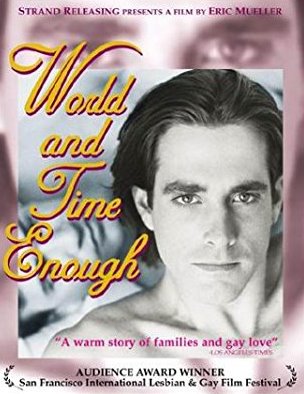
Above and left: The inaugural Queer Movie Night, which I hosted for friends in my south Minneapolis home on the evening of Sunday, March 25, 2018. We watched local filmmaker Eric Mueller's 1994 film, World and Time Enough.

Following is Heidi Rasschke's City Pages review from 1995:

This independent, locally made film about two gay lovers, one of whom is HIV positive, has been kicking around for so long that you may think you've already seen it. It was released about a year ago and has been a hit at film festivals and in big cities around the world. Those of you who haven't been holding your breath waiting for it to come home, may assume that, with such a heavy sounding title and HIV/AIDS in the picture, director Eric Mueller's low budget production is a drama about dying of a stigmatized disease in the Philadelphia vein. But, though World has its dramatic moments, this film is best described as a touching comedy about two quirky, lovable characters, Mark (Matt Guidry) and Joey (Gregory G. Giles), for whom HIV/AIDS is just one of life's many trials. There are the everyday worries of homophobic pests, strained familial relations and temp jobs, among others. And though Mark, an activist-artist who makes hilarious "sculptures" and owns a drawerful of white T-shirts bearing sloppily painted slogans, has a tendency to take himself a bit too seriously, the movie never becomes overdramatic. That's because the couple's story is told through the eyes of their wonderfully gossipy friend David (Kraig Swartz), who nearly steals the show with his camera-addressing digressions. You'll envy Mark and Joey's relationship, wish David was your friend, and laugh at life's ridiculousness.


Future gatherings will be hosted by other members of the group and they'll get to choose the film that we'll view and discuss. For more about this series of movie nights and queer cinema in general, click here.


Above and right: My friends Joan and Matt hosted the second Queer Movie Night on Sunday, April 22, 2018. They chose the 2016 documentary Free CeCe to view and discuss.

Free CeCe is about Chrishaun Reed "CeCe" McDonald, a trans African American woman who was served a 41 month prison sentence in 2012 for defending herself against a violent attack that took place the previous year in south Minneapolis. As well as highlighting CeCe's story, Free CeCe also examines the all-too common violence experienced by trans women of color.


Above: With my dear friend Joan – April 22, 2018. Joan and Matt's "bold" kitchen was recently featured in an article in the Star Tribune. Following is an excerpt.

[T]he home’s new owner, Joan Demeules, said the kitchen made the sale. “I loved the red cabinets. Such a cool pop of color! It’s a wonderful place to cook. And I like how it flows. It’s really the centerpiece of the house. I hosted a rehearsal dinner, and nobody wanted to leave the kitchen.”

So true!


Above: Friends (from left) Omar (with Sadie), Hugh, Matt, Joan, John, and George at Queer Movie Night of April 22.


Above: More Queer Movie Night fun with (from left) Jeffrey, Pete, Omar, and Jim – Sunday, April 22, 2018.


Above: My friend Deandre – March 30, 2018. It was Deandre's birthday and so we went out to The Libertine in Uptown where we celebrated by playing table tennis!


Above: With friends (from left) Jake, Steve, Angie, Verna, and Simeon – Friday, March 23, 2018.


Above: My friend Simeon preaching at the Kenyan Community Seventh-Day Adventist Church – Saturday, March 31, 2018.


Above: Celebrating Easter Sunday with my friend Omar at Spirit of St. Stephen's Catholic Community – April 1, 2018.


Above: Easter Sunday lunch at the home of my dear friends Ken and Carol. From left: My boyfriend Brent; Sue Ann; Cass; Paul; Oscar; Carol, Carrie; and Kathleen.


Brent and I enjoyed Easter Sunday dinner at the home of our friends Joan and Matt. In 2015, Joan (pictured with me above) accompanied me on a visit back to Australia.


Above (from left): Zach, Omar, Matt, and Brent – Easter Sunday, April 1, 2018.

For The Wild Reed's 2018 Holy Week series, "The God from the House of Bread: A Bridge Between Christianity and Paganism," click here.


Above: Friends George, Brent, Stephanie, Taffy, John, and Omar – Saturday, April 7, 2018.


Left: With my friends Joan and Omar – April 7, 2018.


Above: Sunday brunch at the home of my friend Pete – April 8, 2018. From left: Jeffrey, Brent, Pete, and Omar.


Above: Pete and Jeffrey – Sunday, April 8, 2018.


Above: With my boyfriend Brent and our friends (front row from left) Jeffrey, Chris, and Pete – Thursday, April 26, 2018. We're pictured heading out to a neighborhood restaurant to celebrate Jeffrey's birthday.


NEXT: Part II


Spring 2018 Wild Reed posts of note:
• Thoughts on Queer Cinema
• The God from the House of Bread: A Bridge Between Christianity and Paganism
• Congratulations, Buffy
• The Student-Activists of 2018 – Leading Us to the Future
• Easter Bodiliness
• Spring's Snowy Start
• Celebrating Al Green, Soul Legend
• The Spring Blizzard of 2018
• Happy Birthday, Dad!
• What a Difference Four Days Can Make
• Let's Dance
• Welcoming the Return of Spring
• Beltane: Casting Off the Darkness and Celebrating the Light
• Umberto and Roberto: Love in Motion
• In the Garden of Spirituality – David Richo
• Quote of the Day – May 8, 2018
• Deconstructing Childish Gambino's "This Is America"
• "What You Feed, Grows! (It's All About Love)" – MayDay 2018 (Part 1)
• "What You Feed, Grows! (It's All About Love)" – MayDay 2018 (Part 2)
• A Longing and a Prayer
• Quote of the Day – May 15, 2018
• Reclaiming the Power of Male Touch
• Spring Blooms
• The NFL: "A Modern Example of Nakedly Racist Authoritarianism in America"
• Something to Think About – May 27, 2018
• Yeah, You Know You've Got It
• Interiors
• Meeting (and Embodying) the Lover God
• The Gorgeous One
• Jeremy Scahill on the Historical Context of the Trump Administration's "Pathologically Sick" Anti-Immigrant Agenda
• Time By the River
• Michelangelo Signorile on the Rebellious Purpose of Queer Pride
• Opposing the Trump Administration's Inhumane Treatment of Immigrant Families

See also the previous Wild Reed posts:
• Out and About – Winter 2017-2018
• Out and About – Autumn 2017
• Out and About – Summer 2017
• Out and About – Spring 2017

Images: Michael J. Bayly. (With thanks to my friend Raul Fernandez for the opening image.)