Friday, February 07, 2020

Winter Round-Up

Can you believe it’s been over six years since I did a “round-up” post? Time sure flies.

So without further ado, here’s a “round-up” of recent (and not-so-recent) online articles and commentaries that I’ve found to be of particular interest. Perhaps you will too!

______________


The first piece I highlight this evening, though four years old, sadly remains relevant today.

In it, Marlow Stern reviews the 2016 HBO documentary film, Meet the Donors: Does Money Talk?, which, writes Stern, “is a fairly non-partisan examination of the corrupting influence of money in politics, and how the American political system is no longer a democracy but rather a plutocracy.”

Elsewhere, Stern writes: “When you have an obscenely large amount of money required to run for President of the United States combined with the ruling of Citizens United, it’s given us this nightmare scenario where corporations and the uber-wealthy wield disproportionate power over elections, and by extension government as a whole.”

To read Stern’s full review of Meet the Donors, click here.

To view the trailer for this documentary, click here.


_____________________________


A more recent article on this same issue was published by The Guardian in July 2018. Written by David Callahan and entitled, “American Elections Are a Battle of Billionaires. We Are Merely Spectators,” this piece notes the following.

Ordinary citizens without big bank accounts . . . certainly play a role in the outcome [of elections]. We cast the votes, after all. But more and more, US politics – along with civic life broadly – often feels like a spectator sport, as a growing array of billionaire super citizens battle it out in the public square. . . . Depending on your politics, you may either cheer or fear the influence spending of specific top donors. In truth, we should be troubled about all such spending. Thanks to several factors, economic inequality seems to be translating into civic disparities at a faster pace and in ways that touch more parts of US society.


I particularly appreciate the closing words of Callahan's article:

There’s no easy way to counter the rising power of these super rich citizens. Campaign finance reform would help, but influence spending now extends far beyond elections, as philanthropy has been weaponized for policy combat.

Ultimately, the best solution to the new civic inequality lies in stronger social movements that convert Americans from spectators to activists. And one of the most reassuring trends of recent years is we’ve seen a lot of such people power, including the Tea Party, Occupy, Black Lives Matter and #MeToo.

Now we need more of the same, extending to more issues and more places – especially the core challenge of economic inequality. Otherwise, it’s hard to see how the United States can escape from a new era of plutocracy.


To read Callahan’s article in its entirety, click here.


_____________________________


In the wake of President Donald Trump’s impeachment trial acquittal, here are some words of insight and, yes, encouragement and hope from Andre Damon. They're excerpted from his recent article, “Trump Gloats Over Impeachment, But Popular Opposition Mounts to His Administration.”

By this point, no one should be under any illusion as to what Trump represents. American capitalism has vomited up a figurehead who expresses its most predatory and criminal features: its greed, violence, backwardness and ignorance. Trump represents the intersection of two powerful impulses within American society: the parasitic growth of social inequality and US imperialism’s perpetual war drive.

. . . Millions marched to oppose Trump in the wake of his inauguration. He remains hated, with an approval rating among the lowest of any post-World War II president. His crimes against immigrant children, his racist overtures to fascists, his advocacy of torture and his sadistic militarism have made his name a profanity, a synonym for vulgarity, criminality and brutality.

The processes that created Trump – above all, the unprecedented growth of social polarization and economic inequality – have also created the social basis for his removal. Millions of workers throughout the United States live in hardship and oppression, toiling every day for the enrichment of the oligarchy, totally excluded from political life, yet yearning for equality, peace and democracy. This broad popular opposition to Trump must find expression and will find expression.


To read Damon’s article in its entirety, click here.


_____________________________


According to recent polling, Trump’s approval rating is at its highest in the wake of his acquittal. For instance, a recent Gallup poll found that Trump’s job approval rating was at 49%, which is the highest it’s been since he took office. I appreciate historian Manisha Sinha's perspective on all of this, one which she shared recently on Democracy Now!

Well, you know, polls come and go, and it would be interesting to see who conducted the poll and how it was conducted. As a historian, I tend to take all these things with a pinch of salt, and it’s just literally a snapshot in time. All the polls predicted that Trump would be defeated, and in fact he ended up winning the Electoral College.

I disagree with Senator McConnell. I think Trump will be damaged goods, that this impeachment, the ongoing investigation, the Bolton revelations, as they come out, will eventually swing the pendulum against Trump. I don’t think this is good for Trump at all. I think the entire impeachment process revealed not just the corruption that everyone knows about, not just, you know, the kind of behavior that demeans his office that everyone knows about, but it revealed a person who was willing to sacrifice national interest and security – something that the Republicans actually used to value – for personal gain. This is not even for his private enrichment. You know . . . he and his family have been flouting the emoluments clause of the Constitution by personally enriching themselves after his election to the presidency. But this is actually even worse than that kind of crude corruption. This is literally playing a game with the country’s security, with the country’s democracy. And that, I think, is extremely troubling. I think that that will eventually penetrate.

"[T]he Republicans today remind me a lot of the Democrats in the 1850s. And remember, you have to simply flip parties’ ideological roles when you talk about the 19th century, because the Republican Party was the liberal, progressive party of anti-slavery and big government, and the Democratic Party had become the party of slavery, white supremacy and states’ rights. You know, they just voted along partisan lines. They voted egregious laws protecting slavery, because they had a foolproof majority in Congress, and many times they had the – in fact, most of the times they had the presidency. And then, of course, they went down to a deep defeat, and they were able, eventually, to reinvent themselves in the Progressive Era, the New Deal era and finally with civil rights. Will the current GOP be able to do that? I doubt it. I think they have adopted a strategy of sinking and swimming with Trump. Let us see how far that gets them.


To listen to and view Manisha Sinha’s full interview on Democracy Now!, click here.


_____________________________


I was quite moved by Kate Willett's recent piece in Elle in which she makes the political profoundly personal by relating the tragic story of her boyfriend Raghav, one of the roughly 45,000 people who die every year in the U.S. from not having health insurance. It is both this personal and societal tragedy that compels Willett to support the presidential campaign of Sen. Bernie Sanders and his Medicare for All platform. Following is an excerpt:

I used to think supporting Sanders would also somehow make me less of a feminist. Now I know that couldn’t be further from the truth – my feminism needs to fight for women who don’t have $500 a month to spend on health insurance premiums, for single moms working three part-time jobs and still not making ends meet, for women who can’t leave an abusive marriage because her insurance is tied to her husband’s job. In 2016, I thought Bernie was prioritizing economic issues over women’s issues – now I understand that they’re connected.

Contrary to the Bernie Bro narrative, the growing progressive movement in this country is multiracial, includes all genders, and is full of people who care deeply about creating a better world for everyone, including future generations. Anyone telling you otherwise is likely not on your side. I even kind of like when Sanders yells now, because he’s yelling for me. He’s yelling for Raghav.


To read Willett's commentary in its entirety, click here.


_____________________________


Okay, a change of topic. . . . As a gay man who has never felt drawn to the gay male hook-up scene, I found Lester Brathwaite’s article, “Why I’ve Given Up on Hooking Up” to be both insightful and affirming. Following is an excerpt.

[The process of hooking up’s] emphasis on anonymity and masculinity . . . engenders internal homophobia in the gay male community. Nevermind what sex between two (or more) men actually entails, we’re taught from a young age to embrace that which is manly and shun that which could be perceived as its antithesis. Femininity is weakness, is undesirable, is a boner-killer if there ever was one. From the ludicrously inflated pecs of Tom of Finland to the sculpted torsos on Grindr, gay men have always prized the hyper masculine, but this exaltation of all things manly forces those of us who don’t necessarily fit within those rigid gender constructs to make one of two choices: rebel or conform. I’ve tried both and I can say from experience — it takes a real man to be a queen.

I had my first flirtation with hookup culture back in high school — pre-Grindr, pre-Manhunt, maybe even pre-Craigslist – when XY (the now-defunct magazine for twinks and their admirers) had an online personals section. Then I was just coming into my own as a gay and I bought my occasional copy of XY with more than a little shame. I’d sneak onto my friend’s computer, excited to find others like me. It was all so new, but even then I remembered being confronted with the reality of the internet’s sway on people’s attitudes and mores: “No blacks, no Asians, no fats, no fems.”

The inherent racism of gay male hookup culture masquerading as a “preference” akin to height or hair color is an issue I’ve struggled with since then – and have grown weary discussing – but it’s incidental to my argument here. Being online and having a world of men at your fingertips with a wall of anonymity between you and them makes us all awful people. It reinforces unreal body expectations, encourages the enumeration of ideal qualities/deal breakers, and contributes to the further disconnectedness of my already disconnected generation. I’ve spent countless hours, whether alone or in the company of friends I rudely ignored, staring intently at my phone, slavishly yet listlessly flipping through the same profiles, wasting my time and poking holes in my self-esteem for what? Sex? Maybe. Love? Hardly. Validation? Probably.

. . . [I]t’s up to me to attempt to make real connections in the real world. Because through this process [of giving up hooking up] I realized the most important thing – that all those apps and sites aren’t real. I always attempted to see the headless torsos as real people, but they’re just the versions of the people they want to be. That’s why the connection online and in-person is often lost in translation: you can’t carry on a relationship – strings attached or not – with someone who doesn’t exist.


To read Brathwaite’s article in its entirety, click here.


_____________________________


Lester Brathwaite's piece above reminds me of another thoughtful and insightful article I read a while back and bookmarked on my computer: LeRon Barton's essay, “Men and the Need to Be Vulnerable.” Following is an excerpt:

I have been pondering a question for some time: what if we let men be themselves? Without any of the societal pressures, role assuming behaviors, or passed down expectations? What if we did not force men to succumb to any of the actions or conventional behavior of what a man is supposed to be? What if we just let men be free from all the identity destroying expectations we have placed on manhood? As I ask myself that same question over and over in my head, I have come to the conclusion that one of the ways to get to this point is to not shame men for showing vulnerability.

There is a stigma, a thought held with all of us, that if a man shows any kind of vulnerability he is not a man. This vulnerability can come from fear, pain, weakness, upset, or being in need of any kind of emotional help. This is taught to us at a very young age. Women are allowed to be emotional creatures, expressing any feeling they want. Men – we are supposed to be strong all the time. If we cry we hear, “Stop that, crying is for girls,” “Shake it off, it’s nothing”, and the ever present “Man Up.”

If there was ever a phrase that has severely hurt men’s growth, it is “Man-Up.” To say that to an adult male is one thing, but to hear that as a child is another. I cannot tell you how many times in one way or another I have heard that phrase. It’s almost as if boys are not allowed to feel any kind of discomfort, or that being hurt is one of the rites of passage of growing up to be a man. Having older people say that to a young boy, as well as shit like, “Pain is weakness leaving the body”, can and does have a negative effect. It forces men to bottle up our pain until it comes out – either through substance abuse, extreme behavior, violence against our partners, or ourselves. This teaching to young men discourages any type of real closeness between fellow boys. The friendships that result in this usually involve machismo, bravado, and alpha male chest pumping.

I didn’t start having deep friendships until my mid-twenties. For me up until that point, friendships meant talking about music, cars, video games, movies, sports, and women. It was nothing too deep because we are all frontin’ like we got it all together. This is what we thought being a friend was all about – getting drunk, fighting, picking up women, calling women bitches, helping them fix their car, and talking crap. Any attempt to go beyond that was met with being called a sissy, mama’s boy, and “talking like a bitch.” This was all we saw men doing. It wasn’t until I started seeing confident brothers of all races talking about more pensive things, not putting down women, not expressing this fake bravado, that I began to question my upbringing and manhood.

A turning point for me was when I heard one man say to another man: “I love you.” It was so casual, so natural. Two male friends had been having a conversation and as one was leaving the party, they gave each other a hug and the other friend said it. This guy was so secure in himself. He was self-assured and didn’t worry about anyone thinking he was soft, weak, or gay. I admired that about him and from that moment, I wanted to emulate that. Shortly after, I dropped the phony tough guy act that I was never good at anyway. That was the moment I decided I wanted to be better, more evolved person.

As I started to become more in touch with who I am, I started to like myself more. One of the first things I did was accept who I am. I am a sensitive guy; I always have been. I care very deeply and sometimes I am moved to tears. I realized there is nothing wrong with that. Men are human and crying is a part of life. Once I started being completely honest with myself, it was easier for me to express what I felt without worrying about what people thought. It is not easy, especially being a young Black man, but at some point I said, “Screw it, this is who I am.”


To read LeRon Barton’s essay in its entirety, click here.


_____________________________


The terrible bushfires in my homeland of Australia continue, and over the last couple of months (since last I wrote about them) there have been a number of well-written and insightful articles about the role that both the climate crisis and the actions of the pro-fossil fuel Australian government have played in these unprecedented fires.

Rachael Bunyan, for instance, wrote the following in her November 21, 2019 article for TIME magazine:

The conditions Australia experienced earlier this year count as the most severe in its modern history. Scientists have long warned that increasingly hot and dry climates, the result of the climate crisis, will lead to a worsening of wildfires around the world. And we are seeing the effects in Australia with unprecedented early fires. The wildfires also aggravate climate change by destroying treats that could absorb carbon in the atmosphere. “Climate change is a likely factor,” argues Peter Thorne, a climate change expert at Maynooth University in Ireland. “It’s changing the odds because it’s hotter and is drier on average in the summer in Australia.”

At first, [Australian Prime Minister] Scott Morrison acknowledged the contribution of climate change has had on the bushfires in Australia. “These are things that are very well known to the government — the contribution of these issues to global weather conditions and to conditions here in Australia are known and acknowledged,” he said. “In February [2019] I acknowledged the contribution of those factors to what was happening in Australia — amongst many other issues.” But, he then argued that the actions of Australia are not impacting the bushfires.

. . . Morrison has faced criticism this month for avoiding the issue of climate change by a group of former Australian fire chiefs. They said that the government “fundamentally doesn’t like talking about climate change” and that politics is getting in the way. “Just a 1 C temperature rise has meant the extremes are far more extreme, and it is placing lives at risk, including firefighters,” Greg Mullins, the former chief of NSW Fire and Rescue, said on Nov. 14. “Climate change has supercharged the bushfire problem.”


In his January 3, 2020 op-ed in The New York Times, Australian author Richard Flanagan provided an insightful and eloquent summation of the ongoing bushfire disaster and the underlying dysfunction of Australia's political scene, one dominated by a conservative government's climate crisis denialism, a massive propaganda machine (in the Murdoch press) and the lack of an effective opposition. Following is an excerpt.

Incredibly, the response of Australia’s leaders to this unprecedented national crisis has been not to defend their country but to defend the coal industry, a big donor to both major parties – as if they were willing the country to its doom. While the fires were exploding in mid-December, the leader of the opposition Labor Party went on a tour of coal mines expressing his unequivocal support for coal exports. The prime minister, the conservative Scott Morrison, went on vacation to Hawaii.

Since 1996 successive conservative Australian governments have successfully fought to subvert international agreements on climate change in defense of the country’s fossil fuel industries. Today, Australia is the world’s largest exporter of both coal and gas. It recently was ranked 57th out of 57 countries on climate-change action.

In no small part Mr. Morrison owes his narrow election victory last year to the coal-mining oligarch Clive Palmer, who formed a puppet party to keep the Labor Party – which had been committed to limited but real climate-change action – out of government. Mr. Palmer’s advertising budget for the campaign was more than double that of the two major parties combined. Mr. Palmer subsequently announced plans to build the biggest coal mine in Australia.

. . . Mr. Morrison has tried to present the fires as catastrophe-as-usual, nothing out of the ordinary. This posture seems to be a chilling political calculation: With no effective opposition from a Labor Party reeling from its election loss and with media dominated by Rupert Murdoch – 58 percent of daily newspaper circulation – firmly behind his climate denialism, Mr. Morrison appears to hope that he will prevail as long as he doesn’t acknowledge the magnitude of the disaster engulfing Australia.

Mr. Morrison made his name as immigration minister, perfecting the cruelty of a policy that interns refugees in hellish Pacific-island camps, and seems indifferent to human suffering. Now his government has taken a disturbing authoritarian turn, cracking down on unions, civic organizations and journalists. Under legislation pending in Tasmania, and expected to be copied across Australia, environmental protesters now face up to 21 years in jail for demonstrating.

“Australia is a burning nation led by cowards,” wrote the leading broadcaster Hugh Riminton, speaking for many. To which he might have added “idiots,” after Deputy Prime Minister Michael McCormack blamed the fires on exploding horse manure.

Such are those who would open the gates of hell and lead a nation to commit climate suicide.


Also, Tripe J’s Hack program shared the following in its January 6, 2020 piece on the fires:

Conservatives routinely blame the Greens political party, environmentalists in general, or simply green-tinged state laws for preventing government agencies and private landholders from carrying out prescribed burns [a common form of bushfire hazard reduction].

However, bushfire experts roundly reject this argument. Professor Ross Bradstock, the director of Wollongong University’s Centre for Environmental Risk Management of Bushfires, described it as a “tired and old conspiracy theory,” while [former NSW fire and rescue commissioner] Greg Mullins said ex-fire chiefs were annoyed that the fires were being used for political attack.

“That the Greens are stopping burning – it’s actually not true,” he said. “This is the blame game. We’ll blame arsonists, we’ll blame greenies.”

Even Alan Jones – the conservative radio host who is no friend of the left – this week said the Greens have been “unfairly blamed.”


And finally David Chadwick wrote the following in “Bushfires and Blame”:

Another embarrassingly stupid false narrative is that The Greens are somehow responsible for these fires because they stop hazard reduction burns. There is a seductive appeal to these lies, because accepting them is going to be a lot more comfortable for many people than admitting they have been wrong about climate change. Even so, it’s a really stupid argument. Despite the fact, that the Greens do not have a position against back burning, or hold majority government in any state, this narrative (which has repeatedly debunked by fact-checking) has been pushed so hard by unscrupulous politicians, shockjocks and newspaper hacks (if you work for The Australian I’m probably talking about you) that some people are falling for it. Sadly, some people don’t just drink the conservative Kool-Aid Rupert Murdoch and his goons provide. They practically swim in it.


_____________________________


I conclude The Wild Reed's Winter 2019-2020 round-up with the hopeful words of Ayana Elizabeth Johnson, a marine biologist, the founder and chief executive of Ocean Collectiv, a consulting firm for conservation solutions grounded in social justice, and the founder of Urban Ocean Lab, a think tank for coastal cities. Johnson was one of five climate change experts that The Huffington Post spoke to at the end of 2019 about what gives them hope.

I have a tenuous relationship with hope these days, but I am certainly bolstered by the fact that we already have all the solutions we need. From renewable energy, to replanting ecosystems, to regenerative farming, to retrofitting buildings, to electrifying transportation, to reducing waste – we don’t need to wait for new technologies, we just need to get to work. Plus, much of that doesn’t require the federal government, and there is so much beautiful and creative work happening at local levels just waiting to be replicated and spread.

I’m also aglow about what I call the “feminist climate renaissance” that we are witnessing. There have always been women leaders on climate issues, but they are now, finally, starting to get the resources and platforms they need to flourish. The youth climate movement is led primarily by girls and young women, and there are two older generations of women standing right beside them. The notable thing about these women leaders is how collaborative and generous they are. I’ve never seen anything like it in work or in a movement.

As for 2020, I’m looking forward to having a new president, one who prioritizes climate action and puts us on a fast track to zero emissions. And my . . . wish is for every American to read the Green New Deal. The big secret is that it’s only 13 pages – double-spaced and large font! So I hope you’ll cozy up with it this [winter] season so that as a society we can all have an informed conversation about how to shape the policy changes we need to secure a livable climate.


To read the hopeful insights of the four other climate change experts interviewed by The Huffington Post, click here.


See also the previous Wild Reed Round-Ups:
• Fall 2014
• Summer 2011
• Spring 2010
• (Australian) Summer 2009 II
• Summer 2009
• Spring 2009
• (Australian) Summer 2009
• Fall 2007
• Spring 2007
• End of Year (2006)

Opening image: Hugh Jackman as the Drover in Australia (2008).


Wednesday, February 05, 2020

Photo of the Day


Image: A dancer at La Noche Lounge and Rooftop Garden Bar, a popular gay establishment in Puerto Vallarta's Old Town. (Photo: Michael J. Bayly)

Update: For more images, click here.


Quote of the Day


.
The allegations made in the articles of impeachment are very serious. As a Senator-juror, I swore an oath, before God, to exercise “impartial justice.” I am a profoundly religious person. I take an oath before God as enormously consequential. I knew from the outset that being tasked with judging the President, the leader of my own party, would be the most difficult decision I have ever faced. I was not wrong.

. . . [T]he President’s insistence that [Joe Biden and his son Hunter] be investigated by the Ukrainians is hard to explain other than as a political pursuit. There is no question in my mind that were their names not Biden, the President would never have done what he did.

The grave question the Constitution tasked senators to answer is whether the president committed an act so extreme and egregious that it rises to the level of a high crime and misdemeanor. Yes, he did.

The president asked a foreign government to investigate his political rival. The president withheld vital military funds from that government to press it to do so. The president delayed funds for an American ally at war with Russian invaders. The president’s purpose was personal and political. Accordingly, the president is guilty of an appalling abuse of public trust.

What he did was not “perfect.” No, it was a flagrant assault on our electoral rights, our national security and our fundamental values. Corrupting an election to keep oneself in office is perhaps the most abusive and destructive violation of one’s oath of office that I can imagine.

. . . [M]y promise before God to apply impartial justice required that I put my personal feelings and biases aside. Were I to ignore the evidence that has been presented, and disregard what I believe my oath and the Constitution demands of me for the sake of a partisan end, it would, I fear, expose my character to history’s rebuke and the censure of my own conscience. . . . [W]ith my vote, I will tell my children and their children that I did my duty to the best of my ability, believing that my country expected it of me. I will only be one name among many, no more or less, to future generations of Americans who look at the record of this trial. They will note merely that I was among the senators who determined that what the President did was wrong, grievously wrong.

– Mitt Romney
February 5, 2020


Related Off-site Links:
Mitt Romney: A Profile in Courage as the American Republic Dies – Michael Hamer (Michael-In-Norfolk, February 5, 2020).
Romney Cites Faith as Inspiring His Vote to Convict Trump – Jack Jenkins and Emily McFarlan Miller (Religion News Service via National Catholic Reporter, February 6, 2020).
“Not Guilty”: Trump Acquitted On Two Articles of Impeachment As Historic Trial Closes – Philip Ewing (NPR News, February 5, 2020).
The Senate Has Spoken: U.S. Presidents Can Abuse Power Without Consequence – Sasha Abramsky (TruthOut, February 5, 2020).

UPDATES: Mitt Romney Just Showed Trump How a President Should Act – Brian Rosenwald (The Week, February 6, 2020).
Historian: With Impeachment Acquittal, the GOP Has Given Trump a Blank Check to Do Anything He Wants – Democracy Now! (February 6, 2020).
“A Pretence of Justice”: The Global Press on Trump's Acquittal – Jon Henley (The Guardian, February 6, 2020).
Donald Trump and His Democratic Opponents Are Grappling With Life After Impeachment – David Lipson (ABC News, February 6, 2020).
Trump Gloats Over Impeachment, But Popular Opposition Mounts to His Administration – Andre Damon (World Socialist Web Site, February 7, 2020).
American Democracy Is Dying – Ryan Cooper (Common Dreams, February 8, 2020).

See also the previous Wild Reed posts:
• Quotes of Note Regarding the Senate’s Impeachment Trial of President Trump
• Quotes of Note Regarding the Impeachment of President Trump
• Progressive Perspectives on Corruption in U.S. Politics


Something to Think About . . .


Related Off-site Links and Updates:
Nancy Pelosi Rips Up Trump’s Speech After Divisive State of the Union Address – Joan E. Greve and Ed Pilkington (The Guardian, February 4, 2020).
Fact Checking Trump’s Claims in His State of the Union Address – Josh Boak and Hope Yen (Associated Press via PBS Newshour, February 4, 2020).
State of the Union 2020: Trump Just Gave Americans a Lesson in White History – Jessica Machado (Vox, February 5, 2020).
Trump’s State of the Union Was a Terrifying Game Show Stunt – Elie Mystal (The Nation, February 5, 2020).
Amnesty International USA Responds to Trump’s State of the Union Address – AmnestyUSA.org (February 4, 2020).
Forget Trump’s Lies, Here’s the Real Economic State of the Union – Robert Reich (Common Dreams, February 6, 2020).
Trump’s State of the Union Speech Was a White Supremacist Vision of America – Jonathan Capehart (The Washington Post, February 7, 2020).
Nancy Pelosi Rips Republicans for “Normalizing Lawlessness” in Scathing Op-Ed – Lee Moran (The Huffington Post, February 8, 2020).

See also the previous Wild Reed posts:
• Opposing the Trump Administration’s Inhumane Treatment of Immigrant Families
• Marianne Williamson: “Today Is a Day of Shame”
• Demanding Justice and Embodying Compassion for Separated Families
• On International Human Rights Day, Saying “No” to Donald Trump and His Fascist Agenda
• Trump’s America: Normalized White Supremacy and a Rising Tide of Racist Violence


Tuesday, February 04, 2020

Photo of the Day


Image: Michael J. Bayly (Puerto Vallarta's Old Town).

Sunday, February 02, 2020

Thoughts on the Eve of the Iowa Caucuses

Ahead of tomorrow’s Iowa caucuses, economist Paul Krugman recently had an op-ed in The New York Times in which he makes the case that in terms of policy, it really doesn't matter who the Democrats choose as their presidential nominee.

Writes Krugman:

It’s still far from clear who will come out on top in the primary, but it’s enough to think about what would happen if either of the two current front-runners, Bernie Sanders or Joe Biden, were to become president – and also have strong enough coattails to produce a Democratic Senate, because otherwise nothing will happen. . . . It matters hugely whether a Democrat wins, it matters much less which Democrat wins.

[M]y main point is that Democrats should unify, enthusiastically, behind whoever gets the nomination. Any moderate tempted to become a Never Bernie type should realize that even if you find Sanders too radical, his actual policies would be far more tempered. Any Sanders enthusiast tempted to become a Bernie or Bust type should realize that these days even centrist Dems are pretty progressive, and that there’s a huge gap between them and Trump’s G.O.P.


By and large I appreciate Krugman’s perspective. Yet I think the key difference between a Biden and a Sanders presidency escapes Krugman’s attention. It’s to do with who each would choose for their cabinet secretaries and other professional advisors. It’s key because their choices would reflect how they see the fundamental problem facing the U.S. today and to what degree they intend to actually address this problem.

From everything I've seen and read of Biden (and other “moderate” Democrats such as Amy Klobuchar and Pete Buttigieg), the problem is understood as Trump; for progressives, on the other hand, Trump is the most repugnant symptom of the problem.

And what is this “fundamental problem” for progressives? It’s that for the last 40 years or so the U.S. has devolved from the rule of the people (democracy) into the rule of money (plutocracy). I’ve long concluded that the various individual/personality traits of the candidates are secondary to how a candidate understands and names this fundamental problem before us.

I’ve also come to observe that what distinguishes moderates from progressives at this crucial time is that progressives very clearly understand that the fundamental problem facing the U.S. is indeed the movement away from democratic and humanitarian values to such things as the primacy of stock holders, the power and influence of moneyed interests and lobbies, and various other destructive characteristics of the neoliberal economic doctrine which first emerged in the late 1970s. Moderates, on the other hand, still very much embrace neoliberalism and believe that tweaking the system here and there is all that’s needed. By doing so they may be softening the negative impacts of the system on some but the overall result is that they are simply managing the country’s economic and moral decline. And it is this decline that makes the electorate susceptible to authoritarian populism, as the rise and presidency of Donald Trump has shown. We need a much more radical (i.e., deeper and fundamental) pattern disruption to the political and economic status quo. I also think that the average American understands this, despite what the corporate media and the mainstream political establishment would have us believe. (Examples of this "pattern disruption" would be the overturning of the U.S. Supreme Court's Citizens United ruling and the establishment of publicly-funded federal election campaigns.)

In commenting on Krugman’s article on The New York Times website, Joseph Dibello puts it is way:

Dr. Krugman seems determined to draw a false equivalence between Sanders and Biden regarding their views on Social Security and by extension, the social safety net. . . . The fact is that throughout his career Sanders has been one of the most vociferous opponents of cuts to the social safety net. He has also consistently woven this critique into his opposition to our regime-change military interventions. Joe Biden, on the other hand, has been a consistent player in the co-opting of the Democratic Party by financial and corporate interests, to the detriment of all but the top quintile.


Another thought: I identify as a progressive, but as Erin McCarley points out in her recent open letter to the Democratic National Committee (DNC), the meaning and use of this term has been purposeful maligned by the mainstream corporate media to mean “fringe” and “extreme.” Moreover, by McCarley's reckoning, I'm actually a centrist/moderate.

Writes McCarley:

Proposals like maintaining social security, increasing the minimum wage, providing universal healthcare coverage, protecting the environment for future generations, and making college accessible to young people are not radical positions! These are centrist positions because a majority of Americans support them. These positions would have formed a basic policy platform for an FDR administration. What the corporate media calls left-wing is actually moderate, by any recent polling on these basic social issues. Americans have really not moved so far to the left in their support for Bernie Sanders. But the Democratic Party has moved consistently and unrelentingly to the corporate right. In its alliance with the corporate, neoliberal ruling-class, the Democratic Party is now hardly distinguishable from the Republican Party in its level of corporate corruption. It’s no wonder voter turnout rates in this country have been so pathetically low.


Finally, Barbara Smith, one of the preeminent black feminist activists in American history, recently endorsed Bernie Sanders as president. In doing so, she said the following.

Of all of the people who are running, Bernie Sanders is the person whose political commitment most closely reflects and align with political commitments that I’ve had throughout my life. He has a much deeper understanding of what the situation is, why we have injustice and inequality and oppression and discrimination or whatever words you use to describe a society that isn’t functioning the way that it should be functioning. He [has] the most incisive, sharpest understanding of where all that comes from.


Related Off-site Links:
On the Big Issues, Bernie Sanders Is the Only One Who Can Save America – Juan Cole (Informed Comment, February 3, 2020).
The Candidate Who Best Represents Me Is the Only One Saying It's About Us – Cari Hernandez (Common Dreams, February 3, 2020).
Tom Perez Stacks the DNC Deck Against Progressives – Daniel Boguslaw (The New Republic, January 28, 2020).

UPDATES: Technical Difficulties in Iowa Caucuses Lead to Widespread Confusion and Delayed Results – Sara Morrison (Vox, February 4, 2020).
Dude, Where’s My Vote? – Alice Herman (Common Dreams, February 4, 2020).
Why the Iowa Mess Is So Incredibly Damaging to Democracy – Chris Cillizza (CNN, February 4, 2020).
Iowa’s Lesson: Political Parties Are Not as Good as Government Officials at Counting Votes – Jessica Huseman, Jack Gillum and Derek Willis (Pro Publica, February 4, 2020).
Iowa Should Be a Warning – It’s Time to Switch to Paper Ballots – Bob Fitrakis & Harvey Wasserman (TruthOut, February 4, 2020).
The Catastrophic 2020 Iowa Caucuses Could Be the Final Nail in the Coffin of the Storied Political Tradition – Grace Panetta (Business Insider, February 4, 2020).
Pete Buttigieg Declares Victory in the Iowa Caucuses With Zero Percent of the Vote In – Sonam Sheth (Business Insider, February 4, 2020).
Sanders Campaign's Internal Caucus Numbers Show Them Leading Iowa, With Biden a Distant Fourth – Ryan Grim, Aída Chávez, Lee Fang, and Akela Lacy (The Intercept, February 4, 2020).
2020 Iowa Caucus: President Trump Recaptures Overwhelming Iowa Republican Support – William Petroski (Des Moines Register via USA Today, February 4, 2020).
Iowa Caucus: “I'm the Winner” says Trump Amid Democrat Chaos – BBC World News (February 4, 2020).
Iowa Caucuses: Pete Buttigieg and Bernie Sanders Take Lead – BBC World News (February 5, 2020).
Majority of Democratic Voters “More Likely” to Vote for Bernie Sanders After Iowa Caucuses: New Poll – Jason Lemon (Newsweek, February 6, 2020).
Popular Vote Proponent Pete Buttigieg Claims Victory in State Where Another Guy Got More Votes – Tim Dickinson (Rolling Stone, February 7, 2020).
Bernie Got the Most Votes in Iowa, Which Means He Won Iowa – Ben Burgis (Jacobin, February 7, 2020).
Democrats Seek to Suppress Sanders Victory in Iowa – Patrick Martin (World Socialist Web Site, February 7, 2020).
Iowa Autopsy Report: DNC Meddling Led to Caucus Debacle – Tyler Pager (Politico, December 12, 2020).

See also the previous Wild Reed posts:
• The Case for Bernie Sanders
• A Thank You Letter to Marianne Williamson
• Progressive Perspectives on Joe Biden's Presidential Run
• Beto, Biden and Buttigieg: “Empty Suits and Poll-Tested Brands”
• Pete Buttigieg, White Privilege, and Identity Politics
• Quote of the Day – October 19, 2019
• Quote(s) of the Day – February 26, 2019
• Hope, History, and Bernie Sanders (2016)


Photo of the Day


Image: Michael J. Bayly (Puerto Vallarta's Centro neighborhood or colonia).

Friday, January 31, 2020

Quotes of Note Regarding the Senate’s Impeachment Trial of President Trump

.
More than a year after Brett Kavanaugh’s confirmation, as Trump himself now stands trial in the Senate, Mitch McConnell, Lindsay Graham, and other Republicans have gone out of their way to rig the impeachment trial in Trump’s favor in order to guard him against damaging new evidence and testimony.

On January 21, McConnell called the House investigation (which Trump and his attorneys refused to participate in despite invitations from House leaders) an “unfair” process, arguing that Democrats should not be allowed to force the Senate to agree to admit new evidence for the trial or call witnesses. Two days later, Trump tweeted that the House impeachment hearings were the “Most unfair & corrupt . . . in Congressional history!”

The evidence leaves little doubt that Trump committed the abuses for which he stands accused, and his defense has often waffled between “it’s not a crime” and false claims that there is no evidence at all. On January 24, Senator Lindsey Graham, a Trump ally, claimed that Trump’s attempted extortion of Ukraine’s president was simply indicative of “good government.” The White House and Trump’s Republican defenders have also tried to argue that Democrats have not interviewed key direct witnesses, knowing full well Trump has ordered every single witness congressional investigators have sought not to testify.

Perhaps none of Trump’s defenders, though, have gotten closer to the truth than Republican US Senator Kelly Loeffler. Before she assumed office in early January, the Georgia business executive espoused some of the same race-based demagoguery that made Trump a right-wing hero, warning in an op-ed that Democrats wanted Trump out of the way so they could unleash “socialism” on the country and let “Mexican drug cartels” roam free. Loeffler also offered what she considers the real motive behind Trump’s impeachment.

“The left’s impeachment circus is about more than just overturning an election, but our way of life,” Loeffler wrote, using a segregation-era talking-point that “spoke directly to what (segregationists) considered a unique and practical way to preserve white supremacy,” historian Stephanie Rolph told DSV for that story. While examining old newspaper stories from the 1940s through the 1960s, DSV found thousands of instances in which segregationists used “our way of life” as coded language for “white supremacy.”

For many, Trump is the ultimate poster boy for the power of white supremacy and patriarchy to elevate even the most subpar of White men well beyond the station in life they have earned, and his failure would represent the unraveling of a system upon which countless men like him desperately depend.

– Ashton Pittman
Excerpted from “The Right of Subpar White Men
to Wield Power and Live Above the Law is on Trial
”
Deep South Voice
January 27, 2020


Friends, [Republican US Senator] Lamar Alexander's decision [to vote against witnesses at Trump's trial] is the end. The Trump-McConnell-Fox News Party has decided to finish their charade of a Senate trial, and cover up any official account of Trump's dirty work forever.

It's now up to the rest of us to remove the tyrant the old-fashioned way, at the ballot box in November. Yes, I know: The Electoral College, the Kremlin, and Trump's own dirty tricks will make it difficult. But we have no other choice. The fate of our democracy, and of the society and world we want to leave our children and grandchildren, depend on it.

– Robert Reich
via Facebook
January 30, 2020


Our Founders carefully constructed Constitutional levies that would protect us from a dictator. Unless something unexpected happens in the Senate tomorrow, it’s time to realize all the levies have fallen. There’s only one thing left now to protect our democracy – and that’s voting on November 3. It’s time for We the People to take care of this now.

One of the most important things in life is taking responsibility for our part when things go wrong. And in the final analysis, none of this current crisis would’ve happened had so many of us not checked out and been chronically politically disengaged over the last few decades.‬ ‪The good thing about all this – and there IS a good thing – is how many people are politically waking up, and how many more people will be waking up over the next few months. No more “I’m not political.” No more giving in to the convenience of cynicism. No more thinking “other people are handling it.” Those days are over.‬ And for the spiritual seekers among us – I’ve always felt we should be the last people sitting out the great social, political and economic issues. Spirituality doesn’t mean we’re to look the other way from darkness; it means we’re to be the light that casts out darkness.

Some people say, “But what you look at expands.” That is such a ridiculous platitude when misused. Actually, some things expand BECAUSE you’re not looking at them! There’s a difference between transcendence and denial. Are we supposed to love Donald Trump? In some impersonal way, yes. But sometimes Love says “No.” And such a time is now.

– Marianne Williamson
via Facebook
January 30, 2020


Related Off-site Links:
GOP Sen. Alexander to Vote Against Witnesses; Trump Impeachment Trial Could End Friday – Bobby Allyn (NPR News, January 30, 2020).
“Apologia for Authoritarianism”: Trump Lawyer Argues President Can Do Whatever He Wants to Boost Reelection Chances – Jake Johnson (Common Dreams, January 30, 2020).
Senate Rejects Witnesses in Trump Trial, Ensuring Acquittal – Lisa Mascaro, Eric Tucker, and Zeke Miller (PBS Newshour, January 31, 2020).
Trump Impeachment Is a McCarthy-Era Turning Point. Can The U.S. Survive? – Kenneth Foard McCallion (Common Dreams, January 31, 2020).
“A Crisis for Democracy”: Senate Votes Against Hearing From Witnesses – Eoin Higgins (Common Dreams, January 31, 2020).

UPDATE: The Abdication of Senate Republicans – Michael Hamar (Michael-In-Norfolk, February 1, 2020).

See also the previous Wild Reed posts:
• Quotes of Note Regarding the Impeachment of President Trump
• Progressive Perspectives on Corruption in U.S. Politics
• Insightful Perspectives on the Kavanaugh/Ford Hearing
• Trump's Playbook
• Progressive Perspectives on the Rise of Donald Trump
• Progressive Perspectives on the Election of Donald Trump as President of the United States
• On International Human Rights Day, Saying “No” to Donald Trump and His Fascist Agenda
• Trump's America: Normalized White Supremacy and a Rising Tide of Racist Violence

Image: The final vote on witnesses for President Donald Trump's impeachment trial, Friday, January 31, 2020. (Photo: CSPAN/Twitter)


Wednesday, January 29, 2020

A Prayer for the Present Moment


Dear God,

Please take my past and take my future.
Transform them both
through the miracle of Your power
into healing energies of Love
and Love only.


May I know this present moment
as You would have me know it.

May I see only You in everyone and everything
so that I may be transformed by Your Love,
lifted up by Your Love, given joy by Your Love,
and made new by Your Love.


Release me from my past
and deliver me to my future.

In You I trust; nothing else sets me free.
In You I have faith; nothing else sustains me.

And so it is that I am where I belong,
within the transforming power of Your Love.

I am home. May I feel this and be at peace.

Amen.


Adapted by Michael Bayly from a prayer by Marianne Williamson in her book, Illuminata: Thoughts, Prayers, Rites of Passage (1994).

Images: Calvin Royal III. (Source)

See also the previous Wild Reed posts:
• A New Day
• Anew
• A Prayer for the Moment Between
• Move Us, Loving God
• Andrew Harvey on Radical, Divine Passion in Action
• To Dance
• And As We Dance
• A Prayer for Dancers
• Not Whether We Dance, But How
• "I Came Alive with Hope"
• Aristotle Papanikolaou on How Being Religious is Like Being a Dancer
• The Art of Dancing as the Supreme Symbol of the Spiritual Life
• The Soul of a Dancer


Monday, January 27, 2020

Quote of the Day


.
Auschwitz did not fall from the sky but was the destination reached after a thousand smaller steps, each one stripping a single minority of its dignity and humanity. After the Shoah, the 11th commandment is: Thou shalt not be indifferent.

Do not be indifferent when any minority is discriminated against; democracy hinges on the rights of minorities being protected. . . . Do not be indifferent when you see . . . historical lies . . . when you see that the past is stretched to fit the current political needs. . . . Do not be indifferent, otherwise you should not be surprised when another Auschwitz crashes down on us.

– Marian Turski
Quoted in Jonathan Freedland's article,
“'Thou Shalt Not Be Indifferent': From Auschwitz's
Gate of Hell, a Last, Desperate Warning
”
The Guardian
January 27, 2020


Related Off-site Links:
“Don't Be Indifferent”: Auschwitz Survivor Sounds Alarm 75 Years On – SBS News (January 27, 2020).
Survivors Call for End to World Indifference at Auschwitz Memorial – Kate Connolly (The Guardian, January 27, 2020).
Holocaust Survivors Return to Auschwitz 75 Years After Liberation – Markus Schreiber and Kirsten Grieshaber (PBS Newshour, January 21, 2020).
“Humiliation Was the Worst”; Holocaust Survivor at UN, Asks World to Act with “Empathy and Compassion” – UN News (January 28, 2019).
Auschwitz Survivors Share Their Stories on 75th Anniversary of Camp Liberation – Tim Nelson (MPR News, January 27, 2020).
Remembering the Long Road to Auschwitz – Steven Luckert (US Holocaust Museum, January 26, 2020).
Holocaust Remembrance Day 2020: Anti-Semitism Is Still Poisoning Our Nation – Stephanie Beach (Teen Vogue, January 21, 2020).
The Near-forgotten History of the Holocaust’s Gay Victims – Stefanie Gerdes (Gay Star News, January 26, 2016).
Why the Heinous Crimes Committed by the Nazis Against Thousands of Queer People Must Never, Ever Be Forgotten – Patrick Kelleher (Pink News, January 27, 2020).
The Untold Gay Stories of Auschwitz – Hugh Kaye (Attitude, January 27, 2019).
Nazis Murdered a Quarter of Europe’s Roma, But History Still Overlooks This Genocide – Barbara Warnock (The Conversation, January 24, 2020).
European Roma (“Gypsies”) in the Holocaust: The Story of Some of the Forgotten Victims of the Nazis – Patrick Kelleher (Pink News, January 27, 2020).
The Forgotten Stories of Muslims Who Saved Jewish People During the Holocaust – Melissa Chan (TIME, January 27, 2017).
The Unimaginable Reality of American Concentration Camps – Masha Gessen (The New Yorker, June 21, 2019).
His Rise to Power: Drawing Parallels Between the Rise of Trump and Hitler – Jacob Weisberg (Slate, November 22, 2016).
How Hitler’s Rise to Power Explains Why Republicans Accept Donald Trump – Jonathan Chait (New York Magazine, July 7, 2016).
Are Hitler-Trump Comparisons Fair? A Holocaust Survivor Tells His Son – Itay Hod (The Wrap, March 20, 2016).
Yes, Trump Represents Fascism – It's Going Down (December 16, 2016).
Trump Is an Eerily Perfect Match With a Famous 14-Point Guide to Identify Fascist Leaders – Kali Holloway (AlterNet, December 6, 2016).

See also the previous Wild Reed posts:
• On Holocaust Remembrance Day, James Martin Labels as “Appalling” President Trump's Plan to Demonize Immigrants
• Trump's Playbook
• Trump's America: Normalized White Supremacy and a Rising Tide of Racist Violence
• In Charlottesville, the Face of Terrorism In the U.S.
• Marianne Williamson: “We’re Living at a Critical Moment in Our Democracy”
• On International Human Rights Day, Saying “No” to Donald Trump and His Fascist Agenda
• Global Condemnation for Trump's Latest Ignorant and Racist Comments
• “Can the Klan!”
• Quote of the Day – December 14, 2019
• Something to Think About (and Embody!) – September 25, 2019
• Quote of the Day – July 12, 2019
• Quote of the Day – June 20, 2018
• Something to Think About – January 29, 2017
• Something to Think About – July 18, 2016
• 2000+ Take to the Streets of Minneapolis to Express Solidarity with Immigrants and Refugees
• Rallying in Solidarity with the Refugees of Syria and the World
• Opposing the Trump Administration's Inhumane Treatment of Immigrant Families
• “What We're Seeing Here Is a Tipping Point”
• Demanding Justice and Embodying Compassion for Separated Families
• Pan’s Labyrinth: Critiquing the Cult of Unquestioning Obedience

Image: Marian Turski: “Do not be indifferent, otherwise you should not be surprised when another Auschwitz crashes down on us.” The 94-year-old Turski spoke at a special January 27 ceremony at the gates of the Nazi death camp of Auschwitz to mark the 75th anniversary of its liberation by the Soviet army. (Photograph: Markus Schreiber/AP)


Sunday, January 26, 2020

D’Angelo’s Voodoo, 20 Years On


.
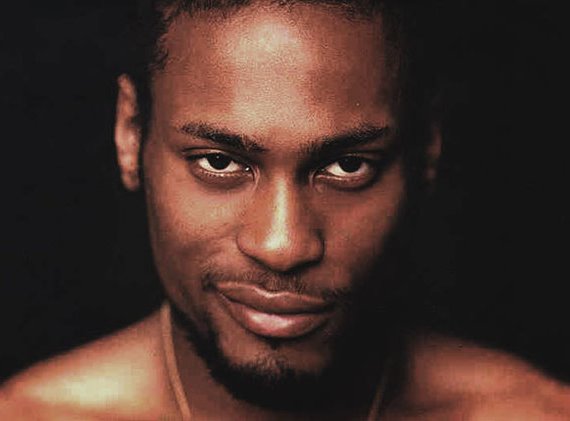
Tonight for "music night" at The Wild Reed I share the video for D’Angelo’s 2000 single, “Untitled (How Does It Feel?),” a track from his groundbreaking album, Voodoo, released 20 years ago yesterday. I also share a number of insightful perspectives on this “subversive” and thus, for some, controversial video.

But first, NPR music critic Sam Sanders recently interviewed recording engineer Russell Elevado on the making of Voodoo. In introducing this interview, Sanders says the following about the album.

While many today think of it as a masterpiece, it seems we still haven't figured out how to make sense of Voodoo: what box to place it in, how to pay it the respect it deserves, all the nuance and depth of a young black artist making a previous generation’s black music.

Voodoo is so many things. It is jazz, soul and funk all at once. You can hear hip-hop’s footprint in some of the songs, but it never dominates. While the influence of Prince and Funkadelic and Marvin Gaye is there on every track, it draws just as much inspiration from Hendrix and The Beatles. And for the artist, it was such an important statement that he waited nearly 15 years to follow it up. If it took time to see that Voodoo didn't live in the same music world as its peers in 2000, by now it has stopped feeling vintage – and started feeling timeless.


. . . [I]f you'll have me
I can provide everything that you desire
Said if you get a feeling
Feeling that I am feeling
Won't you come closer to me, baby
You've already got me right where you want me, baby
I just want to be your man

How does it feel
How does it feel
Said I want to know how does it feel


Writes Elijah C. Watson on D’Angelo’s “subversive” video for “Untitled (How Does It Feel?)”:

For most of the four-and-a-half minute-long video – which was directed by Paul Hunter and Dominique Trenier – D’Angelo’s upper body is the focus. The camera expands from his black braids, brown eyes, and his plump, licked lips, to show a glistening and chiseled chest and V-cut abs, the screen cut off right at the point of his waist to where a viewer can’t help but wonder if he’s nude or not. There’s nowhere to avert your eyes as the one-shot video offers a voyeuristic exploration of D’Angelo’s body. It’s intimate, provocative, sensual, vulnerable – a hypnotizing performance that offers no relief until its over, beautifully capturing the pleasures of sex without being explicitly overt.

The video is subversive, a display of black masculinity that’s affectionate but confident, and delicate but strong. A middle ground between Tupac’s infamous bathtub photos and the first 30 seconds of Prince’s “When Doves Cry” music video.

“Untitled” was distinct from other hip-hop, R&B, and pop videos because of this. Unlike the hedonism and hypermasculinity found in hip-hop and R&B videos or the teenage-like fantasies found in pop videos, “Untitled” felt real and offered a display of blackness uncommon in music videos at the time.


Luis Minvielle also insightfully weighs-in on the significance and uniqueness of both the music video for “Untitled (How Does It Feel?)” and Voodoo overall, suggesting that both “laid out the blueprint for a new masculinity.”

The [album’s] resolve of exploring love was forthright: its liner notes, written by poet Saul Williams, poised Voodoo as an hour-long ceremony expected to “serenade darkness.” “We speak of darkness as the unknown and the mysteries of the unseen,” the sleeve read. If romance was something unfamiliar to the listener, then Voodoo was the gateway into the mystique surrounding the different stages of human intimacy.

. . . [F]or all its noteworthy features, Voodoo is best remembered for D’Angelo’s sexy appearance – naked and sly – in the music video for “Untitled (How Does it Feel?).” In it, a smoldering D’Angelo sings and flexes past the swooning point, the grooves in his body running as deep as the low-end bass in Voodoo’s central tracks. One can fathom why memories of Voodoo are mostly associated with his strikingly alluring chest rather than the messages of love or his devoted rendition of soul music. It was all about exposition – nothing else from the record had as much airtime and as much attention as the video for “Untitled.” It was Voodoo’s driver for success. D’Angelo became a sex symbol, an icon for black macho bravado and suggestive lovemaking invitations and, naturally, a superstar. . . . [Yet] this attention was too much for a sensitive soul. The shy son of a Pentecostal preacher, D’Angelo could never cope with being a superstar. To his dismay, he was acclaimed for his body and not for his music. After touring for Voodoo, D’Angelo disappeared from the public eye. He rarely showed up, and when he did, music was the last issue to touch upon: he was caught up in a mugshot in 2005, overweight and frightened. It would be another 14 years before he would release Voodoo’s follow up, the future-funk protest album Black Messiah.

. . . Twenty years later, there’s still ground to break from one of neo-soul’s masterpieces: no other record has since portrayed sexuality in a way so appealing, yet so respectful. This achievement, concealed behind beautiful bodies and superstar narratives, has been Voodoo’s defining triumph: the inclusive representation of all sides of intimacy, love, sex and romance by embracing the feminine. D’Angelo was able to create this state of expression, of inclusive intimacy and universal love, by embracing his own femininity, and embracing what’s feminine in soul music. The liner notes are exact: “If we are to exist as men in this new world many of us must learn to embrace and nurture that which is feminine with all of our hearts.” . . . Contrary to the barbaric G-Funk tropes that swamped hip-hop, Voodoo understood that reclaiming femininity did not mean shunning masculine aspects of sexuality. While turn-of-the-century emcees would gloat in misogyny to explain arousal, Voodoo portrayed sexuality as both steamy and sympathetic. As the artwork implies, Voodoo’s posture is a posture of contemplation.


And finally, here’s more about both “Untitled (How Does It Feel?)” and its parent album Voodoo, courtesy of Wikipedia (here and here):

Voodoo is the second studio album by American neo soul singer, songwriter, and multi-instrumentalist D’Angelo. It was released on January 25, 2000, by Virgin Records.

D’Angelo recorded the album during 1998 and 1999 at Electric Lady Studios in New York City, with an extensive line-up of musicians associated with the Soulquarians musical collective. Produced primarily by the singer, Voodoo features a loose, groove-based funk sound and serves as a departure from the more conventional song structure of his debut album, Brown Sugar (1995). Its lyrics explore themes of spirituality, love, sexuality, maturation, and fatherhood.

Following heavy promotion and public anticipation, the album was met with commercial and critical success. It debuted at number one on the US Billboard 200, selling 320,000 copies in its first week, and spent 33 weeks on the chart. It was promoted with five singles, including the hit single “Untitled (How Does It Feel?),” which was written and produced by D’Angelo and Raphael Saadiq, and originally composed as a tribute to musician Prince. The song’s lyrics concern a man’s plea to his lover for sex.


The music video for "Untitled (How Does It Feel?)" garnered D’Angelo mainstream attention and controversy. Directed by Paul Hunter and Dominique Trenier, the video consists entirely of one shot featuring a muscular D’Angelo appearing nude and lip-synching to the track. While initial reaction from viewers was divided with praise for its sexuality and accusations of sexual objectification, the video received considerable airplay on music video networks such as MTV and BET, and it helped increase mainstream notice of D’Angelo and Voodoo. It also helped engender an image of him as a sex icon to a younger generation of fans.

D’Angelo promoted Voodoo with an international supporting tour in late 2000. While successful early on, the tour became plagued by concert cancellations and D’Angelo’s personal frustrations. The singer’s portrayal as a sex symbol in “Untitled (How Does It Feel?)” had repercussions on the tour, with female fans yelling out for him to take his clothes off and tossing clothes onto the stage. As trumpeter Roy Hargrove recounted, “We couldn’t get through one song before women would start to scream for him to take off something [...] It wasn’t about the music. All they wanted him to do was take off his clothes.” This led to frustration and both onstage and offstage outbursts by D’Angelo. Music journalist Questlove later said, “He’d get angry and start breaking shit. The audience thinking, 'Fuck your art, I wanna see your ass!', made him angry.” Although some were cancelled due to D’Angelo’s throat infection during the tour’s mid-March dates, many shows were cancelled due to his personal and emotional problems.

D’Angelo’s discontent with his sex symbol image led to his period of absence from the music scene following the conclusion of Voodoo's supporting tour.

“Untitled (How Does It Feel?)” won a Grammy Award for Best Male R&B Vocal Performance at the 43rd Grammy Awards in 2001. Rolling Stone magazine named the song the fourth best single of 2000. The magazine later named it the fifty-first best song of the 2000s (decade).

Upon its release, Voodoo received general acclaim from music critics and earned D’Angelo several accolades. It was named one of the year’s best albums by numerous publications.

Voodoo has since been regarded by music writers as a creative milestone of the neo soul genre during its apex. It has sold over 1.7 million copies in the United States and has been certified platinum by the Recording Industry Association of America (RIAA).


10/14/25 UPDATE
Soul Legend D'Angelo, 51, Dies After
Private Battle with Pancreatic Cancer

– Ilana Kaplan and Janine Rubenstein
People Magazine


Related Off-site Links:
D’Angelo’s Voodoo Redefined What an R&B Album Could Be – Kristin Corry (VICE, January 24,2020).
D'Angelo: Voodoo Child – Paper (December 1, 1999).
There Will Never Be Another Music Video Like D’Angelo’s “Untitled (How Does It Feel?)” – Elijah C. Watson (OkayPlayer, January 23,2020).
D’Angelo’s Masterpiece Voodoo Laid Out the Blueprint for a New Masculinity – Luis Minvielle (OkayPlayer, January 23,2020).
The New D’Angelo Documentary Shows a Musician Tired of Being a Sex Symbol – Kristen Yoonsoo Kim (Pitchfork, April 30, 2019).
For Everyone Who Had a Sexual Awakening Watching D’Angelo’s “Untitled” Video – Sylvia Obell (BuzzFeed, September 30,2016).
D’Angelo’s Black Messiah Is Political, Personal and Necessary – Mikey IQ Jones (Fact, December 18,2014).
The Second Coming of D’Angelo – Brian Hiatt (Rolling Stone, June 15, 2015).
Second Coming: D’Angelo’s Triumphant Return – Sasha Frere-Jones (The New Yorker, January 5, 2015).
D’Angelo’s Black Messiah Was Worth Waiting 15 Years For – James Joiner (The Daily Beast, December 16, 2014).


See also the previous Wild Reed posts:
• A Fresh Take on Masculinity
• Learning from the East
• Engelbert Humperdinck: Not That Easy to Forget
• Celebrating Al Green, Soul Legend
• Carl Anderson: “Like a Song in the Night”
• Changes
• Rockin’ with Maxwell
• Maxwell’s Hidden Gem
• Maxwell in Concert
• Maxwell’s Welcome Return
• Lenny
• State of Grace
• Remembering Prince, “Fabulous Freak, Defiant Outsider, Dark Dandy” – 1958-2016
• Ocean Trip
• Donald Glover: Renaissance Man
• Quote of the Day – May 8, 2018
• Deconstructing Childish Gambino's “This Is America”
• In a Historic First, Country Music's Latest Star Is a Queer Black Man

Previously featured musicians at The Wild Reed:
Dusty Springfield | David Bowie | Kate Bush | Maxwell | Buffy Sainte-Marie | Prince | Frank Ocean | Maria Callas | Loreena McKennitt | Rosanne Cash | Petula Clark | Wendy Matthews | Darren Hayes | Jenny Morris | Gil Scott-Heron | Shirley Bassey | Rufus Wainwright | Kiki Dee | Suede | Marianne Faithfull | Dionne Warwick | Seal | Sam Sparro | Wanda Jackson | Engelbert Humperdinck | Pink Floyd | Carl Anderson | The Church | Enrique Iglesias | Yvonne Elliman | Lenny Kravitz | Helen Reddy | Stephen Gately | Judith Durham | Nat King Cole | Emmylou Harris | Bobbie Gentry | Russell Elliot | BØRNS | Hozier | Enigma | Moby (featuring the Banks Brothers) | Cat Stevens | Chrissy Amphlett | Jon Stevens | Nada Surf | Tom Goss (featuring Matt Alber) | Autoheart | Scissor Sisters | Mavis Staples | Claude Chalhoub | Cass Elliot | Duffy | The Cruel Sea | Wall of Voodoo | Loretta Lynn and Jack White | Foo Fighters | 1927 | Kate Ceberano | Tee Set | Joan Baez | Wet, Wet, Wet | Stephen “Tin Tin” Duffy | Fleetwood Mac | Jane Clifton | Australian Crawl | Pet Shop Boys | Marty Rhone | Josef Salvat | Kiki Dee and Carmelo Luggeri | Aquilo | The Breeders | Tony Enos | Tupac Shakur | Nakhane Touré | Al Green | Donald Glover/Childish Gambino | Josh Garrels | Stromae | Damiyr Shuford | Vaudou Game | Yotha Yindi and The Treaty Project | Lil Nas X | Daby Touré | Sheku Kanneh-Mason | Susan Boyle